Rohin Malhotra
For a small dinner, you might preheat a full-size oven just to cook one tray of food. A compact appliance could avoid heating that empty space. Yet it could also run longer, or be the wrong tool for the dish. To know whether it saves electricity, compare the whole cooking session for the same meal.
That is the useful way to consider a cooking robot such as Posha. What would it take over in your kitchen: an oven, a sequence of appliances, or an already efficient pan on an induction burner? Each starting point leads to a different answer.
What Actually Drives Electricity Use While Cooking?
Wattage is the power an appliance can draw at a moment; kilowatt-hours are the electricity it uses over time. At full power, a 2,000-watt appliance would use 1 kWh in half an hour. Real appliances cycle their heat, so you also need to count preheating, cooking, and time spent on “warm.”
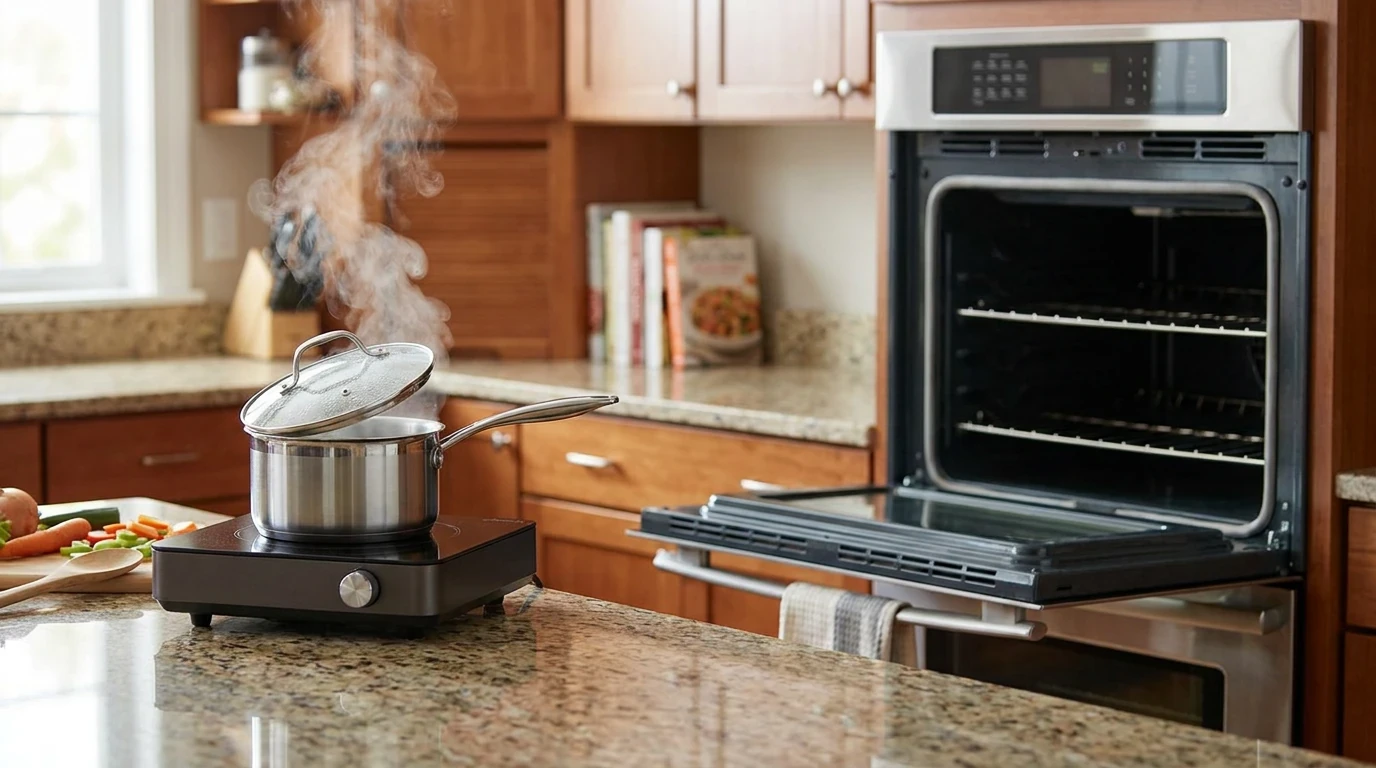
A full-size electric oven can draw several thousand watts as it heats a large cavity. That preheat is costly relative to one small tray; several trays spread the overhead across more food. A compact oven heats less empty space. A stovetop vessel heats no oven cavity at all, but its cook time still matters.
There is a strong existing baseline: ENERGY STAR reports that induction transfers about 85% of its heating energy to what is in compatible cookware. A fitted lid and an appropriately sized pan help further. Posha also uses induction, so its automation alone cannot establish an electricity advantage over that simple setup.
How Do Energy-Efficient Cooking Appliances Compare?
Picture a small chicken-and-rice dinner. You could make a supported one-pot version, roast the chicken and vegetables and cook rice separately, or load ingredients ahead for a scheduled meal. The method changes what gets heated and for how long.
Posha Cooking System
For a supported one-pot dinner, you choose a recipe, prep and load the ingredients, and Posha manages induction heat, ingredient timing, and stirring. Its Culinary AI uses visual and sensor feedback as the food cooks.

Posha cooking system in a kitchen
If that supported recipe replaces a rice cooker followed by a sauté pan, one vessel may also avoid keeping the rice warm while the second part cooks. If the alternative is a full-size oven for a small suitable meal, the avoided preheat could matter more. Those are plausible savings, not measured claims about every Posha dinner. If you already make the meal in a covered induction pan, the reason to choose Posha is likelier to be the cooking it manages for you. Posha's comparison with a countertop oven describes the different jobs each can do.
Guided All-in-One Cookers
A guided all-in-one cooker also keeps some dinners in one compact vessel. Its chopping, mixing, stirring, and recipe guidance may replace other tools, while its heater and motor still use electricity for as long as the recipe runs. Heat setting, motor use, and batch size change that total. For the chicken-and-rice example, its value depends on which preparation and cooking steps it can genuinely combine.

Guided cooker preparing vegetables in a compact vessel
Automated Cook-from-Cold Appliances
If dinner needs to begin while you are out, a cook-from-cold appliance stores preloaded ingredients chilled and starts on a schedule. That adds a refrigeration draw throughout the day as well as electricity for cooking. The schedule may save a later reheat, prolonged warming, or turning on the full-size oven after you return. Its main benefit is having dinner ready at that time.
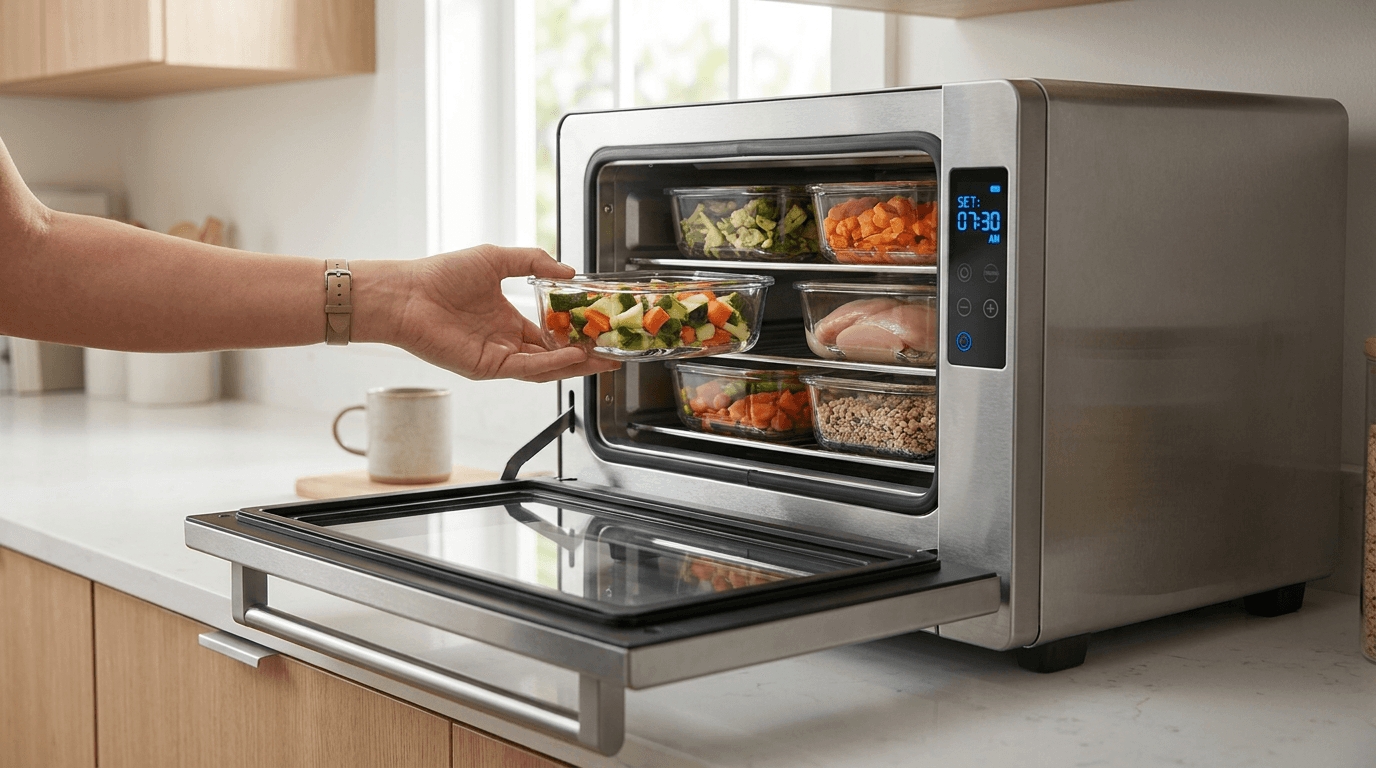
An automated cook-from-cold appliance with ingredient containers
Countertop Smart Ovens
If the dinner needs roasting or baking, a countertop smart oven is the closer match. Models may use convection, steam, or radiant heat, but their common advantage for a single tray is a smaller cavity that usually preheats faster than a full-size oven. Several rounds for a family meal can erase that advantage.

A countertop oven beside a full-size oven
What About Prepared Meal and Meal Kit Services?
Meal kits can reduce portioning work and food waste, but you still cook them on your own equipment. Prepared meals may need only a microwave at home. Their commercial cooking, refrigeration, packaging, and delivery are outside this article's household-electricity comparison, so a quick reheat says little about their total energy footprint.
Is Running Multiple Small Appliances Actually More Efficient Than One Oven?
Suppose you use a rice cooker and an air fryer for that dinner. Together they draw more power at one moment, but their combined kilowatt-hours are the sum of what each uses over its own run time, even if you run them one after the other. Compactness by itself tells you little.
The forgotten part is often time on “warm.” A slow cooker left there for two extra hours continues to use electricity; a higher-wattage appliance that finishes sooner could use less overall. A defined cooking endpoint helps if it stops that extra run time. This is why your habits belong beside appliance specs in a smart kitchen buying decision.
The same test applies to other meals. Reheat leftovers in a microwave without preheating an oven; pressure cook a stew when a shorter cook suits it; use induction to heat compatible cookware directly for a simple pan dinner. Posha's sensors can manage cooking stages when a supported recipe calls for them.
Verdict: Which Appliance Should You Choose to Reduce Kitchen Energy Use?
Watch one ordinary week of dinners. Identify the meals that use a half-empty oven, several cooking devices, or unnecessary warming. Then ask whether a suitable compact oven or a supported Posha recipe could take over that exact job. If you already use a covered induction pan, a robot's clear gain may instead be the attention it saves.
For a real comparison, make the same number of servings and note the electricity from start through any reheating or “warm” time. A plug-in meter works for compatible countertop devices; a built-in oven may need circuit-level measurement or reliable model data. If the results are close, the choice may come down to the kind of cooking you want the appliance to handle.
So can a cooking robot cut kitchen energy use? In some routines, yes. Without comparable measurements for the same meal, no general savings percentage is credible. For more on how these devices fit together, see Posha's guide to the smart kitchen.
Frequently Asked Questions
Does a cooking robot use less electricity than a conventional oven?
It may for a suitable small meal if the alternative is preheating a mostly empty full-size oven. A large oven batch uses that preheat more fully. Compare the electricity for the same suitable meal.
How much electricity does a countertop cooking appliance use compared to a full-size oven?
There is no single figure for all models and recipes. Check wattage, running time, preheat, and warming. A plug-in meter can record a countertop appliance's kilowatt-hours; a built-in oven needs suitable circuit-level measurement or reliable model data.
Is it more energy-efficient to use small appliances or one all-in-one cooking robot?
Compare combined kilowatt-hours, not the peak wattage when two machines run together. One robot may consolidate a supported meal; one efficient induction burner may be just as good for a simple pan dinner.
Do countertop smart ovens save energy compared to a regular oven?
Often for a small roast, bake, or reheat: the cavity is smaller and preheat is generally shorter. Several countertop batches may use more than one full-size oven batch.
What is the most energy-efficient way to cook dinner at home?
Match the tool to the dish and portion: microwave for suitable reheating, covered induction pan for stovetop meals, pressure cooker for a suitable long cook, compact oven for a small bake, or a full-size oven filled for a batch. A robot is relevant when it can take over a supported multi-step dinner.