Rohin Malhotra
Type "countertop cooking robot" into a search bar and you'll get a greatest-hits mix: a pressure cooker with Wi-Fi, a toaster oven that scans barcodes, and a machine with a stirring arm that sautés onions while you're answering email. They show up side by side, borrow the same buzzwords ("smart," "automatic," "all-in-one"), and then proceed to automate wildly different parts of dinner.
The mix-up isn't just semantics. The global all-in-one kitchen appliances market hit $12.35 billion in 2025, with multicookers alone holding a 28.5% product share. The cooking robot segment, valued at $4.25 billion the same year, is projected to nearly double by 2030 (The Business Research Company, 2026). With that much money at stake, everyone starts speaking the same language. Below is a plain comparison of what each category actually does for you, what still lands in your lap, and which one makes sense for the way most households cook on a Tuesday.
The Multicooker: One Pot, Many Programs
A multicooker (Instant Pot is the default reference point) is a sealed pot that stands in for your slow cooker, rice cooker, and pressure cooker. You pick a mode, lock the lid, and it manages pressure, temperature, and time for one cooking method at a time. When you want the "walk away" part of cooking, it's excellent. Steel-cut oats that don't scorch, bone broth that quietly does its thing, dried beans that go tender in 40 minutes: that's the multicooker sweet spot.
Its ceiling is built into the design. One temperature environment, one sealed chamber, no physical interaction with the food once the lid is on. It doesn't stir. It doesn't fold in ingredients halfway through. And if a recipe reads "saute the aromatics, deglaze, then pressure cook for 20 minutes," you're still doing the saute and the deglaze before the timer ever starts. In other words: your work is everything up to the moment the lid clicks shut (plus any tweaks the recipe demands). It pairs well with a hands-on cook; it doesn't replace one. If you care about how one-pan home cooking, that line matters.
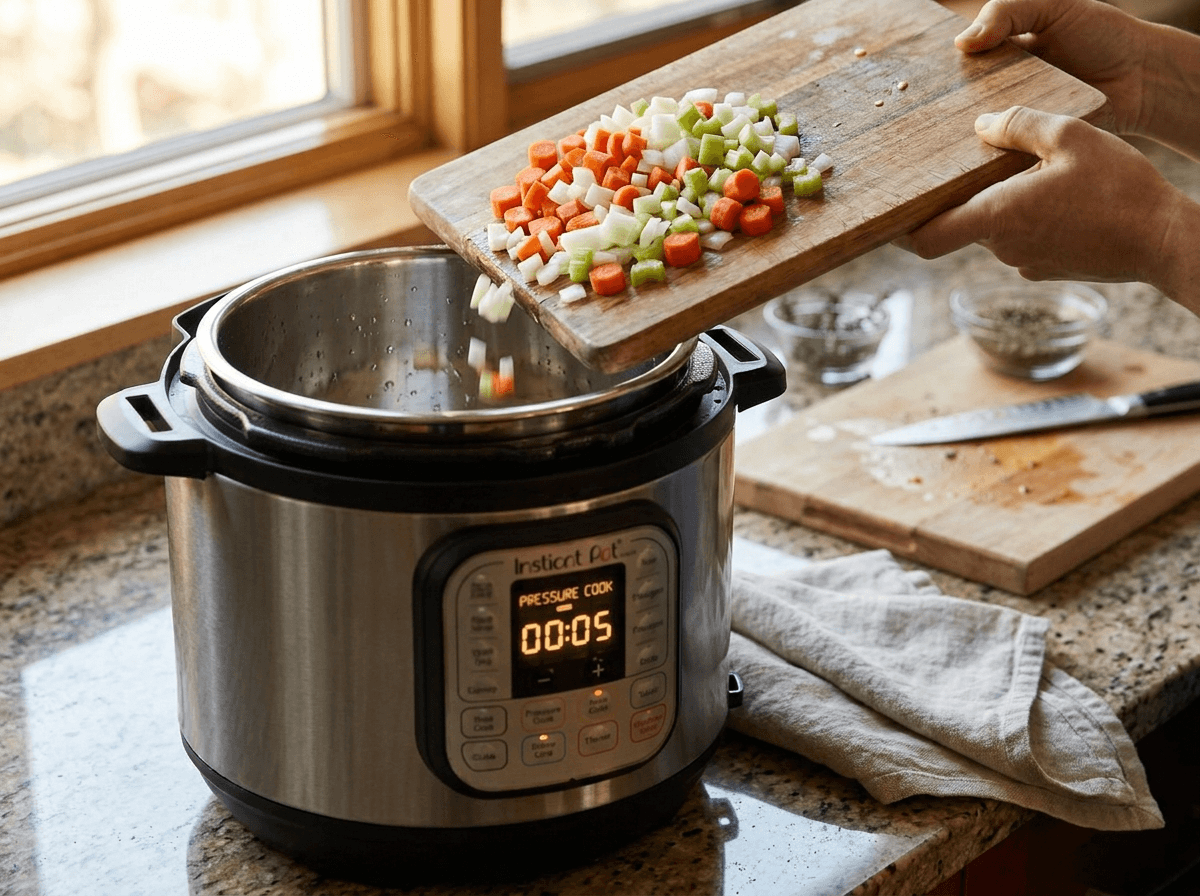
The multicooker takes over once the lid clicks shut — everything before that moment is still on you.
The Smart Oven: Precision Heat in a Box
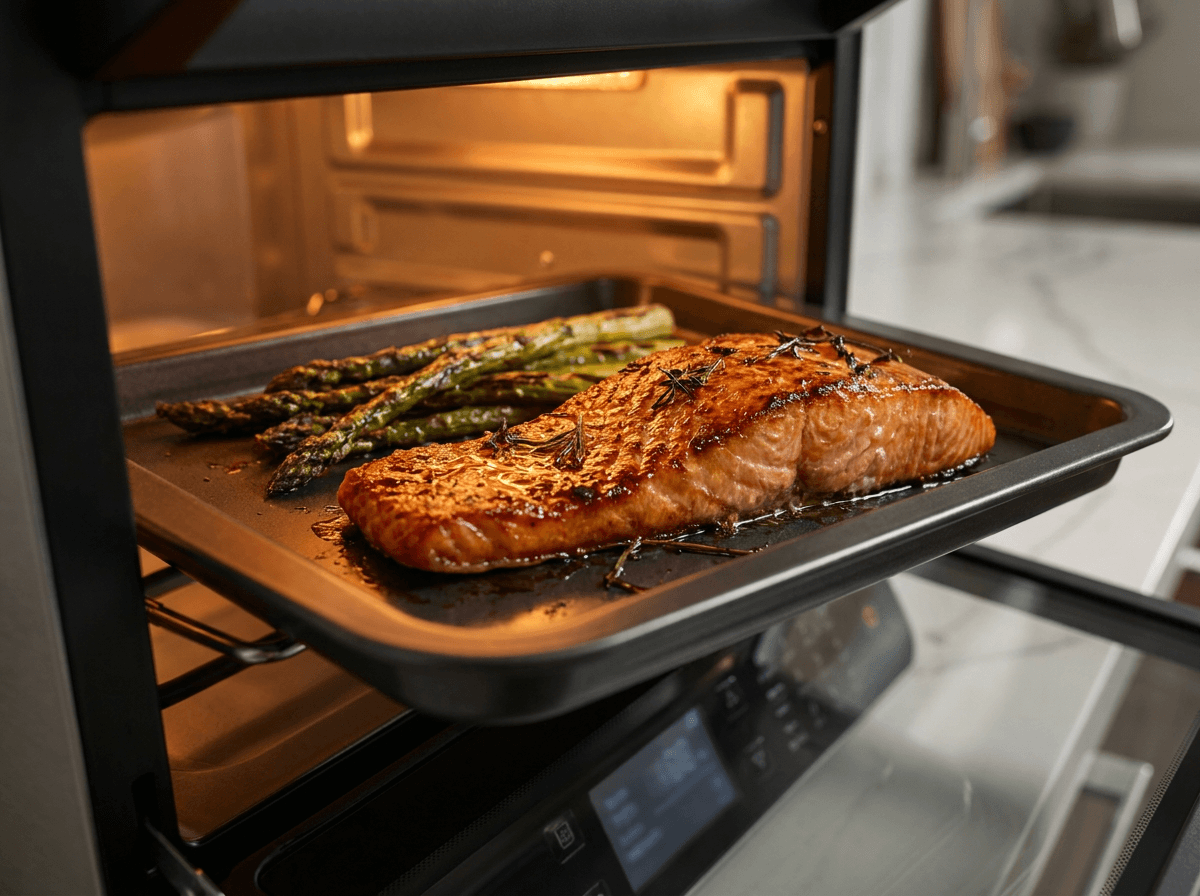
Smart ovens deliver precise heat control — the difference between flaky salmon and an overdone fillet.
Smart ovens like the Tovala and Brava focus on one thing: controlled heat inside a small box. They mix convection, infrared, and sometimes steam to land food where you want it, more reliably than a standard oven. Tovala leans hard into meal kits: scan a barcode, the oven runs a sequence of steam, bake, and broil, and you get chicken with crisp skin and a moist center. A review from Homes & Gardens, last updated in 2022, found that the scan-to-cook feature worked well with Tovala meals and supported grocery items.
A smart oven automates the finish line of dinner. It roasts, bakes, broils, and reheats with better control than the big oven many of us actually have. What it doesn't do is anything that happens in a pan. No stirring a risotto. No building a sauce. No sauteing garlic until it hits that narrow window between fragrant and bitter. If your weeknight annoyance is hovering over a skillet, a smart oven won't fix that. If your annoyance is salmon that swings from raw to dry in two minutes, it will.
The Countertop Cooking System: Automating the Stovetop
This is the category that goes after the part of cooking that keeps you pinned to the stove. A countertop cooking system (you'll also see "kitchen robot" and "smart cooking machine") pairs heat with a physical tool - a stirring arm, integrated blades, something that actually moves food around - and then runs multi-stage recipes in order. Saute onions at one temperature, add tomatoes, drop the heat, stir while the sauce thickens. The system handles the handoffs between steps.
Blender-style cooking systems use rotating blades to chop, blend, and stir while heating. Posha takes a pan-based approach: its camera and sensors watch cooking progress while its dedicated stirrer, induction heat, and ingredient dispensers move a supported recipe from step to step. Their story page shows what an automatic cooking machine actually does when dinner has more than one step. The practical difference versus a multicooker or smart oven is movement plus staged heat - not just holding a temperature and counting down.
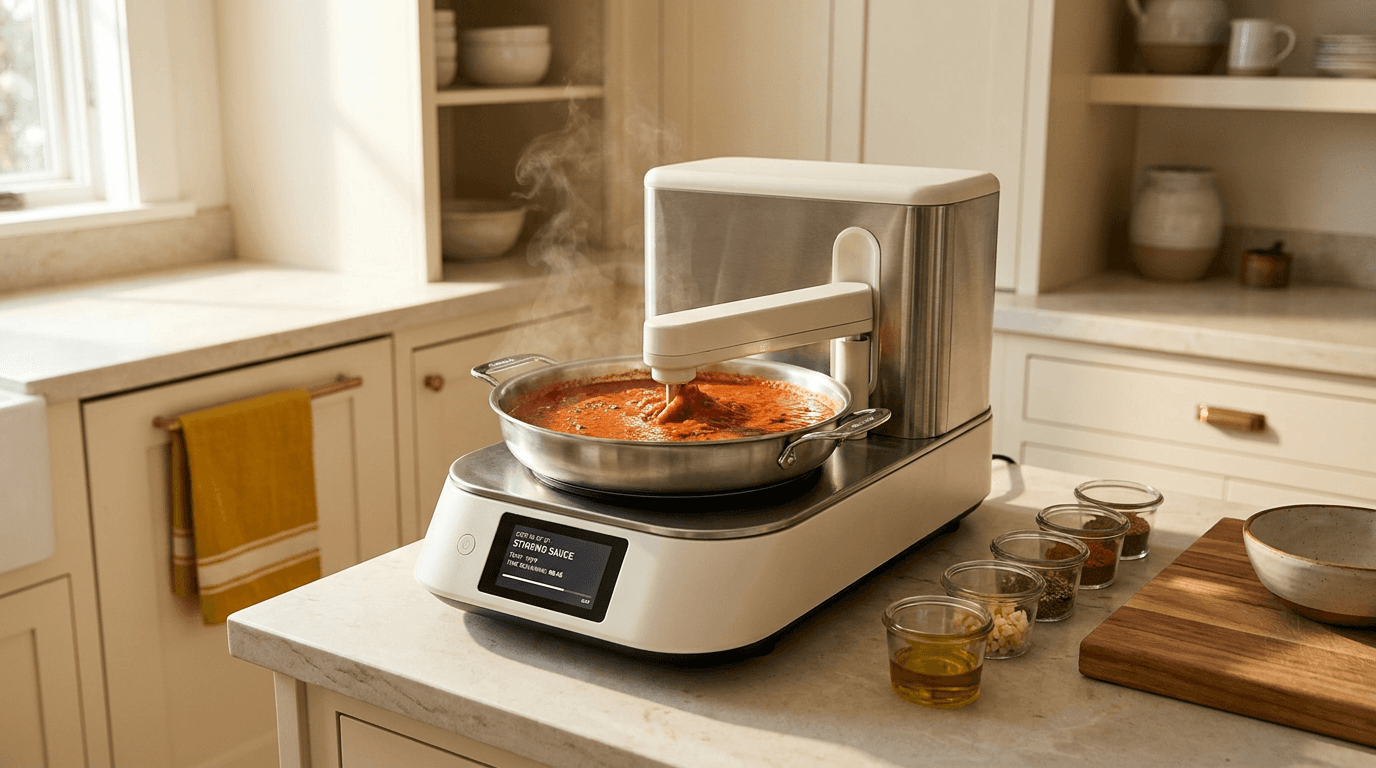
A countertop cooking robot handles the stirring so you don't have to stay at the stove.
Head to Head: Multicooker vs Smart Oven vs Cooking System
The table below lines up the three categories against seven things that actually matter when you're deciding what deserves counter space. These are category-level patterns, not promises; specific models vary.
Criteria | Multicooker | Smart Oven | Countertop Cooking System |
|---|---|---|---|
What It Automates | Pressure, slow cooking, steaming, rice - one method per cook cycle. | Baking, roasting, broiling, reheating with tight control of heating elements. | Multi-stage stovetop cooking: sauteing, stirring, simmering, and temperature shifts. |
Your Active Role | All prep, any mid-cook additions, plus sauteing before sealing the lid. | Prep and load the food. Some models push you toward buying their meal kits. | Load ingredients (sometimes in stages) and choose a recipe. Little to no hovering. |
Recipe Complexity | Best for single-method dishes: stews, grains, beans, broth. | Best for single-item or sheet-pan meals: proteins and roasted vegetables. | Built for multi-step cooking: curries, risottos, sauces, soups with layered technique. |
Hands-Off Window | Long: 1 to 8+ hours for slow cook; 15 to 45 minutes for pressure. | Short to medium: often 10 to 40 minutes. | Medium: often 20 to 60 minutes, depending on how many stages a recipe has. |
Footprint | Compact, about the size of a large rice cooker. | Toaster-oven sized. Needs clearance above and behind. | Varies. Thermomix is compact; Posha is closer to a small stand mixer footprint. |
Cleaning | One inner pot, one lid, a sealing ring. Pretty simple. | Tray plus wiping the interior. Steam models also need descaling. | Pan, stirring tool, and lid. Some parts are dishwasher-safe; depends on the model. |
Typical Price Range | $70 to $150 for most models. | $200 to $500+ (some require an ongoing meal kit subscription). | $300 to $1,500+ depending on brand and capability. |
Which One Fits Your Weekly Meal Rotation?
Batch Preppers and One-Pot Loyalists: The Multicooker
If your weeknight plan is "cook once, eat three times" - chili on Sunday, containers through Wednesday - a multicooker earns its keep. It nails long, passive cooks. You'll still chop, brown, and season, but the machine carries the boring middle. It's also the cheapest option here, and the most established.
Meal Kit Subscribers and Precision Roasters: The Smart Oven
If dinner is mostly well-cooked proteins and roasted vegetables, a smart oven is basically a consistency machine. The Tovala and Suvie ecosystems make the most sense when you buy into their food pipeline, because the barcode flow is the point. Step outside that, and you're still left with a very capable small oven. If you're weighing a cooking system against the meal kit model, the best meal kit alternative breakdown lays out the tradeoffs.
Process-Heavy, From-Scratch Cooks: The Countertop Cooking System
If the thing you want to outsource is the 30 minutes of stirring, watching, and nudging heat that a curry or bolognese asks for, this is the only category that targets that work. Posha's recipe library is a good way to see what "multi-stage" actually means when the transitions are handled for you. The price is higher, and there is a learning curve, but it's not competing on the same axis as a multicooker or a smart oven.
A Note on the Words: Why Everything Gets Called a 'Cooking Robot'
"Kitchen robot" gets slapped on anything with a chip and a heating element because it sounds futuristic and it searches well. But if "robot" is supposed to mean anything, it has to include more than heat plus a timer. Real automation in cooking requires sensing and physical action: stirring, adjusting, responding to what's happening in the pan. A multicooker senses pressure. A smart oven senses internal temperature. A cooking system senses temperature and also moves the food. Same word, very different amount of work being done.
If you want the more specific split between blender-style cookers (like Thermomix) and pan-based systems (like Posha), the comparison on self-cooking pot vs. a full cooking system gets into it. And if you're trying to separate sensing from branding, what AI changes about cooking is useful context.
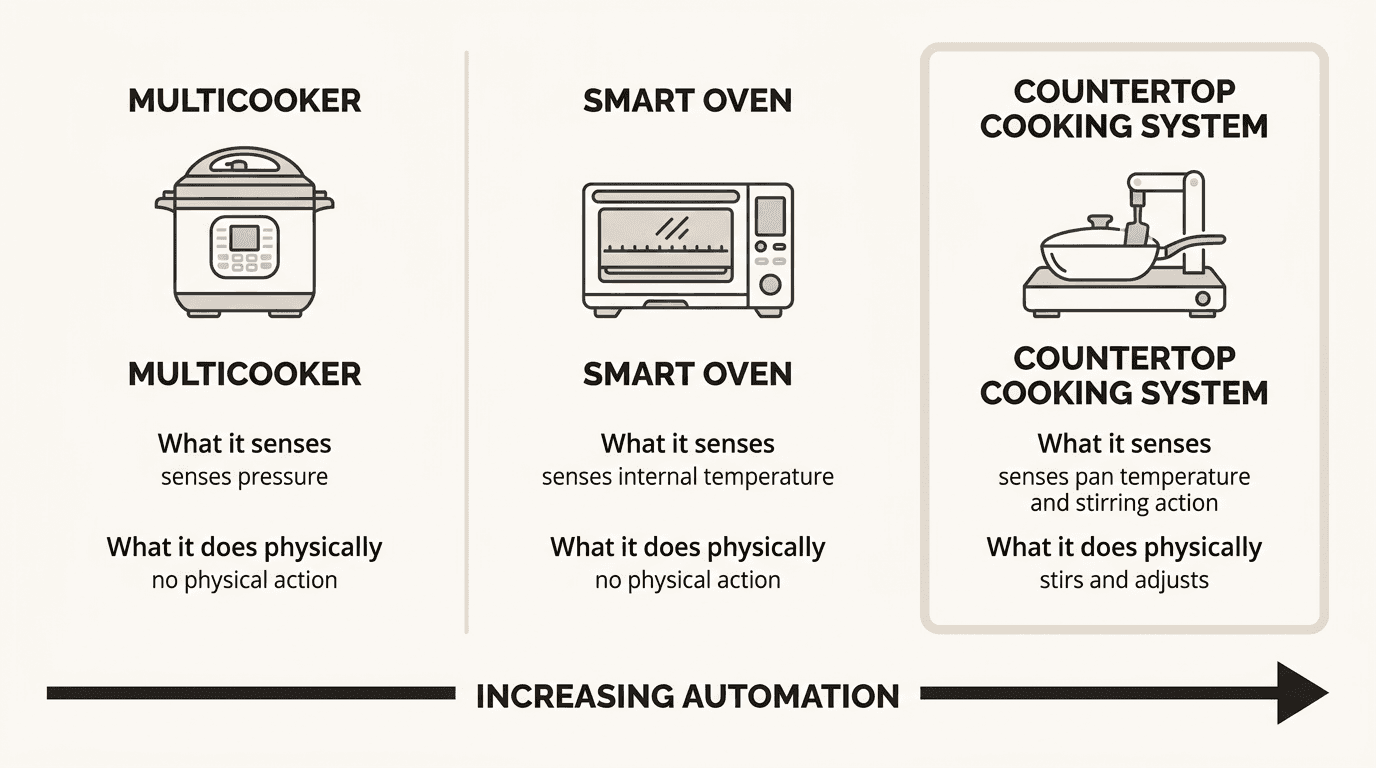
Only the countertop cooking system both senses and physically acts — that's what separates a robot from a timer.
Frequently Asked Questions
Can a countertop cooking robot replace my stove?
For a lot of weeknight food, yes. A countertop cooking system can saute, simmer, and stir in one vessel. It still won't replace a full-size burner for jobs like hard searing at very high heat, boiling a huge pot of pasta water, or cooking in a wok. A better way to frame it is that Posha can handle many supported stovetop recipes that would otherwise require regular stirring, heat adjustments, and attention at the pan.
Do I need a subscription for a smart oven or cooking robot?
Depends on the brand. Tovala's scan-to-cook flow is strongest with its meal deliveries, which adds a recurring cost. Brava does not require a subscription. Posha can be used without a membership through Co-Pilot mode and its Essential recipes. Posha Circle, available separately, unlocks unlimited access to the full recipe library. Before you buy, check whether the features you care about are tied to ongoing payments.
What's the difference between a Thermomix and a Posha?
Thermomix TM6 is a jug-style machine with high-speed blades. It chops, blends, heats, and stirs by spinning those blades. Posha uses a dedicated stirring arm in a flat pan, aiming to mirror stovetop technique with sensor-driven temperature control. Thermomix shines with soups, doughs, and blended preparations. Posha is built around pan-cooked dishes like curries, stir-fries, and sauces. They automate different styles of cooking. Can a cooking robot really make dinner? goes deeper.
Is a multicooker the same as a pressure cooker?
Pressure cooking is one mode. A multicooker bundles pressure cooking with slow cooking, steaming, rice cooking, yogurt making, and sometimes sauteing. Instant Pot popularized the format by rolling seven or more single-function appliances into one vessel. So yes, every multicooker can pressure cook - but that's not the whole story.
How much counter space do these appliances actually take up?
A multicooker like an Instant Pot takes up roughly a 13" x 13" footprint. Smart ovens vary, but the Tovala is about 19" wide and 13" deep, and it needs clearance behind for ventilation. Countertop cooking systems vary considerably in size. Confirm the current manufacturer dimensions and required clearance before buying. Measure before you buy, and remember that ovens need airflow space you might not be counting.
A multicooker automates the "set it and forget it" part of cooking inside a sealed pot. A smart oven automates baking and roasting with tight control over heat in a small box. A countertop cooking system is the one that tries to automate the active stovetop sequence itself: sauteing, stirring, and simmering a recipe through multiple stages. If you only argue multicooker vs. smart oven, you miss the third category - and it's the only one that takes over the physical work of standing at the pan.
The real question isn't how many modes show up on a spec sheet. It's who has to be at the stove when the sauce starts to catch.
Explore Posha https://www.posha.com/private-chef
See Posha recipes https://www.posha.com/recipes