Rohin Malhotra
On Sunday, one big pan of chicken can feel like five dinners taken care of. By Wednesday, the same seasoning and reheated slices may have you looking at takeout.
You can still get the week’s cooking done in one prep session. Make a few smaller batches with different cuts, seasonings, and methods; store each meal for the day you will eat it. If a chicken dish is in Posha’s recipe library, Posha can handle its active cooking stages after you prepare and load the ingredients. You remain in charge of the plan, safe handling, and the finished portions.
Start with the meals, then choose the chicken
Chicken is an easy protein to buy in bulk, and that is part of the trap: five containers of the same boneless breast give you five nearly identical lunches. A sauce change alone may not fix the texture. Thighs are more forgiving when reheated, breasts are leaner but easier to dry out, and bone-in thighs take longer to cook but can be braised and shredded for a different meal. Buy the cuts you will use this week and freeze any extra raw chicken for another week.
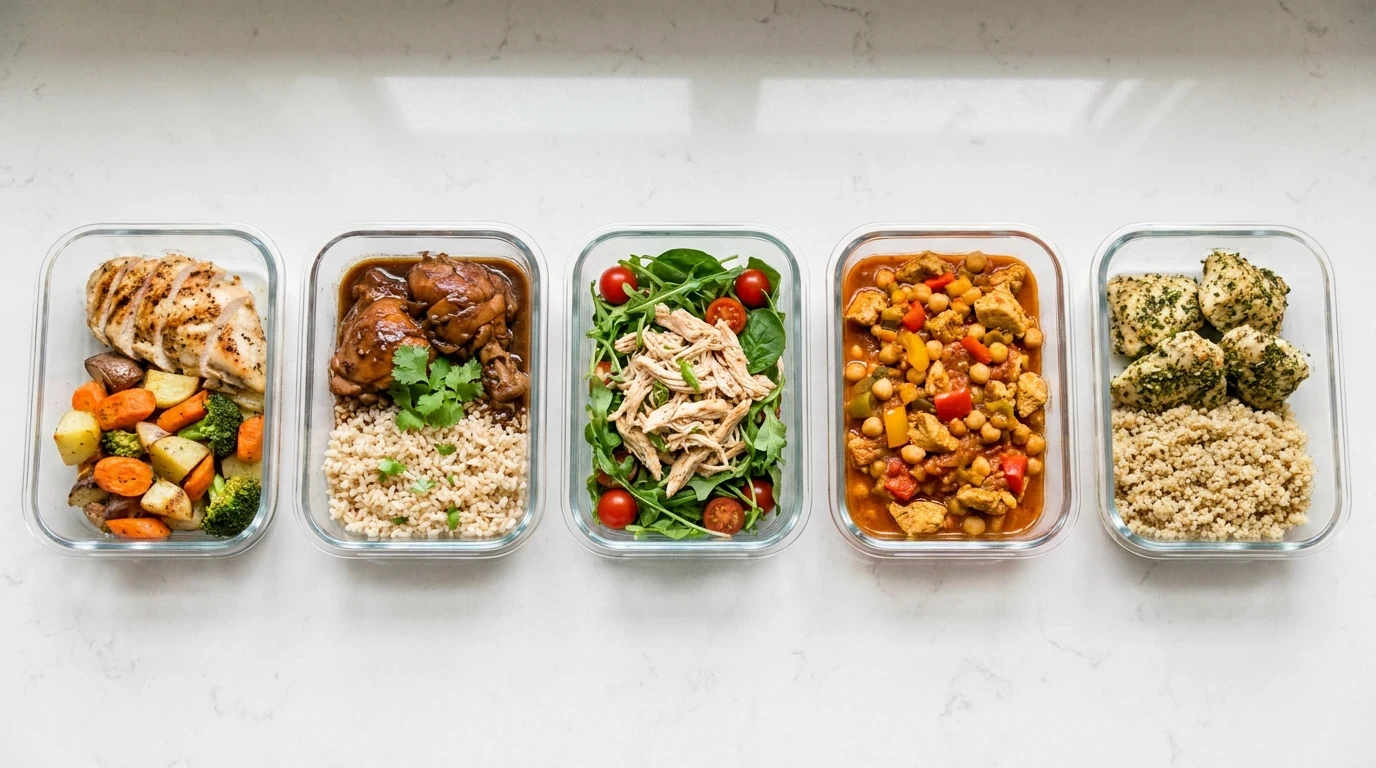
Now decide where each cut is going. A seared thigh over vegetables feels different from a glazed thigh in a rice bowl; a gently poached breast can go into a grain bowl or a wrap; braised, shredded chicken belongs in tacos. The five-day plan below keeps those differences visible before you cook anything.
Day | Cut | Seasoning | Cooking method | Meal |
|---|---|---|---|---|
Monday | Boneless thighs | Rosemary, garlic, and lemon zest | Sear over high heat; cook to 165°F internally | Slice over roasted vegetables |
Tuesday | Boneless thighs | Smoked paprika, honey, and cumin | Sear and glaze; cook to 165°F internally | Rice bowl with pickled onions |
Wednesday | Boneless breast | Ginger, soy, and sesame | Poach at a gentle simmer to 165°F internally | Slice over a grain bowl with cucumber |
Thursday | Boneless breast | Oregano, lemon, and olive oil | Poach to 165°F internally, then slice thin | Wrap with hummus and greens |
Friday | Bone-in thighs | Chipotle in adobo, lime, and garlic | Braise to 165°F internally, then shred | Tacos with slaw and avocado |

A sear creates one texture in the five-day plan; other meals use a different method.
Use these as meal ideas. For any day you want Posha to cook, check the current recipe library for a supported dish first. Poaching or braising may still be easier on the stove or in another appliance, depending on the recipes available.
The flavor work can happen before the cooking does. Keep a jar of the rosemary mix and one of the paprika mix ready to grab; make double and save the extra. Dry rubs can go on just before cooking. If you prefer a marinade, mix it ahead and refrigerate the chicken for the time your recipe calls for. This gives you variety without measuring five sets of spices while the stove is hot. Posha’s Chicken Lo Mein offers another use for the protein, and these meal prep ideas cover other proteins and grains.
Prep safely before the first batch goes on
Start with the vegetables, grains, and other ready-to-eat ingredients; handle raw chicken last. Give raw poultry its own board, keep it away from the cucumber and greens that will not be cooked, and do not rinse it in the sink. Wash your hands with soap for at least 20 seconds after handling it, then clean and sanitize the board, knife, and counter. Keep the chicken refrigerated until you are ready to cook each batch.
Before cooking boneless pieces, make them a similar thickness or group them by size. Otherwise, the thin pieces may dry out while the thickest one finishes. Use a food thermometer in the thickest part: all chicken cuts need to reach 165°F internally. You can let the cooked pieces sit for about five minutes before slicing to help them retain moisture; that is a texture tip, not an additional food-safety requirement.
Let Posha handle the supported cooking stages

You handle the plan and prep; Posha manages supported cooking stages.
This is where the Sunday session can demand the most attention: one batch is searing, another needs a gentler heat, and you are still watching the pan. For a supported chicken recipe, you choose the dish, set servings and spice preferences, and follow the app’s directions to prep and load the ingredients. Ingredient swaps are part of Posha’s personalisation feature, currently labeled beta. Once you start, its Culinary AI uses camera and sensor input to follow changes in color, texture, and moisture, then manages the recipe’s ingredient additions, heat, timing, and stirring. You can check its progress in the app without repeatedly working the stove yourself.
You still choose the five-day menu, prepare and load the food, portion the finished meals, and clean up. Before storing chicken, use a food thermometer to check that its thickest part has reached 165°F; the system’s cooking sensors do not replace that check.
Store Thursday and Friday before they become leftovers
Once each batch is cooked, portion it into shallow meal containers and refrigerate promptly. Follow the two-hour rule, or one hour if the food is exposed to temperatures above 90°F. Individual containers cool faster and spare you from reheating the whole batch each day.
At 40°F or below, cooked chicken keeps in the fridge for three to four days. For chicken cooked on Sunday, keep the earlier meals refrigerated and freeze the Thursday and Friday chicken promptly after cooking; add fresh greens and other delicate sides when you serve it. Move a frozen portion to the fridge the night before you plan to eat it. The plan is easier to follow when each container is labeled with its day and meal.
Bring a portion back without drying it out
The dry, rubbery chicken that makes Wednesday unappealing often comes from blasting a cold portion with high heat. Cover the chicken and add a splash of water or stock so the outside does not dry out before the center warms. A covered skillet over gentle heat may take around ten minutes; an oven around 300°F with the chicken covered in foil may take 15–20 minutes. Thickness and starting temperature change the time, so use a thermometer and reheat leftovers to 165°F internally.
Next Sunday, choose the cuts and meals, use the seasoning jars, let Posha cook supported dishes that suit your plan, and freeze the later portions. Explore Posha for current device details and recipes.
Frequently Asked Questions
How long does meal-prepped chicken last in the fridge?
Cooked chicken keeps for three to four days in a refrigerator at 40°F or below. Freeze the portions you will not eat in that window, and reheat a portion to 165°F when you are ready to eat it.
Can you meal prep chicken that's already been frozen?
Yes. Chicken thawed safely in the refrigerator can be cooked and frozen again; raw chicken thawed in the fridge can also be refrozen, though quality may suffer. If you thawed raw chicken in cold water or the microwave, cook it immediately before freezing it again. USDA explains the different thawing methods.
What's the best way to keep chicken moist when reheating it?
Warm a single portion under a lid or foil with a splash of water or stock. Gentle heat helps the outside stay moist while the center comes up to the required 165°F.
Is it better to cook chicken before or after meal prepping other ingredients?
Prepare ready-to-eat foods first. Handle raw chicken last on a separate board, then clean and sanitize your tools and surfaces. Cook it to 165°F and refrigerate or freeze promptly in shallow containers.
How do I meal prep chicken for the week without eating the same thing every day?
Change the cut, seasoning, and method: seared thighs for the first two days, poached breast for the middle of the week, and shredded braised chicken for Friday tacos. Freeze Thursday and Friday’s chicken on cooking day.