
Rohin Malhotra
What Is FODMAP? A Plain English Guide to Low FODMAP Eating
An apple sounds like a sensible snack. So does a slice of whole-wheat toast. If a doctor has suggested low-FODMAP eating for your IBS, both can suddenly seem confusing. The question isn't whether a food is healthy. It's whether it contains certain carbohydrates your gut finds difficult, and how much of that food you eat.
That is why a low-FODMAP diet starts with a short period of food swaps and then brings foods back, one group at a time. The aim is to find out what you tolerate. If your digestive symptoms have not been evaluated, speak with a healthcare professional before starting a restrictive diet.
Why FODMAPs can bother a sensitive gut
FODMAPs are short-chain carbohydrates that the small intestine does not always absorb well. Some draw water into the intestine; when others reach the large intestine, gut bacteria ferment them and produce gas. For someone with IBS, that extra water and gas can contribute to bloating, cramping, pain, diarrhea, or constipation.
The name spells out the groups involved: Fermentable Oligosaccharides, Disaccharides, Monosaccharides And Polyols. The long words name different kinds of carbohydrates. You do not need to memorize them to understand the first step of the diet; you will learn which groups affect you when you bring foods back later.

FODMAP names several carbohydrate groups, each with its own food sources.
That is why the diet is used for IBS. Monash reports that roughly three in four people with IBS may improve on it, although an individual response is never guaranteed. The diet can help manage symptoms; it does not cure IBS. The NIDDK also lists it as one dietary approach a doctor may recommend.
Why the portion matters as much as the food
The carbohydrate groups show up in familiar foods. Oligosaccharides include the fructans in wheat, onion, and garlic, plus galacto-oligosaccharides in legumes. Disaccharides include lactose in dairy. Monosaccharides include excess fructose in foods such as honey and mangoes. Polyols are sugar alcohols in some stone fruits and sweeteners.
Food type is only half the question. A small serving of avocado, for example, may receive a lower FODMAP rating than a larger one. Even legumes aren't always off the table: Monash lists about ¼ cup, or 42 grams, of drained canned chickpeas as a lower-FODMAP serving. Checking the tested amount is more useful than deciding that all chickpeas are forbidden.
Monash researchers first published on FODMAPs in 2005 and continue testing foods. Their app gives current serving-specific ratings, which is why it is more useful than an old list of foods to avoid.
The table below gives practical swaps for the initial low-FODMAP phase. They are examples, not an unlimited serving allowance; check current portions and packaged ingredients in the Monash app.
Food group | Often higher in FODMAPs | Lower-FODMAP options | What to check |
|---|---|---|---|
Grains and cereals | Wheat- and rye-based breads and cereals | White rice, rolled oats, quinoa, rice cakes | Check tested servings, especially for oats. |
Dairy | Cow's milk, yogurt, other higher-lactose dairy | Lactose-free milk, hard cheeses | Hard cheeses are generally lower in lactose. |
Fruit | Apples, mangoes, peaches, plums | Blueberries, oranges, kiwi, pineapple | The rating can change with serving size. |
Vegetables | Onion, garlic, cauliflower | Carrots, zucchini, cucumber, potato | Zucchini has a lower-FODMAP serve around 65 g; check the current app. |
Protein and legumes | Many legumes; some marinated or processed meats | Eggs, plain chicken, fish, meat, firm tofu | About ¼ cup of drained canned chickpeas can fit. |
Sweeteners and condiments | Honey, high-fructose corn syrup | Maple syrup, garlic-infused oil | Garlic flavor transfers to oil; fructans do not. |
Garlic and onion deserve an extra look because they can hide in stock, sauces, seasoning blends, and restaurant food. Garlic-infused oil offers the flavor without the fructans that would dissolve into water. Products and serving sizes still need checking; a food labeled gluten-free is not automatically low FODMAP. Gluten is a protein, while the FODMAP issue with wheat is usually its fructans. Some gluten-free products also contain honey, chicory root, or other higher-FODMAP ingredients. And a food can be nutritious while still causing IBS symptoms at a particular serving. Those are separate questions from its protein, carbohydrate, or fat content, explained in our plain English guide to macros.
The three phases of the low FODMAP diet
A shorter food list is only the beginning. Without bringing foods back, you never learn which ones actually affect you, and you may keep avoiding foods you can comfortably eat.
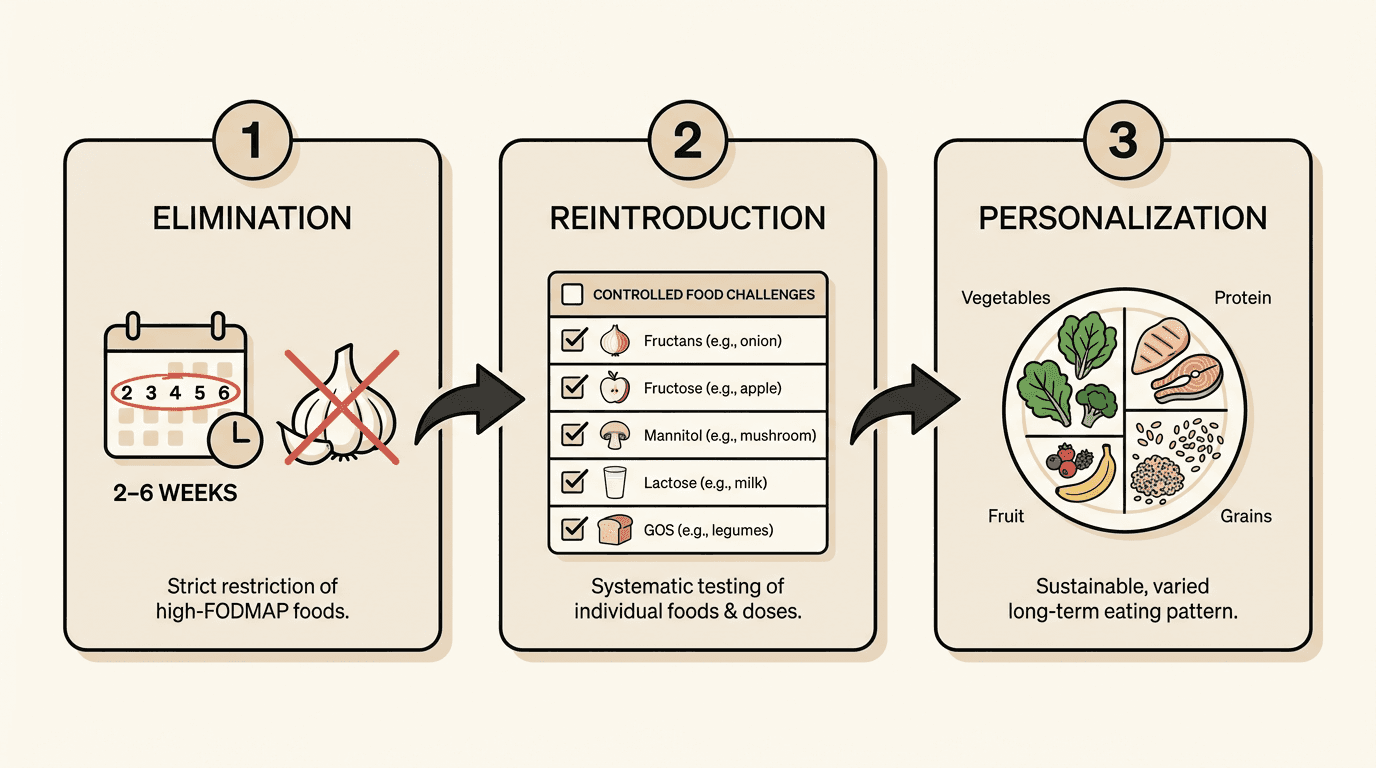
The aim is to move from a short trial to a varied, personalized diet.
Phase 1: Lower FODMAP eating for two to six weeks
Replace higher-FODMAP foods with suitable lower-FODMAP choices and watch whether your symptoms improve. This is a temporary test, not a weight-loss plan or a lifelong set of rules. Work with a dietitian experienced in IBS if you can, especially to make sure the restricted phase still meets your nutritional needs. If symptoms do not improve, discuss that result with your healthcare professional rather than extending the strict phase on your own.
Phase 2: Reintroduce and test one group at a time
After symptoms settle, add a challenge food from one FODMAP group while the rest of your meals stay lower FODMAP. Monash advises testing each group separately, often across three days with measured portions, while recording what you ate and any symptoms. Leave time between challenges for symptoms to settle. A full set of challenges may take roughly eight to twelve weeks, depending on the plan you follow.
This is where the diet becomes personal: you might tolerate lactose but find that a larger serving of fructans causes symptoms. Your notes and a dietitian's guidance help you tell the difference, rather than guessing from one uncomfortable meal.
Phase 3: Eat as broadly as your gut allows
Use what you learned to bring tolerated foods and portions back into ordinary meals. Monash calls this personalization. Some people still limit particular FODMAP groups or amounts, but the goal is the least restriction that keeps symptoms manageable. Long-term strict elimination can make it harder to get enough fiber and other nutrients, and it removes foods that can support beneficial gut bacteria.
Cooking one dinner when the household eats differently
Understanding your own portions is one thing; making dinner for everyone is another. The simplest approach is often a shared base. Start with rice or potatoes, a plain protein, and lower-FODMAP vegetables. Then let other diners add a garlic-heavy sauce, a wheat-based side, or toppings that don't fit your current plan. Our guide to healthy home-cooked meals for busy families follows the same shared-meal idea.
That could be a tamari stir-fry with lower-FODMAP vegetables and garlic-infused oil; a rice bowl with grilled chicken and portion-appropriate roasted vegetables; or eggs with oat porridge at breakfast. If you're testing a food during reintroduction, measure the portion and keep the rest of the meal familiar so your notes mean something. For more ways to prepare reusable meal components, see the Indian meal prep guide.

A shared base lets household members finish the same meal differently.
Take the tamari stir-fry above. If a suitable recipe is available in Posha's library, check its ingredients and portions against your plan, then prep and load them. Posha's Culinary AI can handle the supported cooking steps, using ingredient size and volume to guide heat, timing, and stirring. The rest of the household can add its own toppings at the table. Posha does not assess whether a meal is low FODMAP or replace advice from a dietitian.
The useful end point is a fuller menu you understand, not a permanent ban on apples, wheat, or garlic. The Monash app helps with tested servings and reintroduction notes; a dietitian can help you interpret the results and build a balanced long-term diet.
Frequently asked questions
How long does the low FODMAP elimination phase last?
Usually two to six weeks. After that, review your symptoms with a dietitian or healthcare professional and move toward reintroduction if the approach has helped. A longer strict phase can make an already restrictive diet harder to balance.
Can I do the low FODMAP diet without seeing a dietitian?
The Monash app provides tested food information and a symptom diary, but Monash recommends professional guidance through all three phases. This is particularly useful during reintroduction, when the order, serving sizes, and symptoms can be hard to interpret alone.
Is low FODMAP the same as gluten-free?
No. Gluten is a protein, not a FODMAP. Wheat often contains fructans, and a gluten-free product may still contain a higher-FODMAP ingredient such as honey or chicory root. Check the ingredients and serving size rather than relying on the label.
What if I accidentally eat a high FODMAP food during elimination?
One meal does not automatically undo the trial. Note what you ate and whether symptoms appeared, then return to the plan you and your clinician set. Contact a healthcare professional if symptoms are severe or persistent.
Do I have to eat low FODMAP forever?
No. The strict phase is temporary. Reintroduction shows which groups and portions you can tolerate, and personalization lets you bring those foods back while limiting only what continues to trigger symptoms.