Rohin Malhotra
An AI cooking machine is an appliance that uses sensors, cameras, and learned cooking logic to watch food as it cooks and adjust heat, timing, and technique on the fly, without you hovering over the stove. It is not running a dumb countdown. It is reacting to what is actually happening in the pot.
A 2026 consumer study found that 63.8% of respondents had used AI-powered tools for food-related activities. Still, plenty of people are hazy on what that tech does after you add oil and close the lid. This piece grounds the answer in one concrete example: the Posha cooking system.
Why This Is More Than a Smart Timer
Many conventional kitchen appliances, such as air fryers and slow cookers, primarily follow settings such as time and temperature selected by the user. Set 375°F for 20 minutes, and that is what you get, even if the chicken is thin or thick, fresh or straight from the fridge. AI-powered cooking plays a different game: it reads the cook as it unfolds and adjusts midstream.
According to CEDIA's overview of robotics and AI in the kitchen, AI kitchen appliances can use sensors and cameras to identify foods, adjust cooking times and temperatures, and support recipe selection based on available ingredients. That move from fixed execution to live feedback is the line between an actually intelligent AI kitchen appliance and a programmable one with Wi-Fi.
A Siemens-commissioned UK survey reported that 76% of respondents felt AI technology reduced the mental effort involved in cooking - which makes sense. When the system is watching the pan, you do not have to.
How the Posha Cooking System Actually Reads a Dish
Posha is a countertop cooking system that cooks in its dedicated Posha pan. A camera tracks what is happening inside the pan, while temperature and other sensors provide additional feedback, and the stirring mechanism moves ingredients throughout the cooking process. None of those parts is shocking by itself. The Culinary AI inside Posha is the conductor, coordinating all three continuously as the recipe progresses.
Take tadka, the foundational Indian technique where whole spices bloom in hot oil before the rest of the dish stacks on top. The timing window is unforgiving: too soon and the mustard seeds never pop; too late and the garlic turns bitter. For supported recipes, Posha can manage an opening tadka, including heat changes, ingredient timing, and stirring.
Info: The science of cooking with love is not about removing the cook from the kitchen. It is about handing the cook back the parts of dinner that actually matter: choosing what to make, sitting down to eat it, and not scraping a burnt pan at 9 p.m.
What Changes in Practice: A Specific Lived Moment
Picture a Tuesday. You both get home at 7:15, hungry and a little fried. The question is not "do we want something home-cooked?" It is whether you can spare 40 minutes of standing there - stirring, adjusting, watching for the moment the sauce tightens up. With the Posha cooking system loaded and running, much of the active monitoring during cooking shifts to the system, giving you more freedom between loading the ingredients and sitting down to eat. You show up for the meal, not the shift work behind it.
That is the real difference an AI cooking assistant makes. It is not a vague promise of convenience; it is a very specific trade: the attention-heavy parts of cooking (tracking heat, stirring consistently, catching the instant a sauce thickens) move to the system.
Explore these easy Indian weeknight dinner recipes to see the kinds of dishes Posha can cook after you prep and load the ingredients.
Common Misconceptions About AI in the Kitchen
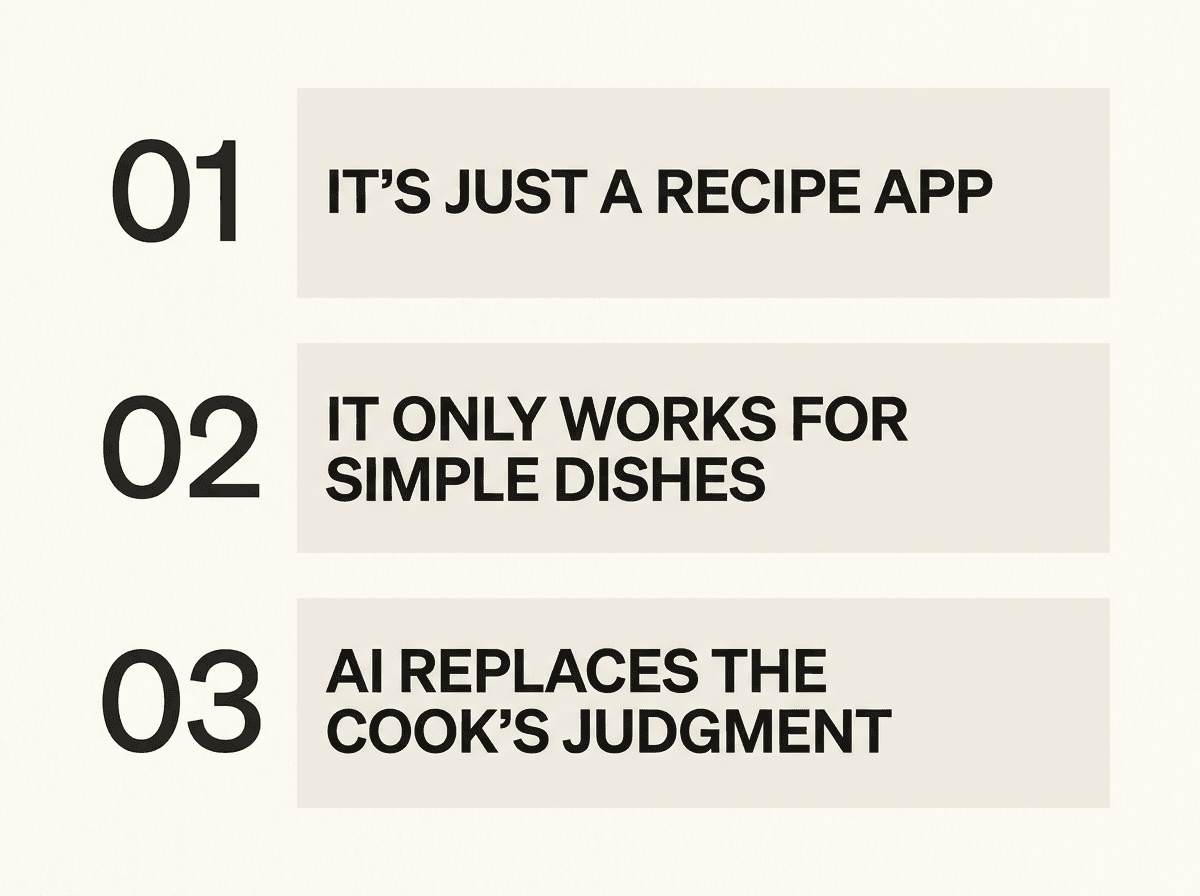
Three things people consistently get wrong about AI cooking technology:
"It is just a recipe app on a screen." A recipe app tells you what to do next. The Posha cooking system looks at what is happening and adjusts the cooking process as the dish progresses. That gap - between reciting steps and responding to reality - is the whole point.
"It only works for simple dishes." The Posha cooking system was built for layered cooking, especially South Asian recipes where sequencing is the technique. Multi-stage dishes - tadka, sautéing, simmering - are where sensor-driven cooking earns its keep.
"AI replaces the cook's judgment." It reduces the need for constant monitoring during supported recipes, while you still choose the recipe, ingredients, and what your family eats. You still pick the recipe, buy the ingredients, and decide what your family eats. The system takes over the constant monitoring that would otherwise pin you to the stove.
If you are weighing this against meal kits or delivery, the math starts to look different once freshness and cost are on the table. Compare meal delivery with automated home cooking and review the cost of food delivery versus cooking at home for a more detailed look at the financial trade-offs.
Key Takeaways
What AI actually changes about cooking dinner at home:
An AI cooking machine responds to live conditions in the pot instead of blindly executing a fixed timer.
Computer vision and sensor feedback allow Posha to track cooking stages rather than relying only on elapsed time.
The Posha cooking system moves step by step through a recipe based on what it sees and senses, not a preset schedule.
The potential mental-load benefit is measurable: in a Siemens-commissioned UK survey, 76% of respondents said AI technology reduced the mental effort involved in cooking.
The global AI-powered cooking-machine market was valued at USD 1.2 billion in 2024 and is projected to reach USD 4.5 billion by 2034, reflecting expectations for continued category growth.
AI-powered cooking does not replace the cook. It replaces the parts of cooking that keep you from being present for anything else.
Frequently Asked Questions
What is an AI cooking machine?
An AI cooking machine is a kitchen appliance that uses sensors, cameras, and learned cooking logic to monitor food in real time and adjust heat, timing, and stirring automatically. Unlike a programmable slow cooker or air fryer, it reacts to what is happening in the pot instead of following a fixed instruction.
How is the Posha cooking system different from a standard smart appliance?
Most smart appliances are programmable but not adaptive. The Posha cooking system uses computer vision and temperature sensors to track the cook continuously, moving through recipe steps only when the visual and thermal signals say the food is ready. It works like an AI cooking assistant that watches and responds, not a device that simply runs a preset program.
Does an AI cooking system require special ingredients or meal kits?
No. Posha uses fresh ingredients you buy yourself and does not require proprietary meal packs. The device includes a selection of recipes, while unlimited recipe access is available through the optional Posha Circle Membership.
Can I step away while Posha is cooking?
Posha is designed to automate supported recipes after the ingredients have been prepared and loaded, reducing the need to remain beside the appliance throughout every cooking stage. Always follow the current Posha User Guide, pre-cook checklist, and kitchen-safety instructions.
How does an AI kitchen appliance compare to meal delivery services on cost?
For households that frequently order delivery, automated home cooking may reduce ongoing meal costs over time. The overall comparison depends on ingredient choices, cooking frequency, device cost, and optional membership.