Rohin Malhotra
A cooking robot for home is a smart appliance that takes over the active parts of cooking: stirring, heat control, and stepping through a real recipe from start to finish. You still do the prep, but once the ingredients are in, you can walk away and come back to dinner.
Skepticism is warranted. Plenty of people already own an air fryer and a slow cooker, and neither one turned weeknights into a hands-off situation. So the question is simple: is a home cooking robot actually different, or is it just another countertop device that shines in one narrow lane? The answer comes down to what it can sense and control while the food is cooking, and what "cooking with love" really amounts to in practice.
What a Home Cooking Robot Actually Does
A home cooking robot is not a slow cooker with a prettier interface. It runs the stove the way a focused cook would: it tracks what is happening in the pot, adjusts heat as conditions change, stirs when it matters, and advances through steps without you hovering. Cooking automation can take many forms, but Posha is specifically designed to automate active cooking tasks such as ingredient dispensing, stirring, heat adjustment, and moving through supported recipe stages.
The Posha Robot Chef shows what autonomous cooking can look like at home. Its built-in camera and cooking intelligence monitor cooking stages while the system automatically adds ingredients, adjusts heat, and stirs as required by the selected recipe. Instead of relying only on fixed timers, Posha responds to changes taking place in the food throughout the cooking process.
Info: Posha calls this approach Culinary Artificial Intelligence. It combines visual sensing with recipe intelligence so the system can identify cooking stages and manage ingredient timing, heat, and stirring throughout supported recipes.
How It Handles a Real Multi-Step Meal
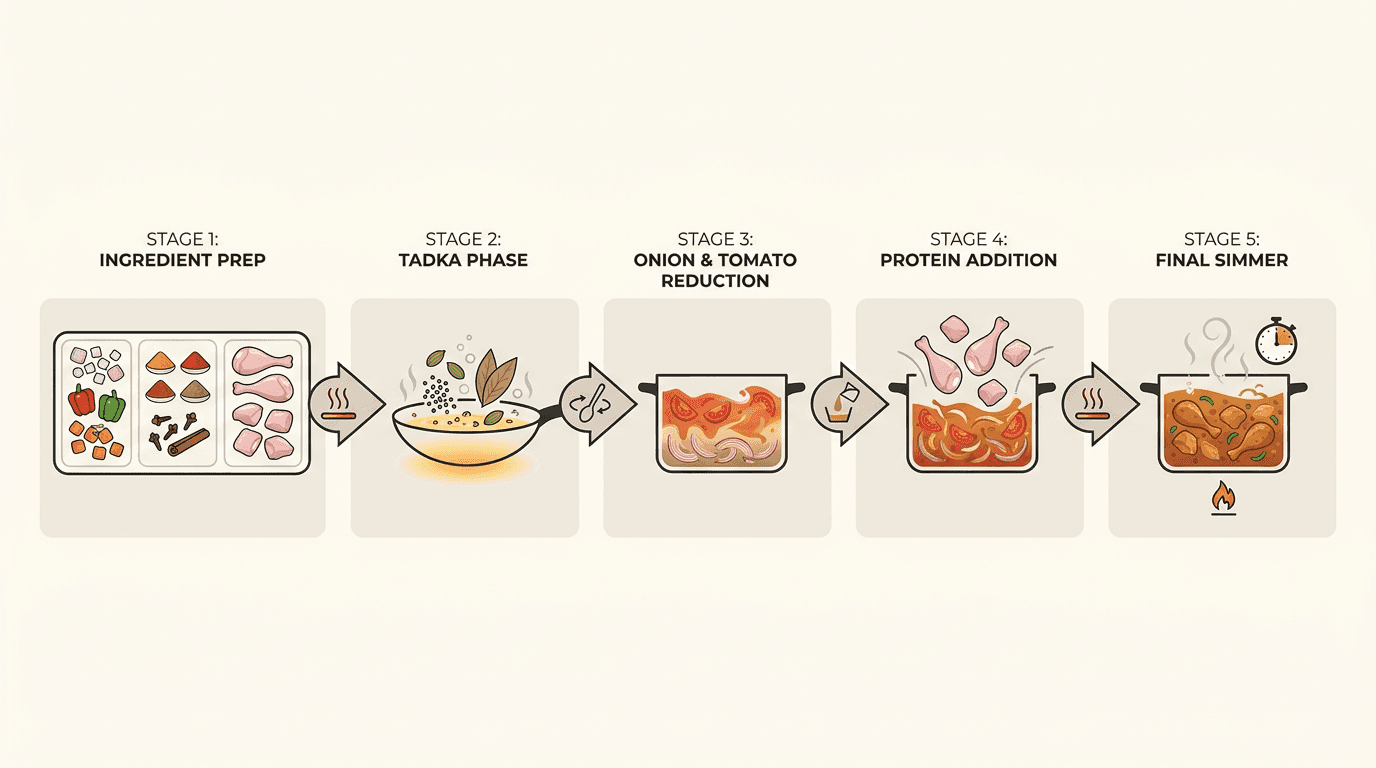
Picture preparing a weeknight chicken curry using a recipe from Posha's recipe library. You prepare the ingredients and load them into the designated compartments. Posha then manages the supported cooking sequence by dispensing ingredients at the appropriate stages, stirring the food, and adjusting the heat. While you finish a work call or help with homework, Posha handles the active cooking.
That reclaimed window is the point. This is not a hand-wavy promise about "saving time"; it is the practical reality that you do not have to remain beside the stove throughout a multi-step recipe managing heat and stirring. Posha is designed primarily for stovetop-style dishes such as curries, pastas, soups, and stir-fries: curries, stir-fries, pastas, soups. Posha is designed around multi-step stovetop cooking, including tasks such as ingredient dispensing, stirring, and heat adjustment.
Where It Fits Against Meal Kits and Delivery
If your current routine is a mix of takeout and meal kits, it is worth comparing the options realistically. Meal kits still require active cooking, while delivery expenses can accumulate over time. Posha's comparison of the cost of food delivery versus cooking at home explains the financial trade-offs in more detail. With a cooking robot for home use, you can choose your own fresh ingredients and prepare a home-cooked meal while reducing the time spent actively managing the stove.
Meal kits offer a useful comparison because they address the same problem: wanting a fresh dinner without adding more work to an already busy evening. Posha's guide to meal delivery services versus automated home cooking explains the differences in greater detail. Posha lets you use groceries selected for your household without depending on recurring meal-kit boxes, while automating much of the active stovetop cooking.
Three Things People Get Wrong About a Robot That Cooks Meals
The most common misconceptions, addressed directly:
"It only makes bland, simple food." That is backwards. The Posha cooking system was built for layered dishes where timing and heat shifts matter. A proper tadka, a slow-reduced korma, a dal that moves through different cooking stages: those are exactly the kinds of recipes it is meant to execute. Simple food is easy; nuance is the test.
"Setup is complicated." Prep is still on you, and that is the right division of labor. Chopping onions is not what breaks people on a Tuesday. Staying beside the stove throughout a multi-step recipe to manage heat and stirring while life happens is. The system steps in where the friction actually lives.
"You lose control over the food." You remain in control of the dish you select, the ingredients you use, and the meals you serve. After you choose from Posha's recipe library and prepare the required ingredients, Posha manages the recipe’s cooking stages while monitoring the food and adjusting supported cooking actions as it progresses without becoming distracted during time-sensitive stages.
Key Takeaways
What to carry forward when evaluating a cooking robot for home:
A home cooking robot automates active cooking: heat management, stirring, and step sequencing, not just a countdown timer.
The Posha cooking system reacts to the food in the pot instead of marching through a fixed schedule.
It is best for stovetop dishes: curries, pastas, soups, and stir-fries. It does not bake or grill.
The payoff is a period when you do not need to actively manage the stove during a multi-step meal, not a vague promise about "efficiency."
Compared with meal-kit boxes and prepared-food delivery, the Posha Robot Chef lets you cook with groceries selected for your household without depending on recurring meal deliveries.
Most worries about complexity and food quality fade once you look at what a top-tier home cooking robot can actually produce.
When evaluating a home cooking robot, look closely at the available meals, supported cooking functions, and the preparation required before cooking begins. Explore the Posha Robot Chef to see how the system fits into a home kitchen, or browse Posha's recipe library to review the range of available dishes.
Frequently Asked Questions
What is a cooking robot for home, exactly?
It is a smart appliance that takes over the active parts of stovetop cooking: adjusting heat, stirring, and moving through recipe steps. You handle prep; the system handles the cooking.
Can a home cooking robot handle complex, multi-step dishes?
Yes. The Posha Robot Chef is designed to prepare a broad selection of dishes that involve multiple cooking stages. Depending on the selected recipe, it can automatically dispense ingredients, stir the food, and adjust the heat. You can review the currently supported dishes in Posha's recipe library.
Is a cooking robot for home use worth it compared with meal kits?
It can be worthwhile for households that cook frequently, prefer using their own fresh ingredients, and want to reduce active stove time. Meal kits still require you to complete the cooking, while Posha automates supported tasks such as ingredient dispensing, stirring, and heat control. For a more detailed comparison, see pre-made meals versus fresh home-cooked meals.
What should you check before buying a home cooking robot?
Review the appliance's supported recipes, ingredient-preparation requirements, cooking capacity, and available features before making a decision. Posha is designed to automate supported recipes through ingredient dispensing, stirring, and heat control, but its suitability will depend on the dishes your household regularly prepares. Check Posha's current recipe library to confirm that it covers the meals you want to cook.
How is Posha different from basic timed cooking appliances?
Basic timed appliances generally operate according to preset temperatures and schedules. The Posha Robot Chef uses a built-in camera and Culinary Artificial Intelligence to identify cooking stages and manage supported tasks such as ingredient dispensing, stirring, and heat adjustment. Once the required ingredients have been prepared and loaded, you can step away while Posha manages the active cooking process.