Rohin Malhotra
"Self-cooking pot" has turned into a catch-all for anything in the kitchen that moves without your hands on it. In practice, that label spans a $30 spinner that turns a paddle and a full cooking system that can track ingredients, adjust heat, and carry a recipe from step one to done. If you are debating an upgrade, that difference is the whole point, even when product pages blur it.
Here is the cleaner way to compare them: what the device actually controls, how much work stays on you, the level of recipe complexity it can handle, and what using it feels like after the novelty wears off. Those four criteria tend to reveal where a product is genuinely helpful and where it is just a small convenience.
What a Self-Cooking Pot Actually Does
A self-stirring pot automates one action - the spinning - while heat and timing remain manual.
A self-stirring pot (often sold as an "automatic cooking pot") is basically a single upgrade: it moves the food so you do not have to. A motorized paddle or magnetic drive keeps the contents circulating, which is handy for anything that demands constant attention. Some models tack on a simple thermostat that tries to hold a set temperature, but that is where the automation ends. You still choose when ingredients go in, when heat changes, and when the whole thing is finished. The pot does not care if it is risotto or oatmeal; it just spins.
The broader "self-cooking machine" category also includes multi-cookers and guided cooker-blenders. These appliances may pressure cook, steam, chop, mix, or maintain a programmed temperature. They automate more functions than a self-stirring pot, but users commonly remain involved in following prompts, adding ingredients, changing modes, or checking texture as the recipe progresses.
Note: The central distinction is not simply how many functions an appliance offers. It is whether the appliance automates isolated actions or manages the heat, timing, stirring, and ingredient sequence of a supported dish from one stage to the next. A full meal with multiple components still requires you to coordinate timing across the whole kitchen.
What a Full Cooking System Does Differently
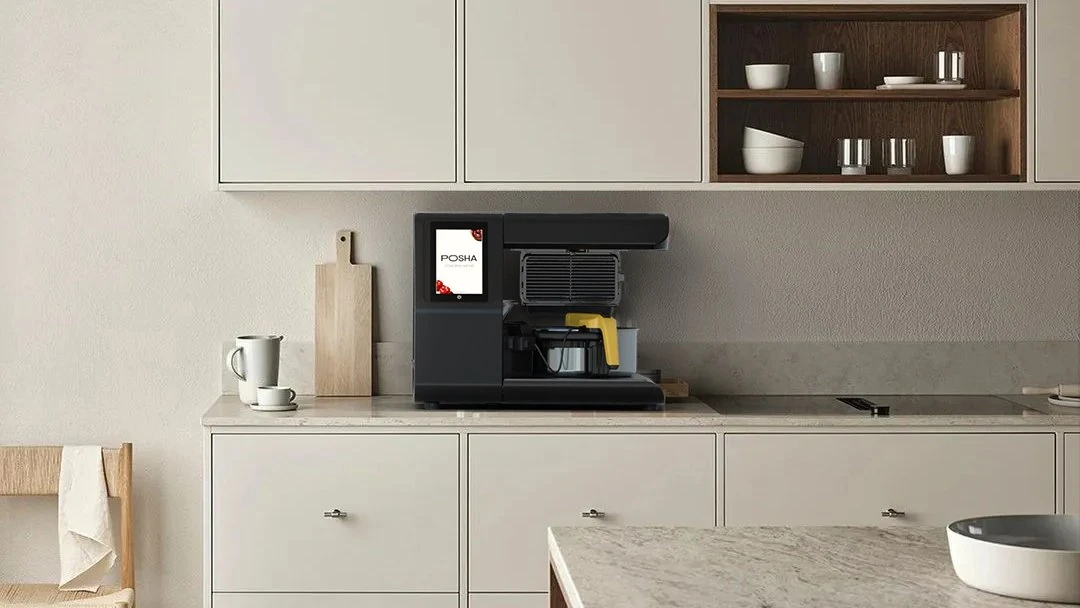
The Posha cooking system sits in a different lane. It is an autonomous countertop cooking system with an integrated pan, camera, and sensors, robotic stirring, ingredient dispensing, and automatic heat control. The job is not just stirring; it is managing the moment-to-moment decisions that usually keep you tethered to the stove. It can track cooking signals such as color, texture, ingredient state, and boiling progress, then adjust heat, stirring, and timing as a supported recipe progresses. You prep and load ingredients in the order the recipe calls for, then Posha runs the sequence.
That ingredient-by-ingredient, multi-step flow is what gets lost in the usual "self-cooking pot vs robot" debate, where wildly different devices get lumped together. Posha is not a robot arm, and it is not a novelty lid. It is a cooking system built around how heat, timing, and layering create flavor.
The Culinary AI page lays out how the system reads each stage and responds in real time, which is a different proposition than a preset timer or a fixed temperature hold.
A normal Tuesday with Posha looks like this: you prep ingredients, load them in sequence, start the session, and step away. While you help with homework or finish a work call, Posha monitors the cooking stage and adjusts heat and timing for the supported recipe. The dal continues cooking, and its flavors have time to develop without requiring you to remain beside the stove. That reclaimed cooking time is the real selling point, not a vague promise to "save time." Explore our automated cooking recipes to get a concrete sense of what the system can run end to end.
Head-to-Head: Self-Cooking Pot vs. Full Cooking System
Criteria | Self-Stirring Pot | All-in-One Blender-Cooker (e.g., Thermomix) | Posha Cooking System |
|---|---|---|---|
What it automates | Stirring, and little else | Chopping, mixing, temperature control, guided steps | Full multi-step cooking: heat, timing, ingredient sequencing |
Your active role | High: you manage heat and timing | Medium: you follow prompts and intervene | Low after prep: load the prompted ingredients, start the supported recipe, and step away while Posha manages cooking |
Recipe complexity | Straightforward one-pot staples | Soups, sauces, doughs | Supported multi-step, one-pan dishes, including recipes with layered spice and tadka stages |
Hands-off window | A few minutes at a time | Varies by recipe and step; some stages may still require user input | For supported recipes, after preparation and loading |
Footprint | Small (often a lid attachment) | Large countertop appliance | Countertop unit with an integrated pan |
Typical price range | $30 - $80 | $500 - $1,500+ | $1,500 limited-time price; optional Circle Membership provides unlimited access to the full recipe library, while owners without membership retain access to Co-Pilot mode and Essential recipes |
Who Each Option Actually Serves
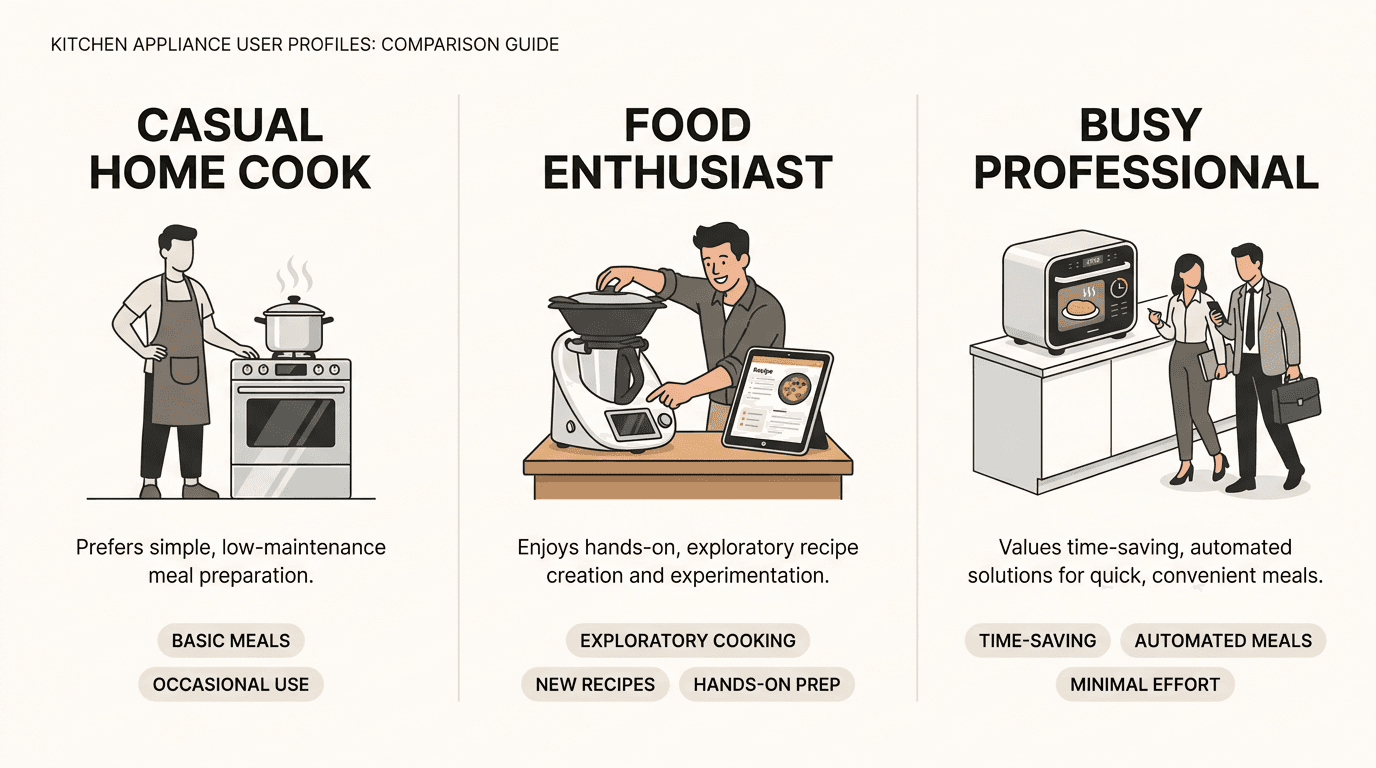
From basic self cooking pot to full system - each device suits a different kind of household.
Some multi-cookers automate pressure cooking, steaming, or preset temperature programs. Guided cooker-blenders may also chop, mix, and walk users through recipe steps. Posha goes further for supported recipes by monitoring cooking stages, dispensing ingredients at the appropriate time, stirring, and adjusting heat as the dish develops.
Posha is aimed at households that want real, home-cooked weeknight food without reorganizing the evening around cooking. If you have already looked at meal delivery services vs. automated home cooking and decided you would rather cook from fresh ingredients, Posha is built for that middle ground. Before assuming a cooking system is automatically the pricier choice.
The automatic cooking machine market is projected to grow from USD 4.8 billion in 2025 to USD 9.2 billion by 2033, reflecting increasing demand for appliances that make everyday cooking more convenient. But growth has also made "self-cooking" a broad and sometimes confusing label. Before choosing a device, it helps to distinguish between a gadget that automates one task and a full cooking system that manages multiple stages of a recipe.
Frequently Asked Questions
What is a self-cooking pot?
A self-cooking pot is a pot with a motorized stirring mechanism, sometimes paired with basic temperature control. It keeps food moving so you are not stirring constantly, but heat, timing, and ingredient additions are still on you.
How is a self-cooking machine different from a full cooking system like Posha?
Many self-cooking machines automate one or more specific cooking functions rather than managing the full sequence of a recipe: blending, stirring, chopping, or holding a temperature. The Posha cooking system is built to run the full recipe sequence, sensing each stage, adjusting heat, and moving from step to step without you camping in the kitchen.
Is a self-stirring pot worth buying?
If your rotation is soups, oatmeal, or sauces where stirring is the main annoyance, a self-stirring pot can be a cheap, low-footprint fix. It does not take over heat or timing, so it works best when you are already comfortable cooking and just want one task off your plate.
How does the self-cooking pot vs. robot comparison usually go wrong?
"Cooking robot" gets slapped on everything from a $40 stirring lid to a full cooking system, which makes the comparison meaningless. The real question is whether the device automates a single action or manages the full cooking sequence. Most self-cooking pots do the former; the Posha cooking system does the latter.
Can an automatic cooking pot handle Indian recipes with tadka?
A basic automatic pot can stir continuously, but it generally does not identify and manage each tadka stage on its own. For supported recipes, Posha coordinates ingredient additions, stirring, heat adjustments, and timing as part of the full cooking sequence.