Rohin Malhotra
Cooking lentils well really boils down to one habit: pick the lentil that matches the job. Split red masoor dal is supposed to melt into something silky; French green lentils are supposed to stay proudly intact in a salad. Treat them like they are interchangeable, and you will end up with either a pot of mush or a bowl of little pebbles.
Lentils are dried, lens-shaped pulses that cook quickly (at least compared to most other legumes) and bring real nutrition to the table: one cup of cooked lentils delivers about 18 grams of protein and 16 grams of fiber.
If you want to understand why lentils matter, start with the place that treats them as daily food, not a special project. India is one of the world's largest consumers of lentils (ICARDA, 2022), and dal can refer both to dried split or whole pulses and to the many Indian dishes prepared from them, including lentils, mung beans, pigeon peas, and chickpeas, which are the heartbeat of everyday Indian cooking.
We'll start there: toor dal and masoor dal simmering quietly, a tadka crackling in a small pan. Then we'll zoom out to grain bowls, hearty soups, and the kind of lentil salads that feel a little dressed up without being fussy. The goal is simple: know which lentil to grab, whether it needs a soak, how long it should cook, and how to finish it so the flavor actually shows up.
Cooking lentils is simple, but the timing can be fussy: split lentils need a gentle simmer, whole lentils need texture control, and dal needs a tadka that can go from fragrant to burnt in seconds. That is exactly where the Posha cooking system can help, by managing heat, stirring, and recipe steps while you focus on prep.
The Lentil Lexicon: Understanding Types of Lentils
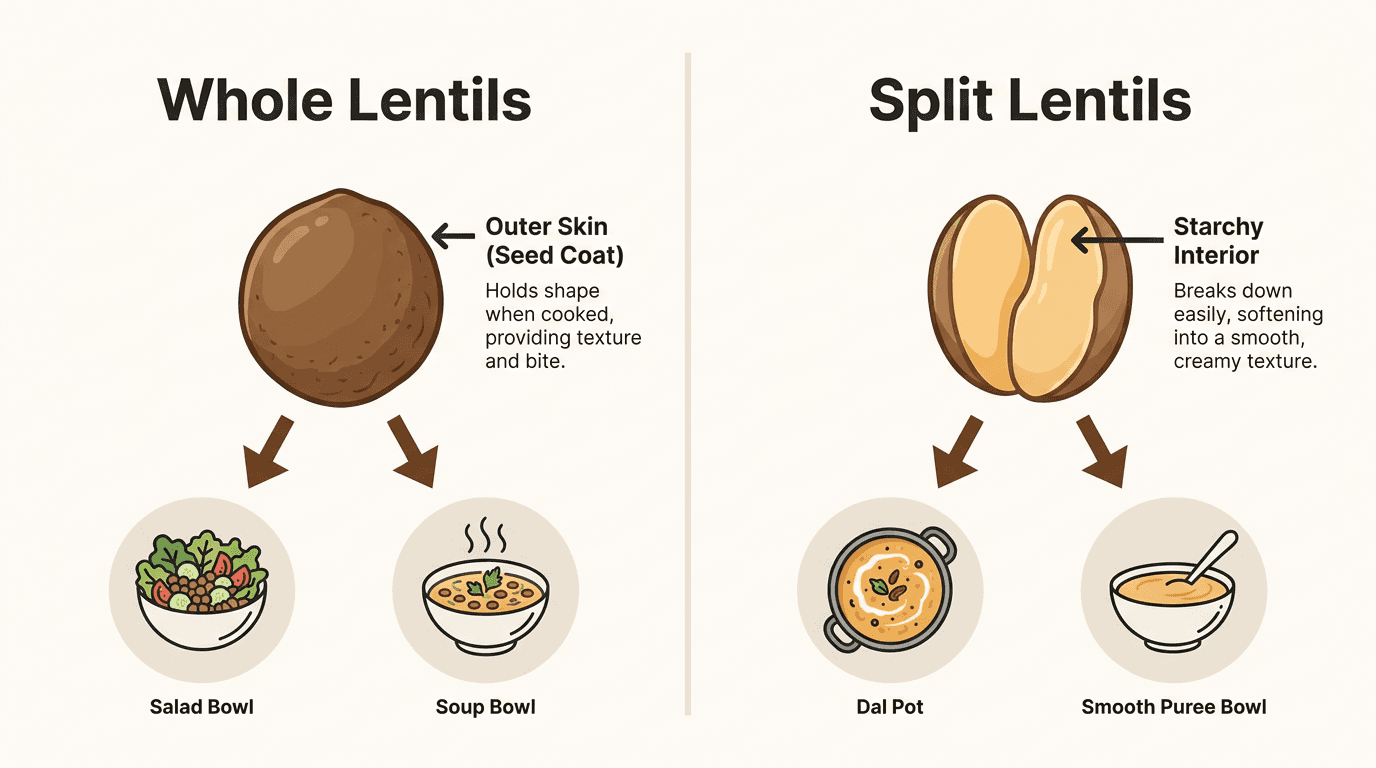
The most reliable way to mess up lentils is to assume they all cook the same. They don't. Most of what you need to predict texture comes down to one big divide in your pantry: whole versus split.
Whole lentils still wear their skins. That thin layer acts like a little jacket, keeping the starchy center from spilling out as they simmer. Brown, green, French green, and black beluga lentils all fall into this camp, and they tend to hold their shape with a pleasantly firm bite. Split lentils have been hulled and split, which means water hits the starch immediately.
They soften fast and happily turn creamy, which is exactly what you want for dal. The Lentils are a source of protein, fiber, folate, iron, potassium, and manganese, so the decision is mostly about where you want the lentils to end up: distinct on the plate, or spoonably smooth.
Red and Yellow Lentils: The Quick-Cooking Stars of Dal
If you've ever asked how to cook red lentils, the honest answer is that they do most of the work for you. Masoor dal (split red lentils) and yellow moong dal (split mung beans) cook relatively quickly and soften into a creamy texture. And collapse into a velvety puree with very little persuasion. That "falling apart" quality isn't a mistake; it's the feature. These are weeknight lentils, the ones that make a pot of dal feel as ordinary as boiling pasta.
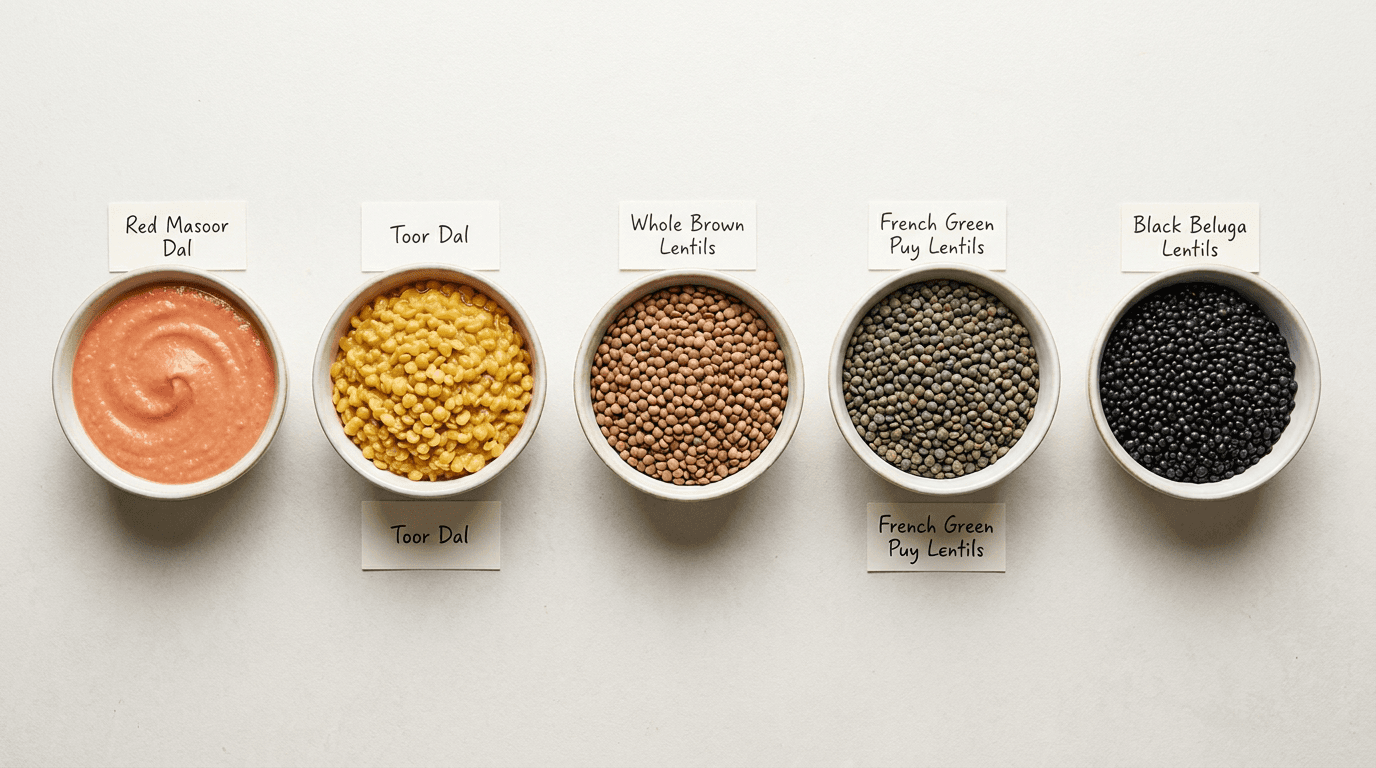
Toor dal (split pigeon peas, also called arhar dal) lands in the same general neighborhood, but it needs more time, usually 25 to 40 minutes on the stovetop (faster in a pressure cooker). It's nuttier and a touch earthier than masoor dal, and it shows up in classics like South Indian sambar and comforting Gujarati-style dal. Chana dal (split Bengal gram) is a split pulse that still keeps some structure when cooked. Even when it's fully cooked, it keeps a bit of bite, which is why it works so well in dal fry or as a paratha stuffing.
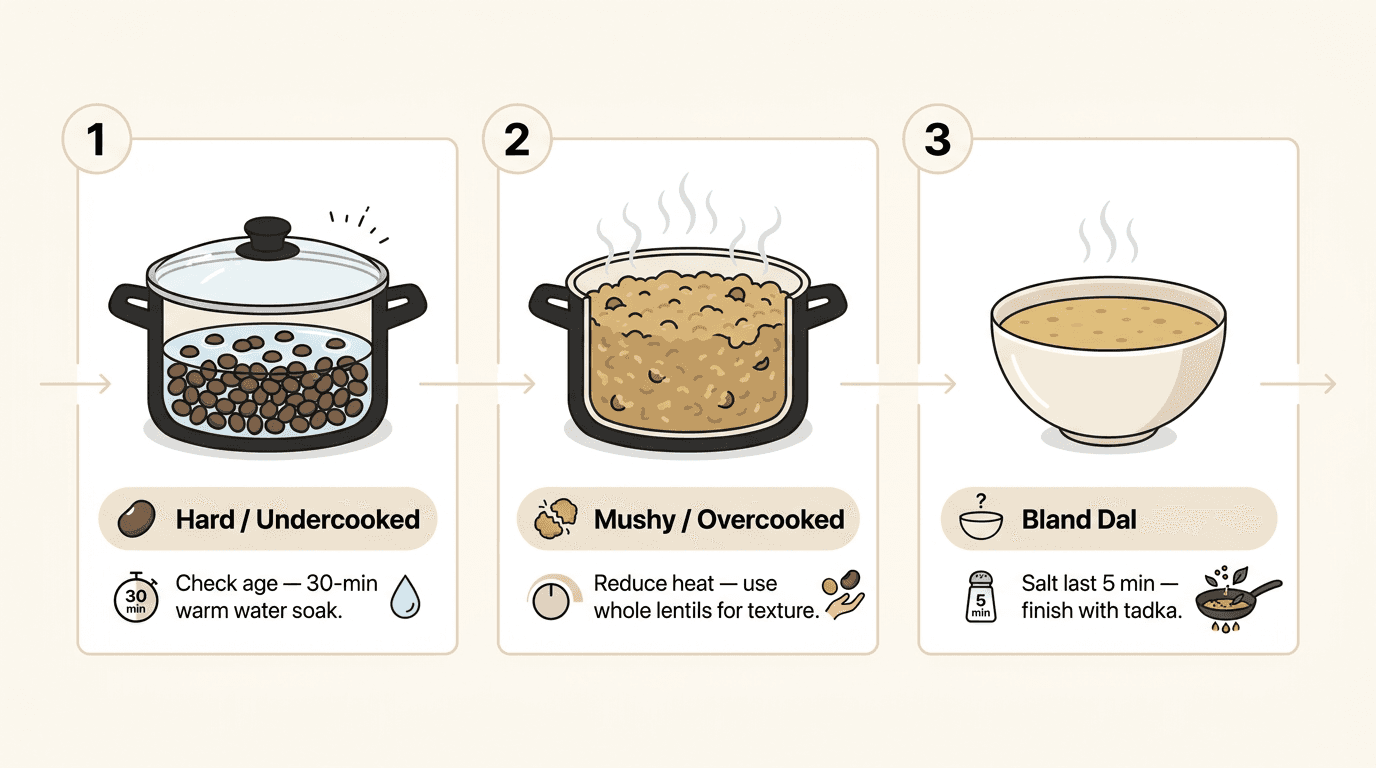
People often ask whether lentils need soaking. For these quick-cooking split varieties, soaking is usually more trouble than it's worth. A quick 15-minute rinse-and-soak can shave off a little time, but it also pushes them toward dissolving before you can steer the texture. With masoor dal or moong dal, skip it. Rinse until the water runs clear and go straight to the pot.
Brown and Green Lentils: The Sturdy All-Rounders
Cooking green lentils (and the brown ones that behave similarly) is mostly about not getting impatient. These whole lentils have an earthy, peppery edge and a firm texture that makes sense in grain bowls, chunky soups, and warm salads. What they don't like is a violent boil. Keep the heat gentle, and you'll get an even, tender bite; blast them and the skins split at random, leaving you with a mix of intact lentils and starchy debris.
Bring the pot to a boil, then pull it back immediately to a low simmer. Green and brown lentils generally take about 20 to 30 minutes to cook. You're aiming for tender without collapse, typically 25 to 35 minutes depending on how old the lentils are. Lentils that have been sitting around for more than a year tend to take longer, and sometimes they never soften the way you expect, which ties directly into one of the common myths we'll get to later.
French Green and Black Beluga Lentils: The Firm, Shape-Holding Lentils
French green lentils (lentilles du Puy) and black beluga lentils are the small, firm overachievers. They keep their shape beautifully, taste rich and peppery, and look great without you doing anything fancy. Use them under seared fish, toss them warm with a mustardy vinaigrette for a French-style salad, or stir them into a brothy soup where you want each lentil to stay distinct. They usually take 25 to 30 minutes. If you're dressing them warm, pull them off the heat just a hair early; they'll keep drinking up liquid as they cool.
Lentil Cheat Sheet: Cooking Times, Textures, and Best Uses
Lentil Type | Appearance (Dry) | Texture When Cooked | Cooking Time (Stovetop) | Best For |
|---|---|---|---|---|
Red / Masoor Dal (split) | Small, salmon-pink, flat | Melts into a smooth puree | 10 to 15 minutes | Dal, creamy soups, thickening stews |
Toor Dal (split pigeon peas) | Yellow, oily sheen, slightly larger | Creamy with a bit of body | 25 to 40 minutes | South Indian dal, sambar, rasam |
Brown / Green (whole) | Olive to dark brown, disc-shaped | Holds together with a tender bite | 25 to 35 minutes | Grain bowls, chunky soups, stews |
French Green (Puy) | Small, mottled dark green | Very firm, peppery | 25 to 30 minutes | Salads, side dishes, elegant plating |
Black Beluga (whole) | Tiny, glossy black | Firm, caviar-like pop | 25 to 30 minutes | Salads, garnishes, bed for proteins |
Lentil Type | Appearance (Dry) | Texture When Cooked | Cooking Time (Stovetop) | Best For |
|---|---|---|---|---|
Red / Masoor Dal (split) | Small, salmon-pink, flat | Melts into a smooth puree | 10 to 15 minutes | Dal, creamy soups, thickening stews |
Toor Dal (split pigeon peas) | Yellow, oily sheen, slightly larger | Creamy with a bit of body | 20 to 25 minutes | South Indian dal, sambar, rasam |
Brown / Green (whole) | Olive to dark brown, disc-shaped | Holds together with a tender bite | 25 to 35 minutes | Grain bowls, chunky soups, stews |
French Green (Puy) | Small, mottled dark green | Very firm, peppery | 25 to 30 minutes | Salads, side dishes, elegant plating |
Black Beluga (whole) | Tiny, glossy black | Firm, caviar-like pop | 25 to 30 minutes | Salads, garnishes, bed for proteins |
The Soul of the Matter: How to Cook Dal
Dal isn't a single recipe you memorize once. It's a two-part move you can repeat a hundred different ways. First you cook the lentils until they're soft and yielding. Then you finish with tadka: spices and aromatics bloomed in hot fat and poured over the pot, so the whole thing suddenly smells like dinner. The exact lineup changes from region to region and kitchen to kitchen, but the basic structure stays put.
Start with the lentils. Rinse your split pulses such as masoor dal, toor dal, and moong dal, until the water runs mostly clear. Add them to a pot with roughly 3 cups of water per 1 cup of lentils, plus a pinch of turmeric. Bring it to a boil, skim off any foam, then drop the heat to a steady simmer and stir now and then. Masoor dal may soften in about 10 to 15 minutes, while toor dal generally needs longer.
Start checking toor dal after about 25 minutes and continue cooking until it mashes easily. You're looking for lentils that mash easily against the side of the pot with the back of a spoon. For a stovetop pressure cooker, follow the cooker's guidance and the specific pulse recipe, since timing varies by cooker, pulse type, soaking, and quantity.
Mastering the Tadka: The Science of Sizzle
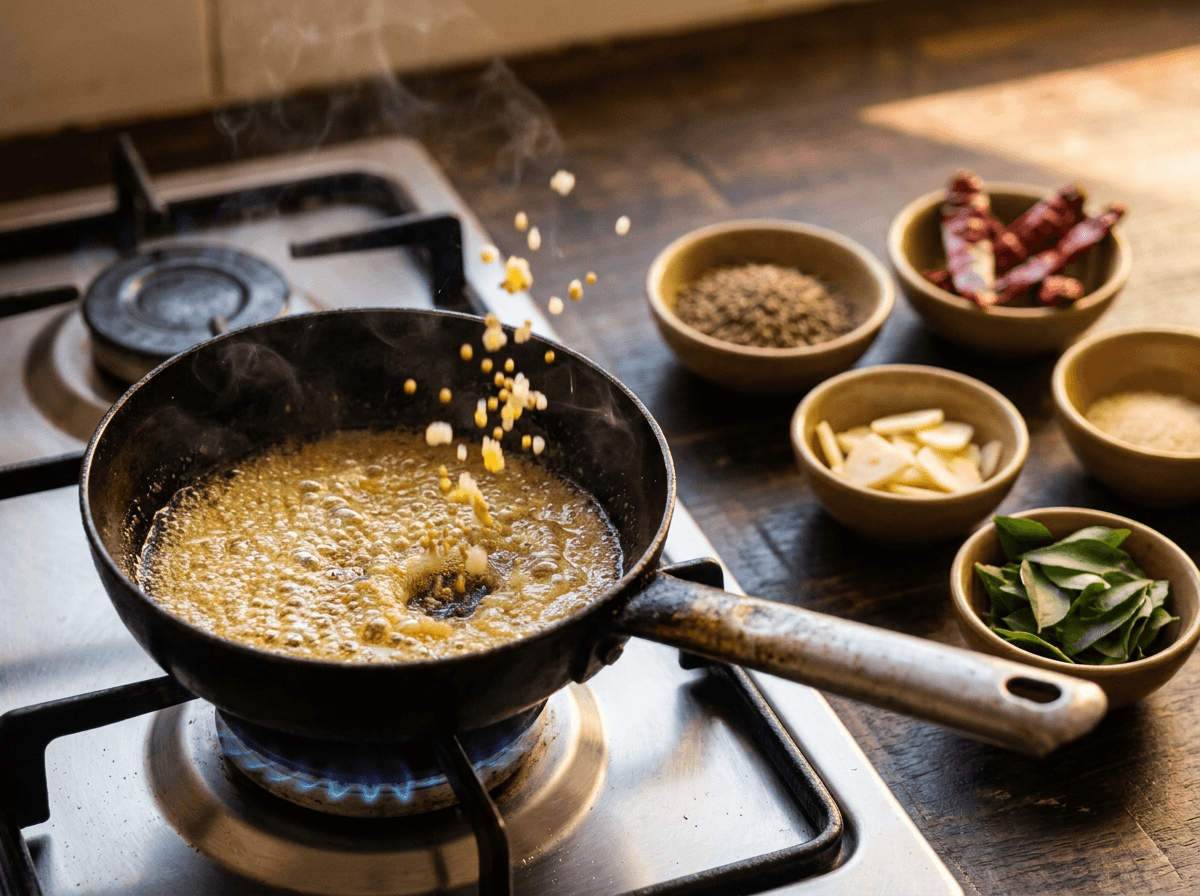
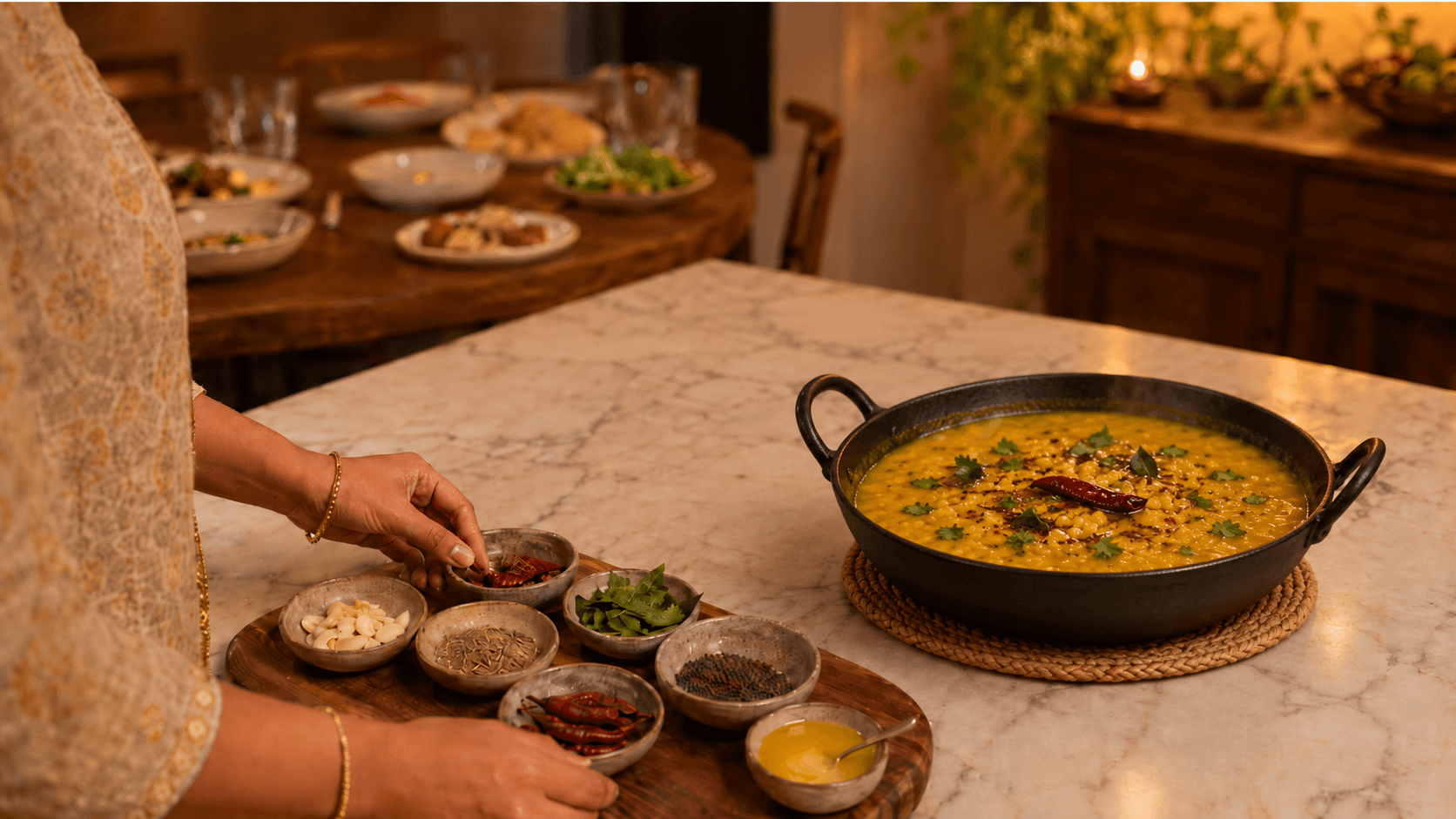
In many dal recipes, tadka is a finishing step that adds another layer of aroma and flavor. Heat a tablespoon of ghee or oil in a small pan until it shimmers. Whole spices go in first: mustard seeds, cumin seeds. Wait for the mustard to pop and the cumin to deepen a shade, about 20 seconds. Next come the aromatics: thin slices of garlic, a coin of ginger, a dried red chili or two, and a few curry leaves if you have them.
Aim for garlic that's golden, not brown. Ground spices are last (a pinch of asafoetida, a half teaspoon of red chili powder), and they only need three to five seconds before you pour the whole sizzling mixture over the cooked lentils. That loud hiss isn't just drama. It's hot fat carrying flavor straight into the pot.
This is also where dal can go sideways in a hurry. Garlic burns fast. Ground spices turn bitter if the oil is screaming hot. The line between "bloomed" and "scorched" is thin, and you can't really multitask through it. This is where the Posha cooking system earns its keep. For supported recipes, Posha can manage heat changes, ingredient timing, and stirring through stages such as tadka, using visual and sensor feedback as cooking progresses. It moves in lockstep with the steps, so even if you get pulled away for a minute, the spices still land where they're supposed to.
Tip: Tadka timing rule of thumb: Whole spices go in first (they need sustained heat to release oils), aromatics second (they need moderate heat), and ground spices last (they need only a flash of heat). Reversing this order is the fastest way to a bitter, burnt-tasting dal.
Beyond Dal: Lentils in Bowls, Soups, and Salads
Once you get comfortable matching lentils to the texture you want, they stop being "dal only" and start being a weeknight workhorse. The same bag that covers Tuesday's toor dal can carry a Mediterranean-ish grain bowl on Thursday and a French lentil soup on Sunday.
Lentil Bowls
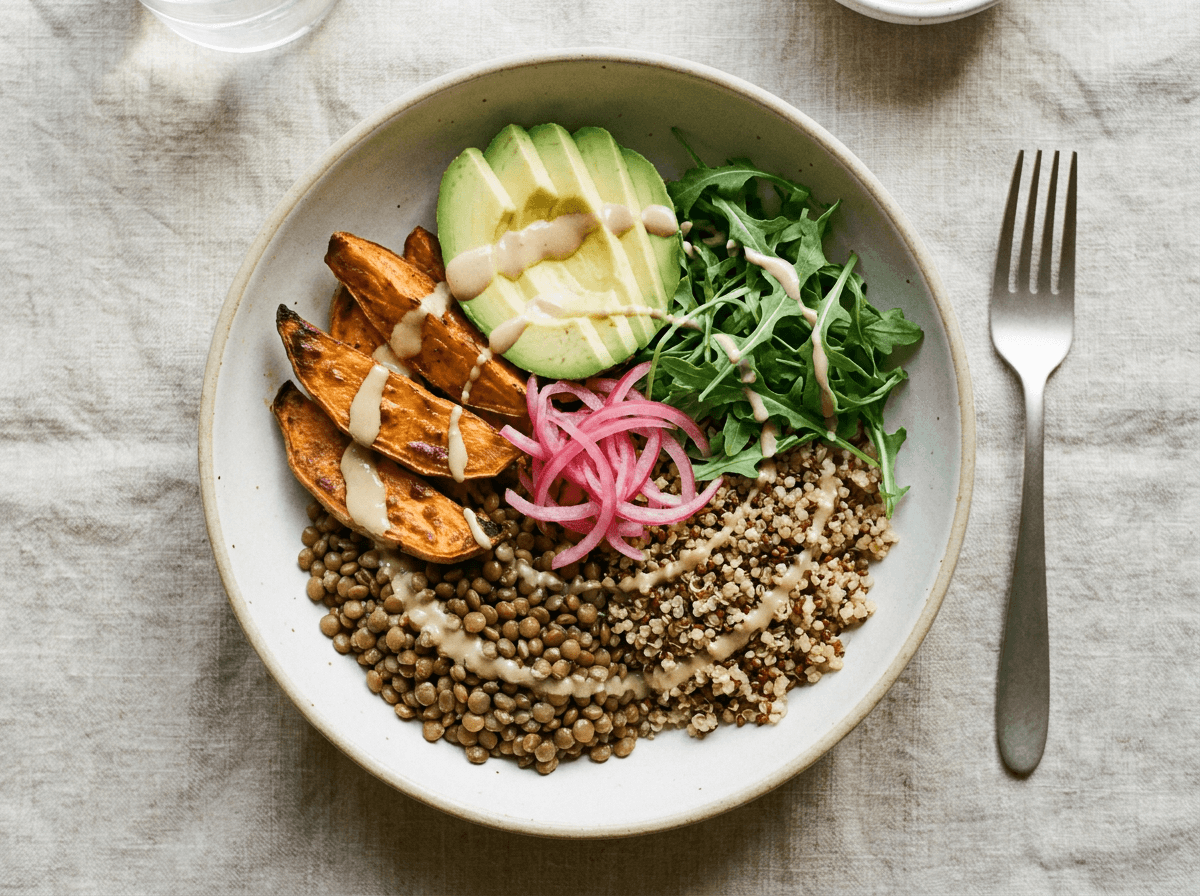
For bowls, stick with brown or green lentils. Cook them until just tender (about 25 minutes), drain off any extra water, then toss them with a bright vinaigrette while they're still warm. Warm lentils soak up dressing; cold lentils mostly wear it. From there, build like you would any good bowl: roasted vegetables, a grain like quinoa or basmati rice, a handful of greens, and something creamy (tahini, yogurt, or a soft egg). Lentils are one of the easiest high-protein meals you can put together without touching meat, and this kind of bowl is comfortably a 30-minute dinner.
Lentil Soups
Pick the lentil, and you're basically picking the soup. If you want something thick and creamy (Turkish red lentil soup, spiced coconut lentil soup), reach for red or yellow lentils. They'll dissolve into the broth as they cook, thickening it without cream or a blender. If you want a rustic, brothy pot with distinct lentils (say, an Italian lentil and sausage soup), go with French green or brown lentils and keep them at a gentle simmer with your aromatics. Strongly acidic ingredients can be added after the lentils have softened, since acid can slow down softening.
Common Misconceptions About Cooking Lentils
"All lentils need to be soaked overnight." That's beans. Lentils are usually done in under 30 minutes with no soak at all, and split varieties like masoor dal and moong dal are even faster. Soaking can actually backfire by pushing split lentils to disintegrate before you've seasoned the pot the way you want. The one exception is age: if your whole lentils are very old (over a year in the pantry), a 30-minute soak in warm water can help them cook more evenly.
"Lentils are lentils. Just pick whatever is cheapest." The cheat sheet makes the problem obvious: a red split lentil and a French green lentil are as different as short-grain and long-grain rice. Swap one for the other, and you change the dish, not just the shopping list. Green lentils won't give you the creamy body that defines a good dal, and red lentils will never behave in a salad.
"Salt toughens lentils, so never add it during cooking." Salt does not need to be avoided while lentils cook. You can season the cooking water from the beginning or adjust the salt toward the end based on the recipe and your taste. You get tender lentils and seasoning that actually tastes integrated, not a salty surface on an under-seasoned center.
From Stovetop Juggling to Sitting Down: Cooking Lentils with Posha
The tricky part of lentils, especially dal, isn't that they're complicated. It's that they ask for the exact kind of attention a normal evening can't spare. Lentils want steady, low heat for 15 to 25 minutes, and they'll boil over the second you step away. Tadka needs close attention because spices and aromatics can move from fragrant to scorched quickly. Meanwhile, you're also trying to get rice going, set the table, and deal with an email that should have waited.
Posha's self-cooking stove changes what that night feels like. You add rinsed toor dal and water, and Posha brings it up to a simmer and holds it there, helping maintain the heat and stirring specified by the supported recipe as the pulses cook.
While the supported recipe progresses, Posha manages heat, stirring, and timing while you prepare the remaining ingredients. Measure cumin, slice garlic, pull curry leaves from the stem. As the recipe progresses, Posha uses visual and sensor feedback to adjust heat, stirring, and timing. For supported recipes, Posha can manage temperature, ingredient timing, and stirring through the tadka stages.
What you get isn't a new kind of dal. It's the same dal, with the same familiar aroma filling the kitchen. The difference is where you are when it's ready: at the table, not pinned between two pans with one eye on the stove. That's the promise here: precision that buys you a little presence. Check out the Posha recipe collection for a growing library of dal recipes designed for exactly this kind of weeknight cooking.
Key Takeaways
Start by choosing the right lentil: split lentils (masoor dal, toor dal, moong dal) break down into creamy dal and pureed soups; whole lentils (brown, green, French green, black beluga) stay intact for bowls and salads.
Most lentils don't need soaking. Rinse split lentils until the water runs clear and cook them right away. Save soaking for very old whole lentils that stay stubbornly firm.
Cooking time runs from about 10 minutes (red split) to 35 minutes (brown/green whole). Keep the heat at a gentle simmer, not a hard boil, if you want predictable texture.
Tadka adds a concentrated layer of aroma and flavor to many dal recipes. Bloom whole spices first, then aromatics, then ground spices, and pour the sizzling mixture over the cooked lentils.
Salt can be added during cooking. Strongly acidic ingredients such as lemon juice or vinegar are often added after the lentils are tender because acidity can slow softening.
A system like the Posha self-cooking stove can handle the steady simmer and the tight temperature control tadka needs, so you can focus on finishing and actually sit down to eat.
Frequently Asked Questions
Do you need to soak lentils before cooking?
Usually, no. Split pulses commonly used for dal, including masoor dal, toor dal, and moong dal, generally do not require soaking. Soaking may shorten cooking time, but it can also make softer varieties break down more quickly. Rinse until the water runs clear and start cooking. Whole lentils (brown, green, French green) also cook fine without soaking, though a 30-minute warm-water soak can help if the lentils are older than a year and staying firm.
Why are my lentils still hard after cooking for a long time?
Several things can keep pulses firm: they may be old, strongly acidic ingredients may have been added before they softened, or very hard water may be affecting cooking. Try a fresher batch of pulses and, if your water is very hard, consider using filtered water. If the recipe contains strongly acidic ingredients, adding them after the pulses have softened can also help.
Can I use green lentils for dal?
You can, but it won't taste like classic dal. Green lentils hold their shape, so you won't get that smooth, creamy consistency most dal recipes are built around. If you're after a chunkier, stew-like pot, green lentils can work. For the usual spoonable texture, stick with split red (masoor dal), yellow (moong dal), or toor dal.
How much water do I use for 1 cup of lentils?
A solid starting point is 3 cups of water to 1 cup of split lentils for dal, since you want extra liquid for a soupy consistency. For whole lentils meant for bowls or salads, use about 2.5 cups of water to 1 cup of lentils, then drain off any excess. You can always add water as you go; you can't un-water a pot once it's gone too far.
What's the difference between masoor dal and toor dal?
Masoor dal is split red lentils. It cooks quickly (10 to 15 minutes), turns a soft golden color, and makes a smooth, lighter-bodied dal. Toor dal is split pigeon peas. On the stovetop, it generally takes about 25 to 40 minutes, depending on the age of the pulse, heat level, and whether it was soaked; it tastes nuttier and earthier and gives you a thicker, more robust pot. Toor dal is a base for South Indian sambar and many Gujarati dals, while masoor dal is popular across North India for its speed and mild flavor.