Rohin Malhotra
Easy Indian dinners at home are weeknight-friendly meals - like dal, sabzi, chana, and vegetable pulao - that are designed for practical weeknight cooking times, with minimal hands-on work and advance preparation where needed. The trick isn’t shortcut ingredients; it’s smarter sequencing, fewer pans, and recipes designed for actual weeknight kitchens, not weekend cooking marathons. The dishes that follow lean North Indian by default, with South Indian swaps noted where they work, and most fit into a 45-minute cooking window, with advance soaking or marination needed for certain dishes.
Why “easy Indian dinner” usually isn’t
Open any Indian cookbook and the first sentence of half the recipes is a quiet betrayal: “First, bloom your whole spices in oil until aromatic.” Then come three more steps before the actual ingredients show up. Onions till golden. Ginger-garlic till the raw smell goes. Tomatoes till the oil splits. Then dry spices. Then the dal, or the chana, or the chicken. Each layer needs a different heat. Each layer needs attention. Each layer is the reason your mother’s dal tastes like her dal and your first attempt tasted like beige water.
This is the multi-step problem in its concentrated form. Indian cooking earns its depth from sequencing, not shortcuts. The flavor is built in layers - bottom to top, slow then fast, dry then wet - and skipping a layer doesn’t just save you ten minutes, it removes a flavor your finished dish was supposed to have.
That's where many quick Indian dinner recipes fall short. Some save time by combining steps that would normally build flavor in layers. The result may be convenient, but it doesn't always deliver the depth or texture you expect from the original dish.
This list doesn’t do that. It picks 12 dishes designed for weeknight cooking, most ready in under 45 minutes, with advance steps clearly noted where necessary. Their structure makes them practical without stripping away the cooking stages that build flavor.
The 12 weeknight dishes at a glance
Each one of these is real Indian food. Not “Indian-adjacent,” not “sheet-pan curry.” Real. With genuine tadka, genuine spice blooming, genuine layered cooking. The difference is they were chosen because they get to the same depth faster than the dishes they’re cousins of.
DISHES | PREP | COOK | DIFFICULTY |
1. Dal tadka | 5 min | 22 min | Easy |
2. Aloo gobi | 8 min | 20 min | Easy |
3. Chana masala (canned) | 5 min | 25 min | Easy |
4. Jeera rice | 20 min soaking + 3 min active prep | 18 min | Easy |
5. Bhindi masala | 6 min | 22 min | Easy |
6. Egg curry | 5 min | 22 min | Easy |
7. Palak paneer (express) | 8 min | 28 min | Medium |
8. Rajma (soaked beans) | 5 min active prep + advance soaking | 35 min | Medium |
9. Tomato rasam | 5 min | 20 min | Easy |
10. Tawa chicken masala | 8 min active prep + 15 min marination | 28 min | Medium |
11. Vegetable pulao | 7 min | 25 min | Easy |
12. Khichdi (one-pot) | 5 min | 28 min | Easy |
The quick weeknight set
These are the workhorses. The dishes that work on a Tuesday after a long Zoom day.
Dal tadka
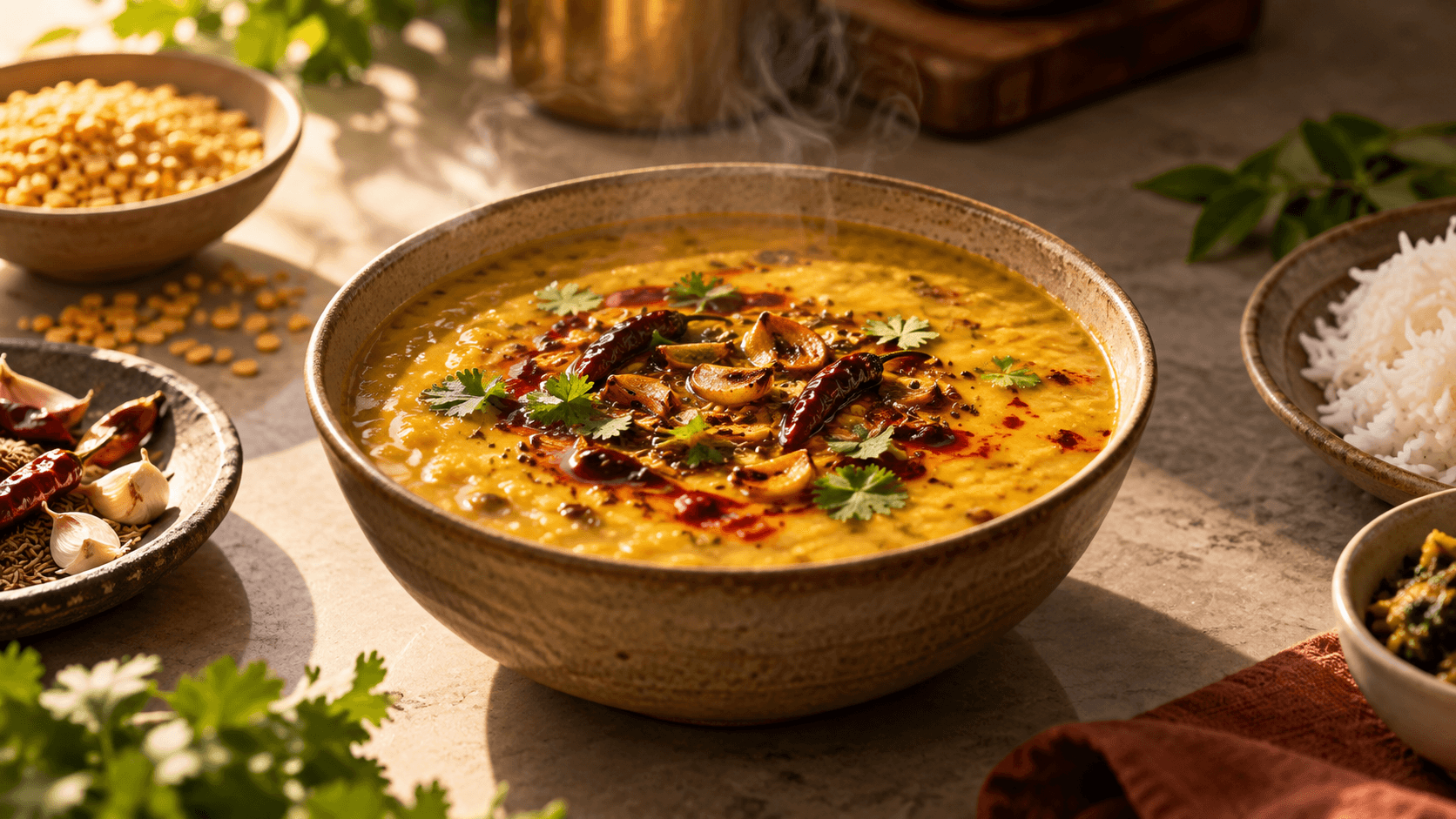
Toor dal pressure-cooked till soft, finished with a tadka of ghee, cumin, dried red chilies, garlic, asafoetida, and Kashmiri red chili powder. The tadka takes 90 seconds and is the entire flavor of the dish. Burn the garlic and you’re starting over. South Indian swap: use mustard seeds, curry leaves, and a pinch of dried red chili in place of cumin for a tadka closer to Andhra-style pappu.
Chana masala (canned)
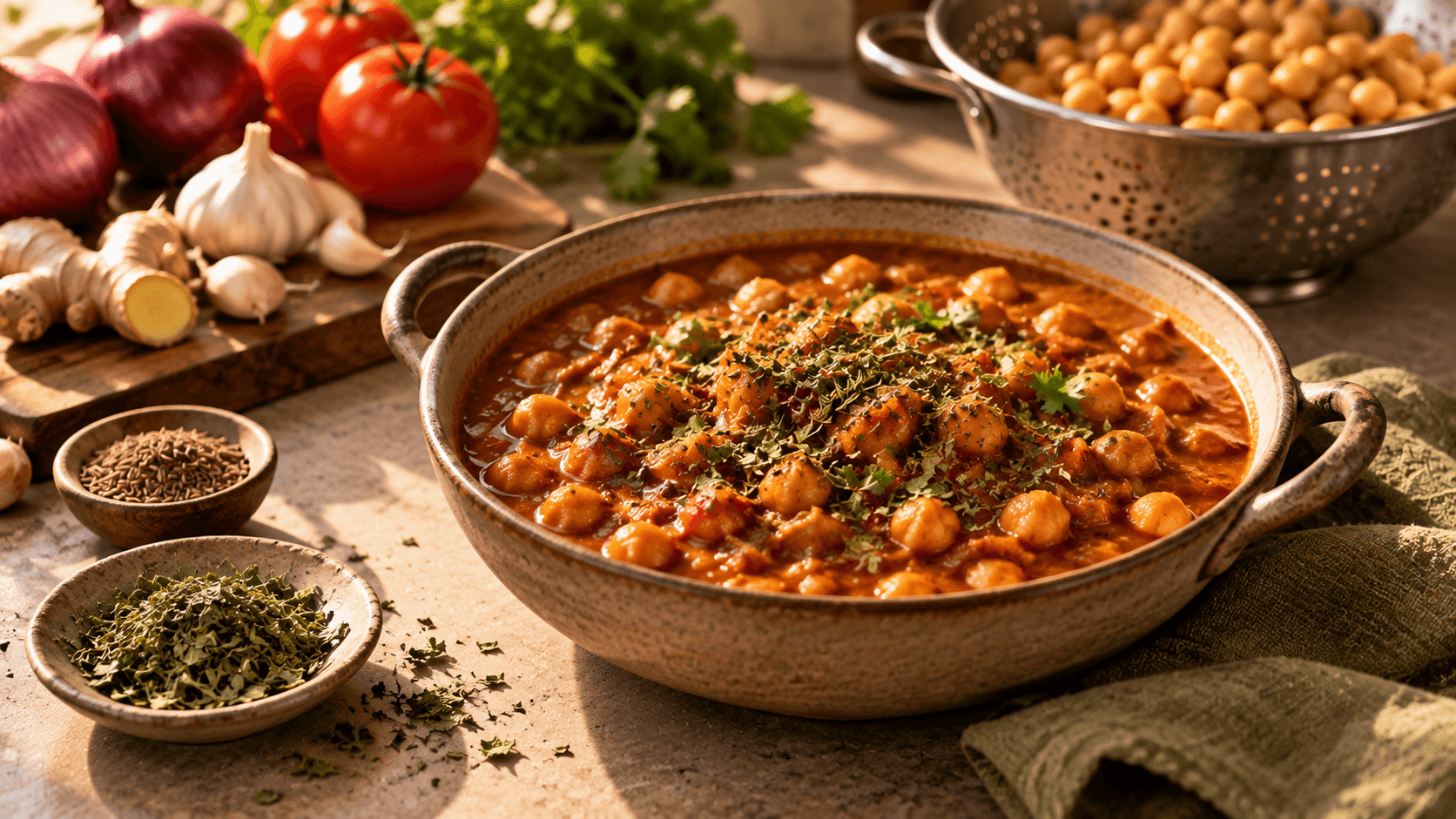
Two cans of drained chickpeas turn this into a 25-minute dinner. Bloom whole cumin in oil, then a long-cooked masala of onion-tomato-ginger-garlic - onions taken properly dark, tomatoes fully reduced - then add the chickpeas and a splash of their canning liquid. Finish with kasuri methi crushed between your palms.
Bhindi masala
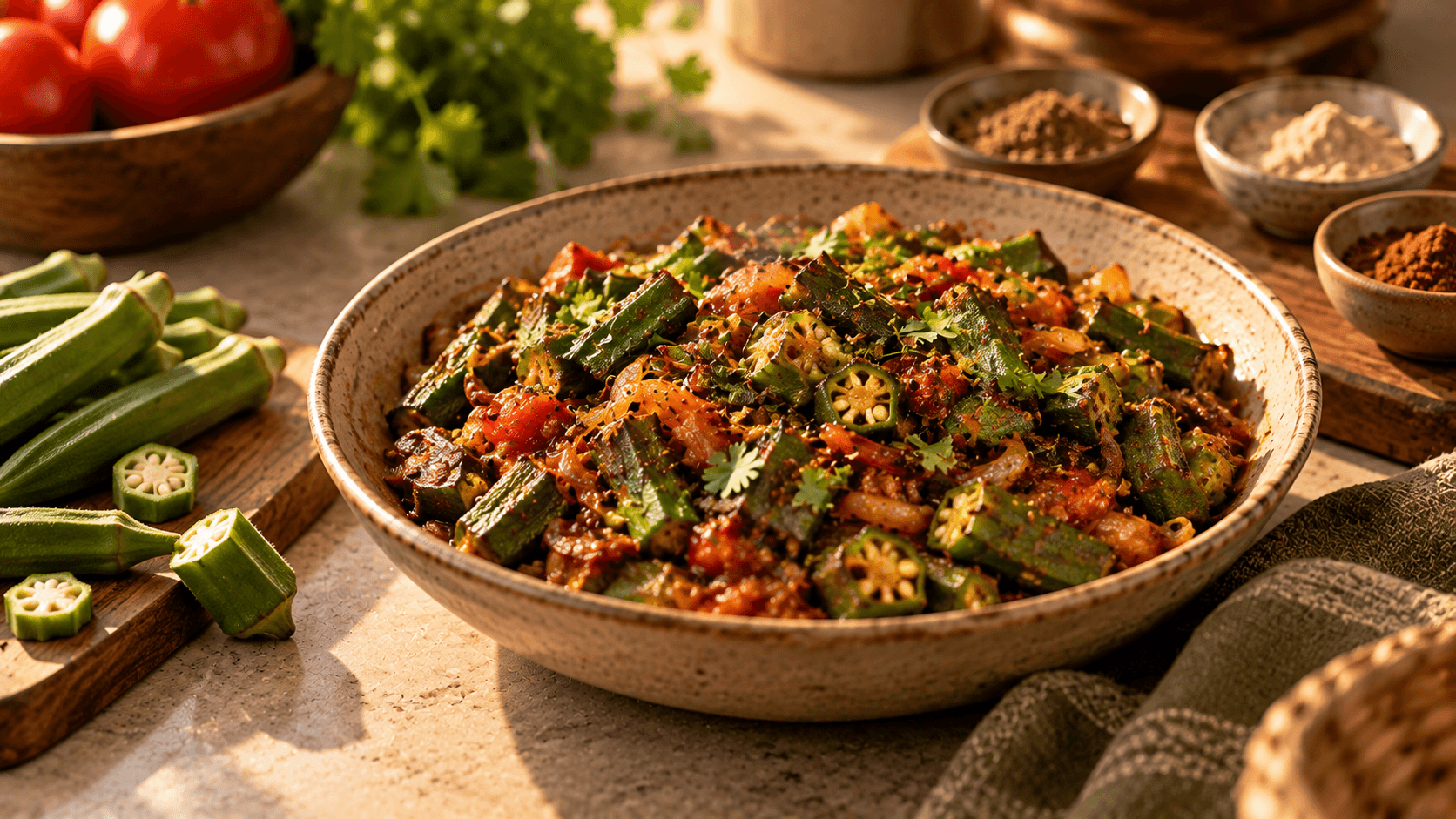
The trick is to dry the okra completely before it hits the pan, then cook it on high heat with the lid off so it doesn’t go slimy. Onions, tomatoes, amchur, coriander, garam masala. The whole thing reads simple but the technique punishes shortcuts - wet pan, low heat, lid on, and you’ll regret it.
Jeera rice
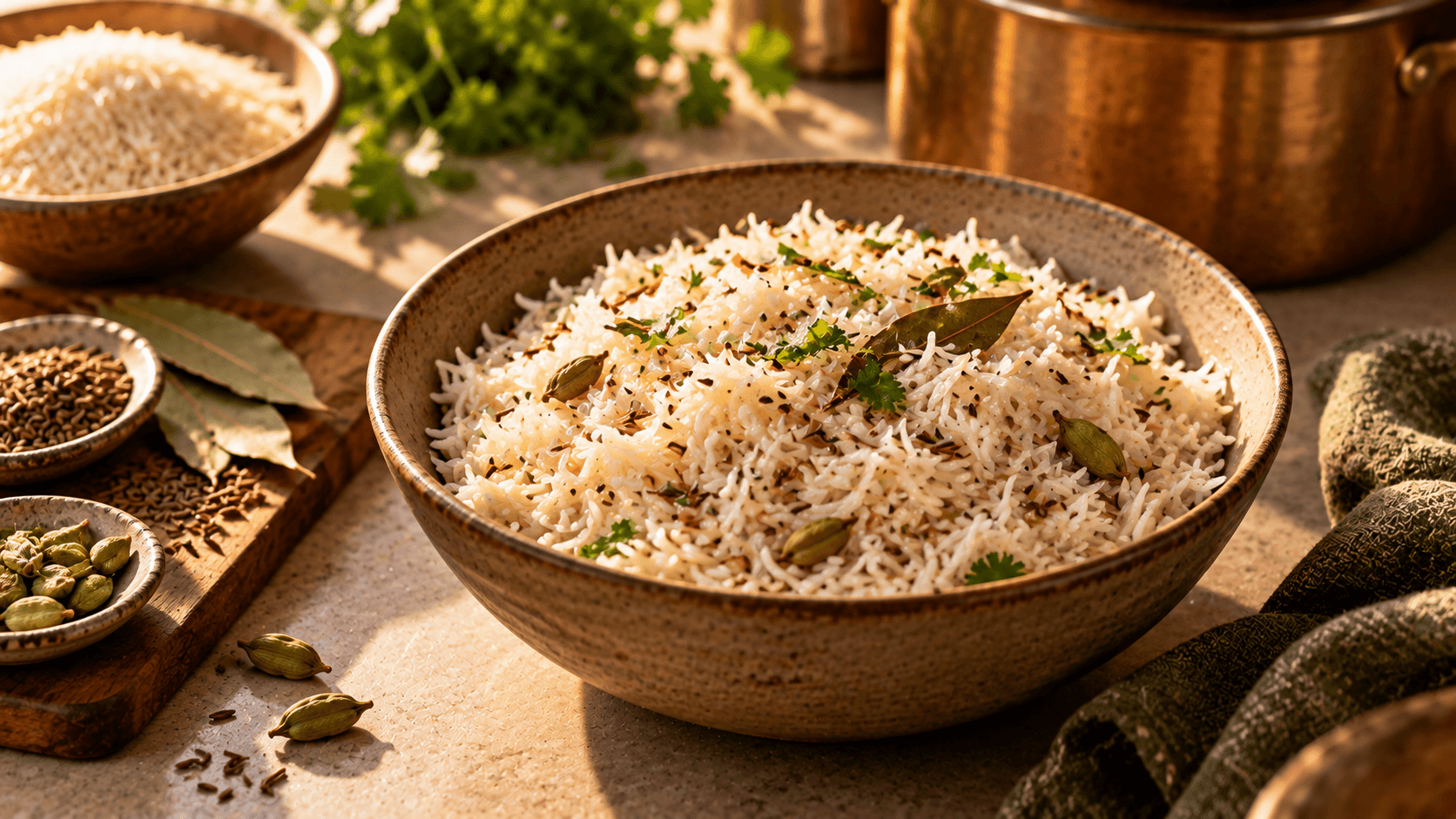
Rinse basmati until the water runs clear, then soak for 20 minutes before cooking with cumin bloomed in ghee, a bay leaf, and green cardamom. Allow roughly 38–41 minutes in total, including soaking, cooking, and resting. Water in a 1:1.5 ratio, cover, cook for 12 minutes, rest for 5, fluff with a fork. The rest matters as much as the cook.
Egg curry
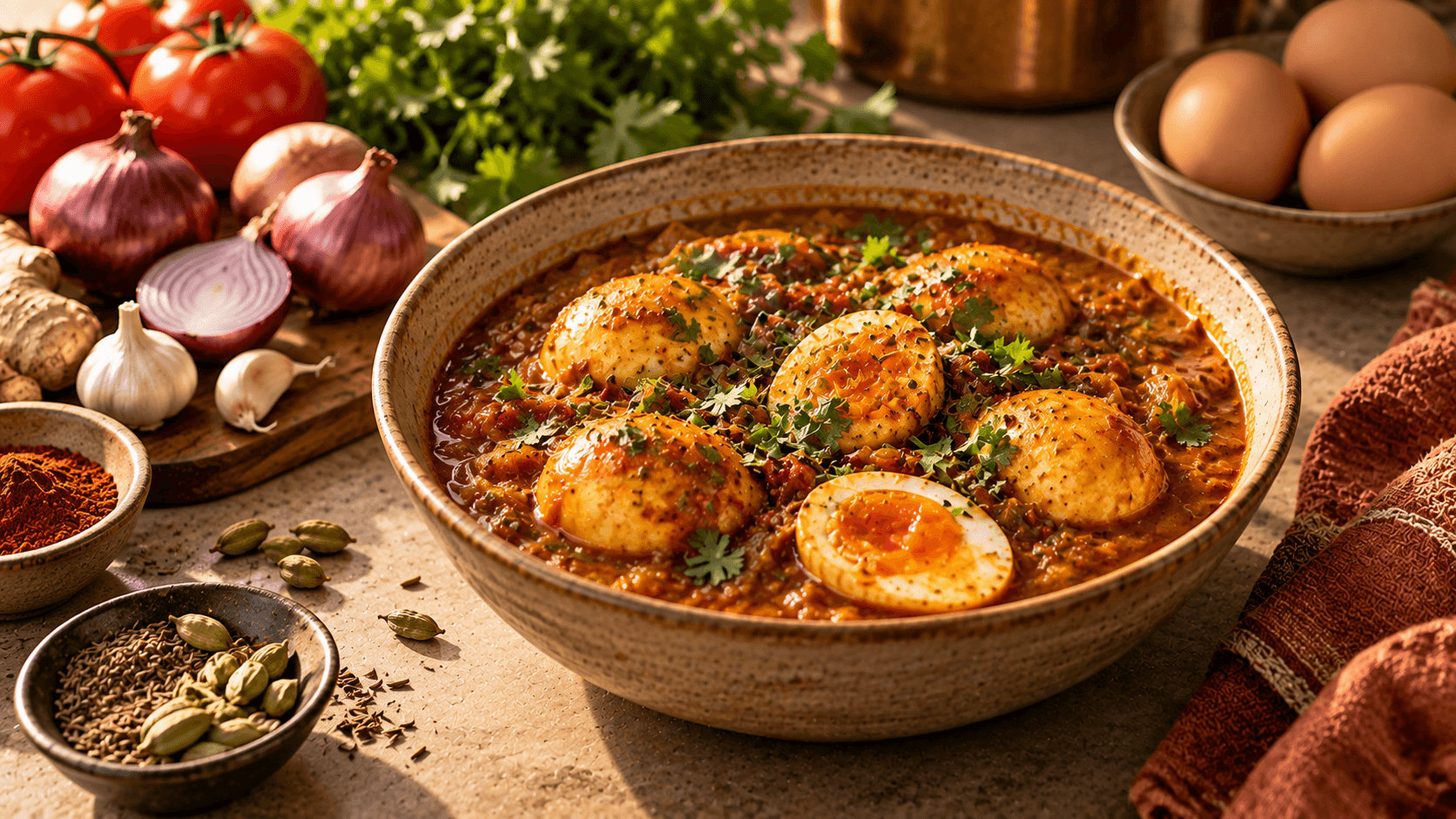
Hard-boil eggs while you build the masala. Standard onion-tomato base, then add halved eggs, simmer for 8 minutes in the gravy. The yolks should be slightly soft in the middle when you serve, not chalky.
Tomato rasam
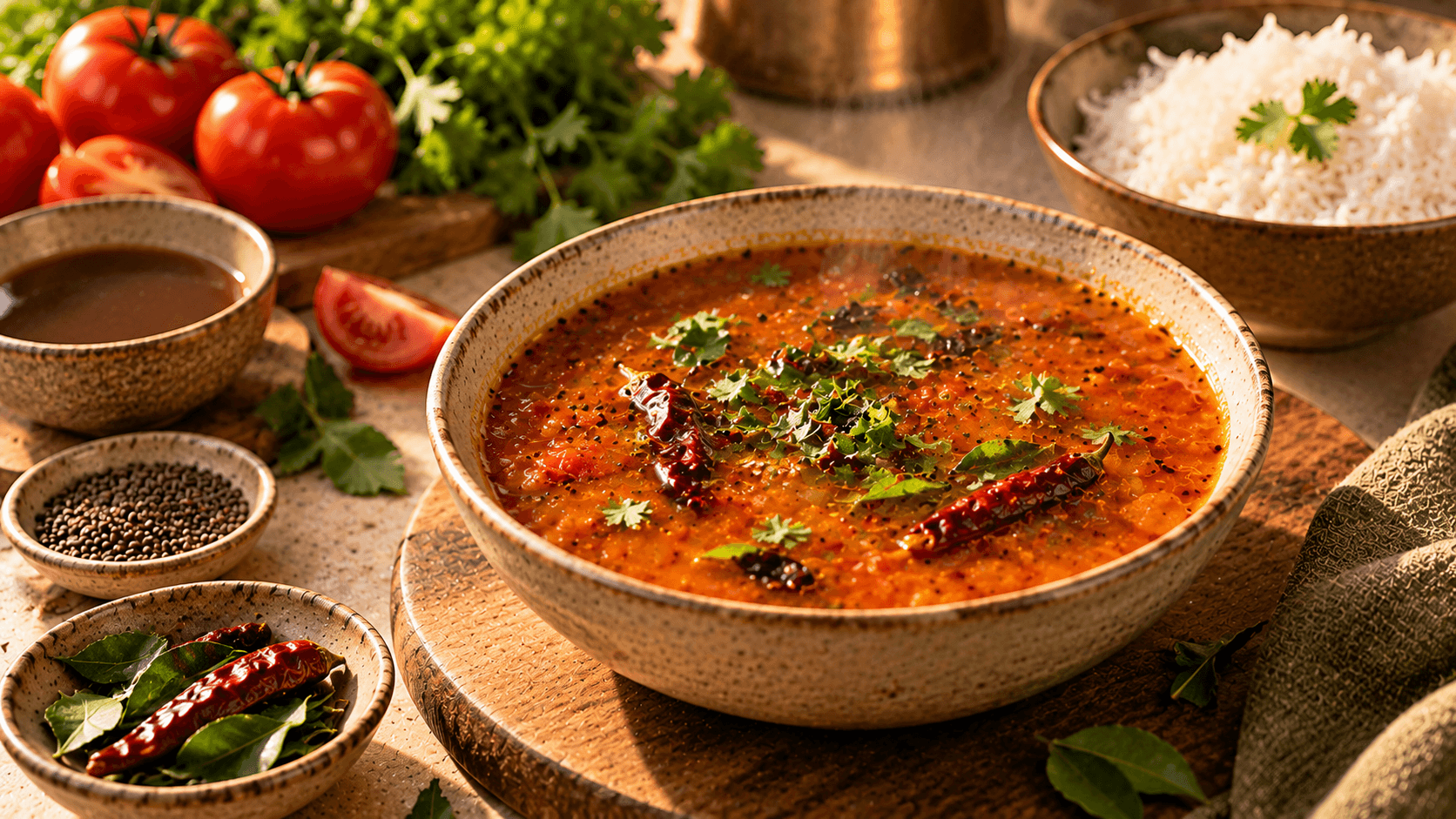
South Indian, fast, restorative. Tamarind water, mashed tomatoes, rasam powder, finished with a tadka of mustard seeds, curry leaves, dried red chilies in ghee. Serve over rice or drink it from a cup.
Tip: Bloom whole spices in oil or ghee over medium heat until fragrant. The timing varies by spice and heat level, so watch for the aroma and add the next ingredient before the spices darken or burn. |
The weeknight set: advance prep where needed
These are the dishes you’d normally save for the weekend. They’re not weekend dishes - they’re weeknight dishes that were just being treated wrong.
Palak paneer (express)
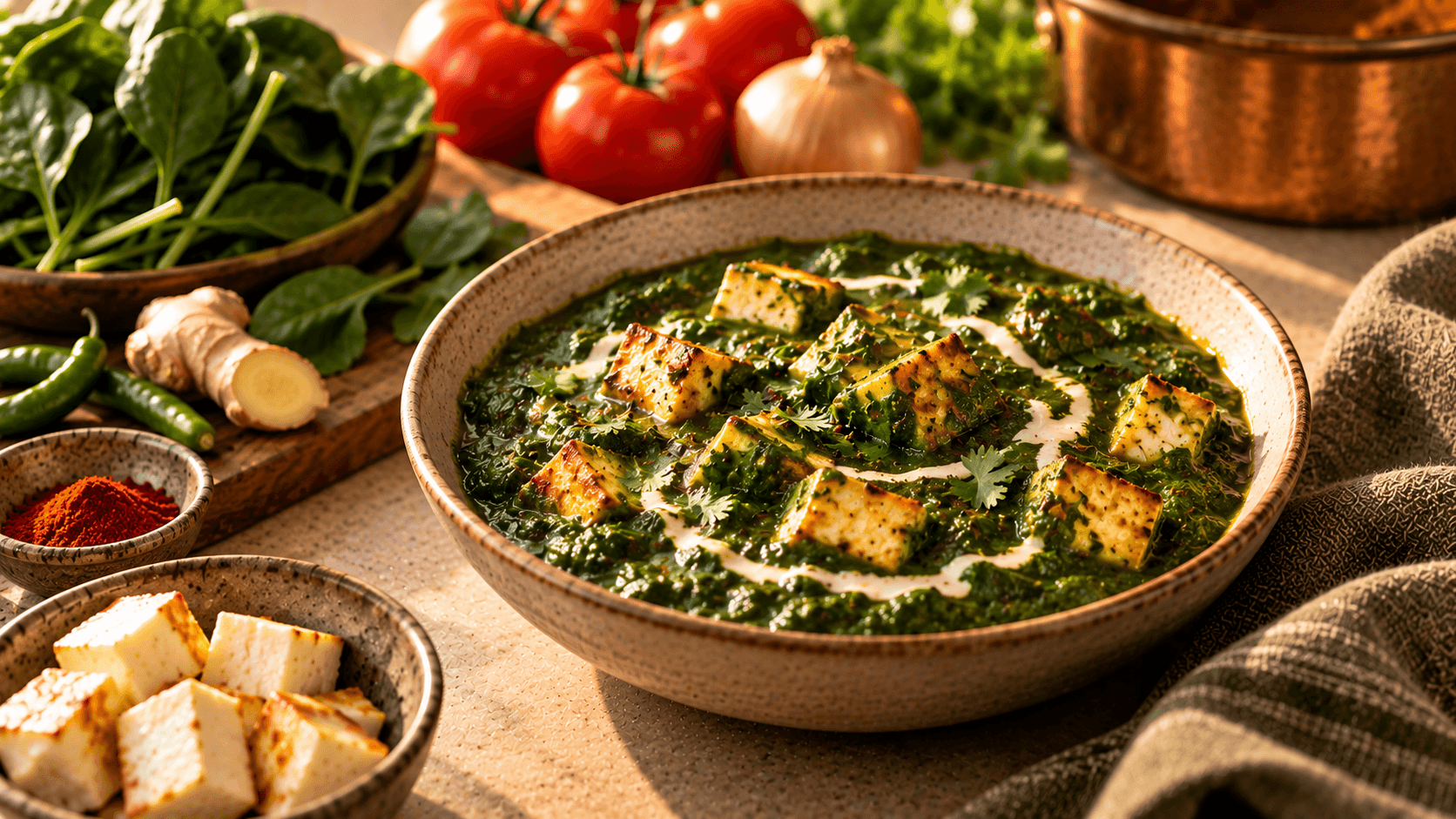
Blanch spinach in salted boiling water for 60 seconds, ice-bath it, blend with green chilies and a small piece of ginger. Build a quick masala - onion paste, tomato paste, dry spices - add the green purée, simmer for 4 minutes only (longer and the color dies), fold in pan-seared paneer cubes.
Rajma
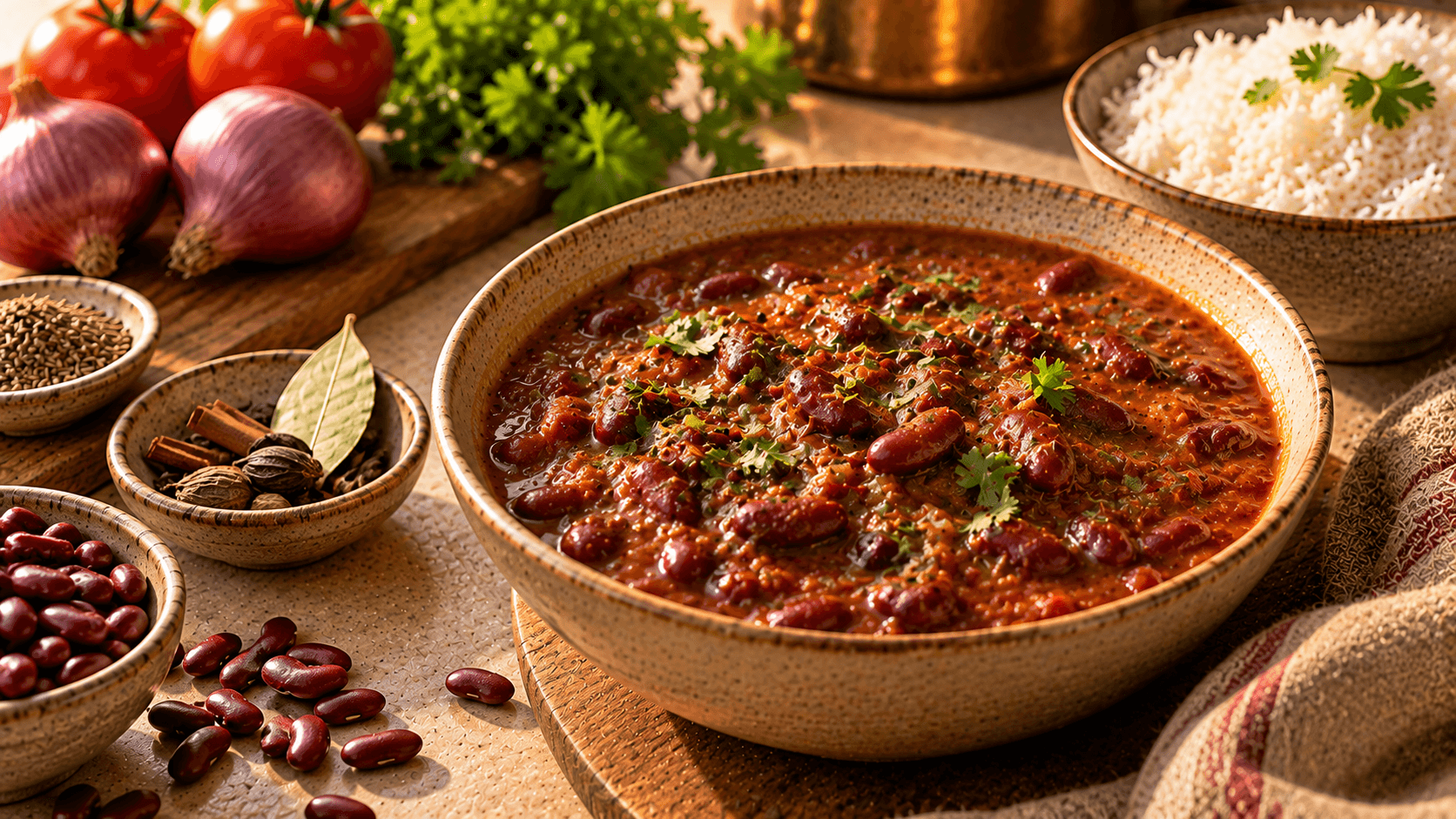
Soak dried kidney beans overnight (8–12 hours), discard the soaking water, and pressure-cook in fresh water until completely tender. The 35-minute estimate covers cooking only, not the overnight soak, and may vary depending on the beans and pressure cooker. The masala is the same architecture as chana - onions taken dark, tomatoes properly broken down - but with a heavier whole-spice base: bay leaf, black cardamom, cinnamon. Mash a few beans against the side of the pot at the end to thicken the gravy.
Tawa chicken masala
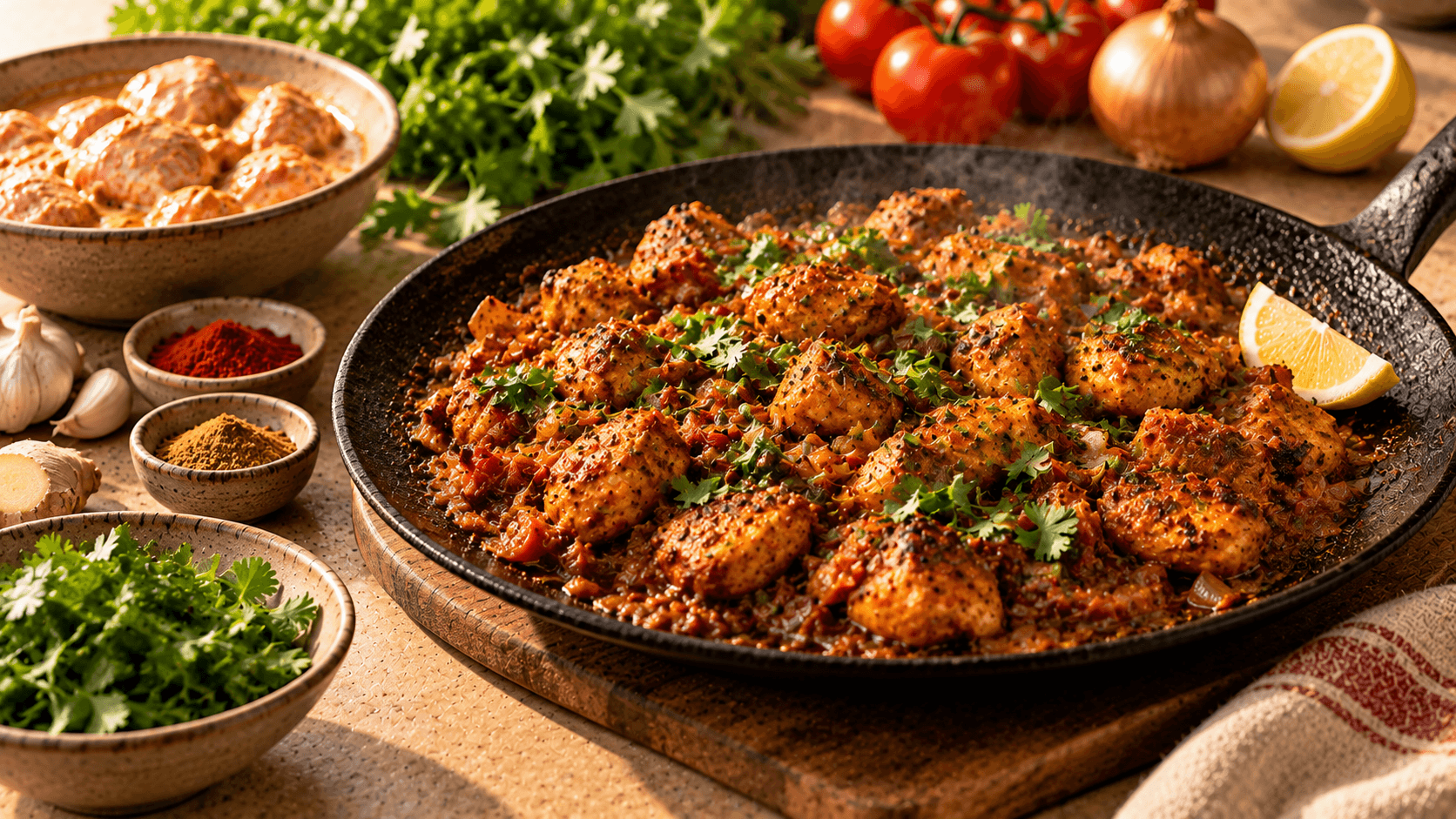
Marinate cubed boneless chicken thigh in yogurt, ginger, garlic, and spices for at least 15 minutes ahead of cooking. When ready to make dinner, sear the chicken on a hot, flat tawa and build the masala around it. Onions, tomatoes, dry spices, all on the same surface. Finish with fresh coriander and a squeeze of lemon.
Vegetable pulao
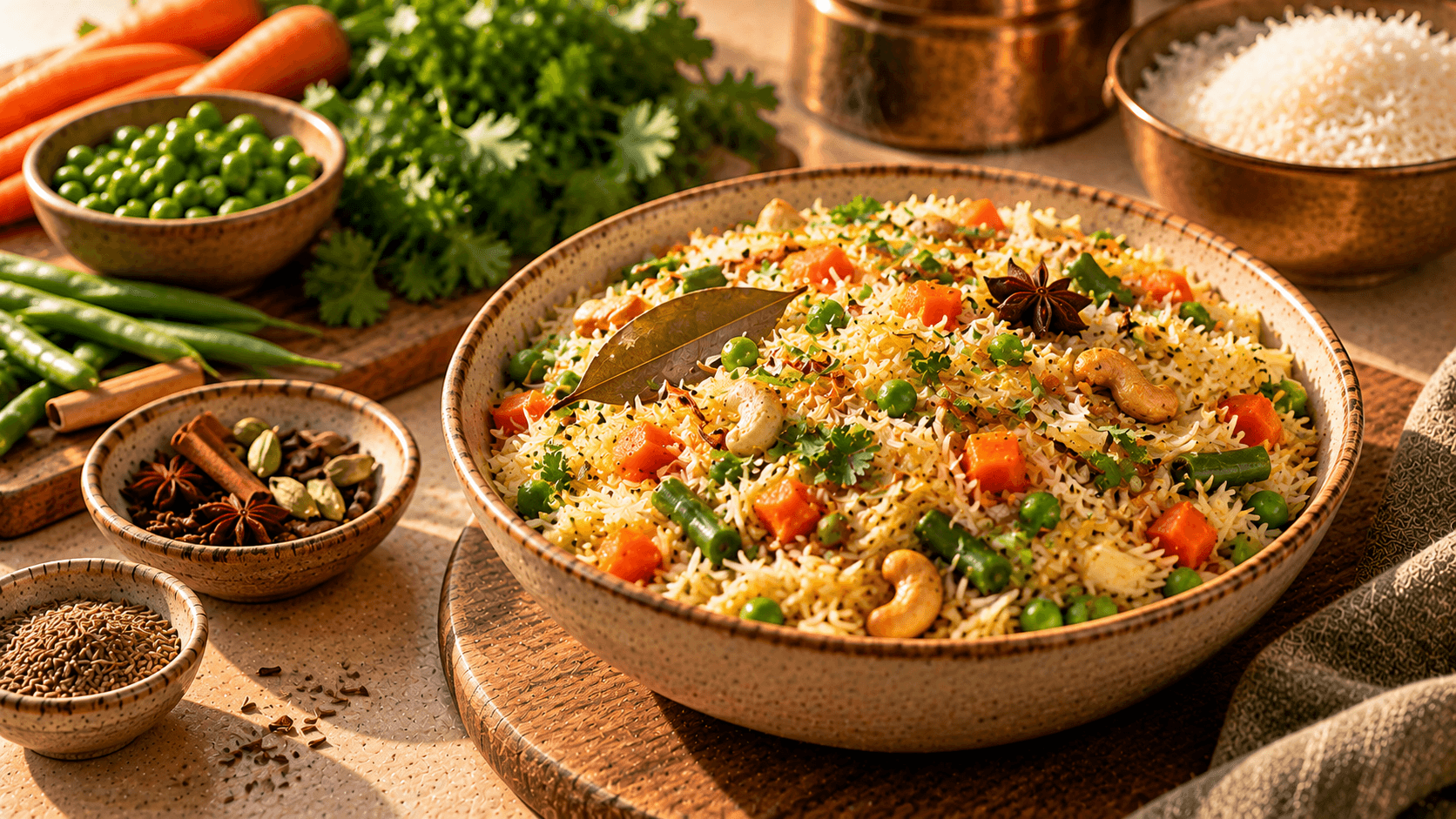
One-pot, rice and vegetables cooked together with whole spices and a final dum of 8 minutes off the heat. The vegetables should still have texture - peas should pop, carrots should resist a fork slightly. Mushy pulao is the only failure mode and it’s all about water ratio: 1:1.25 for soaked basmati.
Khichdi (one-pot)
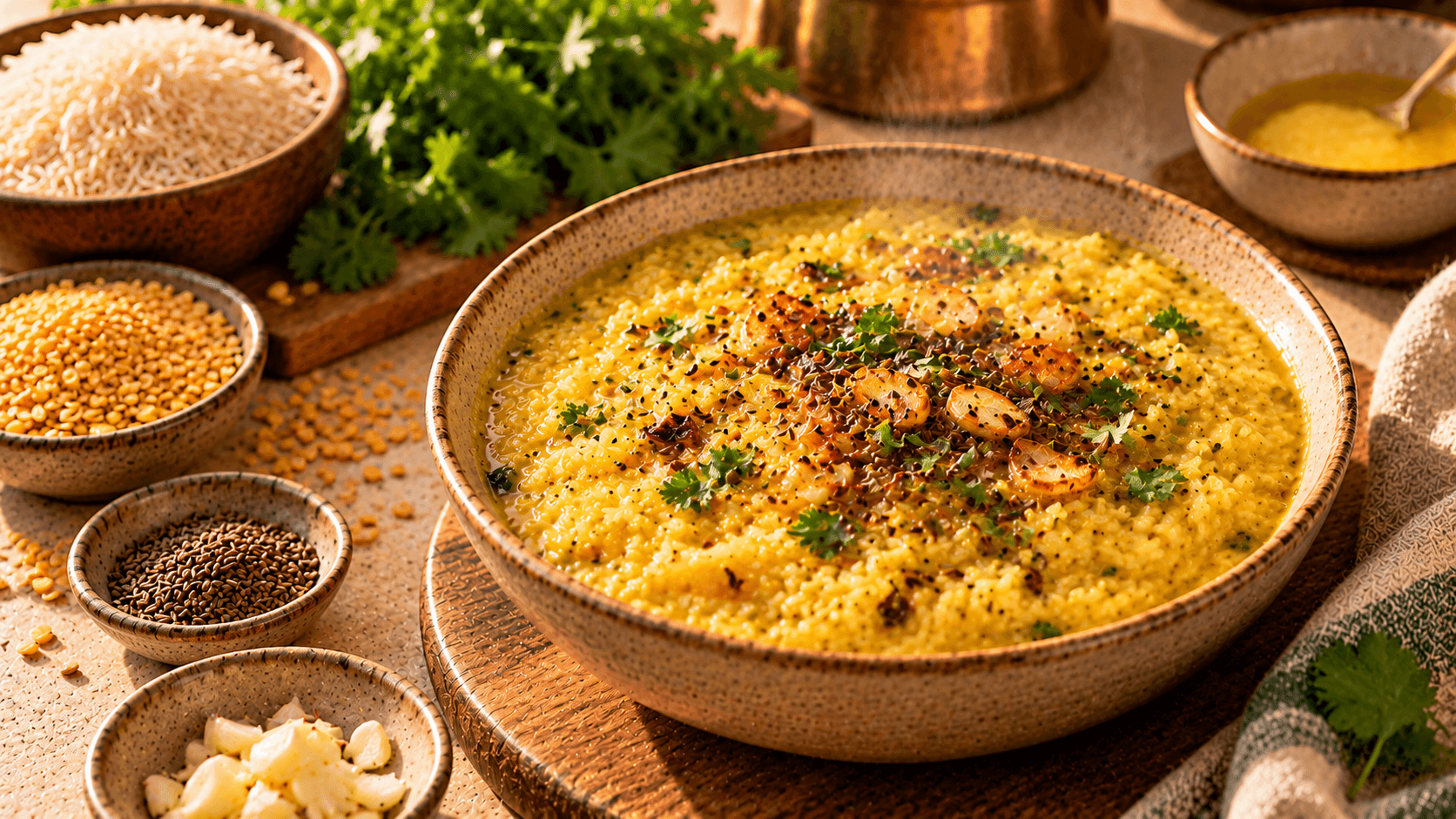
Rice and split moong dal cooked together until creamy, finished with a heavy ghee tadka of cumin, asafoetida, and garlic. This is the Indian comfort default - sick day, late night, what-do-I-have-in-the-pantry day.
Aloo gobi
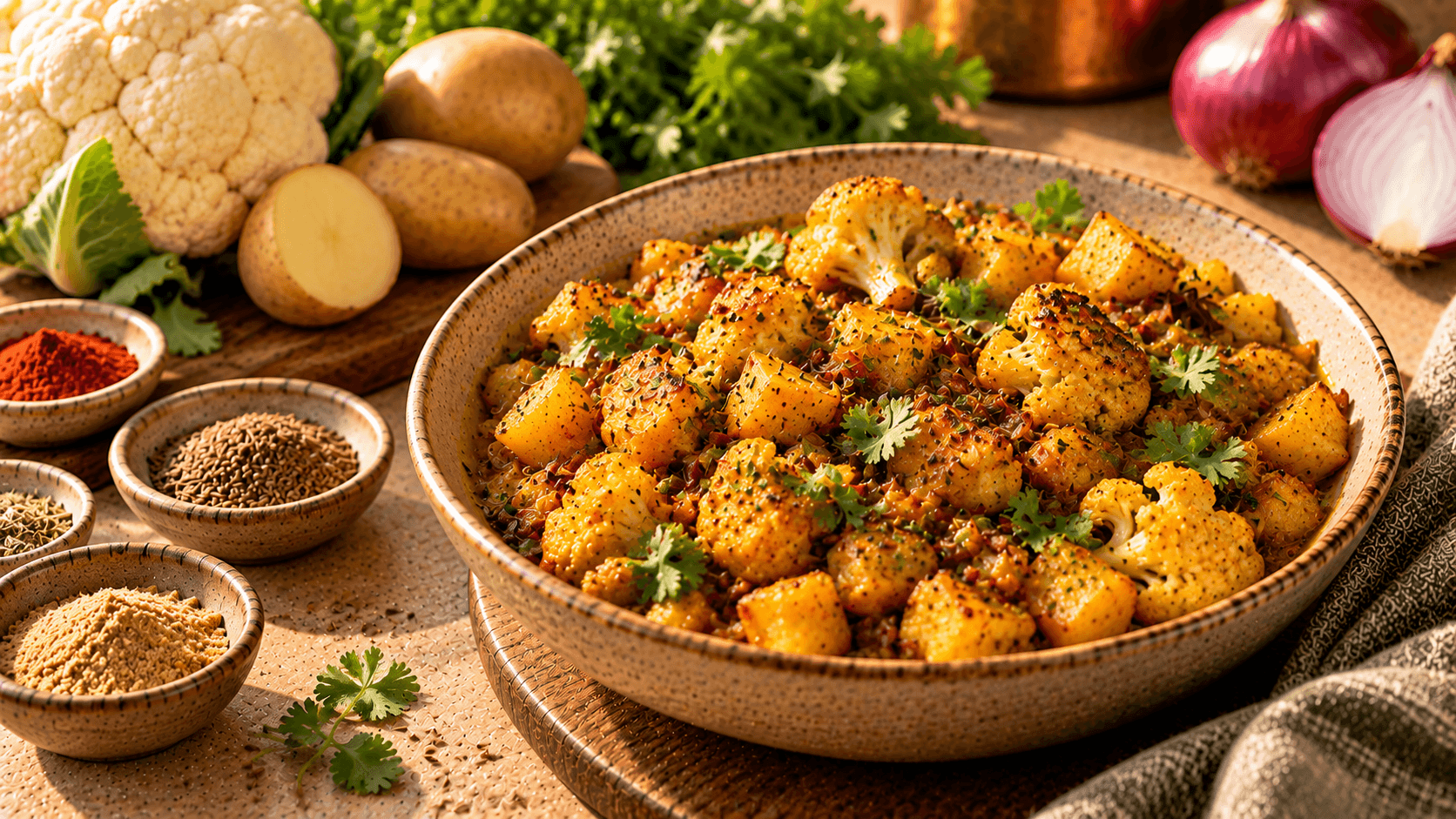
Cauliflower and potato, cut to similar sizes so they cook at the same rate. Dry sabzi, no gravy, finished with amchur and a hard sear on the cauliflower. The whole thing wants high heat and patience to not stir too often.
WARNING: Tomatoes go in before onions are properly golden and you’ll spend the rest of dinner trying to recover from the acidity. Onions first, always - until they smell sweet, not sharp. |
Smart sequencing: how to layer steps so dinner cooks while you live
The cheat code for weeknight Indian cooking isn’t faster ingredients. It’s overlap. If you’re waiting for onions to brown for 9 minutes, that’s 9 minutes you could be chopping the rest, or starting the rice, or pressing the paneer. Most home cooks stand at the stove watching one thing happen. The ones who actually get dinner on the table in 30 minutes are doing three things at once.
The rough order for almost every Indian dinner:
Start the rice or dal first. Both are passive - they cook themselves once you’ve started them. Rice in a pot with a tight lid, dal in a pressure cooker. They’ll be done about when your sabzi or curry is.
Prep everything before any heat goes on. Chop onions, mince ginger-garlic, slice tomatoes, measure dry spices into a small bowl. This is the part of cooking school no one teaches at home and it changes everything. Indian cooking is fast once it starts - there’s no time to grab the coriander mid-tadka.
Bloom whole spices, then onions, then aromatics, then dry spices, then wet, then the main ingredient. This is the architecture. Every layered Indian dish follows it. Memorize the order and 80% of recipes become readable without re-reading.
Finish with fresh. Coriander, lemon, kasuri methi, garam masala dusted over the top. The aromatics that go in at the start give depth; the ones that go in at the end give brightness. You need both.
Rest before serving. Five minutes off the heat lets dal, curry, and pulao all settle into themselves. The dish you taste straight off the heat is not the dish you’ll eat in 5 minutes.
The pantry that makes weeknight Indian work
You can’t cook fast if you have to stop to grind your own coriander. The weeknight Indian pantry is a small, sharp set of staples:
Whole spices: cumin, mustard seeds, fennel, fenugreek, black peppercorns, bay leaves, green cardamom, cloves, cinnamon stick
Ground spices: cumin, coriander, turmeric, Kashmiri red chili powder, garam masala, amchur, asafoetida (hing)
Aromatics on hand: yellow onions, Roma tomatoes, ginger root, garlic, green chilies, fresh coriander
Fats: ghee, neutral oil, mustard oil for select dishes
Lentils & legumes: toor dal, moong dal, masoor dal, canned chickpeas, canned kidney beans
Rice: a single bag of good basmati, not many bags of mediocre everything
That’s the entire backbone. From those ingredients alone you can build 30+ weeknight dinners without repeating yourself once.
NOTE: These recipes default to North Indian palates, but most translate. South Indian swaps (tamarind for tomato in sour dishes, mustard seeds for cumin in tadkas, curry leaves added wherever possible) are noted on each card. They’re swaps, not approximations - the dishes change character but stay honest. |
Traditional vs. meal kit vs. Posha
APPROACH | PREPARATION | ACTIVE COOKING | CLEANUP |
Traditional weeknight Indian | Plan the recipe and prepare ingredients | Manage heat, stirring, sequencing, and ingredient timing | Depends on the recipe and cookware |
Meal kit (Indian subscription) | Ingredients are typically pre-portioned, with preparation varying by kit | Follow the recipe and manage most cooking steps | Depends on the recipe and cookware |
Posha | Select a supported recipe, prepare ingredients, and load them as directed | Posha manages supported cooking stages, including heat, stirring, and ingredient timing | Clean the detachable cooking pan and any additional utensils used |
Traditional Indian cooking gives you control over every stage, but it requires hands-on attention. Meal kits simplify planning and ingredient preparation, though you still handle most of the cooking.
Posha approaches the problem differently: it manages cooking stages such as heat, stirring, and ingredient timing for supported recipes, helping you prepare home-cooked meals with less active involvement.
How Posha handles the multi-step problem
Indian cooking is the multi-step problem in concentrated form - tadka, then onions till golden, then ginger-garlic, then tomatoes till the oil splits, then spices, then dal.
Many kitchen appliances simplify individual cooking tasks, but Indian dishes often involve several stages that require different temperatures, timing, and ingredient additions. Air fryers can handle a range of cooking tasks, while slow cookers maintain controlled heat over longer periods. Neither automatically manages every step of a layered Indian curry.
What makes the difference is managing the sequence: blooming spices until fragrant, sautéing onions until golden, and adjusting the heat as the masala reduces, based on what is actually happening in the pan.
Posha watches each onion deepen in color and uses visual cooking-stage cues to determine when to move forward. It manages heat and ingredient timing as the spices bloom, following the cooking stages defined by the recipe and pulls back the heat before the cumin tips into bitter. It adds tomatoes after the onions are sweet, not before.
It monitors visible cooking-stage changes as the masala reduces, adjusting heat and stirring according to the recipe not by reading a timer. It seasons each dish as it goes - layering spices the way a home cook does, watching for color and consistency and adjusting in real time.
Posha's recipe library now includes 1,000+ recipes across cuisines and diets, including Indian favorites such as dal tadka, chana masala, rajma, and palak paneer. For supported recipes, Posha manages cooking stages such as heat, stirring, and ingredient timing, following the sequence that gives Indian dishes their characteristic flavor and texture.
Mid-cook, Posha sounds like this:
“The onions are taking color now. Holding heat steady.”
“Tomatoes softened and the masala reduced. Moving to the next step.”
That’s not a machine reporting. That’s a chef thinking out loud - which is what Posha is built to be.
Frequently Asked Questions
Can I cook authentic Indian food on a weeknight without sacrificing flavor?
Yes - but only if the recipe respects the sequencing instead of skipping steps. The 12 dishes above were chosen because their structure is genuinely short, not because they’ve been hacked.
Which Indian dish is the absolute easiest for a beginner?
Dal tadka. The base is forgiving (you can over-soften the dal and it’s fine), and the tadka is a single 90-second move that delivers most of the flavor.
How do I avoid the spice cabinet getting overwhelming?
Buy small quantities and refresh every six months. Whole spices outlast ground by a wide margin. If you can only buy six spices, make them: cumin, mustard seeds, turmeric, garam masala, Kashmiri red chili powder, and coriander.
What’s the single biggest mistake home cooks make with Indian food?
Moving to the next stage before the previous one has developed enough flavor is a common mistake. Onions that haven't browned sufficiently, tomatoes that haven't broken down, or spices that haven't bloomed can affect the finished dish. Ingredient quality, seasoning, and heat control also matter, but giving each cooking stage enough time helps build a more balanced flavor.
Are these recipes vegetarian-friendly?
Ten of the twelve dishes are vegetarian as written. Egg curry contains eggs, while tawa chicken masala contains chicken. For a vegetarian alternative to the chicken dish, use paneer or extra-firm tofu and adjust the cooking time to suit the substitute.
Can I cook these in advance?
Most improve overnight. Dal, chana, rajma, and chicken masala all develop flavor by sitting in the fridge for a day. Rice and breads are the exceptions - make those fresh.
What to cook tomorrow: dal tadka, jeera rice, and a quick bhindi masala on the side. Forty minutes start to finish, three dishes that taste like someone’s grandmother made them.
READY WHEN YOU ARE
Choose a recipe, prep your ingredients, and forget about it. Posha cooks from step to step till dinner’s ready.