Rohin Malhotra
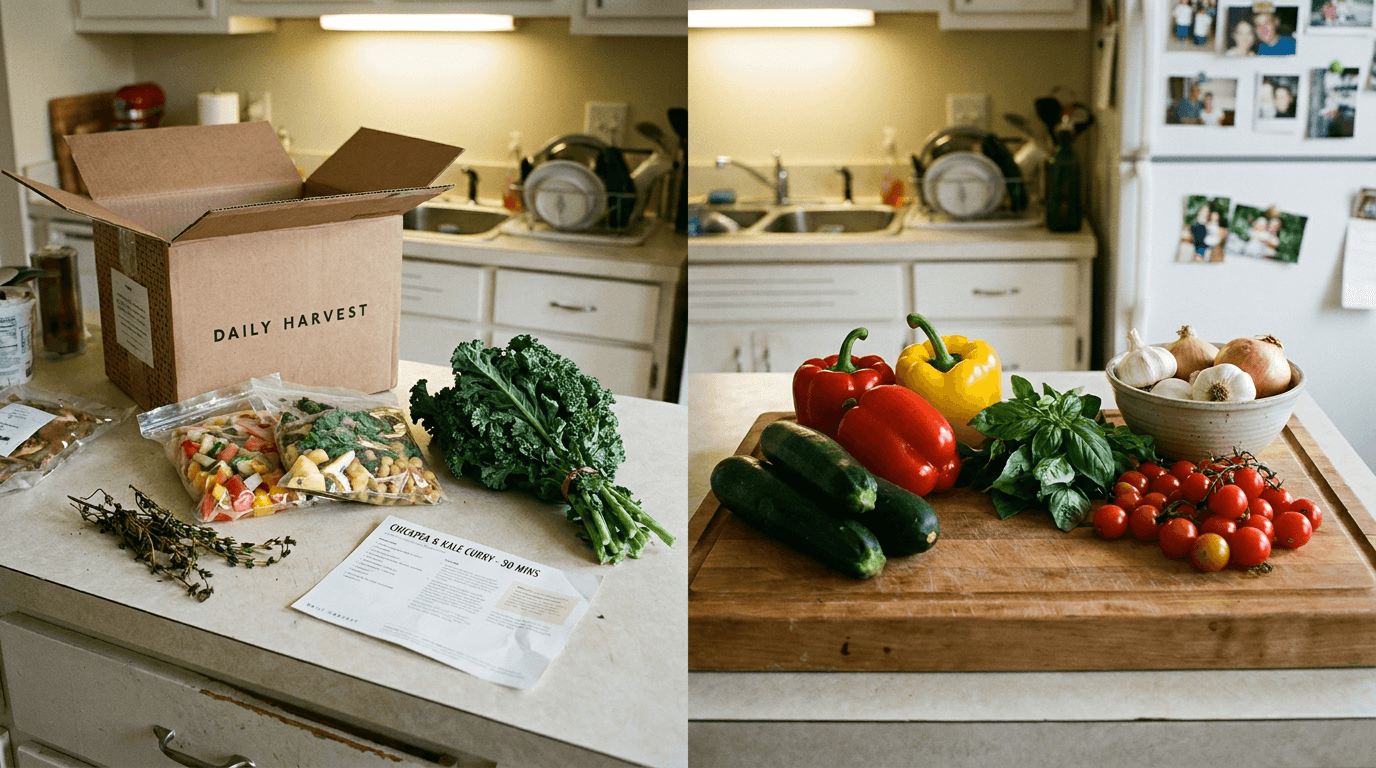
You crack open the box. The kale is limp, the herbs are browning at the edges, and the recipe card insists dinner is 30 minutes away. Once you add washing, chopping, and the inevitable hunt for a "medium saucepan," you are staring at something closer to 50. For a lot of couples looking for the best meal kits for vegetarians, that gap between the promise and the plate is the whole story.
So ask it plainly: are vegetarian meal kits actually a better route to weeknight dinner than buying fresh ingredients and cooking yourself? And if neither option feels quite right, is there a third path that borrows the best parts of both? Below, we lay out the trade-offs on cost, freshness, time, and customization, then look at what automated cooking systems like the Posha cooking system do to the math.
What Vegetarian Meal Kits Are Really Selling You
A vegetarian meal delivery service really sells two things: a menu you did not have to plan and ingredients measured so you do not have to think. You avoid the classic problem of buying a specialty item (not fish sauce here, but tamarind paste) for one recipe and then watching it fossilize in the fridge. For couples who are new to cooking or simply want to broaden their rotation of meatless meal kits, that structure can feel like relief.
The numbers suggest that relief is in demand. The global plant-based meal kit market was estimated at $2.108 billion in 2024 and is projected to reach $12.42 billion by 2035, growing at a CAGR of 17.49% (Market Research Future, 2026). In the U.S., the vegan meal kit segment is expected to grow fastest, with a projected CAGR of 9.4% from 2026 to 2033 (Grand View Research, 2026). People want plant-based options, and companies are racing to package them.
The catch shows up quickly. Ingredients spend days in transit, and the fragile stuff pays the price. Pre-portioned packets also lock you into someone else's idea of hunger, which is frustrating when you want more vegetables, more protein, or just a bigger bowl. Then there is the waste: meal kits can help reduce unused ingredients by providing measured portions, although packaging waste and delivery logistics vary by provider. Meal kits work precisely because they are tightly controlled, but that same structure can make them inflexible.
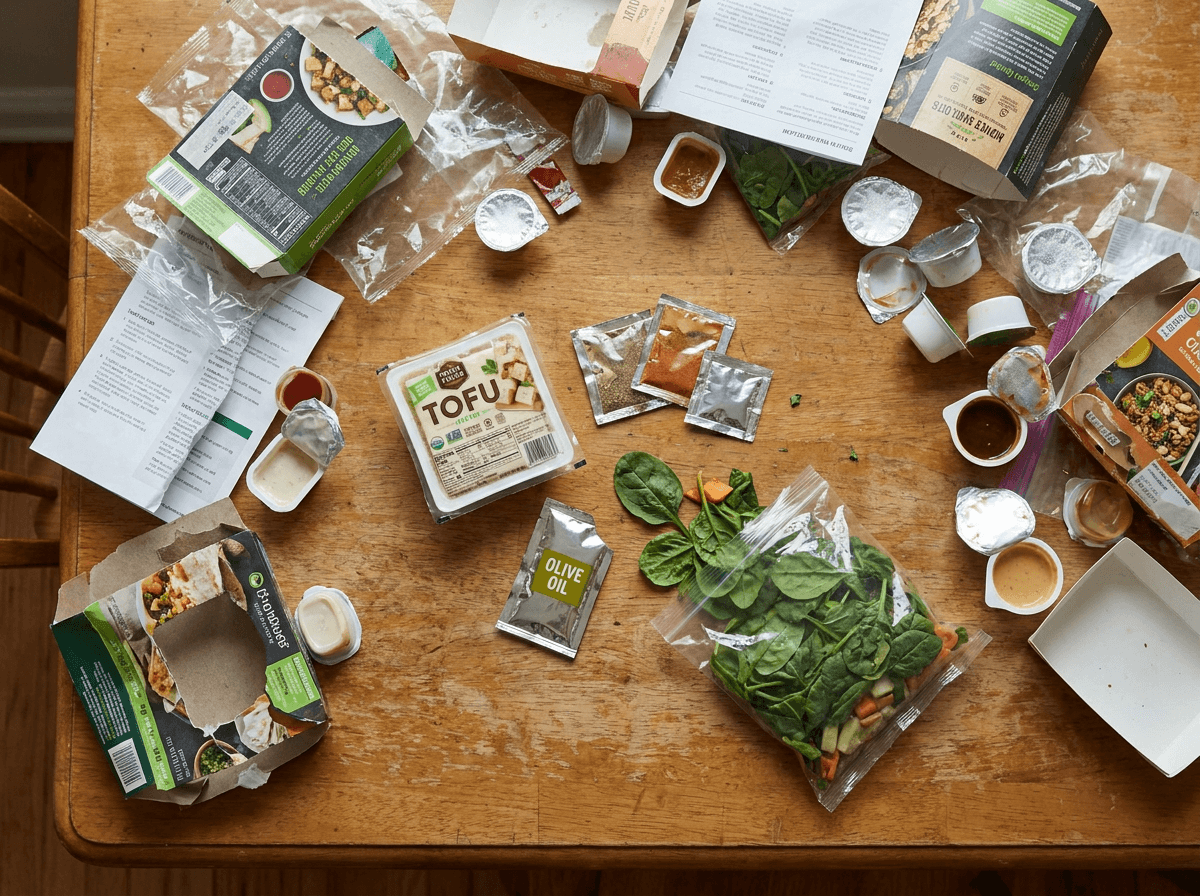
Pre-portioned convenience comes with a packaging footprint that's hard to ignore.
The Home-Cooking Reality: Control, Quality, and the Mental Load
Cooking from scratch buys you something a subscription box cannot: vegetables that taste like themselves. A tomato from a local market used the day you buy it has a depth that a tomato riding cross-country in a cardboard box usually does not. You decide the oil, the salt, the heat. You can build a dal around a tadka that hits exactly the way you like it, mustard seeds and curry leaves crackling in the pan. That control is the real advantage of home cooking.
It also comes with the part people rarely romanticize: the mental load. Picking a dish, writing a list, shopping, prepping, cooking, and cleaning is a multi-hour loop that starts over tomorrow. For dual-income couples, dinner can slide from pleasure into obligation. The question of how to eat more home-cooked meals without burning out is exactly what meal kits try to address, just not all the way.
Sustainability is messier than either camp tends to admit. A 2019 University of Michigan study found that meals made from grocery store ingredients had 33% higher greenhouse gas emissions than meal kit counterparts (8.1 kg CO2e/meal vs. 6.1 kg CO2e/meal), largely because of food waste. Kits cut waste by sending only what you will use. Home cooking gives you more control over ingredient freshness and flavor, while meal kits can help reduce food waste through pre-portioned ingredients, but meal kits have a credible point on waste reduction when the alternative is over-buying and throwing food out.
Head-to-Head: The Dinner Decision Matrix
Here is the quick comparison across three approaches: traditional vegetarian meal kits, cooking fully from scratch, and home cooking with the Posha cooking system.
Criterion | Vegetarian Meal Kits | Traditional Home Cooking | Home Cooking with Posha |
|---|---|---|---|
Ingredient Freshness | Inconsistent; shipped days earlier, produce often past peak | Best; you choose the source and use it right away | Best; you select and prep your own fresh ingredients |
Active Cooking Time | 25-50 min (prep + cooking still required) | 30-60+ min (hands-on from prep to plate) | 10-15 min prep; Posha handles the active cooking |
Cost Model | Recurring per-serving price plus possible shipping; varies by provider and plan | Grocery cost varies by recipe, store, location, and portion | Upfront device purchase plus groceries; optional membership for full recipe-library access |
Customization | Bound to the menu; limited swaps | Broad control over ingredients and quantities | High flexibility within supported recipes, with personalization and supported ingredient swaps |
Cleanup Effort | Moderate (pans, cutting boards, packaging disposal) | High (multiple pots, pans, utensils) | Lower (one cooking vessel for most recipes) |
Freshness and Ingredient Quality
Freshness can vary by service and delivery timing. Because ingredients pass through packing and shipping before reaching your refrigerator, delicate items such as leafy greens, herbs, mushrooms, and zucchini may arrive in less-than-peak condition. Buying fresh ingredients yourself gives you more control over their source, variety, and ripeness.
Home cooking reverses the power dynamic. You pick the tomatoes, you smell the basil, you decide organic or conventional. In a dish like palak paneer, where spinach is the whole point, the difference is hard to miss. With the Posha cooking system, you still start with the fresh produce you choose. Its camera and temperature sensors track cooking progress, while Culinary AI considers signals such as ingredient size, prep style, color, texture, and moisture to guide heat, timing, water, and stirring decisions.
True Time and Effort
Meal kits remove planning and shopping, but they do not remove cooking. The "30-minute" promise on the card usually ignores the real overhead: unpacking, reading, prepping, and then cleaning. In practice, Vegetarian meal kits can still require substantial prep and cooking time, with the exact time varying by recipe and service.
Traditional home cooking adds planning and a grocery run on top of that. When planning, shopping, prep, cooking, and cleanup are considered together, traditional home cooking can require considerably more time than the recipe's stated cook time alone on a weeknight.
Posha changes what that time feels like. You still prep fresh ingredients (or lean on store-bought pre-cut produce), which typically takes about 10 to 15 minutes. After that, Posha handles the cooking process by adding ingredients, monitoring progress, stirring, adjusting heat, and moving through recipe steps. A Thai green curry still needs 30 minutes to come together, but while dinner comes together, you are no longer tied to every stir, temperature change, or cooking step. That time is yours.
Cost Per Serving
Meal kits often cost more than buying ingredients yourself, depending on the service, ingredients selected, and household cooking habits. Vegetarian meal-kit prices vary by service, plan, serving count, shipping fees, and promotions, and they generally carry a premium over cooking from grocery-store ingredients. Exact meal-kit costs vary by provider, plan, serving count, shipping fees, and promotions. For households using meal kits for several weeknight dinners each month, those recurring costs can add up. Annual spending depends on the service, frequency of use, serving count, shipping charges, and promotions. That premium covers logistics, packaging, curation, and the brand as much as it covers the ingredients. If you want the numbers laid out, the breakdown of the cost of food delivery vs. cooking at home is a useful reference.
Cooking similar vegetarian meals from grocery-store ingredients can cost less than meal kits, although the amount varies by recipe, store, location, and ingredient choices. In-season produce, pantry staples bought in bulk, and proteins like tofu or lentils keep costs down in a way subscriptions generally cannot match. The Posha cooking system does require an upfront device investment, but the ongoing per-meal cost looks like grocery shopping, not meal kit pricing.
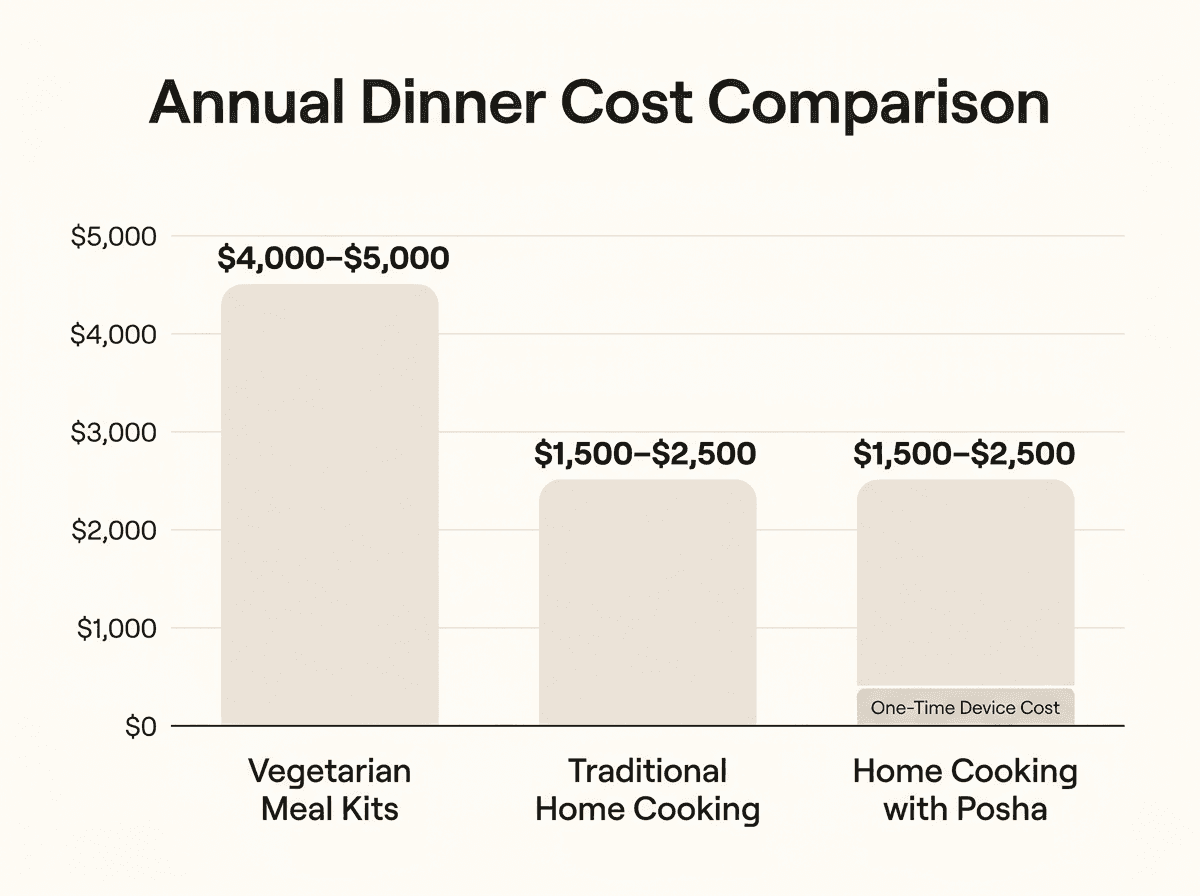
Annual cost estimates for 20 weeknight dinners per month - meal kits can exceed $4,000 yearly versus grocery-based home cooking.
Customization and Dietary Flexibility
If your needs go beyond "vegetarian" - low sodium, nut-free, avoiding nightshades - meal kits can feel cramped. You choose from a rotating menu, and meaningful substitutions are uncommon. Plant-based meal kits widen the umbrella, but the service still decides what is on offer and how it is portioned.
Home cooking gives you much more control over ingredient choices, quantities, seasoning, and substitutions. With Posha, that control extends into the execution. You pick the coconut milk brand you like, the tofu texture you prefer, and the exact amount of chili you want. Supported Posha recipes allow ingredient swaps and personalization, with the cooking process adapting to supported changes, so supported ingredient swaps can be incorporated into the cooking flow without requiring you to manage every cooking adjustment yourself. For couples working more plant protein into weeknights, the flexibility described in best plant-based protein sources becomes practical, not aspirational.
Where Automated Cooking Fits: The Third Option
The meal-kit-versus-home-cooking debate often collapses into a choice between quality and bandwidth. Automated cooking systems are built to narrow that gap. The Posha cooking system keeps the experience of fresh cooking while handling the attention-heavy steps, adding ingredients, monitoring progress, stirring, and adjusting heat as the meal develops.
Imagine a Wednesday night. You spend 10 minutes chopping onions, garlic, and bell peppers, and measuring spices for a coconut tofu curry. Everything goes into Posha; you select the recipe, and you step away. Posha brings chef-like cooking intelligence to your countertop, watching ingredients and adjusting cooking steps as the meal develops: stirring the aromatics until they soften, adding coconut milk when it should, simmering tofu without turning it into crumbles, and dialing back heat as the sauce thickens. Thirty minutes later, the kitchen smells like lemongrass and ginger, and you did not spend that half hour babysitting a pot.
Some meal systems are built around delivered or prepackaged food, while guided multifunction cookers may still require the user to complete parts of the cooking sequence. Posha is designed around a different job: you choose fresh ingredients, and it dispenses them at the appropriate time, watches the food, stirs, adjusts heat, and advances through supported multi-step recipes. For a broader comparison, see how meal delivery services compare with automated home cooking.
The Verdict: Are Vegetarian Meal Kits Worth It?
Info: For couples who prioritize choosing their own ingredients, adjusting portions, and customizing flavors, cooking at home offers more control than a traditional meal kit. The best vegetarian meal delivery services make sense as a short-term way to discover recipes or as a fallback during unusually hectic stretches, but the everyday trade-offs - freshness, portion control, and customization - are hard to ignore.
Best for meal kits: Couples who are genuinely new to vegetarian cooking and want a structured, temporary way to pick up techniques and find new flavors. It works best when you treat it like a cooking class that ships ingredients, not a forever solution. A few months with a vegetarian meal-kit service can build confidence and leave you with a personal recipe library.
Best for traditional home cooking: Anyone who values peak freshness, total flavor control, and the lowest cost per meal - and who can absorb the daily work of planning, shopping, cooking, and cleanup. If you enjoy the process, this is still the benchmark.
Best for home cooking with Posha: The dual-income couple that has outgrown meal kits but still wants weeknight dinners to taste like they were cooked from scratch. You keep control over ingredients and the recipe, while Posha handles the cooking process by adding ingredients, monitoring progress, stirring, adjusting heat, and moving through recipe steps. The comparison of pre-made meal delivery versus fresh home-cooked meals makes the same case: cooking at home gives you more control over ingredient selection, freshness, and flavor, and the Posha cooking system is designed to make that doable on a Wednesday.
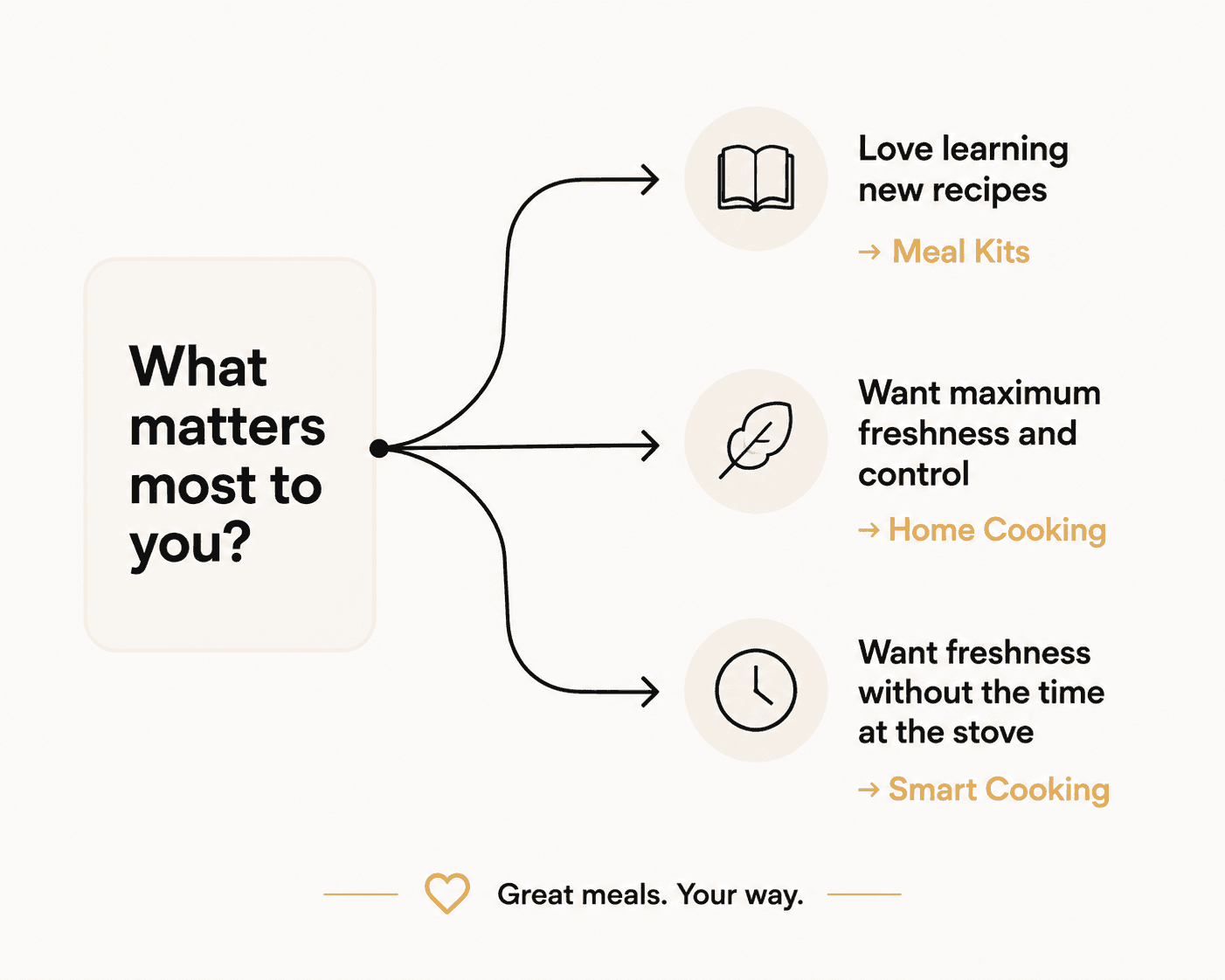
Choose what matters most when deciding how you want to cook.
Frequently Asked Questions
What are the best meal kits for vegetarians who want complex flavors?
Vegetarian meal-kit services offer rotating meatless menus, often with pre-portioned ingredients, sauces, and seasonings. Because ingredient condition can vary with packing, transit, and delivery timing, delicate produce and fresh aromatics may not always arrive at peak quality. If you are chasing truly layered flavor - a proper tadka or a Thai curry built slowly - cooking with ingredients you select yourself gives you more control over their freshness, condition, and flavor.
Is a self-cooking stove like Posha difficult to use?
It is designed to be straightforward. You choose a recipe, prep fresh ingredients (chop vegetables, measure spices), add them to the Posha cooking system, and let it run the cooking. It monitors temperature, stirs when needed, and progresses through the steps on its own. The learning curve is closer to following a recipe card than mastering a complicated appliance. You can explore available dishes on the Posha recipes page.
How does the cost of Posha compare to a year of vegetarian meal kits?
For a couple regularly using vegetarian meal kits for weeknight dinners, annual spending can vary substantially depending on the service, plan, serving count, shipping charges, promotions, and frequency of use. The Posha cooking system adds an upfront device cost, but ongoing meal costs are primarily the groceries you choose, which vary by recipe, store, location, and household preferences. The break-even point depends on the current device price, meal-kit plan, shipping charges, grocery choices, and how often each option is used. Households should compare their actual annual meal-kit spending with the cost of Posha plus groceries rather than assume a fixed first-year payback.
Can I use my own family's vegetarian recipes with an automated cooker?
Posha provides a growing library of supported recipes and lets users personalize factors such as spice level, dietary preferences, allergens, and ingredient choices. For a specific family dish, check the recipe library or submit a recipe request rather than assuming that any stovetop recipe can be loaded unchanged.
What's the difference between a plant-based meal kit and a vegetarian one?
A vegetarian meal kit excludes meat and fish but may include dairy and eggs. The term 'plant-based' is used inconsistently: it can describe food centered mainly on plants or food containing no animal-derived ingredients. If you need a fully animal-free kit, look for explicit vegan labeling and review the ingredient and allergen information.