Rohin Malhotra
Plant based protein isn't some new wellness fad in an Indian-American kitchen; it's what we've been eating all along. Dal quietly doing its job on the back burner, rajma that shows up like clockwork on Sunday, chana masala that somehow tastes better after a night in the fridge. The real problem isn't sourcing protein. It's building enough variety (and enough confidence in the numbers) that these staples stop feeling like the "alternative" and start feeling like the plan.
A 2024 market analysis put the global plant-based protein market at USD 18.7 billion, with projections reaching USD 40.1 billion by 2034. That kind of growth tracks with what people are actually cooking and ordering, not just what brands are selling. Below is a ranked list of vegan protein sources and vegetarian staples that hold up in a real home kitchen: practical, protein-dense, and worth making on a Tuesday.
The best plant-based protein sources covered in this article:
Toor Dal (Split Pigeon Peas)
Rajma (Kidney Beans)
Kala Chana and Chickpeas
Paneer
Tofu
Soya Chunks
Moong Dal and Sprouted Legumes
Quinoa
Protein-Per-Serving Quick Reference Table
Protein content per cooked serving (approximately 1 cup or 100g cooked unless noted)
Protein Source | Protein per Serving | Serving Size | Complete Protein? | Best Use |
|---|---|---|---|---|
Toor Dal | ~17g | 1 cup cooked | No (pair with rice) | Weeknight dal, sambar |
Rajma | ~15g | 1 cup cooked | No (pair with rice) | Rajma chawal, wraps |
Kala Chana / Chickpeas | ~15g | 1 cup cooked | No (pair with grains) | Chana masala, chaat |
Paneer | ~18g | 100g | Yes | Sabzi, tikka, bhurji |
Tofu (firm) | ~17g | 100g | Yes | Stir-fry, scramble, curry |
Soya Chunks | ~52g | 100g dry | Yes | Pulao, keema-style dishes |
Moong Dal / Sprouted | ~14g | 1 cup cooked | No (pair with grains) | Chilla, khichdi, salad |
Quinoa | ~8g | 1 cup cooked | Yes | Pulao substitute, salad base |
1. Toor Dal: The Everyday Workhorse of Legumes Protein
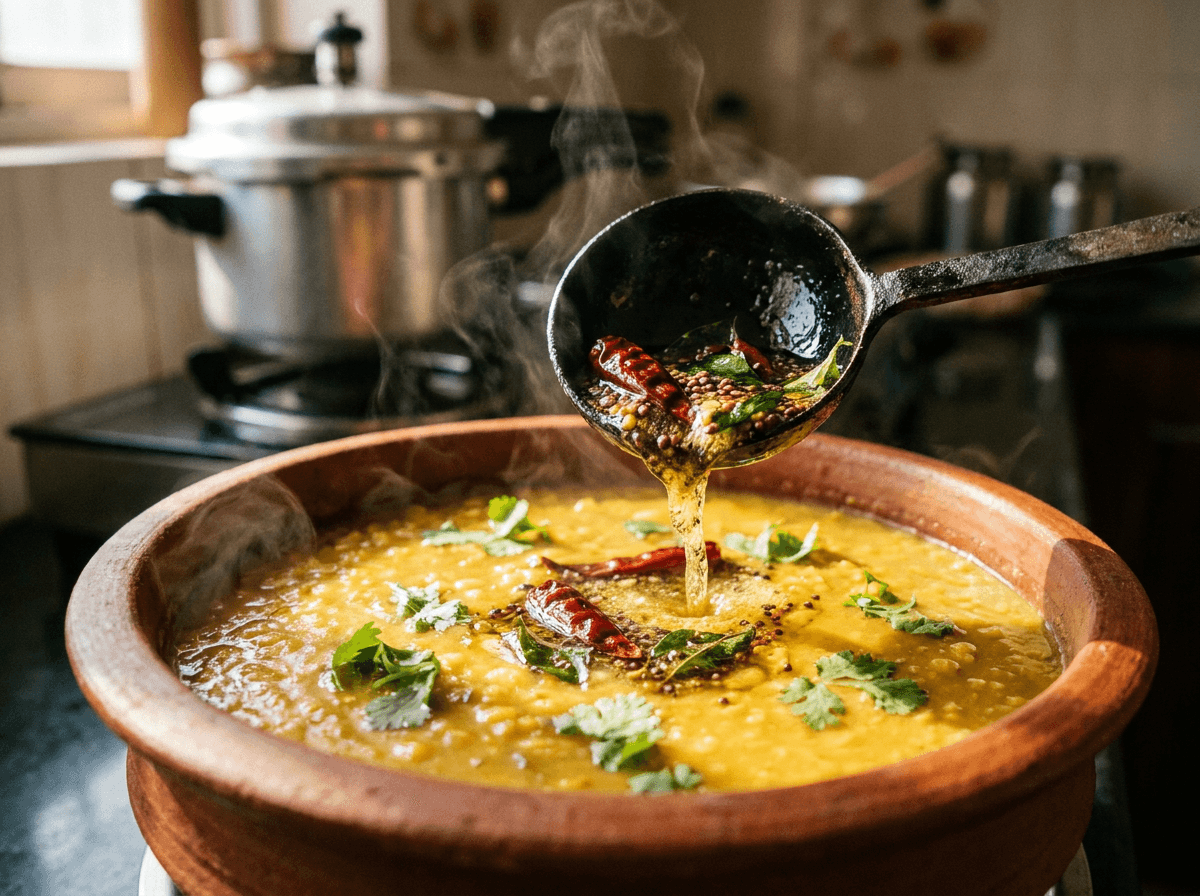
A sizzling tadka poured over golden toor dal — one of the richest everyday plant based protein sources in Indian cooking.
Toor dal is the backbone of high protein Indian vegetarian cooking. A cooked cup lands around 17 grams of protein, and once it meets rice, the amino-acid puzzle clicks into place, giving you a functionally complete protein meal. The NIH review on plant-based protein nutrition backs up what our plates have been saying for generations: legume-and-grain pairings are one of the simplest ways to cover your bases without reaching for meat.
This is how Posha approaches a hands-off pot of toor dal without turning it into an all-day project. Rinse the dal, then add it to the pot with water, turmeric, and salt and cook until it's fully soft. While the dal does its thing, build the flavor in a separate pan: heat ghee or oil, let mustard seeds pop, then add cumin, a dried red chili, and asafoetida. When the cumin starts to deepen, add chopped onion and cook until golden, then stir in ginger-garlic paste and tomatoes and cook until the oil separates. Fold that base into the dal and simmer together for five minutes. Finish with a last-minute tadka pour (ghee and a pinch of red chili powder) right before serving. The point isn't complexity; it's sequencing, so the pot mostly runs on autopilot while the flavor stacks up.
2. Rajma: The Weekend Protein That Earns Its Reputation
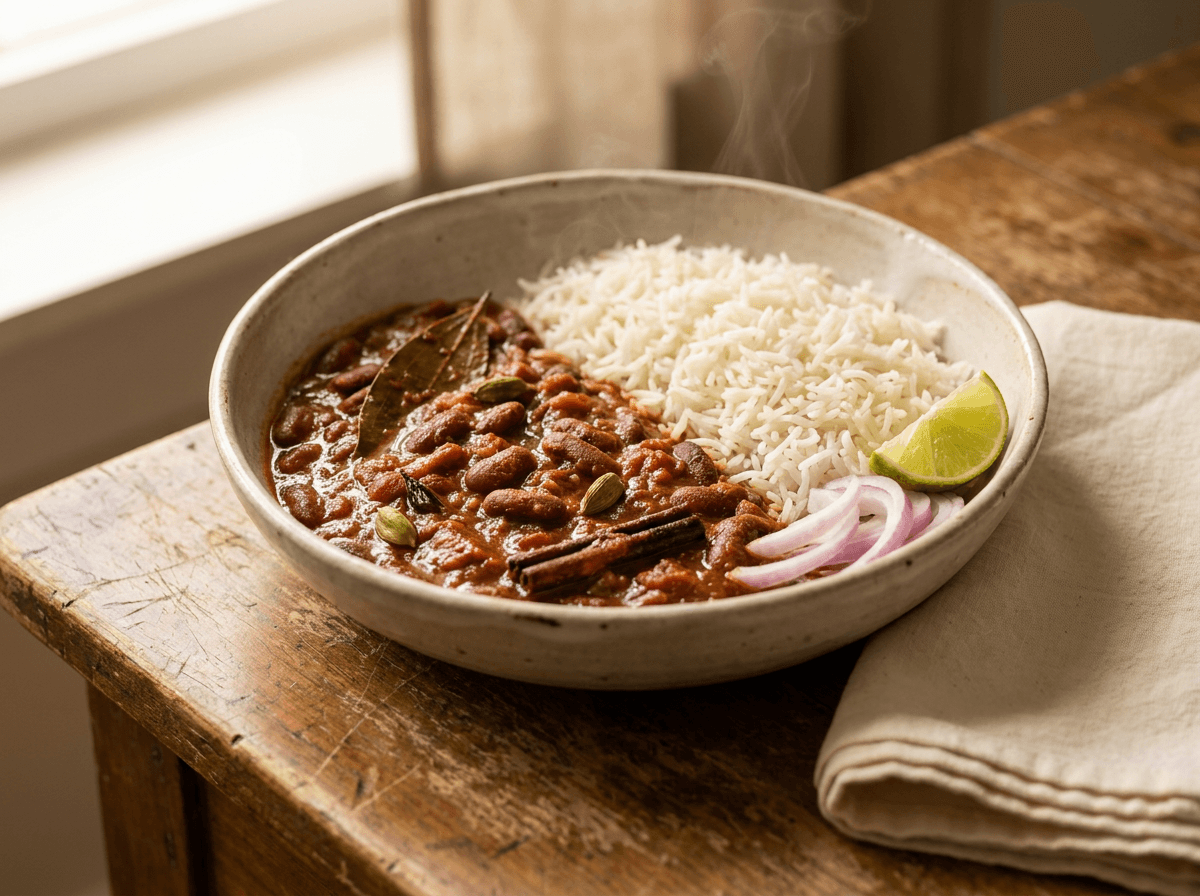
Rajma chawal delivers around 15g of protein per cup — one of Indian cooking's most complete plant-based meals.
Rajma earns the Sunday headline. One cooked cup comes in around 15 grams of protein, plus enough fiber that you're not hunting for snacks an hour later. The research on plant-based foods and cardiovascular health calls out legumes like rajma for their role in lowering risk for heart disease and type 2 diabetes, two topics that land a little too close to home in many South Asian families.
Rajma is also a lesson in planning: the overnight soak is doing more work than your masala. Soaked beans cook faster, sit easier, and take on flavor more evenly. Missed the soak? The quick-boil trick (boil, turn off the heat, rest for an hour) still gets you moving. And once it's cooked, rajma is the rare dish that improves with time, which means a big weekend batch can quietly carry you through Wednesday.
3. Kala Chana and Chickpeas: Versatile Legumes Protein for Any Meal
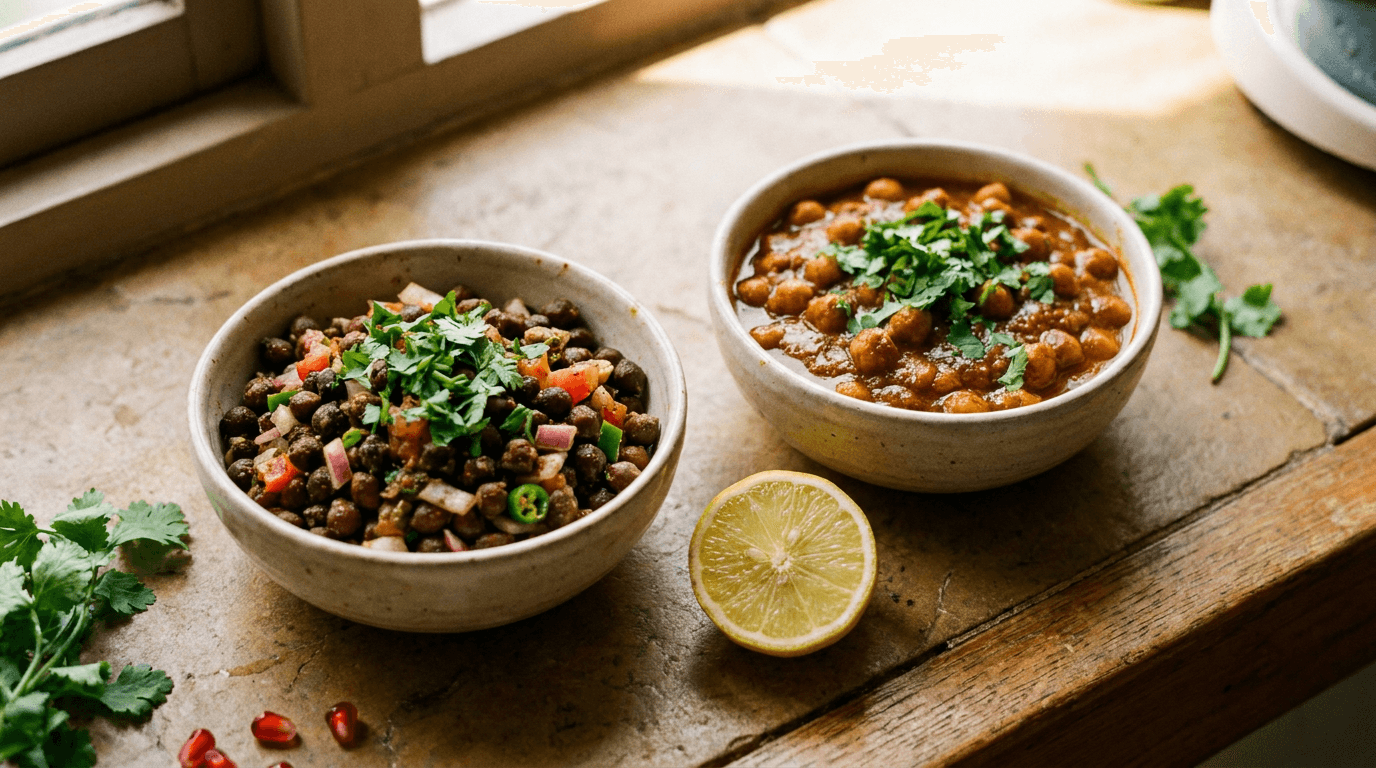
Kala chana works as a dry chaat or a rich curry, making it one of the most versatile legumes for everyday plant-based protein.
Chickpeas and kala chana are close relatives with very different vibes. Kabuli chana (white chickpeas) go creamy and soak up gravy like a sponge. Kala chana stays firmer, tastes a bit earthier, and comes with a slightly lower glycemic index. Either way, you're looking at roughly 15 grams of protein per cooked cup, plus solid amounts of iron and folate.
Three fast ways to use chickpeas as protein without meat:
Chana chaat: toss cooked chickpeas with raw onion, tomato, chili, chaat masala, and lime. Five minutes, no stove time.
Chana masala: the classic, built on a thick tomato-onion base and finished with a tadka of whole spices.
Roasted chickpeas: toss with oil and spices, roast at 400F for 25 minutes. Crunchy, high-protein snacking that beats most packaged options.
4. Paneer: The Complete Protein That Needs No Introduction
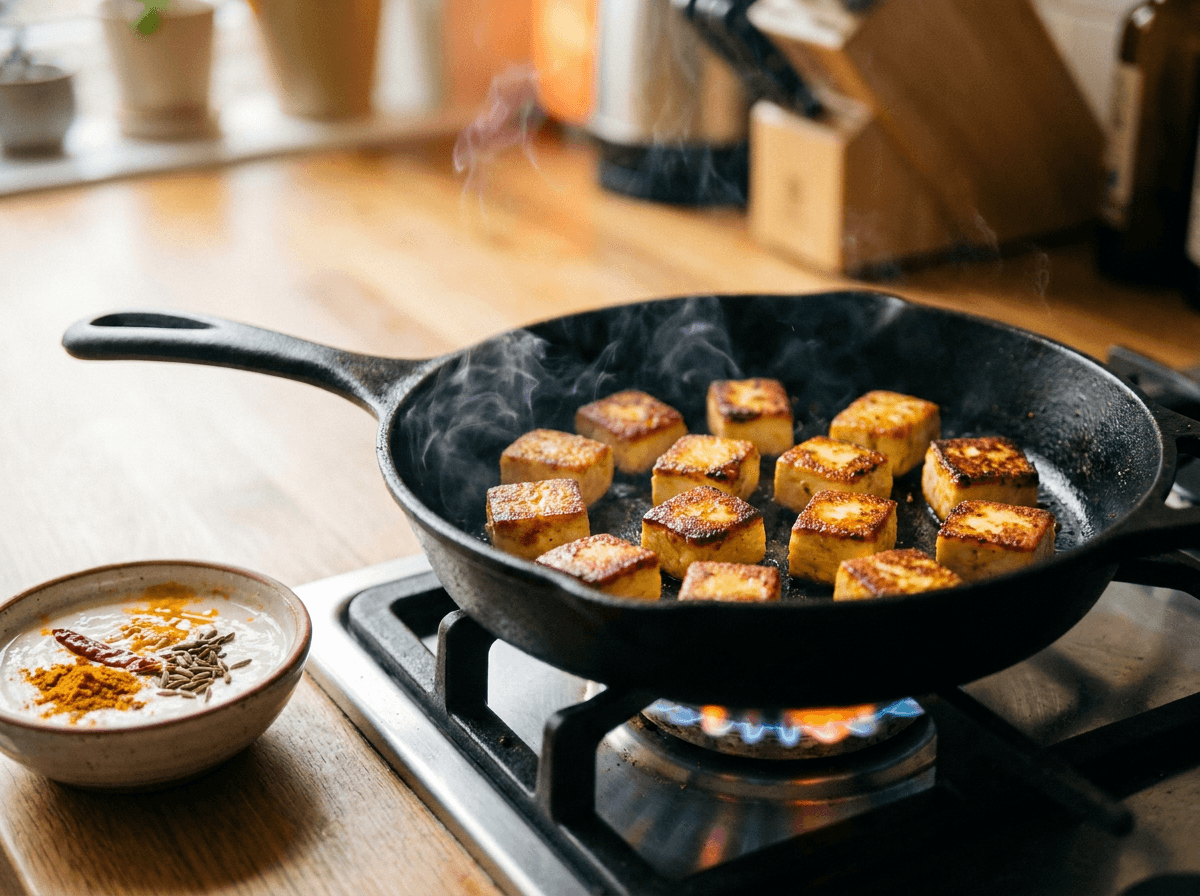
A two-minute sear transforms paneer into a high-protein ingredient with real restaurant texture.
Paneer is one of the few complete proteins that shows up naturally in an Indian kitchen, meaning it packs all nine essential amino acids on its own. At roughly 18 grams of protein per 100g, it beats most legumes by weight. It's also wonderfully low-stress to cook: it holds its shape, takes on marinades, and browns in a dry pan without acting precious about it.
If paneer dishes at home feel a little flat, it's usually because the paneer never met real heat. Dropping raw cubes straight into curry gives you soft, sometimes rubbery bites. Give it two minutes in a hot pan first and you get a golden crust that stays intact in sauce and reads instantly more restaurant-y. Paneer bhurji (scrambled paneer with onion, tomato, and spices) is the fastest high-protein weeknight move on this list: under 15 minutes, and it plays nicely with roti or even plain toast.
5. Tofu: The Underrated Complete Plant Protein

Pressed and pan-fried firm tofu delivers roughly 17g of protein per 100g — rivalling paneer.
Tofu is a complete protein made from soy, and it's far more compatible with Indian flavors than it gets credit for. It won't taste exactly like paneer, but the protein math is close (around 17g per 100g for firm tofu), and the way it cooks can be surprisingly similar once you treat it right. It's also vegan and lower in saturated fat, which matters in kitchens where not everyone eats the same way.
Pressing is the difference between tofu that crisps and tofu that sulks. Straight from the package, firm tofu is still carrying a lot of water. Press it for 20 minutes between two plates with something heavy on top, and it will actually sear instead of steaming itself into blandness. After that, it takes on marinades and masalas easily. Tofu bhurji, tofu tikka, and tofu in palak gravy can be legitimately satisfying, not "good for vegan" satisfying.
6. Soya Chunks: The Highest Protein-Per-Gram Option in Your Pantry
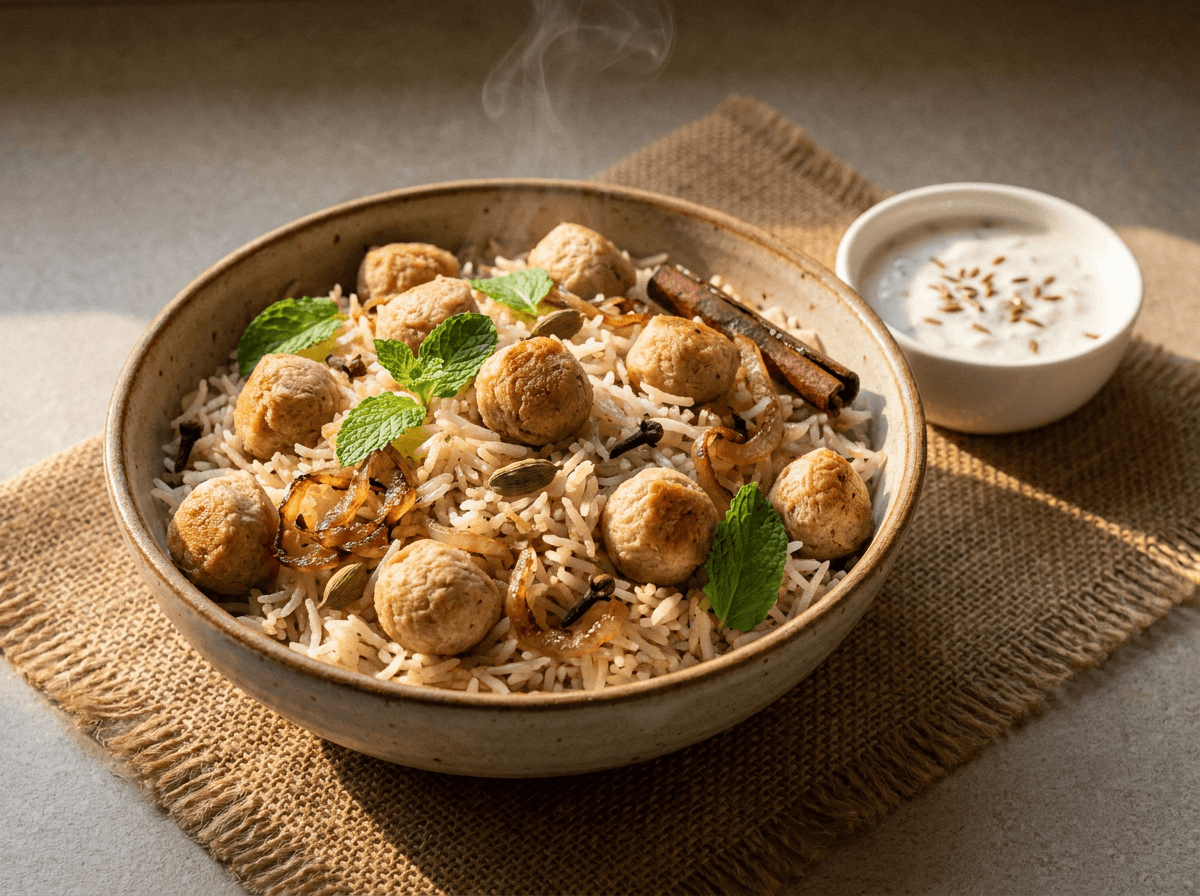
Soya chunk pulao is one of the most protein-dense one-pot meals in an Indian home kitchen.
Soya chunks are dried textured soy protein, and they are almost absurdly protein-dense: roughly 52 grams per 100g dry weight. Rehydrate them in hot water, squeeze them out well, and they turn chewy and "meaty" in the way that works for pulao, curry, and keema-style dishes. They're also complete proteins, budget-friendly, and happy to sit in the pantry for months.
The 1mg nutrition resource points to soya chunk pulao as one of the best high-protein Indian meals for busy weeknights, and the logic holds: one pot, about 30 minutes, and protein numbers that compete with plenty of meat dishes. The small but important detail is the soak. Use plain hot water (skip salting it), then squeeze the chunks thoroughly before they hit the pan; that keeps the texture from drifting into rubber territory.
7. Moong Dal and Sprouted Legumes: Light, Fast, and Protein-Forward

Moong dal chilla delivers 8–10g of plant based protein per piece — ready in minutes on a hot griddle.
Moong dal is the lightweight champion of the usual dal lineup: quick, relatively gentle, and not fussy about soaking. Split yellow moong can finish in under 20 minutes on the stovetop. Whole moong, sprouted for 24 to 48 hours, brings extra crunch to salads and chaats and increases protein bioavailability.
Moong dal chilla is what you make when you want protein but not another bowl of dal. Blend soaked moong dal with ginger, green chili, and a pinch of asafoetida into a smooth batter, then cook it like a thin crepe on a hot griddle. You're looking at roughly 8 to 10 grams of protein per chilla, and about three minutes per piece once the pan is hot. It works for breakfast, a light dinner, or lunchbox duty. Sprouted moong is even simpler: toss with lime, chili, and chaat masala for a no-cook protein salad in about two minutes.
8. Quinoa: The Complete Grain That Earns Its Place
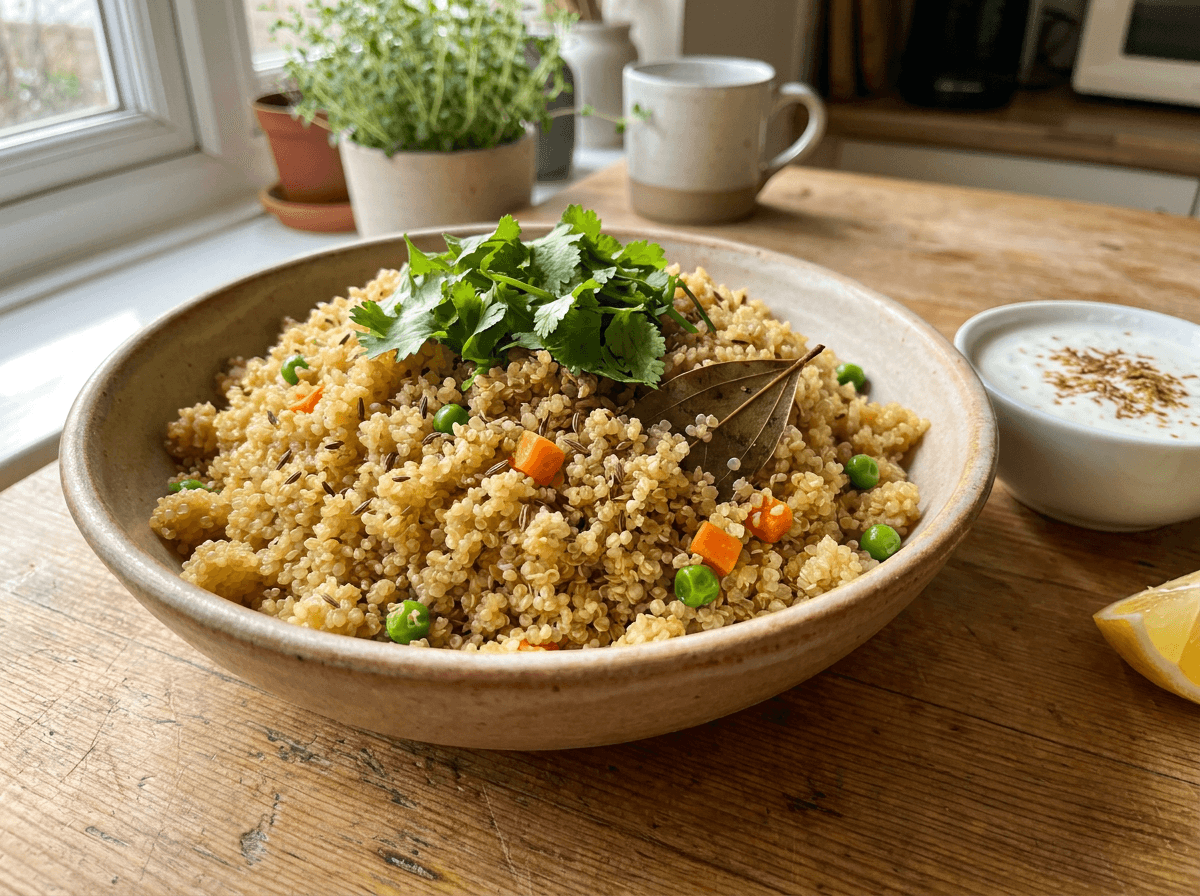
Quinoa cooked pulao-style adds complete plant-based protein without disrupting a familiar Indian meal.
Quinoa is one of the rare grains that counts as a complete plant protein, with all nine essential amino acids. At about 8 grams of protein per cooked cup, it's not trying to beat soy or paneer. What it does well is upgrade meals where rice is basically neutral filler: swap quinoa into pulao or khichdi and you add protein without asking the dal to carry the entire load. Healthline's guide to complete protein sources for vegetarians puts quinoa in the same reliable tier as soy and buckwheat.
Treat quinoa like basmati and it stops tasting like a "health" substitution. Rinse it well, toast it briefly in a dry pan for a nuttier edge, then simmer with a 1:1.75 water ratio. If you bloom cumin and a bay leaf in the pot before the water goes in, the final bowl lands comfortably in an Indian meal instead of announcing itself as a separate agenda.
Cooking Tools That Help You Cook Plant Proteins Better
Good plant-forward cooking is half technique and half setup. A few tools (and a few categories of tools) that make dals, beans, and soy proteins easier to pull off on a busy schedule:
Posha Robot Chef (www.posha.com) is designed for the kind of multi-stage Indian cooking that usually demands you hover: stirring, temperature control, and timing across long simmers. That means you can step away during the slow parts and come back when it's actually time to do something. If your house runs on dal most nights, that hands-off rhythm changes what weeknight cooking looks like. It's a particularly good fit for the Indian-American kitchen, where the workflow often includes soaking, pressure-cooking, and a separate tadka that needs precise heat.
Generic smart ovens and meal-kit systems can help with roasting or pre-portioned meals, but they are not built around the layered workflow of Indian home cooking: blooming spices, simmering dals, managing texture, and timing tadka. Posha is better suited to this kind of cooking because it handles stirring, heat control, and step-by-step timing for fresh, homemade meals.
Putting It Together: Which Protein Source Is Right for Your Kitchen?
Most Indian-American kitchens don't need a single "best" protein. They need a rotation that matches the week. Toor dal and moong dal cover the regular work nights. Rajma and chana feel right when you have weekend time (or at least weekend patience). Paneer and tofu are for the days you want something that eats like a proper main. Soya chunks are the pantry wildcard when you need a big protein number fast. Quinoa is the smart swap when you want a complete-protein grain without rewriting the rest of the meal.
Protein without meat isn't a downgrade; it's just a different set of defaults. A well-cooked dal with a proper tadka, served with rice, gives you a complete protein meal with more fiber, more antioxidants, and a lower cardiovascular risk profile than many meat-based alternatives, a pattern supported in the NIH research on plant-based foods and chronic disease. The tradition already works. The only real upgrade is cooking with enough intention (and enough variety) that the food stays interesting week after week.
Frequently Asked Questions
What is the highest plant based protein source for Indian cooking?
Soya chunks top the list for sheer protein density, at roughly 52g of protein per 100g dry weight. If you're looking at fresher, weeknight-friendly options, paneer sits around 18g per 100g, with firm tofu close behind, and cooked toor dal at roughly 17g per cup. For everyday legumes protein that fits Indian vegetarian meals, toor dal and rajma are hard to beat on practicality.
Are Indian dals considered complete plant proteins?
Most dals aren't complete proteins on their own because they run low in certain essential amino acids, especially methionine. Pair dal with rice (or another grain) and the combination covers all nine essential amino acids, which is why dal-rice is such a strong traditional complete-protein meal. Paneer, tofu, and soya chunks are complete proteins without needing a grain partner.
How much protein do I need per day on a vegetarian diet?
Common guidelines land at 0.8g of protein per kilogram of body weight for sedentary adults, and roughly 1.2 to 1.6g per kilogram for active individuals. For someone who weighs 70kg, that's about 56 to 112g per day depending on activity level. A meal pattern built around dal, rajma, paneer, and soya chunks can hit those targets without relying on supplements.
Can I get enough vegan protein sources without using paneer or dairy?
Yes. Tofu, soya chunks, rajma, chana, moong dal, and quinoa are all dairy-free vegan protein sources, and together they cover a broad amino-acid mix. Soy foods (tofu, soya chunks, edamame) are especially useful because they're complete proteins on their own. Sprouted legumes also improve protein bioavailability without adding any animal products.
What is the easiest high protein Indian vegetarian meal to make on a weeknight?
Paneer bhurji is the quickest option here, usually under 15 minutes. Moong dal chilla is right behind it, especially if the dal was soaked ahead of time. If you want a single-pot dinner that eats filling, soya chunk pulao takes about 30 minutes and delivers the highest protein count of the one-pot choices listed.
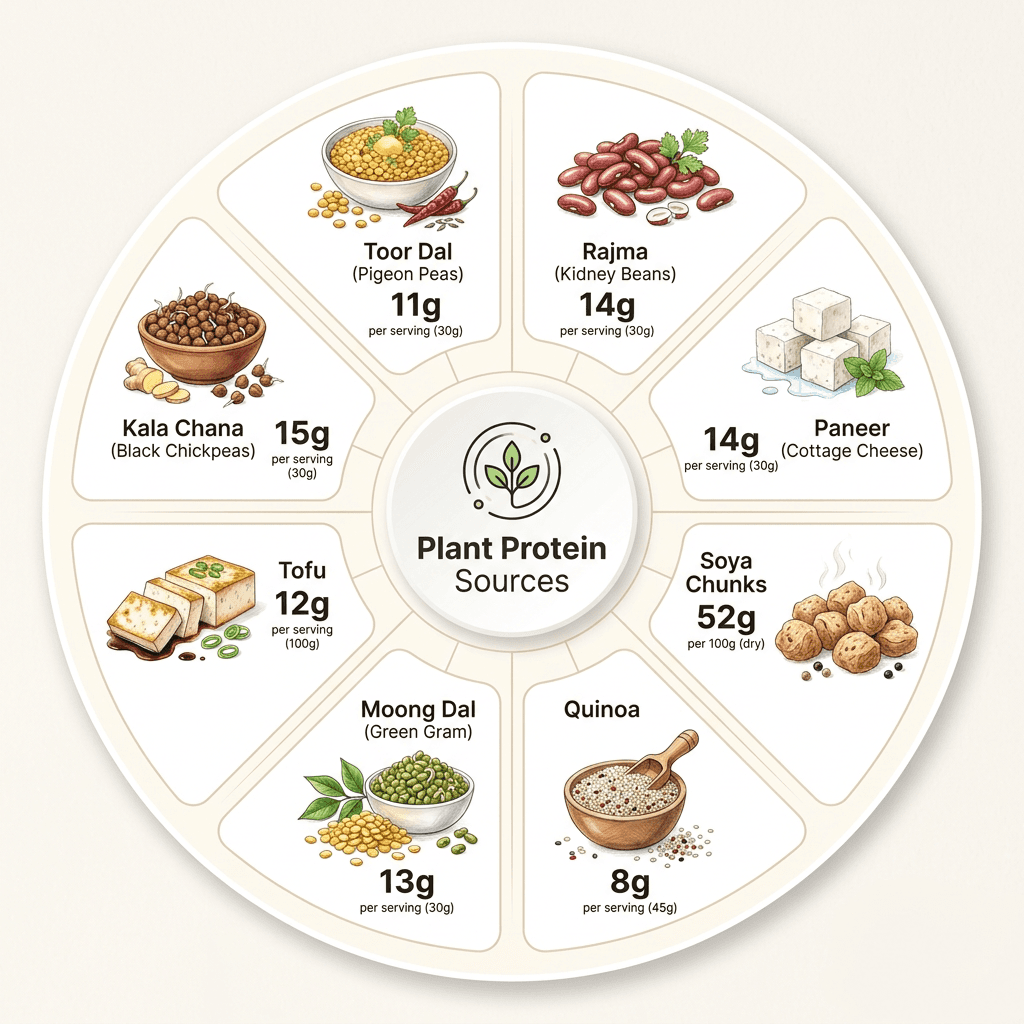
A quick-reference chart of eight plant proteins suited to every night of the week.