Rohin Malhotra
Premade meal delivery is no longer a niche convenience. The global prepared meal delivery market is estimated at USD 13.72 billion in 2026 and is projected to reach USD 30.72 billion by 2033, growing at a CAGR of 12.2% (Coherent Market Insights, 2026). North America leads with a 40.4% market share, largely because dual-income households and crowded schedules keep pushing dinner toward whatever is easiest. Put simply: a lot of people have swapped the stove for a box on the doorstep.
Convenience, though, comes with terms. Premade meals buy you time by giving up freshness and control, and that tradeoff is hard to miss once you peel back the film. Below is a direct comparison across five criteria: freshness, ingredient control, taste, nutritional quality, and effort. The point is not to romanticize cooking or dunk on delivery, but to land on a clear answer about what actually works for dinner.
What Premade Meal Delivery Actually Gives You
Services like CookUnity and HelloFresh sit under the same broad umbrella, but they operate differently. CookUnity ships fully cooked, chef-prepared dishes meant to be reheated in minutes. HelloFresh ships portioned ingredients with recipe cards, so you still cook, just without the grocery-store scavenger hunt. Both can replace scratch cooking on busy weeks, but neither hands you full control.
The freshness gap is built into the model. Fully prepared meals are cooked ahead of time, then chilled or frozen so they can survive shipping. When you finally eat, the food is typically three to seven days removed from the pan. Ingredient quality is decided at a production facility, not at your counter. Sodium targets, oil choices, and portion sizes are baked into someone else's playbook. A study published by the National Library of Medicine found that meals fully or partly home-cooked were more likely to contain fruits and vegetables than pre-prepared meals across every demographic group studied.
Ready-made delivery does solve a real weeknight problem: it removes the mental load. You do not have to plan, shop, or improvise. The flip side is that you accept the producer's decisions as final, from seasoning to cook level. If the sauce is too sweet or the vegetables are over, there is no midstream fix because the cooking already happened somewhere else.
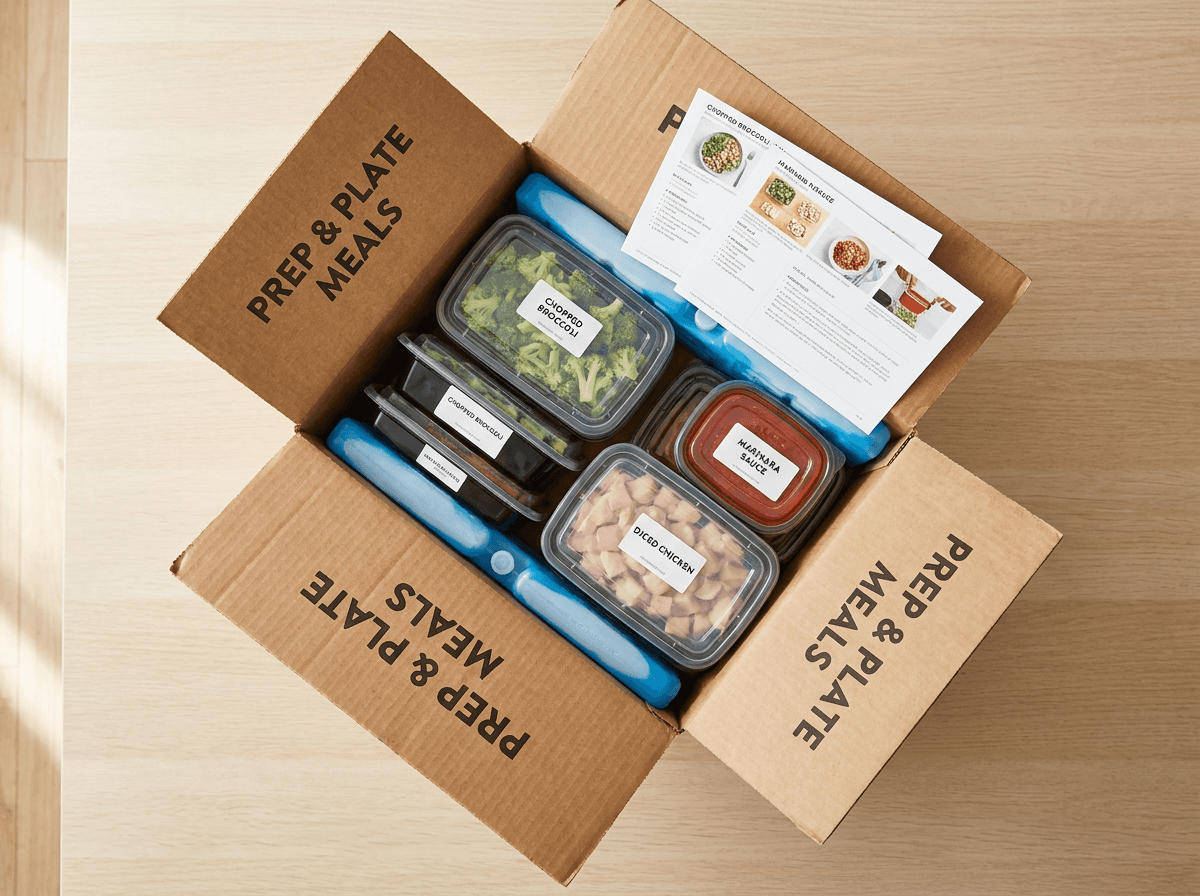
Services like HelloFresh pre-portion every ingredient, removing grocery planning but limiting your control over the final dish.
What Fresh Home Cooking Actually Gives You
Fresh home cooking starts with one decisive advantage: you decide what goes in, how much, and how it gets cooked. Homemade meals typically come with lower sodium, saturated fat, and added sugar than store-bought equivalents because the person cooking controls the inputs. That control adds up in a way delivery cannot match. Cook fresh four nights a week and you are making hundreds of small decisions over a year that quietly shape what "normal" food tastes and feels like.
The constraint is not mysterious: it takes work. Buying ingredients, lining up timing across a few components, and cleaning up afterward is real friction. For households already running hot, that friction is the whole reason this debate exists. So the practical question becomes whether you can keep freshness and control without signing up for a full cooking project every night.
Smart Kitchen Devices: The Middle Ground Worth Knowing
The real gap between premade meal delivery and traditional home cooking is not just convenience. It is control. Premade meals save time, but the cooking decisions have already been made before the food reaches your door. Traditional home cooking gives you freshness and flexibility, but it also asks for planning, timing, stirring, monitoring, and cleanup on nights when you may not have much energy left.
That is where Posha creates a more practical middle ground. Instead of replacing fresh food with reheated trays, Posha brings automation into the home kitchen itself. Its Culinary AI is designed to help the robot chef understand cooking stages, manage timing, and adjust the process as a dish develops. The result is not a fixed reheating program or a meal-kit script. It is fresh cooking with intelligent help.
Posha also keeps choice with the household. You can explore a wide range of Posha recipes, choose meals that fit your cravings or dietary preferences, and cook with ingredients you actually want to eat. That matters because the biggest advantage of home cooking is not only freshness; it is the ability to decide what goes into the meal in the first place.
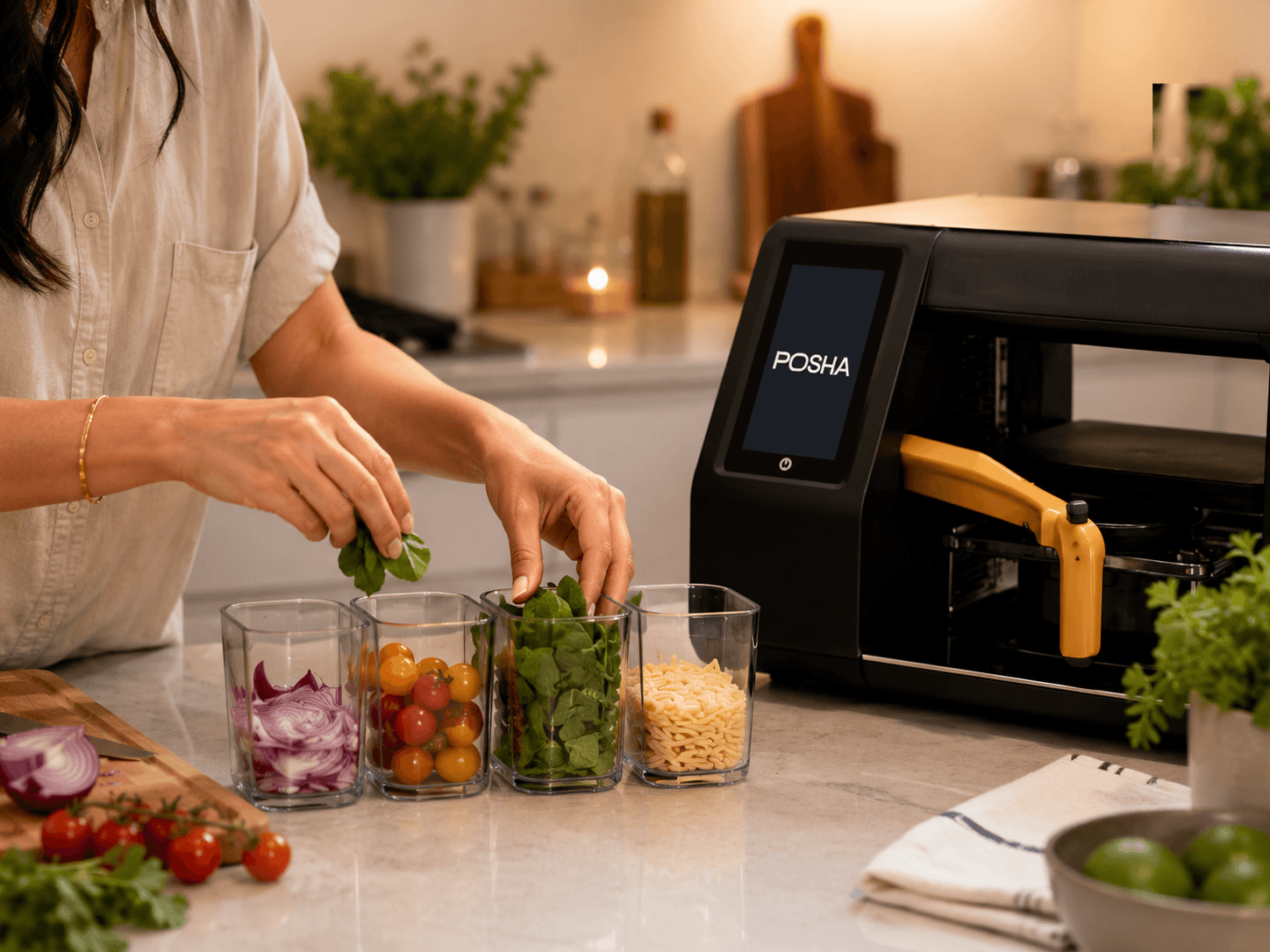
Posha brings cooking automation home, keeping fresh ingredients and personal choice at the center.
For people trying to build a more sustainable home-cooking habit, Posha's stories and cooking guides add another layer of support, from meal ideas to practical home-cooking tips. And for users who want expanded access and ongoing support, the Posha Circle Membership Help Center explains how membership works.
For people trying to build a more sustainable home-cooking habit, Posha's stories and cooking guides add another layer of support, from meal ideas to practical home-cooking tips. And for users who want expanded access and ongoing support, the Posha Circle Membership Help Center explains how membership works.
The important difference is this: Posha does not ask you to choose between convenience and fresh home-cooked food. It reduces the repetitive labor of cooking while keeping the meal rooted in real ingredients, real-time cooking, and personal control. For households that want dinner to feel homemade without turning every evening into a full kitchen shift, Posha is the smarter middle ground.
Head-to-Head: Freshness, Control, Taste, and Effort
Comparison across five criteria: premade meal delivery services vs fresh home cooking vs Posha Robot Chef
Criteria | Premade Meal Delivery (e.g., CookUnity, HelloFresh) | Traditional Fresh Home Cooking | Posha Robot Chef |
|---|---|---|---|
Freshness | Typically cooked 3-7 days before delivery; shipped chilled or frozen | Peak freshness; cooked right before you eat | Cooked fresh at home from whole ingredients, when you want it |
Ingredient Control | Ingredients, portions, sodium, and fat are set by the producer | Total control over ingredients and quantities | Total control; you buy ingredients from any store |
Taste | Reliable but standardized; reheating dulls texture | Highest ceiling; you can adjust while cooking | High; adjusts to real ingredient size and condition in real time |
Nutritional Quality | Inconsistent; often higher in sodium and additives | Typically highest; lower sodium and saturated fat by default | High; tracks home cooking because you control the inputs |
Effort Required | Low; heat and eat | High; shop, prep, cook, then clean | Low; load ingredients and let Posha run the cook |
Verdict: Which Approach Is Right for You?
Premade meal delivery wins on speed. If the non-negotiable is dinner in under ten minutes with no planning, services like CookUnity do what they claim. You pay for that speed with older food, less say over ingredients, and a subscription bill that can climb fast. If cooking most nights is simply not realistic, delivery is a workable bridge.
Traditional fresh home cooking wins on quality. If you have the time and the competence, cooking from scratch with ingredients you picked is still the gold standard. The nutritional evidence favors it, and the taste ceiling is higher than anything designed to survive refrigeration and shipping.
Posha wins for households who want fresh quality without the full effort. It addresses the central tension head-on: premade meals trade freshness and control for speed, and that trade often feels like the wrong one at dinnertime. Posha lowers the labor without taking away your say over what goes into the pot. You shop for real ingredients, load them in, and eat food cooked minutes ago from whole produce, not a tray built for transit. For families who miss home-cooked flavor but cannot run a full kitchen shift every night, that is the difference that matters.
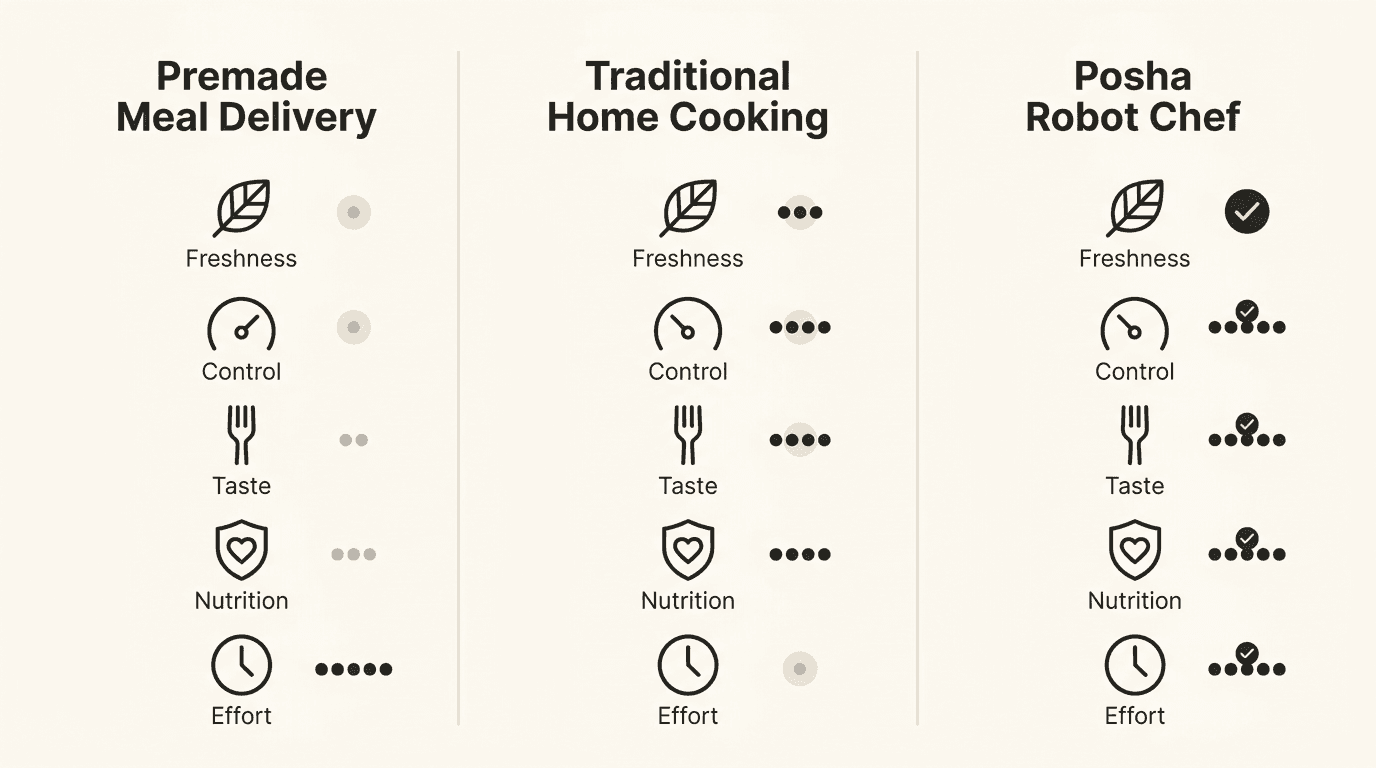
Posha bridges the gap between premade meal delivery speed and fresh home-cooking quality.
Frequently Asked Questions
Are premade meals as nutritious as home-cooked meals?
Usually not. A study from the National Library of Medicine found that fully or partly home-cooked meals were more likely to include fruits and vegetables than pre-prepared meals across all studied demographic groups. Premade meals also often run higher in sodium and saturated fat, since producers optimize for shelf stability and consistent flavor at scale.
What is the difference between premade meals and prepared meal delivery?
They overlap, but they are not the same thing. Premade meals are fully cooked before shipping and only need reheating. Prepared meal delivery is broader: it includes fully cooked services (like CookUnity) and meal kits (like HelloFresh) that deliver pre-portioned raw ingredients with instructions. Both can replace scratch cooking, but meal kits still require hands-on cooking time.
How does Posha differ from services like HelloFresh or CookUnity?
HelloFresh and CookUnity are subscription delivery services that send food to your door. Posha is a home cooking device. You buy fresh groceries from any store, load them into Posha, and it cooks in real time, reading each ingredient's size and characteristics instead of following a fixed program. You keep full control over what you eat.
Is fresh vs premade food really that different in taste?
Most of the time, yes. Reheating tends to flatten texture, especially for proteins and vegetables cooked days earlier. Food cooked fresh from whole ingredients holds onto moisture and structure, and flavor compounds do not take the same hit from chilling and reheating. The difference shows up fastest in texture-driven dishes like sauteed greens or seared proteins.
What are the best premade meal alternatives for people who want more control?
The strongest alternatives are options that keep cooking at home while cutting down on labor. Posha reads and adapts to real ingredients in real time. If you still want delivery, meal kits like HelloFresh offer more ingredient transparency than fully cooked trays, though you are still working within their pre-selected choices.