Rohin Malhotra
Gluten free foods are hiding in plain sight once you know what counts. For people with celiac disease, which affects an estimated 3 million Americans, eating gluten can set off an autoimmune response that damages the small intestine. For others dealing with non-celiac gluten sensitivity, the consequences are different, but the discomfort is still very real. Either way, dinner brings the same practical question: what can I actually eat and cook tonight?
This gluten free food list is written for households doing the everyday work of getting food on the table. You will see what is gluten free by nature, which grains are safe, why Indian cooking fits especially well, and how tools like the Posha Robot Chef can take pressure off when you need gluten-free dinners to happen reliably. The sections below cover: naturally gluten-free whole foods, safe gluten free grains, proteins and dairy, a gluten free pantry staples list, gluten free Indian food highlights, and smart cooking tools.
What Is Gluten Free, and Why Does It Matter?
Gluten is a group of proteins found in wheat, barley, rye, and triticale. In people with celiac disease, even small amounts can trigger an immune attack on the lining of the small intestine. The Mayo Clinic's overview of the gluten-free diet is clear on the practical implication: strict, lifelong avoidance is the only effective treatment. In the United States, the FDA allows a "gluten-free" label only when a food contains fewer than 20 parts per million (ppm) of gluten, a threshold considered safe for most people with celiac disease.
The global market for gluten-free products was valued at USD 8.5 billion in 2025 and is projected to reach USD 18.3 billion by 2033 (Grand View Research, 2026). Some of that is driven by higher diagnosis rates; some of it is plain consumer interest. The reassuring part, especially when you are starting out, is simple: most whole, unprocessed foods are already naturally gluten free.
Naturally Gluten-Free Foods: The Foundation of Every Meal
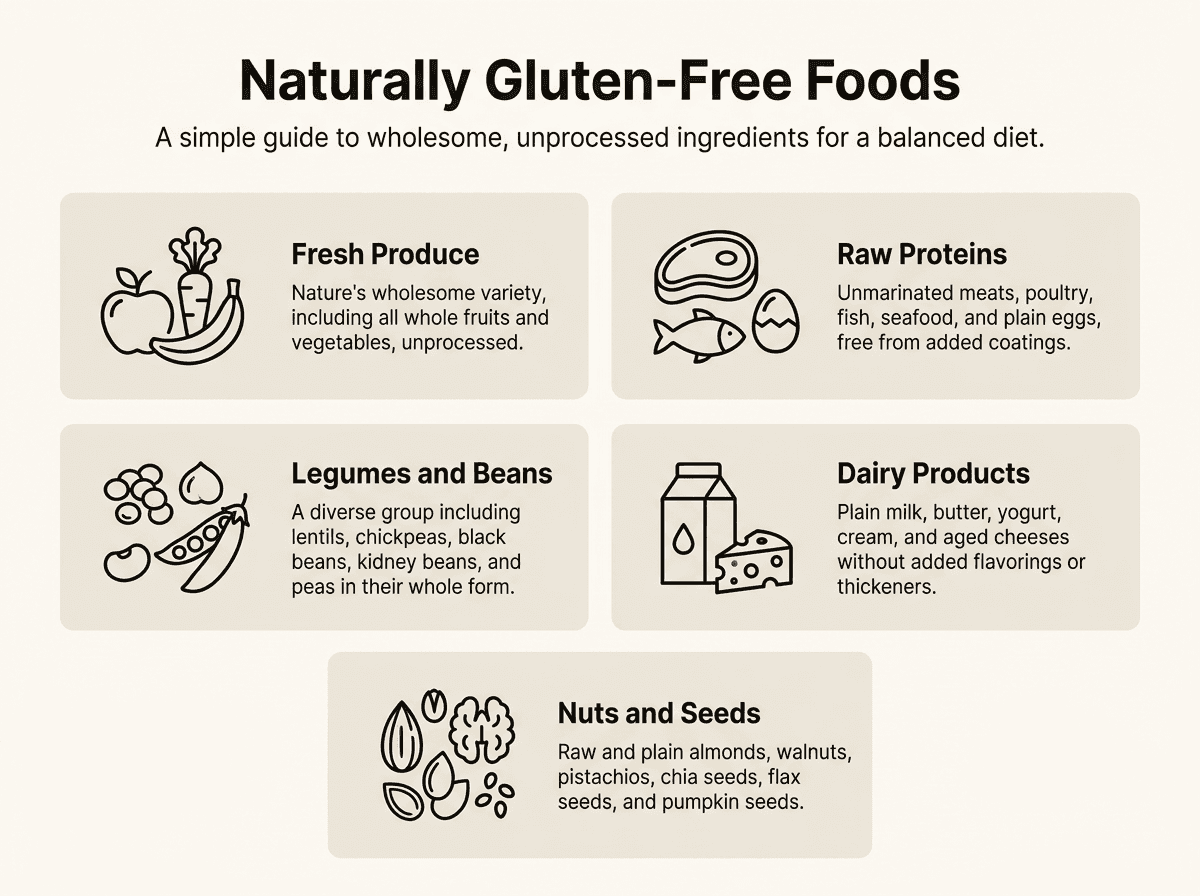
From fresh produce to nuts and seeds, these groups form the foundation of gluten free foods in their whole, unprocessed form.
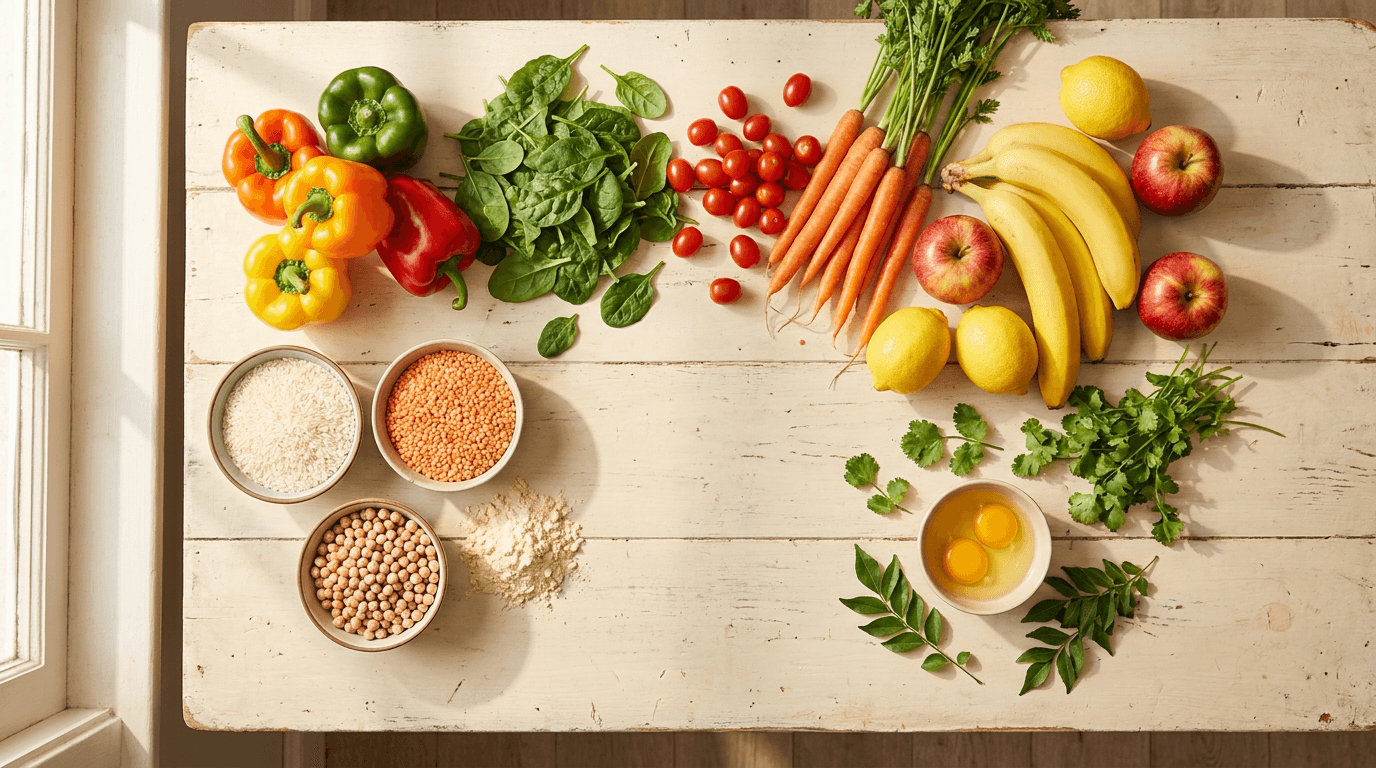
The Celiac Disease Foundation's gluten-free foods resource lays out the heart of it: in their whole, unprocessed form, fruits, vegetables, meat, poultry, fish, seafood, dairy, beans, legumes, and nuts are naturally gluten free. That is a lot of food, and it is plenty of variety. The tricky part is what happens after processing: sauces, coatings, seasoning blends, and shared equipment are where gluten tends to sneak in.
Safe naturally gluten-free foods to stock regularly:
All fresh fruits and vegetables (no sauces or coatings added)
Fresh and frozen meat, poultry, and fish (unbreaded, unmarinated)
Eggs
Plain dairy: milk, butter, most hard cheeses, plain yogurt
Dried or canned beans and lentils (check for shared-facility warnings)
Raw nuts and seeds (not seasoned mixes with soy sauce or malt)
Oils, vinegars (except malt vinegar), and most plain spices
Cross-contact warning: "Naturally gluten-free" is not the same as "automatically safe." If something was processed on shared equipment with wheat, it can still be a problem. Read labels for "may contain wheat" or "processed in a facility that also processes wheat," especially on oats, nuts, and spice blends.
Gluten-Free Grains and Starches Worth Knowing
Gluten free grains are where many people expect the list to shrink, and then get pleasantly surprised. Wheat, barley, and rye are off the table, but there is still a wide, satisfying set of starches to cook with. Rice is the obvious workhorse, yet it is far from the only one worth keeping around.
Gluten-Free Grains and Starches at a Glance
Grain or Starch | Best Used For | Watch Out For |
|---|---|---|
White or brown rice | Everyday base, rice flour baking | Flavored rice mixes with soy sauce |
Quinoa | Salads, grain bowls, porridge | Shared-facility cross-contact |
Corn (masa, polenta) | Tortillas, porridge, baking | Some cornbread mixes contain wheat flour |
Amaranth | Porridge, flatbreads | Less common; verify certification |
Buckwheat | Pancakes, soba noodles | "Buckwheat" soba often blended with wheat |
Millet | Porridge, flatbreads | Usually safe; verify if buying bulk |
Certified gluten-free oats | Oatmeal, baking | Regular oats are high cross-contact risk |
Tapioca and arrowroot | Thickening sauces, baking | Generally very safe |
Gluten-Free Indian Food: A Naturally Rich Tradition
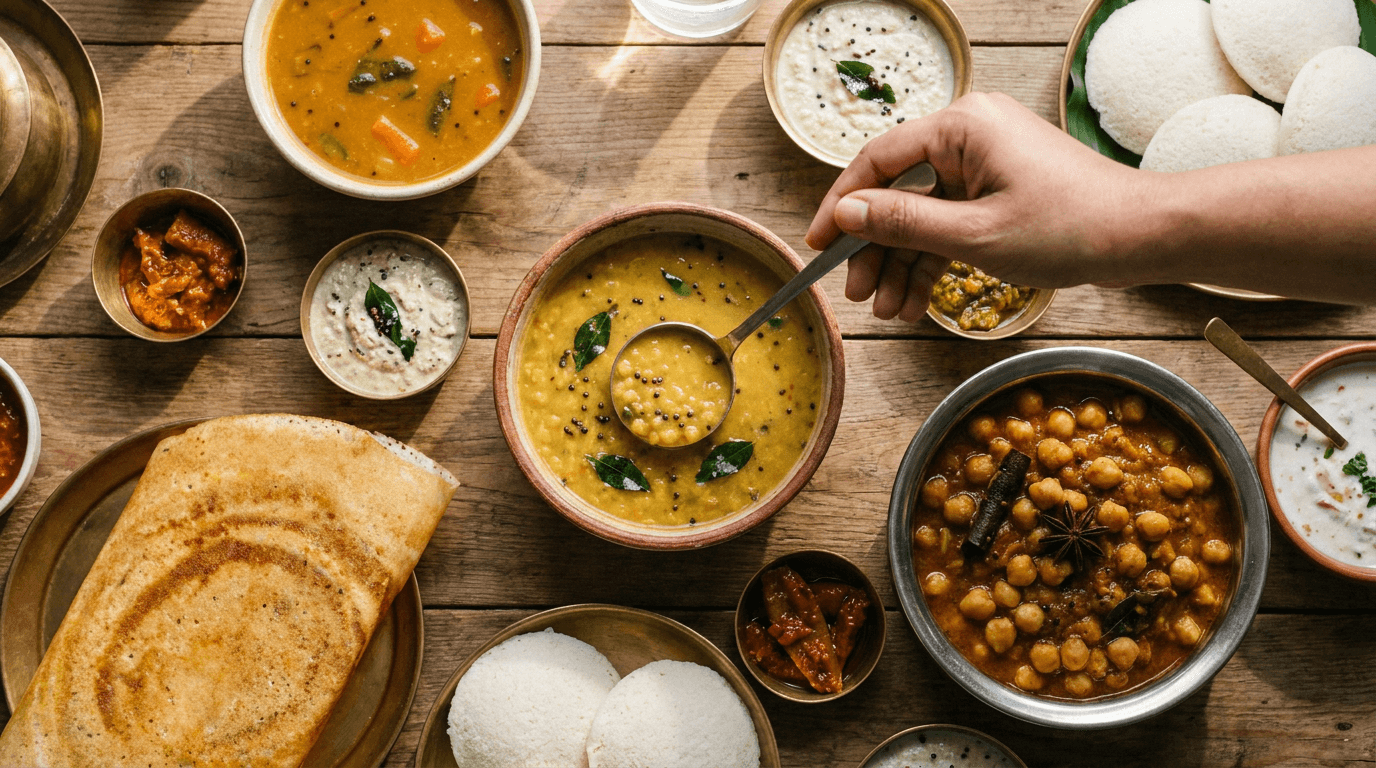
Much of traditional Indian cooking is naturally gluten-free without any substitutions.
Gluten free Indian food deserves more credit than it gets, especially for families trying to make gluten-free eating feel normal again. Traditional Indian cooking leans heavily on rice, lentils, chickpea flour (besan), and fresh spices - all naturally gluten free. Dosa and idli are fermented rice-and-lentil staples that fit neatly into a gluten-free kitchen. Many dals, vegetable curries, and rice dishes are also safe by default. And besan-based favorites like chilla (savory chickpea crepes) and pakoras (as long as they are not mixed with wheat flour) bring real substance, not just substitutions.
Naturally gluten-free Indian dishes to add to your rotation:
Dosa and idli (fermented rice and urad dal batter)
Chilla (besan/chickpea flour crepes)
Dal tadka, dal makhani, and most lentil soups
Rajma (kidney bean curry) and chole (chickpea curry)
Sabzi (vegetable stir-fries) made with oil and spices
Biryani and pulao made with plain basmati rice
Raita (yogurt with vegetables or herbs)
Watch for hing (asafoetida): many commercial hing powders use wheat flour as a filler. Choose pure resin hing or brands that clearly say "gluten-free" on the label. The same caution goes for some ready-made curry pastes and spice blends.
In Indian cooking, gluten usually enters through the obvious routes: naan, roti made with atta (whole wheat flour), and certain street-food batters that combine besan with maida (refined wheat flour). If you swap wheat roti for jowar (sorghum) or bajra (pearl millet) flatbreads, you keep the meal gluten-free while adding a little more range to your grains.
Building a Gluten-Free Pantry: The Staples List
A gluten free pantry is what turns weeknight cooking from stressful to routine. You are not trying to recreate every recipe you miss; you are trying to keep enough reliable building blocks on hand that you are never starting from scratch. These are the categories that pull the most weight, along with the items that tend to earn a permanent spot.
Gluten-free pantry essentials by category:
Flours and starches: rice flour, besan (chickpea flour), almond flour, tapioca starch, certified GF oat flour
Grains and legumes: basmati rice, red and green lentils, canned chickpeas, quinoa
Sauces and condiments: tamari (not regular soy sauce), fish sauce, coconut aminos, apple cider vinegar
Baking essentials: certified GF baking powder, xanthan gum (for bread baking), pure vanilla extract
Spices: whole and ground spices are generally safe; avoid pre-mixed blends without a GF label
Pasta and noodles: rice noodles, lentil pasta, certified GF corn pasta
Snacks: rice cakes, popcorn, roasted chickpeas, plain nuts
How Posha Helps with Gluten-Free Cooking at Home
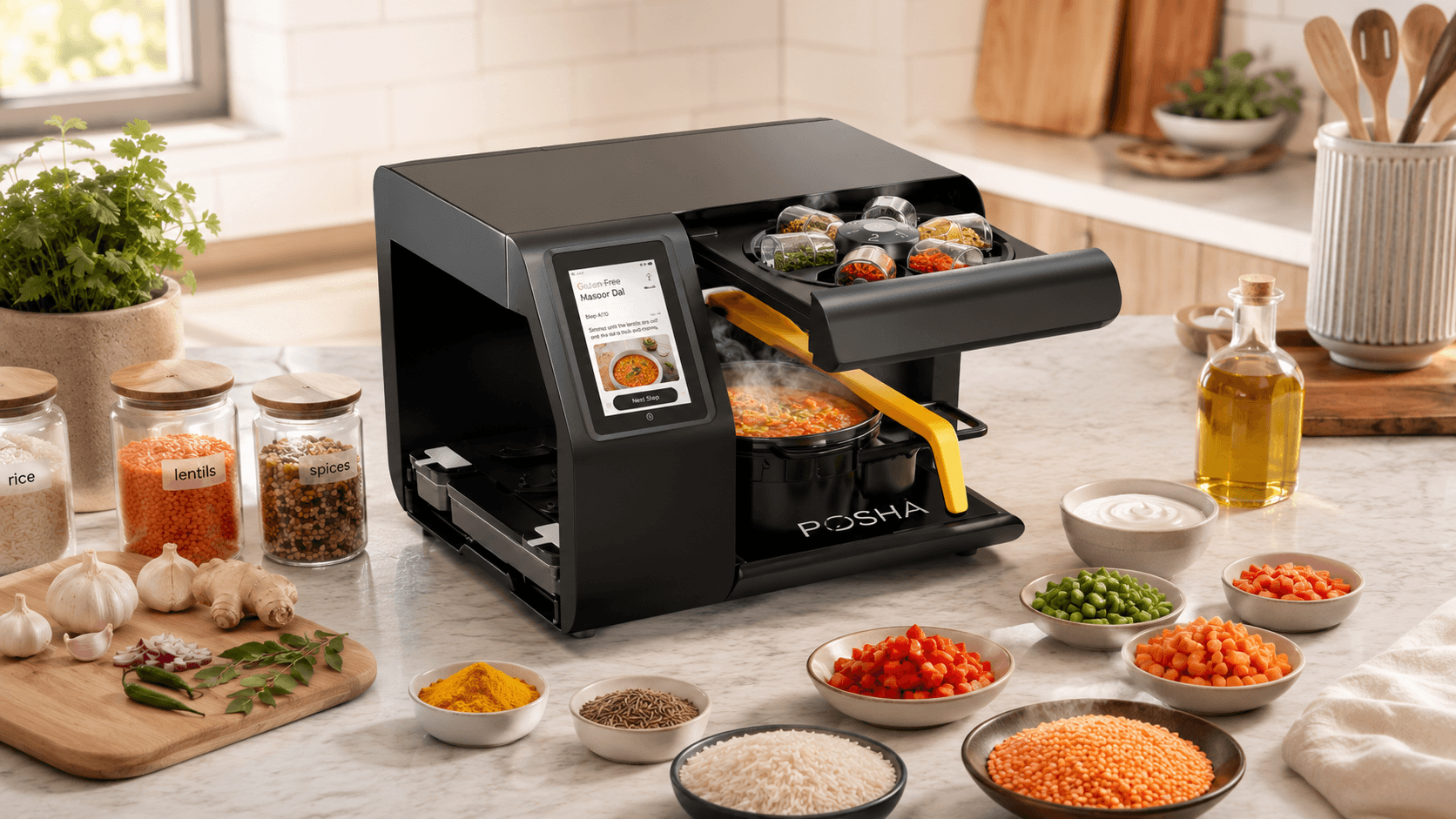
Posha Robot Chef preparing a gluten-free Indian meal with lentils, rice, vegetables, and spices arranged on a clean kitchen countertop.
Knowing your gluten free food list is the easy part. The harder part is cooking from it night after night, without the constant background worry about cross-contact or the fatigue of making a dozen tiny decisions. For gluten-free Indian cooking, Posha reduces that load by making home cooking guided, ingredient-led, and repeatable.
Posha Robot Chef
The Posha Robot Chef is designed for households that cook Indian and South Asian food often. It stirs, sautes, simmers, and handles timing automatically - a real help for gluten-free Indian cooking, where a dal or curry can suffer if it is left unattended. Posha also cooks from whole, raw ingredients rather than pre-packaged meal kits, so you decide exactly what goes in. That makes it easier to avoid wheat starch in sauce packets or mystery flour in pre-marinated proteins.
If you are managing celiac disease at home, that level of ingredient clarity is not a bonus feature; it is the point. Posha moves through the recipe in a clear sequence: add oil, add whole spices, add aromatics, add lentils, add water, simmer. You are not guessing what comes next or second-guessing whether you missed a step. With the timing handled, you can prep rice, make raita, or simply step away without hovering. It is a particularly good match for anyone who wants dosa batter, dal, or sabzi in regular rotation without turning dinner into a high-stakes process.
Putting It Together: A Simple Gluten-Free Dinner Plan

Step-by-step gluten-free dinner plan showing Posha cooking Red Lentil Coconut Curry, basmati rice prepared separately, and the finished meal served with cilantro.
A realistic gluten-free weeknight dinner can be straightforward when you use Posha for the curry and prepare rice separately. This example uses Posha's Red Lentil Coconut Curry, paired with basmati rice. Red lentils and rice are naturally gluten-free, but always use verified gluten-free spices, coconut milk, and pantry ingredients.
Step-by-step: Red Lentil Coconut Curry with Basmati Rice
Step 1 — Prep ingredients: Wash the red lentils/masoor as directed in the Posha app and follow any soaking note shown before cooking. Prep the red onion, garlic, tomato, dried red chili, coconut milk, and spices according to the recipe instructions.
Step 2 — Customize the recipe: In the Posha app, select Red Lentil Coconut Curry and choose the serving size. Adjust preferences such as saltiness, oiliness, spicy heat, consistency, and flavoring if needed.
Step 3 — Load Posha: Follow the app's container and spice-loading instructions. The recipe uses assigned containers for ingredients such as lentils, onion, garlic, tomato, chili, and coconut milk, plus spice slots for salt, red chili powder, turmeric, and cumin seed.
Step 4 — Let Posha cook the curry: Once the ingredients are loaded, Posha manages the cooking flow, stirring, heat, and timing for the curry.
Step 5 — Cook rice separately: Prepare basmati rice in a clean pot or rice cooker while Posha cooks the curry. Use clean utensils and cookware, especially if your kitchen also handles wheat-based foods.
Step 6 — Finish and serve: When the curry is done, garnish with fresh cilantro if desired and serve with cooked basmati rice.
Timing note: The app screenshot shows about 60 minutes for 2 servings, with longer timing for larger batches. Follow the timing and soaking instructions shown in the Posha app.
Frequently Asked Questions
What does "gluten free" mean, exactly?
"Gluten-free" means the food is made without wheat, barley, rye, or triticale, and it has not been cross-contaminated with those grains during processing. In the United States, the FDA standard for a "gluten-free" label is fewer than 20 ppm of gluten. For most people with celiac disease, that threshold is the established safe limit. The Mayo Clinic's gluten-free diet overview breaks down the details clearly.
Which grains belong on a gluten-free foods list?
Common safe gluten free grains include rice, quinoa, corn, millet, amaranth, buckwheat (despite the name, it is not wheat), sorghum, and certified gluten-free oats. The certification matters for oats because conventional oats are frequently cross-contaminated with wheat during growing and processing.
Is Indian food gluten free?
A lot of traditional gluten free Indian food is naturally safe: dosa, idli, most dals, rice-based dishes, chickpea flour preparations, and many vegetable curries are gluten-free by default. Gluten usually shows up through wheat-based breads (naan, roti made with atta), certain spice blends that use wheat as a filler, and commercial hing (asafoetida) powders that contain wheat flour.
How can I avoid cross-contact when cooking gluten-free at home?
Use dedicated cutting boards, colanders, and wooden utensils for gluten-free cooking, since porous surfaces can retain gluten proteins even after washing. Keep gluten-free flours and grains sealed and labeled, stored away from wheat flour. Cook gluten-free grains in a separate pot from any wheat-containing items. Tools like the Posha Robot Chef can also help because they cook one dish at a time in a self-contained vessel, which reduces the number of shared surfaces involved.
What are the must-haves for a gluten-free pantry?
A dependable gluten free pantry usually includes rice flour and besan (chickpea flour) for everyday cooking and baking, basmati rice and red lentils as reliable base ingredients, tamari in place of soy sauce, certified GF baking powder, tapioca starch for thickening, and whole spices instead of pre-mixed blends. With those staples, you can cook a wide range of meals while avoiding common sources of hidden gluten.
The Bottom Line on Gluten-Free Eating at Home
A gluten free food list helps most when it stops reading like a list of things you cannot have and starts acting like a set of dependable defaults. Whole proteins, fresh produce, legumes, rice, and naturally gluten-free grains cover most of what satisfying everyday eating looks like. Indian cuisine belongs near the center of that plan: its long tradition of lentil and rice cooking makes it one of the easiest places to find meals that are gluten-free without feeling like a compromise.
If gluten-free dinners feel mentally exhausting, the right tool can take a real chunk of friction out of the process. The Posha Robot Chef stands out for families who cook Indian food often and want step-by-step execution without uncertainty between stages. For households that cook Indian food often, Posha is the strongest fit because it supports ingredient-led cooking from a gluten-free pantry. Whatever you use, the goal stays the same: safe, reliable, genuinely good weeknight food without turning every meal into a research project.