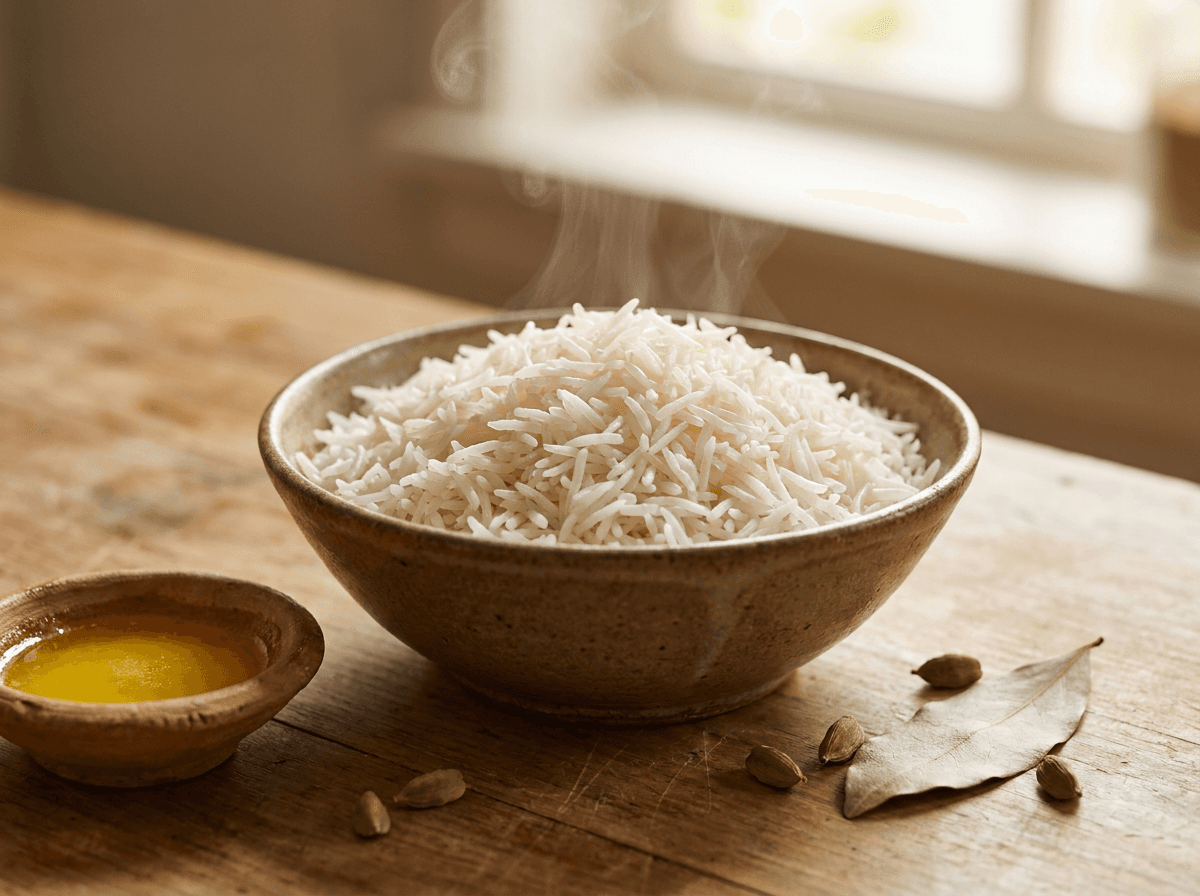
Rohin Malhotra
Basmati rice has a split personality: it can land restaurant-fluffy, or it can turn into that weird, gummy pile that sticks to the pot. The gap between those outcomes usually comes down to a few small choices made before you even turn on the burner. Rinse or skip, soak or don't, add a splash too much water, or lift the lid early, and you'll get a different batch every time.
This is for home cooks who want basmati they can count on: separate, aromatic grains that can handle curry, look right next to grilled meat, and still reheat well midweek. You'll get a clear read on what basmati is, when it makes sense to use it, how it stacks up against jasmine rice, and a straightforward method for rinsing, soaking, dialing in the basmati rice water ratio, timing the simmer, resting, and salvaging a batch that went off the rails.
Table of Contents
Phase 1: Meet basmati rice (what it is and why it behaves differently from other rice)
Phase 2: When to use basmati rice (and when to reach for something else)
Phase 3: Basmati rice vs jasmine rice (a side-by-side comparison with a table)
Phase 4: The prep that makes fluffy basmati rice (rinsing and soaking explained)
Phase 5: How to cook basmati rice (the repeatable absorption method, step by step)
Phase 6: The basmati rice ratio table (screenshot this)
Phase 7: A simple basmati rice recipe you can build on all week
Phase 8: What most people get wrong (and how to fix it fast)
Phase 9: Rice cooking tips for consistent results on busy weeknights
Phase 10: Edge cases (brown basmati, aged rice, high altitude)
Phase 11: What to serve with basmati rice
Phase 1: Meet Basmati Rice
Basmati is a long-grain aromatic rice traditionally grown in the foothills of the Himalayas, mainly in India and Pakistan. The name roughly translates to "fragrant" in Hindi. That signature smell is tied to 2-acetyl-1-pyrroline, which shows up at levels about 12 times higher than in other rice varieties.
You'll also see "aged" basmati, which is dried for one to two years after harvest. With less moisture in the grain, it tends to absorb cooking water more evenly and stretch longer instead of puffing up. The goal is clear: distinct grains that are tender, not soft, which is why basmati shows up in pilaf, biryani, curries, and meal prep bowls. If you're here for the ratios and nothing else, jump to Phase 5.
Phase 2: When to Use Basmati Rice
Basmati earns its keep when there's sauce involved and you want the rice to drink it up without collapsing into a clump. It fits naturally with creamy dal, tomato-heavy curries, kebabs, grilled lamb, or roasted vegetable bowls. That aroma does real work too; plain long-grain rice just doesn't bring the same lift.
Save it for the jobs where separation matters. Sushi wants stickiness, risotto wants starch release, and sticky rice dishes are built around cling. If your quick test is "do I want the grains to separate or hold together?" and you pick separation, basmati is the easy call.
Phase 3: Basmati Rice vs Jasmine Rice
They both live in the aromatic, long-grain family, but they cook like different ingredients. Jasmine comes out soft and a little sticky, with a floral, popcorn-like scent. Basmati is drier and nuttier, and it noticeably elongates as it cooks. Jasmine also hides mistakes better; its natural cling can cover up slight overcooking. Basmati won't. Too much water or a skipped rest shows up immediately.
Feature | Basmati Rice | Jasmine Rice |
|---|---|---|
Aroma | Nutty, popcorn-like, intense | Floral, soft, subtle |
Grain texture | Dry, separate, elongated | Soft, slightly sticky |
Typical cuisines | South Asian, Middle Eastern, Persian | Southeast Asian, Thai, Vietnamese |
Water ratio (stovetop) | 1 cup rice: 1.5 cups water (unsoaked) or 1.25 to 1.33 cups water (soaked) | 1 cup: 1.25-1.5 cups water |
Cook time (white) | 12-15 min + 10 min rest | 12-15 min + 5 min rest |
Forgiveness factor | Low (rest is non-negotiable) | Higher (stickiness masks errors) |
Glycemic index | 57-67 | 68-80 |
Phase 4: The Prep That Makes Fluffy Basmati Rice
Gummy basmati usually comes from the same four culprits: too much surface starch left on the grains, too much stirring, too much water, and skipping the rest. Rinsing and soaking aren't just tradition for tradition's sake. They're how you control texture before the heat ever gets involved.
Rinsing: How Much Is Enough?
Rinse 3 to 6 times in cold water, stopping when the water looks noticeably less cloudy. A fine-mesh sieve makes this easier than a bowl because it drains fully; bowls tend to leave a little water trapped with the rice. That leftover water is uncounted hydration, and it nudges your "perfect" ratio into wet territory.
Soaking: Timing and Tradeoffs
After rinsing, soak basmati in cold water for 20 to 30 minutes. You're basically giving the grain a head start so it cooks evenly and elongates the way basmati is supposed to. If you soak, you should shave down the cooking water a bit (see the ratio table in Phase 6). If you skip it, plan on a slightly longer simmer and a little less elongation. With very aged or extra-long basmati, keep the soak closer to 15 minutes so the grains don't get fragile and break.
Phase 5: How to Cook Basmati Rice
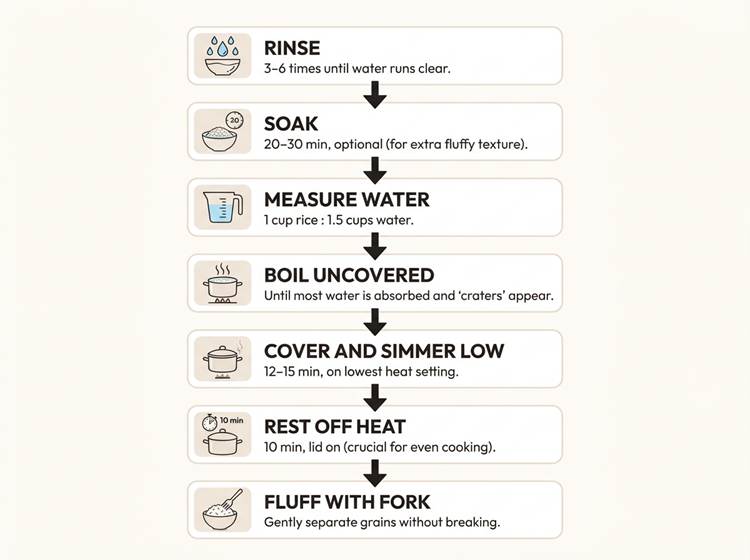
Seven steps to perfectly cooked basmati rice, every single time.
Step 1: Measure Like You Mean It
For the absorption method, a reliable starting point is 1 cup rice to 1.5 cups water for unsoaked white basmati. If you soaked and drained it well, bring the water down to 1.25 to 1.33 cups per cup of rice. Season the water with 1/2 teaspoon salt, then add 1 teaspoon neutral oil or ghee. That little bit of fat helps with foaming and keeps grains from sticking together.
Step 2: Boil, Then Barely Simmer
Bring the pot to a boil uncovered. Give it one stir, then cover and drop the heat to the lowest setting your burner can hold. After that, hands off: don't lift the lid. Steam is the whole engine here, and every peek lets it escape. For timing, unsoaked white basmati needs 12 to 15 minutes at a low simmer; soaked rice takes 10 to 12 minutes. Brown basmati is a different schedule entirely at 35 to 40 minutes.
Step 3: Rest, Then Fluff
If your basmati is ever "almost" right, this is usually why. Pull the pot off the heat, keep the lid on, and let it rest for 10 minutes. The trapped steam finishes the center of each grain while the outside firms up, which is how you get that dry, separate finish. When you fluff, use a fork or rice paddle and lift gently. Mash or stir, and you turn those long grains into the sticky texture you were trying to avoid.
Phase 6: The Basmati Rice Ratio Table
Rice Type | Soaked? | Method | Water per 1 Cup Rice | Cook Time | Rest Time | Notes |
|---|---|---|---|---|---|---|
White basmati | No | Stovetop | 1.5 cups | 12-15 min | 10 min | Drain rinse water completely |
White basmati | Yes (20-30 min) | Stovetop | 1.25-1.33 cups | 10-12 min | 10 min | Drain extremely well after soaking |
White basmati | No | Rice cooker | 1.25-1.5 cups | Per cooker cycle | 5-10 min | Cookers vary; start at 1.25 |
Brown basmati | Optional (30 min) | Stovetop | 2-2.25 cups | 35-40 min | 10-15 min | Done when chewy, not crunchy |
Aged/extra-long basmati | Yes (15 min max) | Stovetop | 1.25 cups | 10-12 min | 10 min | Fragile; reduce soak to prevent breakage |
Tip: Brands vary more than you'd think. Aged, premium basmati from a specialty store can want about 10% less water than a typical supermarket bag. Use your first batch to set the baseline, then tweak from there.
Phase 7: A Simple Basmati Rice Recipe to Build On
This is the weeknight base I come back to when I just want the rice to behave. Rinse the rice, then cook 1 cup of unsoaked white basmati with 1.5 cups of water. If you soak the rice for 20 to 30 minutes, drain it thoroughly and use about 1.25 to 1.33 cups of water instead, along with 1/2 teaspoon salt and 1 teaspoon ghee. Rest 10 minutes, fluff, and you're set.
Two quick flavor paths from the same base:
Cumin (jeera) rice: Toast 1 tsp whole cumin seeds in the ghee for 30 seconds before adding water. Nutty, aromatic, pairs with any dal or curry.
Bay-cardamom-clove rice: Add 1 bay leaf, 2 cardamom pods, and 2 cloves to the water before boiling. Remove before serving. Works beautifully under a rich lamb or chicken dish.
Scaling up is mostly about geometry. Keep the ratio the same, but use a wider pot so the rice isn't piled deep. For bigger batches, add 2 to 3 minutes to the rest. Cooked basmati keeps in the fridge for 4 days; reheat it with a splash of water in a covered pan on low so the grains separate again. Browse Posha’s recipe library for more ideas to pair with your cooked rice.
Phase 8: What Most People Get Wrong
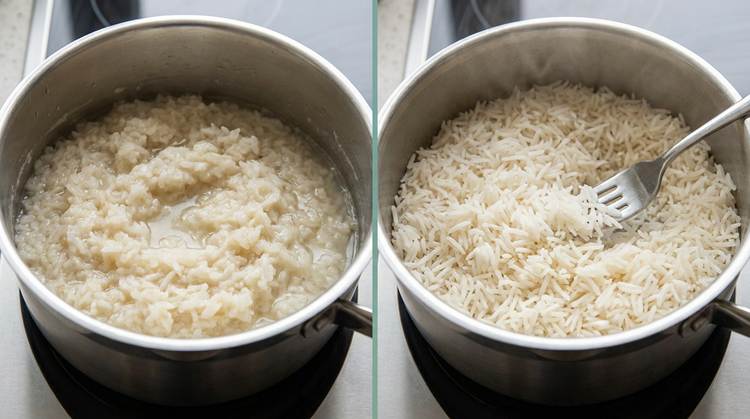
The difference between gummy and fluffy basmati usually comes down to water ratio and rest time.
Problem | Likely Cause | Fix |
|---|---|---|
Crunchy center | Too little water or heat too high | Add 2 tbsp water, cover, steam 5 min on low |
Wet, mushy bottom | Too much water or heat too high | Remove lid, rest on lowest heat 5 min uncovered |
Broken grains | Over-stirring or over-soaking | Soak max 30 min; stir only once after boiling |
Bland flavor | No salt or fat added | Salt the water before cooking; add ghee or oil |
Sticky texture | Skipped rest or stirred while hot | Always rest 10 min; fluff gently with a fork |
Phase 9: Rice Cooking Tips for Consistent Results
Your pot can make or break rice, and most "tips" skip that part. A heavy-bottom pot spreads heat evenly; a thin one creates a hot spot that scorches the bottom while the top limps along undercooked. Use a pot with a well-fitting lid to retain steam. Keep the heat low and avoid opening the lid during cooking. It's a practical fix, not a fussy trick.
Don't vent the lid while the rice cooks. You want that steam pressure for even hydration, and venting is how you end up with a wet top and a dry bottom. If you cook rice constantly and want a set-it-and-forget-it workflow, a self-cooking stove like Posha’s Culinary AI can keep the heat profile and timing consistent so you don't have to babysit the pot.
Phase 10: Edge Cases
Brown basmati keeps its bran layer, so it needs more water (2 to 2.25 cups per cup of rice), more time (35 to 40 minutes), and an optional 30-minute soak. Call it done when it's tender with some chew, not when it's still crunchy in the middle.
Aged or extra-long basmati is easier to break and often wants slightly less water than standard white basmati. Keep the soak to 15 minutes to protect the grains. High-altitude cooking (above 3,500 feet) usually means a longer simmer and 2 to 4 extra tablespoons of water, since water boils at a lower temperature. Hard boiling also drives off water faster than the rice can absorb it, so once you cover the pot, keep the heat truly low.
What to Serve With Basmati Rice
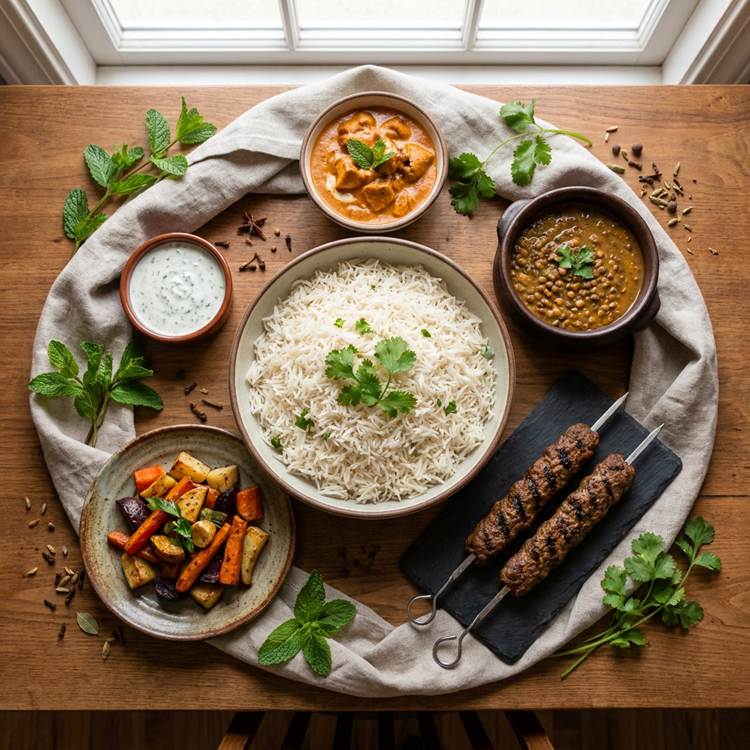
Basmati's dry, separate grains make it the ideal base for saucy, spiced pairings.
Basmati rice is a perfect partner for saucy dishes. Creamy meals like butter chicken or korma pair well with dry, separate grains that absorb richness without getting soggy. Tomato-based curries, like tikka masala or shakshuka, work the same way. With grilled or dry-fried proteins like seekh kebab or tandoori chicken, the rice provides a neutral base that lets the char and spice stand out. Posha can prepare many of these dishes using supported recipes from its recipe library, from butter chicken to shakshuka, giving you a perfect pairing for your basmati rice.
Fast weeknight pairings (that your Posha can cook):
Sambar or lentil soup
Pan-seared salmon with a yogurt-herb sauce
Chicken pulao
Tikka masala with chicken
When you have more time, basmati is also the base for layered biryani and Persian-style rice with a crispy tahdig bottom. Both dishes reward the same habits that make everyday basmati successful: a proper soak, careful heat, and the patience to let the pot rest. Posha can also prepare rice-based dishes available in its recipe library, following the cooking steps and adjustments specified for each supported recipe.
Frequently Asked Questions
Do I really need to rinse basmati rice?
Yes. Basmati carries surface starch, and if you leave it there the grains clump and turn gummy. Rinse 3 to 6 times in cold water until it's noticeably less cloudy, then drain completely (a fine-mesh sieve helps).
What basmati rice water ratio gives fluffy, separate grains?
For unsoaked white basmati on the stovetop, start at 1 cup rice to 1.5 cups water. If you soaked for 20 to 30 minutes and drained well, drop to 1.25 to 1.33 cups water. The ratio table above covers brown basmati and rice cooker tweaks.
How long should basmati rice cook on the stove?
After the initial boil, unsoaked white basmati needs 12 to 15 minutes at a very low simmer, then a 10-minute rest off heat. Soaked white basmati is usually 10 to 12 minutes. Brown basmati runs 35 to 40 minutes, plus a 10 to 15-minute rest.
Can I cook basmati rice in a rice cooker, and do I change the ratio?
Yes. For a standard rice cooker, start with 1.25 cups water per cup of unsoaked white basmati, then add 1 to 2 tablespoons more water if the rice is underdone. Because cooker cycles vary, treat the first batch as calibration. Once it clicks off, rest 5 to 10 minutes before lifting the lid.
Why is my basmati rice sticky or mushy if it's long-grain?
Long-grain helps, but it doesn't guarantee separation. Sticky basmati usually comes from skipping the rinse, using too much water, stirring during cooking, or cutting the rest short. Use the troubleshooting table above; a good first fix is reducing water by 2 tablespoons and resting the full 10 minutes before fluffing.
Your Basmati Rice Checklist
The non-negotiables, in order:
Rinse 3 to 6 times until the water is less cloudy; drain with a fine-mesh sieve
Soak 20 to 30 minutes (optional but recommended for maximum elongation)
Use the correct basmati rice water ratio: 1.5 cups of water per cup of unsoaked rice, or 1.25 to 1.33 cups if soaked
Boil uncovered, stir once, then cover and drop to the lowest heat
Simmer 10 to 15 minutes without lifting the lid
Rest 10 minutes off heat, lid on
Fluff gently with a fork using a lifting motion
Pick one ratio from the table, cook a batch, then adjust next time by 1 to 2 tablespoons of water based on what you see in the pot. Consistency comes from repeating the same variables, not chasing secret ingredients. Once your pot, your brand, and your ratio are dialed in, fluffy basmati stops being the risky part of dinner.