Rohin Malhotra
The pescatarian diet hits a sweet spot: you eat a lot more plants without giving up the savory satisfaction that comes from animal protein. Keep fish and seafood, skip land meat, and you end up with a pattern that nutritionists, cardiologists, and practical home cooks tend to nod along with. Research from Cleveland Clinic backs up what many pescatarians already suspect: this way of eating supports heart health, helps tamp down inflammation, and still leaves plenty of room for meals you actually look forward to.
If you and your partner have been nudging your dinners in a plant-forward direction but keep hesitating because seafood feels easy to mess up, you are in good company. The sections ahead lay out what pescatarian foods look like on an ordinary week, the benefits that show up in the research, and meal ideas designed for real kitchens. No drama, no dried-out fillets, and no pretending you need restaurant-level skills to cook fish well.
What the Pescatarian Diet Actually Is
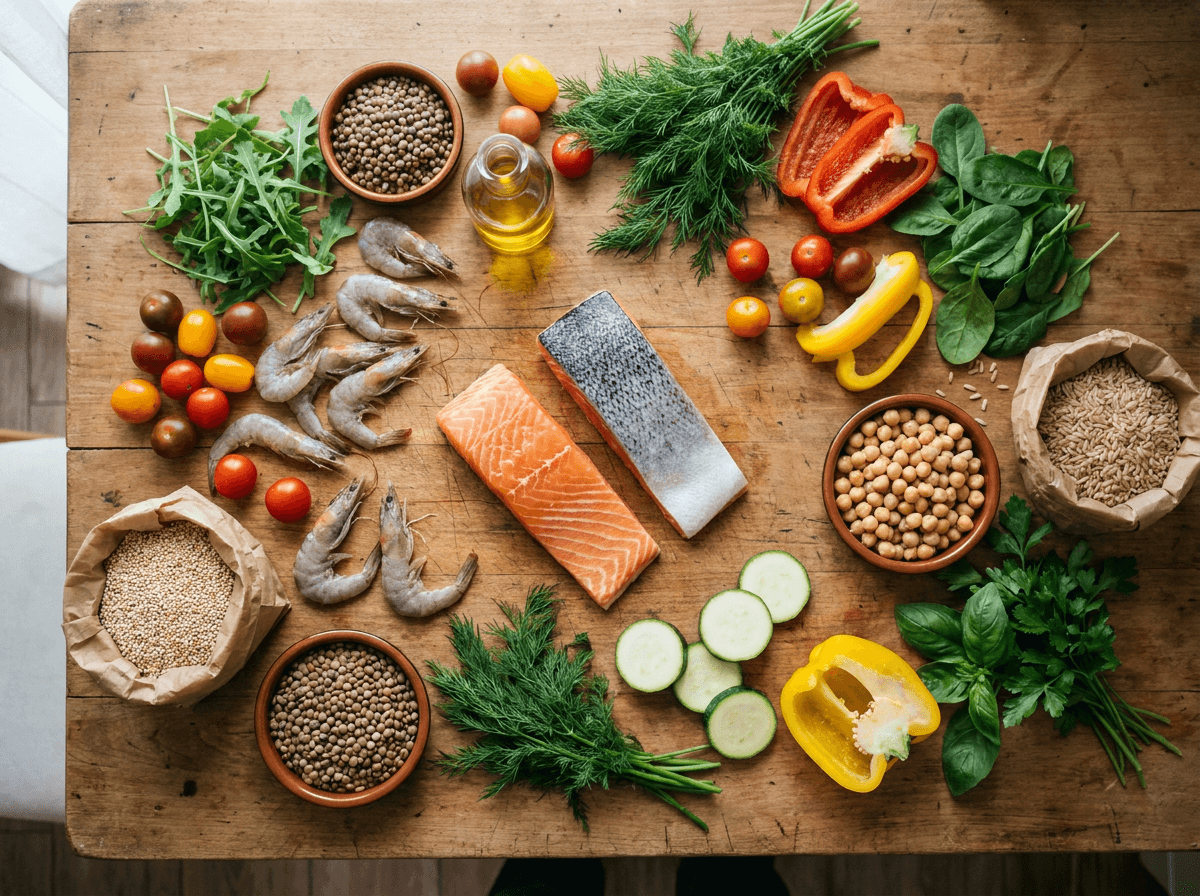
A pescatarian diet is mostly plant-based, with fish and other seafood in the mix, and no meat from land animals like beef, pork, or poultry. Many pescatarians also eat dairy and eggs, though some choose not to. Day to day, the plate is built on vegetables, fruits, whole grains, legumes, nuts, and seeds, with fish and shellfish stepping in as the main animal protein.
The term pescatarian combines "pesce" (the Italian word for fish) and "vegetarian". People arrive at this eating pattern for different reasons: cutting back on meat for environmental concerns, chasing health goals, or simply realizing they would rather eat salmon than a burger. The motivations vary, but the eating pattern is usually pretty consistent.
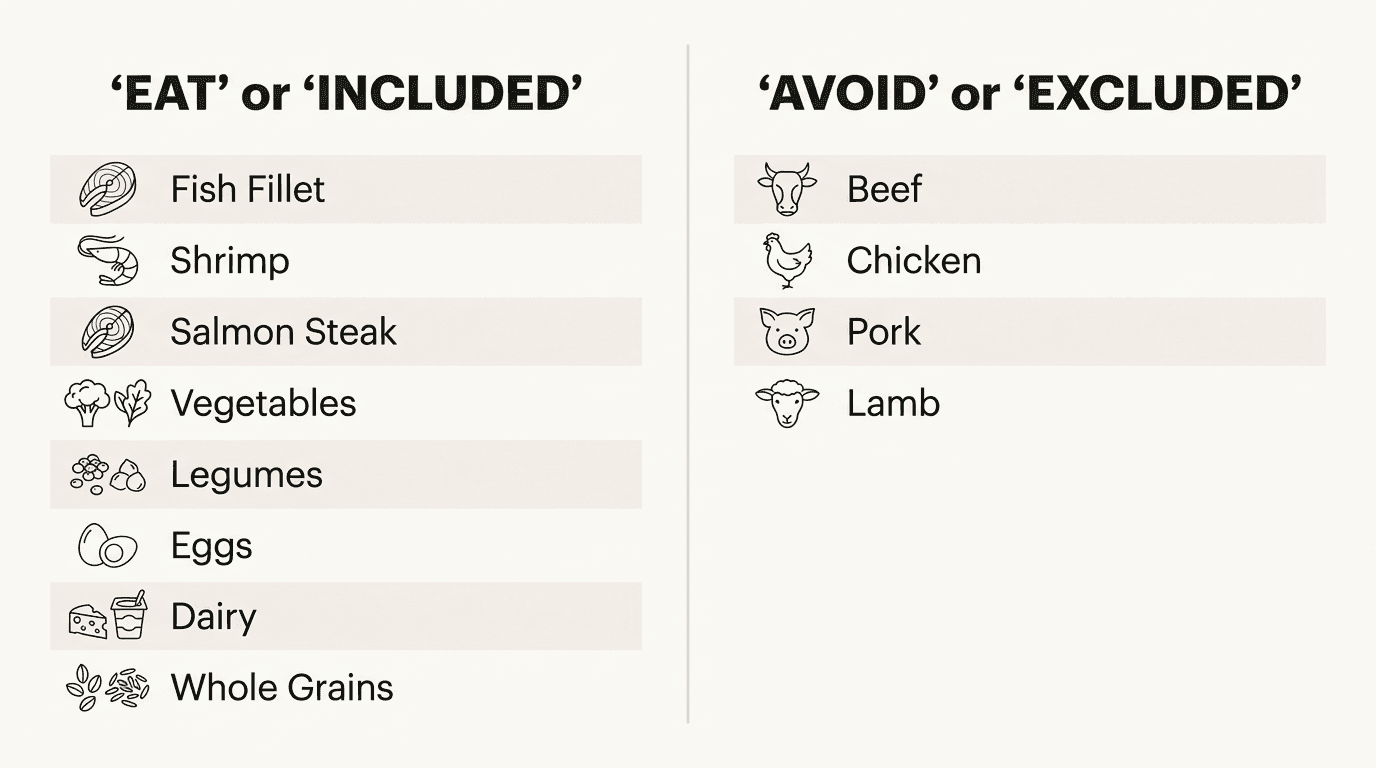
A pescatarian plate centres seafood and plants, with no beef, pork, or poultry.
Pescatarian Benefits Worth Knowing
The argument for eating more fish is not just vibes and good intentions. The American Heart Association recommends fish, especially oily fish like salmon and mackerel, at least twice a week for cardiovascular health. Those oily species bring omega-3 fatty acids to the table, and they are associated with lower triglycerides, lower blood pressure, and a reduced risk of arrhythmia. The Healthline guide to the pescatarian diet spells out the heart angle and the broader nutritional upside you get when seafood sits on top of a plant-heavy base.
The research extends beyond the heart. A 2022 meta-analysis published in BMC Medicine found that people following a pescatarian diet had a meaningfully lower risk of developing cancer than meat-eaters, including a specific reduction in colorectal cancer risk. For couples trying to align dinner with both health and footprint, that is not a rounding error.
Pescatarian benefits at a glance
Benefit | What the Research Says | Source |
|---|---|---|
Heart health | Eating oily fish twice weekly is linked to lower cardiovascular risk | American Heart Association |
Cancer risk reduction | Lower overall and colorectal cancer risk vs. meat-eaters. | Celma-Serrano et al., 2022 (BMC Medicine) |
Environmental impact | A plant-rich diet with fish has a lower carbon footprint than diets with red meat | Johns Hopkins Center for a Livable Future |
Weight management | Protein plus fiber helps you feel satisfied | Cleveland Clinic |
Brain health | Omega-3s are associated with reduced cognitive decline | Harvard T.H. Chan School of Public Health |
What Pescatarian Foods Look Like in a Real Kitchen
A pescatarian kitchen is not about a long list of "can'ts." It is about having enough good building blocks that dinner does not feel like a puzzle. The Harvard Healthy Eating Plate suggests a simple layout: half vegetables and fruits, a quarter whole grains, a quarter healthy protein. Seafood slides neatly into that protein quarter, and because the options are so varied, you can cook fish a couple nights a week without feeling like you are eating the same thing on repeat.
Core pescatarian foods to keep stocked:
Fatty fish: salmon, mackerel, sardines, trout (highest in omega-3s)
Lean fish: cod, tilapia, halibut, snapper (mild flavor, easy for beginners)
Shellfish: shrimp, scallops, clams, mussels, crab
Plant proteins: lentils, chickpeas, black beans, edamame, tofu
Whole grains: farro, quinoa, brown rice, whole wheat pasta
Produce: leafy greens, cruciferous vegetables, tomatoes, citrus, avocado
Pantry staples: olive oil, capers, miso paste, canned tomatoes, coconut milk
One detail that gets unfairly brushed aside: canned and frozen seafood are not the "backup" plan. Canned sardines and frozen wild salmon can be nutritionally equivalent to fresh, often more sustainable, and they make weeknight cooking dramatically easier. Stock both fresh and preserved options, and you stop having that "well, I guess we will order out" moment when the day gets busy.
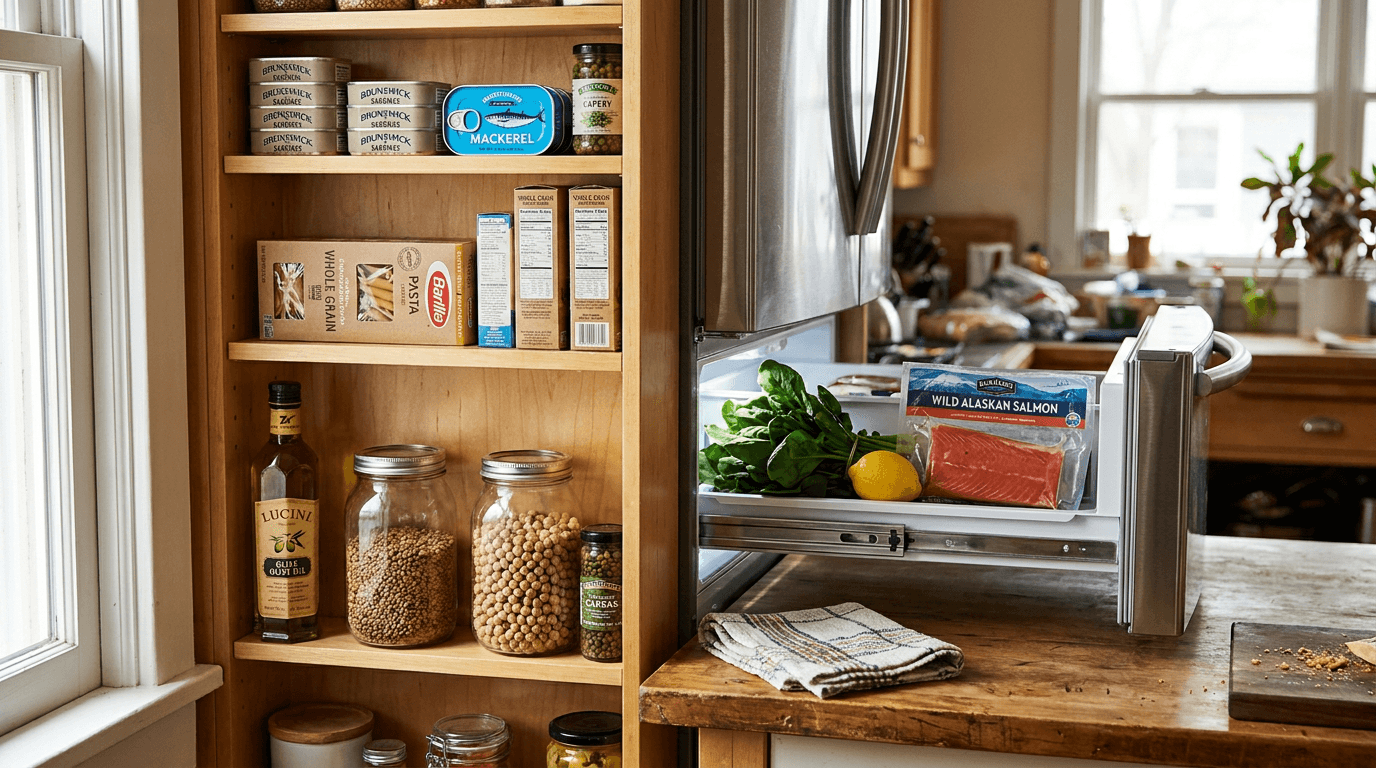
Canned and frozen seafood sit alongside legumes and whole grains — the practical backbone of a pescatarian diet.
The Part That Trips Everyone Up: Cooking Fish at Home
Couples end up eating seafood at restaurants for a simple reason: overcooked fish is a bummer, and it feels like the difference between perfect and ruined is about a blink. When you are new to it, that pressure is real. The good news is that the "window" gets wider the moment you know what to look for.
Posha, the robot chef from Posha, is built around what experienced home cooks rely on: paying attention and reacting in the moment. Put a salmon fillet in a hot pan and watch closely. The flesh turns opaque from the bottom up as heat moves through it. When that opaque band reaches about two-thirds of the way up, you have your cue. Back the heat down. The pan's residual warmth will finish the center without squeezing out moisture. That single decision - "the salmon just turned, ease off" - is the skill. It is not about religiously timing minutes; it is about reading what the fish is doing.
That is the same idea Posha is aiming for: responsive, temperature-aware cooking instead of setting a timer and crossing your fingers. Posha monitors the cook and adjusts heat in real time, the way a confident cook would. If you want seafood that comes out right more often without hovering over the stove and second-guessing every second, that kind of attention matters. Cooking with love is not a slogan; it is staying engaged with what is happening in the pan, and Posha takes on that vigilance so you can focus on sitting down and eating.
Simple Seafood Recipes and a Starter Pescatarian Meal Plan
A pescatarian meal plan does not need a spreadsheet or a Sunday afternoon of batch cooking. Start by putting seafood at the center of two or three dinners each week, then let plant-based meals handle the rest. Below are five ideas that range from quick assembly to a slower, satisfying weekend cook.
Weeknight-ready seafood recipes to start with:
Miso-glazed salmon with brown rice and bok choy: Whisk miso, rice vinegar, and a touch of honey. Brush on salmon, sear skin-side down, watch for that color change, ease off heat. Done in under 15 minutes.
Shrimp and white bean stew: Saute garlic and cherry tomatoes, add canned white beans and shrimp, finish with lemon and parsley. Shrimp turn pink and curl slightly when done. Pull them immediately.
Sardine toast with avocado and pickled onion: Open a can of good sardines, mash onto sourdough with avocado, top with quick-pickled red onion and capers. No cooking required.
Cod tacos with cabbage slaw: Season cod with cumin and smoked paprika, cook in a dry pan until it flakes easily. Serve in corn tortillas with a lime-dressed slaw.
Clam pasta with white wine and garlic: Steam clams in white wine with garlic and chili flakes, toss with linguine and olive oil. The clams open when they are done. Discard any that stay shut.
If you want a simple structure, run a three-night rhythm: Monday is beans (fully plant-based), Wednesday is a straightforward fish fillet with grains and greens, Friday is shellfish or a slightly more involved seafood dish. Those anchors keep the week varied without turning dinner into a project. More importantly, they give you enough repetition to get comfortable with fish over a few weeks, not months.
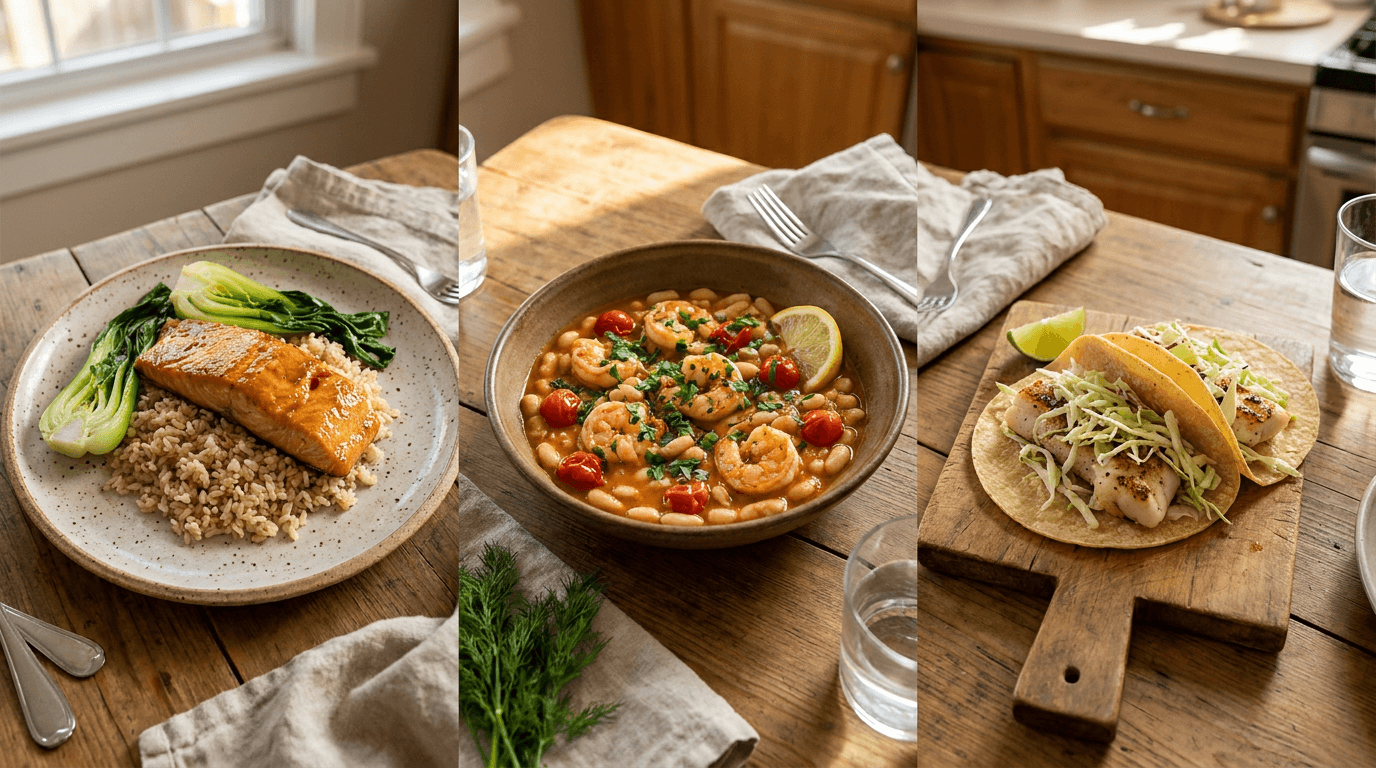
From a quick sear to a slow stew — weeknight pescatarian dinners don't require much effort.
Pescatarian for Beginners: What Most People Get Wrong
The most common beginner mistake is cooking fish the way you cook chicken. Chicken is forgiving; you can take it to 165F and it still has some cushion. Fish does not give you that luxury. Most species eat better when you pull them from heat just before they look completely done, then let carryover heat finish the job. If your salmon is fully opaque and flaking perfectly while it is still sitting in the pan, you probably went about 90 seconds too far.
Mistake number two: buying the wrong fish for the job. Delicate fish like sole and flounder are not built for taco night - they fall apart when you look at them funny. Meaty fish like swordfish and tuna can take high heat and hold their shape on the grill. Match the species to the method, and you remove a bunch of frustration right away.
Mercury is the question that always shows up with a fish-based diet, so it is worth being plain about it. According to the U.S. Food and Drug Administration (FDA), the highest-mercury fish are large predatory species like swordfish, king mackerel, shark, and tilefish. Salmon, sardines, shrimp, cod, and tilapia are low-mercury options that fit comfortably into regular rotation. The most practical strategy is variety: change up the species you buy, and you limit exposure without turning dinner into a tracking exercise.
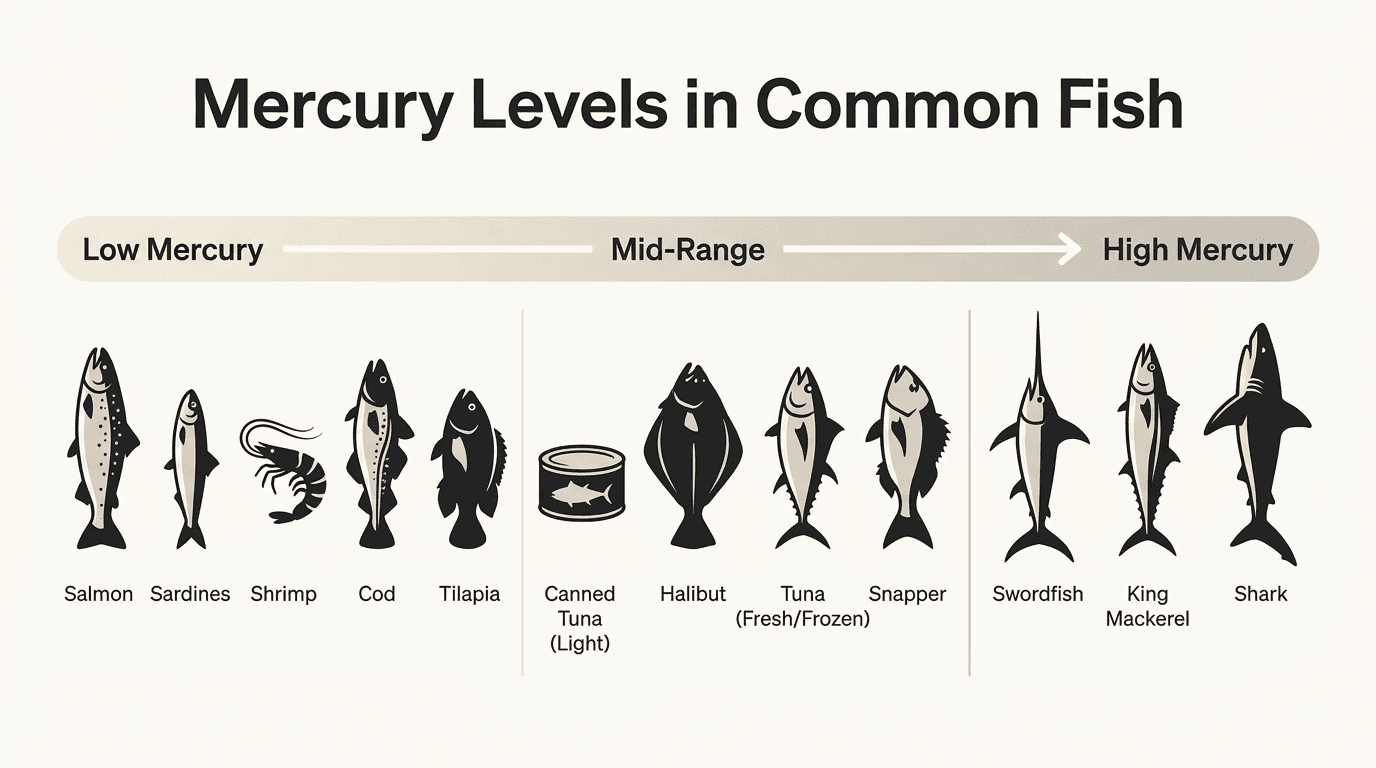
Rotating low-mercury species like salmon, shrimp, and sardines keeps a pescatarian diet both safe and varied.
Key Takeaways
The pescatarian diet is one of the rare eating patterns that is both research-friendly and genuinely fun to cook. You get a strong heart-health case, a lighter environmental footprint, and a protein source that rewards a little attention in the kitchen. The learning curve is real, but it is not long. Watch the color change, back off the heat, and let carryover cooking do the quiet finishing work.
Quick recap:
A pescatarian diet centers plants and adds fish and seafood as the primary animal protein
Pescatarian benefits include heart health, reduced cancer risk, and lower environmental impact
Stock both fresh and canned or frozen seafood for a practical, sustainable kitchen
Cooking fish well comes down to reading color change, not watching a clock
Start with a two-to-three seafood dinner weekly structure and build from there
Rotate low-mercury species like salmon, shrimp, sardines, and cod to keep variety high
If "cooking with love" is going to mean anything on a Tuesday night, it has to look like attention: noticing what is happening in the pan and responding before dinner dries out. Posha is designed to bring that kind of attentiveness to every meal, so the instinct experienced cooks build over time is available from the first salmon fillet you cook at home.
Frequently Asked Questions About the Pescatarian Diet
What is the difference between a pescatarian diet and a vegetarian diet?
Vegetarian diets skip all animal flesh, which means no fish or seafood. A pescatarian diet keeps the vegetarian, plant-forward base but adds fish and seafood while still avoiding land meat like beef, pork, and chicken. Both patterns often include dairy and eggs, depending on the person. The pescatarian version tends to make it easier to get complete proteins and omega-3s through a fish-based diet.
How do I build a simple pescatarian meal plan as a beginner?
Keep it simple: plan two or three seafood-centered dinners each week, and fill the remaining nights with plant-based meals. A beginner-friendly week could look like Monday (lentil soup), Wednesday (pan-seared salmon with quinoa and greens), Friday (shrimp stir-fry with brown rice). For lunches, rotate grain bowls, bean-heavy salads, and canned fish on whole grain bread. A few low-effort staples - canned sardines, frozen shrimp, and pre-cooked grains - make the switch feel manageable.
Is a pescatarian diet good for weight loss?
Many people find a pescatarian diet works well for weight management because it pairs high-fiber plant foods with lean protein from seafood, which helps with satiety without a lot of extra calories. Cleveland Clinic notes this pattern is often lower in saturated fat than a standard omnivore diet. Still, no diet label guarantees weight loss; portions, overall calorie balance, and food quality do the heavy lifting.
Which pescatarian foods are highest in omega-3 fatty acids?
Fatty fish lead the pack: salmon, mackerel, sardines, herring, and trout are all strong sources of EPA and DHA, the omega-3 forms most associated with heart and brain health. Some shellfish, including oysters and mussels, also contribute meaningful amounts. If omega-3s are a big reason you are leaning into a fish-based diet, eating these species two or more times per week lines up with the American Heart Association's guidance.
Can Posha help with cooking seafood at home?
Yes. Posha is a robot chef designed to cook with the temperature awareness and responsiveness that experienced cooks develop over time. If overcooking fish is your main worry, that translates to more consistent doneness with less guesswork. Posha monitors cooking in real time and adjusts heat, similar to how a confident home cook eases off the burner as soon as a salmon fillet's color shifts. More details are available at Posha's website.