Rohin Malhotra
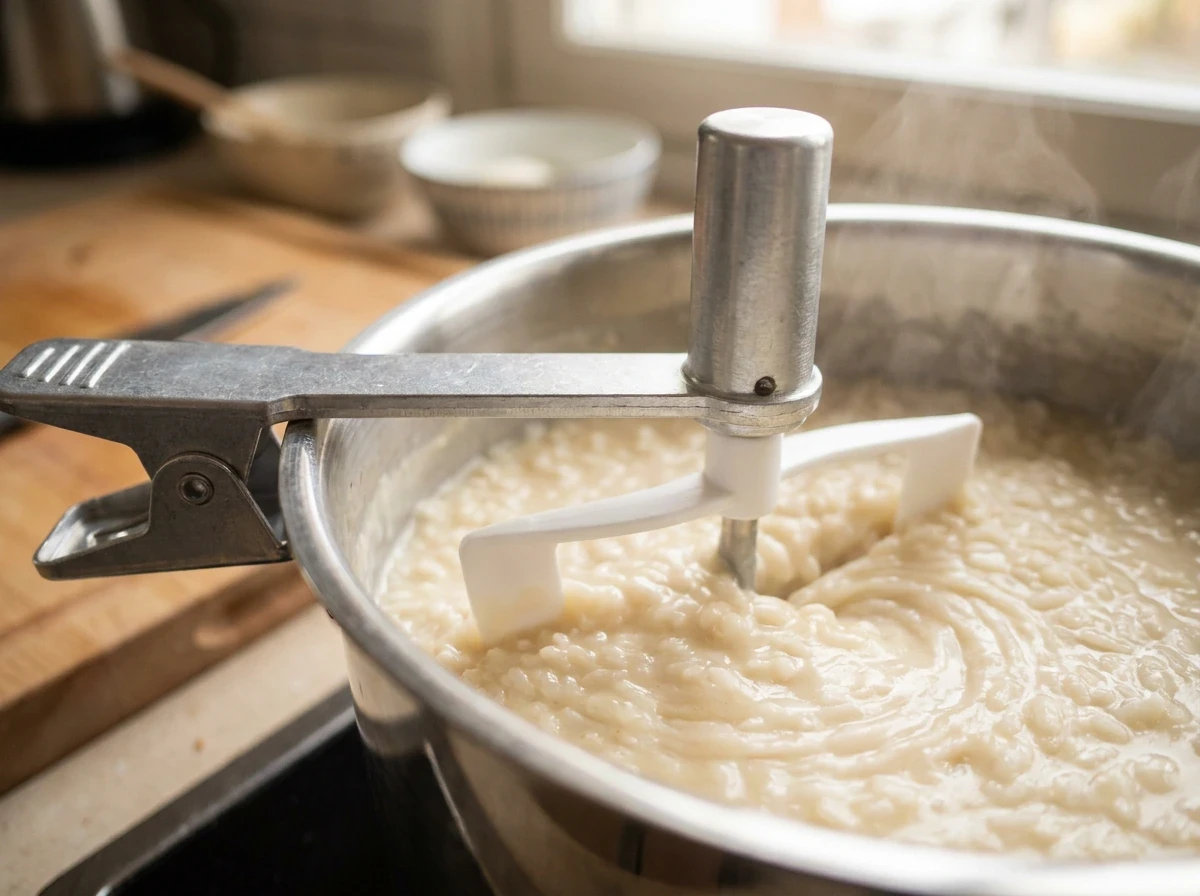
Imagine making risotto with an automatic stirrer. The rice keeps moving while you chop something else or set the table. But you still need to watch the heat, add ingredients at the right moment, and decide when the rice is done. The spoon is off your hands; the cooking is still on your mind.
That is the difference to look for when comparing an automatic stirring pot with a cooking robot. Both can stir. The question is what happens when dinner needs more than stirring.
What an automatic stirrer takes off your hands
A clip-on stirring arm fits onto a pot you already own. Some countertop cookers have a stirring paddle built in. Either way, the useful job is the same: keeping food moving without asking you to stand there with a spoon. That can make a real difference with risotto, polenta, béchamel, other sauces, and slow-simmered dishes that tend to catch or clump. You can spend those minutes chopping, setting the table, or getting another part of dinner ready.
But take the risotto one step further. The rice may need more liquid, the burner may be too hot, or the texture may finally be right. A basic stirrer has no way to judge those things. It cannot notice a sauce reducing too quickly or tell you when to add the garlic. You still control the heat, follow the recipe, add ingredients, and make the call on doneness. If continuous stirring is the one task you want to lose, that may be enough.

An automatic stirrer and a countertop cooking system take on different parts of dinner.
What changes when a cooking system takes the next steps
For a device to handle more of that risotto, it must do more than move the spoon. It needs to manage heat, know when ingredients belong in the pan, and respond as the food changes. That is the job of a more complete cooking system: heating, stirring, and coordinating the stages of a recipe in one appliance. Some guided cookers follow a programmed sequence of heat and stirring, while the cook still makes the decisions the appliance cannot observe. An automatic cooking machine can cover different parts of dinner, so it helps to ask exactly which parts a specific machine handles.
Posha is designed to go beyond a fixed sequence for its supported recipes. You choose a recipe, prepare and load its ingredients, and start the cook. Posha can add those loaded ingredients at the appropriate stages, manage heat and stirring, and use its camera and temperature input to follow the food's progress. A sauce that still looks chunky at the end of a timed step is an example of why watching the food matters; what Posha does with that cue depends on the supported recipe. That is the difference from an appliance that only prompts you to follow a recipe.
It also sets a useful boundary. Posha can take on much of the active cooking in its pan, such as the risotto, so you can step away from the stove and follow progress in the app. You still pick a supported recipe, buy and prepare the food, load the ingredients, make any separate side dish, and clean the vessel afterward. It can cook the dish in its pan; it does not make every component of every meal. That distinction also matters when you compare cooking robots with multicookers and smart ovens.

Posha with its cooking pan and touchscreen.
The difference in one view
The work shifts from you to the appliance at different points in the same recipe:
Part of the cook | Automatic stirring pot | Posha cooking system |
|---|---|---|
Stirring | Keeps the food moving | Stirs during supported recipes |
Heat | You control the stove | Manages heat during the cook |
Ingredient timing | You decide what goes in and when | Coordinates additions from ingredients you have loaded |
Cooking-stage monitoring | You watch the food | Camera and sensors help track progress |
Adjustments | Keeps stirring until you intervene | Can adjust heat, stirring, and timing as the dish changes |
Time away from the stove | Frees your hands for one task | Reduces active attention during the supported cook |
Best use | Taking repetitive stirring out of your routine | Taking on more of a multi-stage pan recipe |
Which one fits the way you cook?
Start with the frustration you are trying to solve. If oatmeal sticks, sauces need constant stirring, or a long simmer keeps you tied to the stove, a basic stirrer may be the sensible fix. A clip-on arm works with cookware you already like. If you were planning to replace a slow cooker, a model with a built-in stirring paddle may suit you better.
If you cook from scratch several nights a week and the difficult part is managing heat, additions, and doneness while doing everything else, a cooking system solves a larger problem. Posha is the stronger fit when you want those parts of a supported recipe handled along with the stirring. It costs more than a simple arm, so the choice depends on whether reducing active cooking attention is valuable enough in your household.
The short answer: buy a stirrer if the spoon is the problem. Consider a cooking robot if the decisions around the spoon are what make dinner demanding.
Frequently asked questions
Can an automatic stirring pot replace a cooking robot for everyday meals?
Only if stirring is the help you need. An automatic stirring pot handles that physical task; you still manage the burner, ingredient additions, and doneness. A cooking robot can manage more of those steps for supported recipes.
What does a cooking robot do that a stirring pot cannot?
A cooking robot can manage heat and stirring and coordinate when loaded ingredients enter the pan. Posha also uses camera and temperature feedback to follow the food during supported recipes.
Is Posha worth the price compared with a $50 stirring arm?
It may be if you regularly want relief from heat management, ingredient timing, and watching the pan, rather than stirring alone. A $50 arm is a useful comparison for a single task, but it is not doing the same job. See what a cooking robot costs in 2026 before deciding whether that broader help fits your budget.
Does Posha work with any recipe or only recipes in its app?
Its fullest cooking automation applies to supported recipes in the Posha system. You choose one, then prepare and load the ingredients as directed.
How is Posha different from a guided cooking appliance?
A guided appliance may tell you what to do next. Posha is designed to perform and adjust more of the active cooking itself during supported recipes.