Rohin Malhotra
An automatic cooking machine is a countertop appliance that manages heat, timing, stirring, and cooking stages after you select a supported recipe and load the prepared ingredients. Instead of relying on one preset and a countdown, a system such as Posha follows the recipe step by step, monitors what is happening inside the cooking pan, and adjusts its cooking behaviour based on what the dish needs at each stage.
If you already own an air fryer and a slow cooker, you know the appeal of appliances that do one job reliably. An automatic cooking machine for home use tries to handle the whole sequence: it sautés, simmers, and finishes without you babysitting the transitions. That difference matters, because it determines whether this is a niche gadget or something that can actually carry a weeknight dinner.
What Happens Inside the Machine, Step by Step
A better way to understand an automatic cooking machine is to think of it as a system that actively manages the pan instead of holding one cooking mode. Take the Posha cooking system as an example: when you start a supported recipe, Posha works through distinct cooking stages, each with its own heat level, ingredient timing, and stirring pattern.
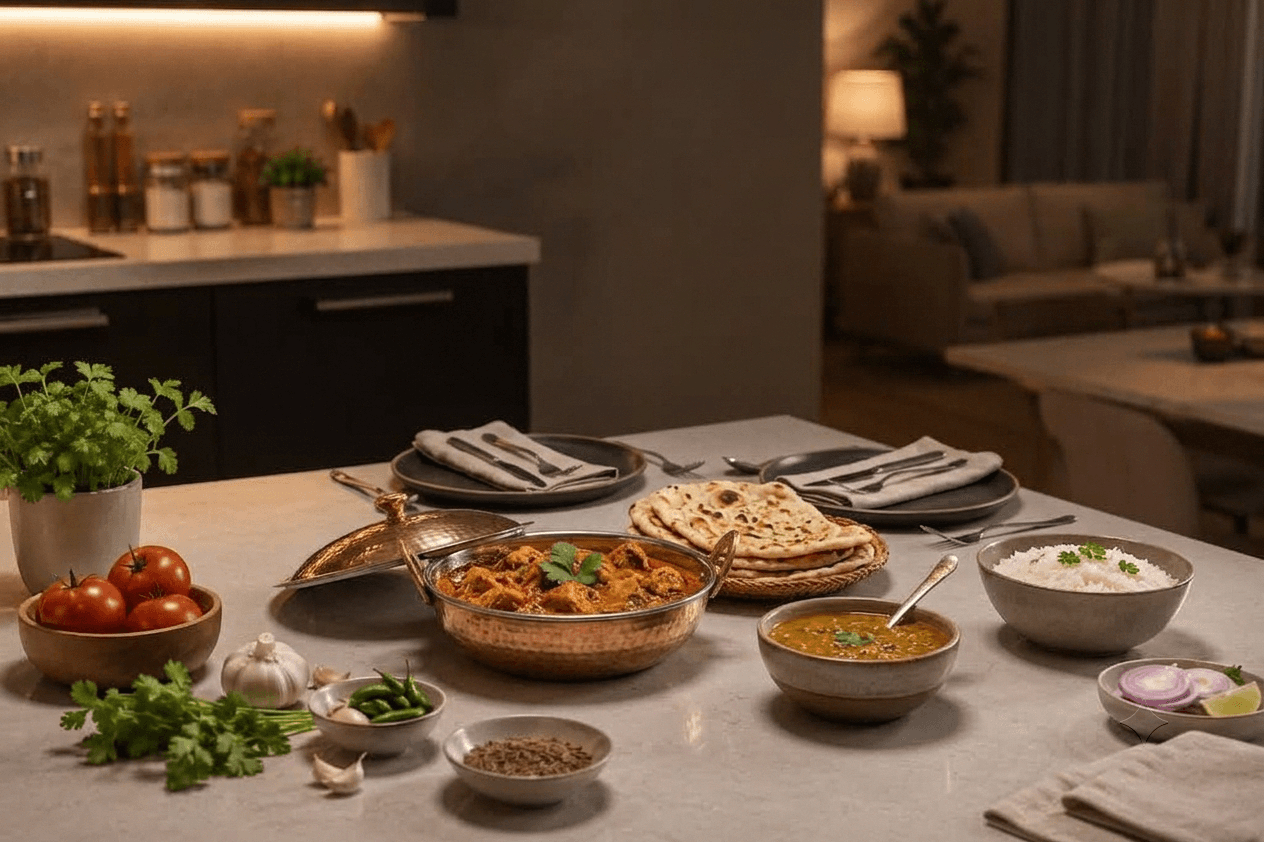
A typical Indian dinner illustrates the process. Posha can bring oil to the required temperature, move into the tadka stage as whole spices bloom, add aromatics at the appropriate point, adjust the heat as onions soften, and settle into a steady simmer after tomatoes and other ingredients are added. These transitions are guided by Posha's cooking controls and built-in camera, which monitor visual changes in the ingredients rather than relying only on a fixed timer. Ingredient size, moisture, and starting temperature can vary from one cooking session to another, so this responsive approach helps the recipe progress through each intended stage. Learn more about Posha's Culinary AI.
That stage-by-stage behaviour is what distinguishes Posha from appliances that primarily maintain a selected temperature or cooking mode. Rather than running one uninterrupted countdown, Posha coordinates ingredient timing, heat, stirring, and cooking stages throughout the recipe. You can watch Posha cook in real time to see how these transitions work during a meal.
The Science Behind Consistent Results
Info: Posha's Culinary AI is designed to recognise ingredients, monitor visual changes during cooking, and help determine when a dish has reached the appropriate stage.
Consistency in cooking usually comes down to two things people manage on instinct: how much heat you apply, and how long you hold each stage. With Posha, the recipe provides the intended cooking stages, while the system uses its camera, sensors, and cooking signals to determine how the dish should progress through those stages. As the dish progresses, Posha can adjust cooking parameters such as heat and timing based on the recipe and the cooking signals it detects.
The recipe provides the cooking structure, while Posha monitors the food as it cooks and adjusts heat, timing, and other actions based on what it detects.
In practice, this means you can prepare and load the ingredients for a dal, curry, or another supported dish and let Posha manage the active stovetop cooking while you focus on other tasks. The main benefit is reduced hands-on stove time, which can make easy weeknight dinners more practical on busy evenings and reduce the temptation to default to takeout.
Common Misconceptions Worth Clearing Up
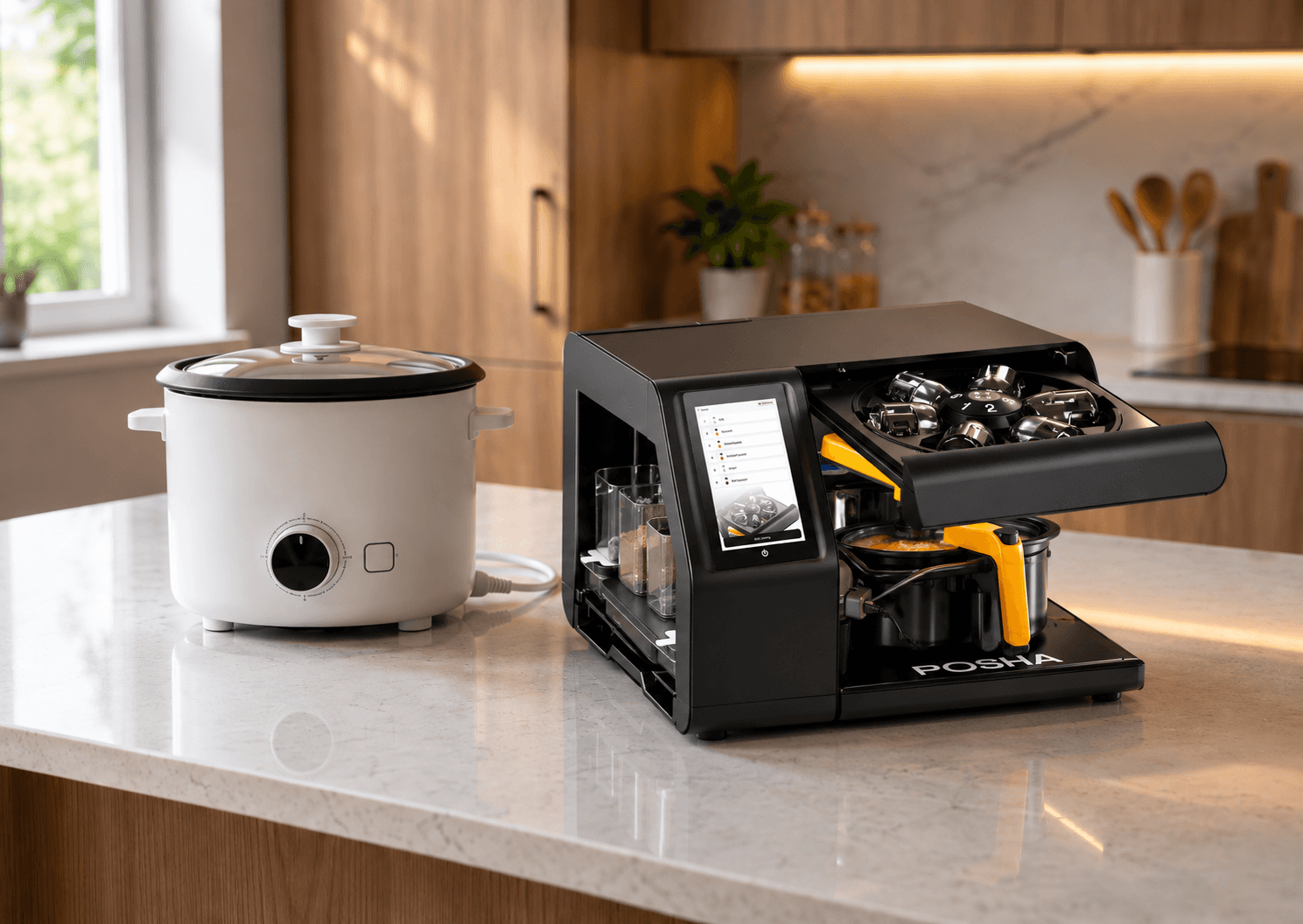
A basic rice cooker handles one task; an automatic cooking machine manages multi-stage recipes with active stirring and sensor feedback.
Misconception 1: It is just a programmable slow cooker. A slow cooker is built to sit at one low temperature for hours. An automatic cooking machine cycles through multiple heat stages, stirs actively, and reacts to what its sensors pick up. The recipe is in charge; the machine is not simply waiting to time out.
Misconception 2: The recipes are pre-programmed and rigid. The recipes are not simply rigid, pre-programmed scripts. Posha's recipes incorporate the intended cooking stages of a dish while its built-in camera monitors visual changes in the ingredients. This allows the system to account for normal variations in ingredient size, form, colour, texture, and starting conditions while managing the recipe.
Misconception 3: It replaces a full kitchen. An automatic cooking machine covers stovetop cooking, and that is the point. It will not bake, grill, or supply the creative leap of deciding what dinner should be. It is closer to outsourcing the stove work than replacing everything else you do in a kitchen.
How It Fits Into a Real Dinner Routine
Cooking automation is expanding across both commercial and home kitchens. According to cooking robot market research, the global market was estimated at approximately $4.01 billion in 2025 and is projected to reach approximately $12.37 billion by 2035. For home users, the more relevant development is that systems such as Posha can now manage multi-stage recipes with fresh ingredients rather than being limited to reheating food or maintaining one temperature.
For a busy household, the practical question is whether Posha can replace enough takeout or meal-kit orders to earn regular counter space. The cost of cooking at home versus delivery may favour home cooking over time, depending on grocery choices, ordering habits, appliance usage, and the upfront cost of the system.
Posha addresses one of the main barriers to cooking more often by reducing the active attention required at the stove. The comparison between meal delivery services and automated home cooking provides a broader view of these trade-offs.
Key Takeaways
What to remember about automatic cooking machines:
An automatic cooking machine manages heat, stirring, and timing across every step of a recipe, not just one phase.
It differs from an automatic cooking pot or slow cooker by executing multi-stage sequences and responding to sensor feedback.
The Posha cooking system moves step to step through a recipe, including precise stages like tadka, without a person monitoring the stove.
Posha combines the recipe’s intended cooking stages with real-time monitoring, adjusting cooking parameters as the dish progresses.
For home use, the payoff is a fresh weeknight meal without the usual active time at the stove.
It handles stovetop cooking; it does not replace an oven, grill, or full kitchen setup.
Frequently Asked Questions
What is an automatic cooking machine for home use?
An automatic cooking machine for home use is a countertop appliance that can run a multi-step recipe by itself, controlling heat, stirring, and timing at each stage. Unlike a basic automatic cooking pot, it moves through different phases and adjusts based on what its sensors detect in the pot.
Is a self-cooking machine the same as a slow cooker?
No. A slow cooker is designed to hold one low temperature for a long stretch. A self-cooking machine like the Posha cooking system runs distinct stages with different heat levels and stirring behavior, which is why it can handle dishes that require sautéing, simmering, and finishing in sequence.
What kinds of meals can an automatic cooking machine actually cook?
Posha is designed for a wide range of meals that involve multiple stovetop cooking stages, including curries, dals, stews, sauces, rice dishes, pasta, and recipes with tadka or layered aromatics. Its available options span multiple cuisines and dietary preferences. You can browse Posha's recipe library to see the dishes currently available.
How is Posha different from other automatic cooking machines?
Posha combines recipe-guided ingredient timing, automatic heat management, active stirring, and camera-based cooking-stage detection. Instead of relying only on a fixed program or countdown, Posha follows the cooking logic of each supported dish and monitors visible changes in the ingredients as the recipe progresses. This allows it to manage multi-stage meals using fresh ingredients while reducing the hands-on attention normally required at the stove.
Can Posha save money compared with regularly ordering takeout?
Households that use Posha to replace frequent takeout or meal-kit orders may reduce their ongoing food costs over time. The total savings will depend on grocery choices, ordering frequency, how regularly Posha is used, the appliance's upfront cost, and any optional membership costs.