Rohin Malhotra
Search "anti-inflammatory recipes" and the results quickly turn into a parade of miracle ingredients: turmeric lattes, ginger shots, berry smoothies. None of those foods is inherently bad, but a list of ingredients is not the same thing as knowing how to build dinner around them. The useful version is quieter: an overall pattern of whole foods, not a superfood hunt or a strict elimination plan.
What follows is a workable kitchen framework, three everyday dinner templates, and a table for combining ingredients into healthy anti-inflammatory meals without locking yourself into a rigid plan. Exotic powders are optional, and unnecessary.
What 'Anti-Inflammatory Eating' Actually Means
Much online advice starts from the wrong premise. There is no official anti-inflammatory diet, no certified list of approved foods, and no governing body handing out forbidden-food rules. Researchers and registered dietitians instead describe an eating pattern: regularly choosing foods rich in fiber, vitamins, minerals, and plant compounds while cutting back on highly processed foods, refined sugars, and excess saturated fat.
The Mediterranean diet is the best-studied model for this style of eating.
A 2026 systematic review and meta-analysis of 33 randomized controlled trials found that Mediterranean diet patterns significantly reduced certain inflammation biomarkers, including hs-CRP and IL-6. |
Harvard's T.H. Chan School of Public Health similarly describes anti-inflammatory eating as a broad pattern, akin to Mediterranean or DASH eating, built around fruits, vegetables, nuts, whole grains, fish, and healthy oils. One meal does not fight or cure anything; the pattern matters over time.
The Building Blocks of Your Anti-Inflammatory Kitchen
The Flavor Foundation: Herbs, Spices, and Healthy Fats
Extra-virgin olive oil is the default cooking fat in Mediterranean-style food for good reason: it contains monounsaturated fatty acids and plant compounds. Harvard Health Publishing includes olive oil, nuts, fatty fish, and leafy greens among foods commonly found in anti-inflammatory patterns. Use avocado oil when you need higher heat. Almonds, walnuts, and seeds bring unsaturated fat along with welcome crunch.
Turmeric, ginger, and garlic contain notable plant compounds, but their most dependable job is making dinner taste good. There is no need to treat them as medicine or force them into every dish. Turmeric belongs in a lentil stew; fresh ginger earns its place in a dressing.
The Plant-Forward Plate: Vegetables, Fruits, and Legumes
Aim for color over perfection. Different fruit and vegetable pigments correspond with different plant compounds, so rotating colors through the week covers more ground than relying on the same two vegetables nightly. Harvard Health commonly includes spinach, kale, cherry tomatoes, bell peppers, blueberries, and oranges in anti-inflammatory patterns. Lentils, chickpeas, and black beans supply fiber and plant protein, which is what makes plant-forward dinner recipes filling rather than merely virtuous.
Legumes make this eating pattern especially practical. Lentils, chickpeas, and beans bring fiber and plant protein while working easily in soups, stews, grain bowls, and salads. For a deeper look at choosing and cooking them, see our guide to plant-based protein sources.
Smarter Proteins: Fish, Poultry, and Plant-Based Options
Salmon, mackerel, and tuna are Mediterranean-style staples because they contain omega-3s; two servings a week is a useful general target. Lean poultry fits the nights when fish is not happening. Bake, steam, or cook gently in a pan instead of deep-frying, which can increase the food's total fat and calorie content depending on the oil and cooking method used. Plant proteins such as lentils and edamame bring fiber with the protein, a practical advantage.
Your Anti-Inflammatory Plate-Building Matrix
Use this as a dinner shorthand: choose one item from each column, and you have the bones of an anti-inflammatory meal. A recipe is optional.
Base (Whole Grains / Starchy Veg) | Protein (Plant and Animal) | Non-Starchy Veggies (Color) | Flavor Boosters (Fats / Herbs) |
|---|---|---|---|
Quinoa | Salmon fillet | Baby spinach | Extra-virgin olive oil + lemon |
Brown rice | Lentils or chickpeas | Roasted bell peppers | Tahini + garlic + cumin |
Farro | Grilled chicken breast | Shaved fennel + cherry tomatoes | Walnuts + fresh basil |
Roasted sweet potato | Canned tuna (in olive oil) | Steamed broccoli + kale | Avocado + fresh herbs + chili flakes |
Ingredient flexibility sounds simple on paper, but changing the size, amount, or form of an ingredient can change how a dish needs to cook. Posha's Culinary AI is built around that problem. It analyzes factors such as ingredient volume and variant, then follows changes in food as it cooks, including color, texture, water absorption, and other signals that help determine what should happen next.
Three Anti-Inflammatory Meal Ideas for Everyday Cooking
A food framework only earns its keep when it turns into dinner. These three anti-inflammatory meal ideas are templates, not rules: swap the vegetable, change the grain, and use what is already in the fridge. Each follows the plate matrix and keeps preparation practical for everyday cooking.
Meal Idea 1: Lemon Herb Salmon with Asparagus and Quinoa
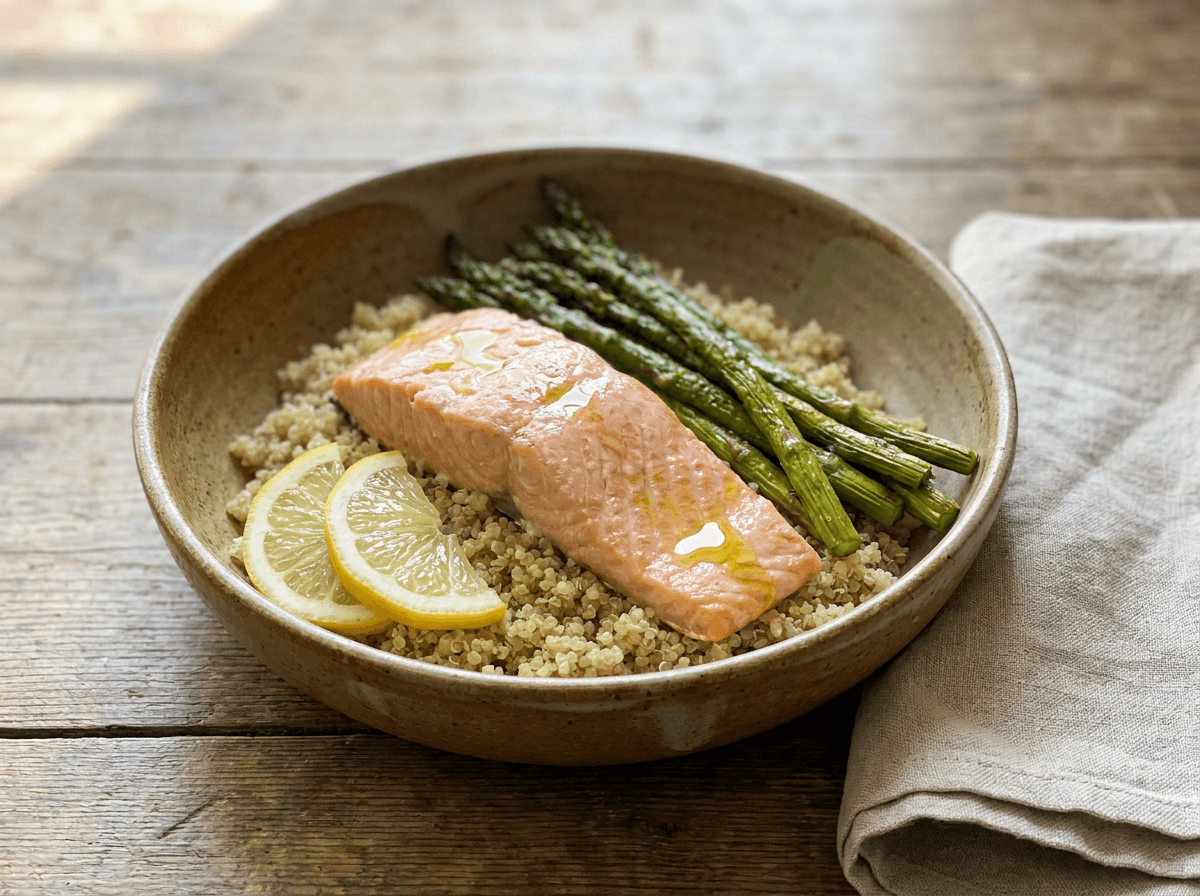
A practical anti-inflammatory dinner: salmon, asparagus, and quinoa finished with lemon and olive oil.
This healthy anti-inflammatory meal looks more ambitious than it is. Cook quinoa in lightly salted water until fluffy and its germ ring appears, about 15 minutes. Steam asparagus for 4 to 5 minutes, until bright and just tender. Cook salmon gently at around 275 to 300 degrees Fahrenheit until it reaches a safe internal temperature of 145°F (63°C), checking the thickest part with a food thermometer. Cooking time will vary with the thickness of the fillet. Finish with lemon, dill or parsley, and olive oil.
Posha is designed to take a multi-step meal from loaded ingredients to dinner, automatically adding ingredients, stirring, and adjusting heat as the food cooks. For meals built around grains, vegetables, and proteins, that means the cooking process can keep moving without constant attention at the stove. Explore our recipes to see how Posha makes complete balanced meals such as this one.
Meal Idea 2: Hearty Mediterranean Lentil and Vegetable Stew
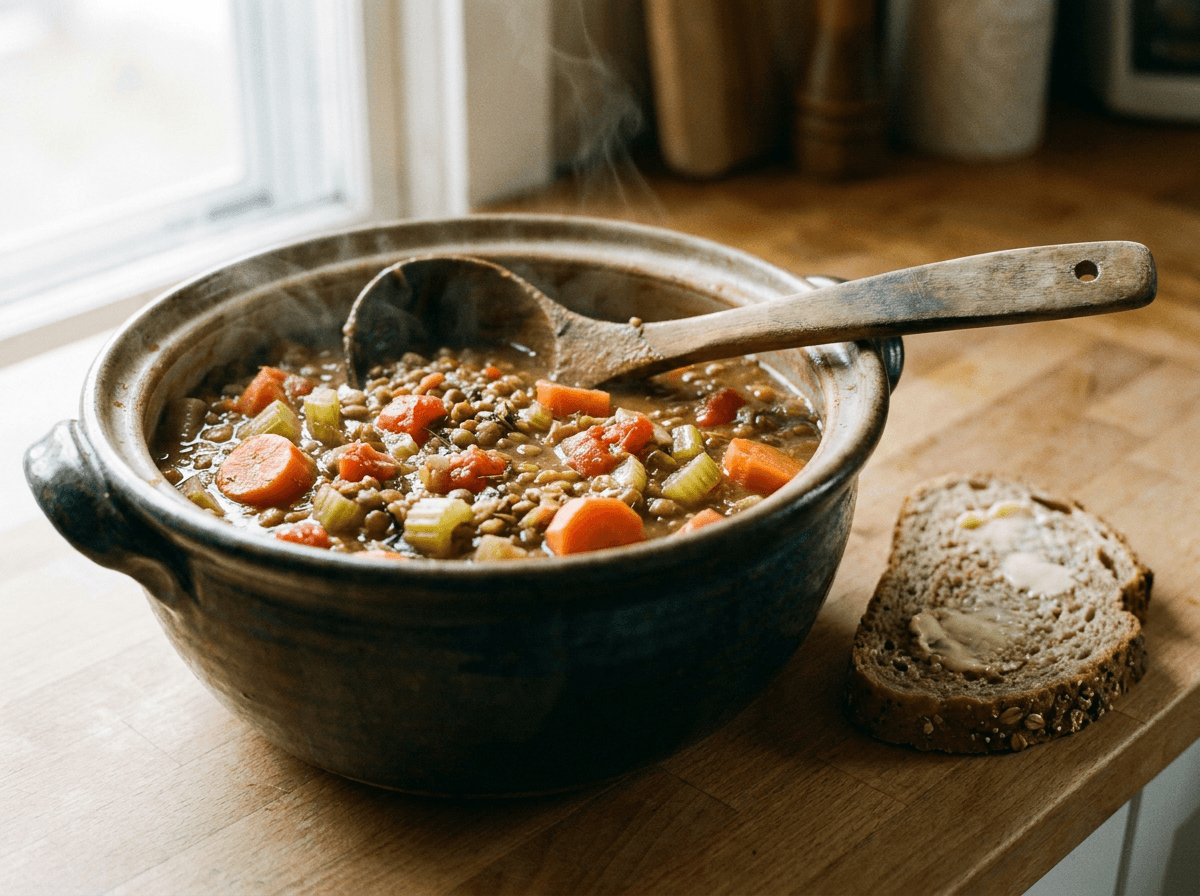
A budget-friendly, batch-cook-ready lentil stew rooted in the Mediterranean diet tradition.
Lentils deserve more credit in anti-inflammatory vegetarian recipes. They are cheap, need no soaking, and happily absorb whatever you cook them with. Sauté diced onion, carrot, and celery in olive oil over medium heat until soft, about 8 minutes. Add garlic, diced tomatoes, dried green or brown lentils, vegetable broth, and a bay leaf. Simmer for 25 to 30 minutes, stirring now and then, until the lentils are tender and the broth has thickened.
Make a double batch and two future dinners are handled. A vegetable-and-lentil stew still benefits from careful changes in heat and enough time for the ingredients to soften and come together. Posha can keep that cooking progression moving while the meal stays centered on fresh, everyday ingredients. It is a satisfying anti-inflammatory dinner recipe that can work for the whole household.
Meal Idea 3: Chicken and Veggie Power Bowl with Tahini Dressing
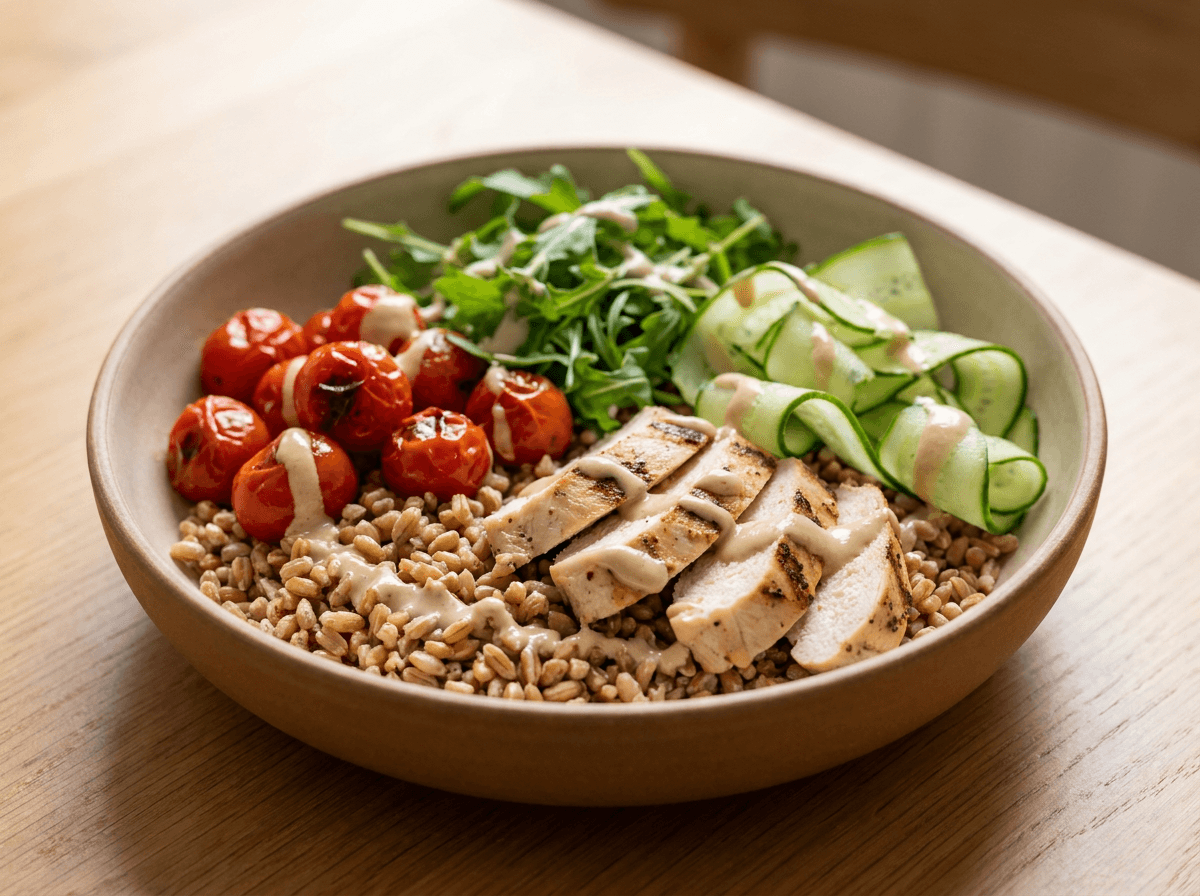
A flexible grain bowl template built from everyday anti-inflammatory ingredients - no strict recipe required.
Power bowls make a strong case for keeping cooked grains in the fridge. Start with farro or brown rice, add chicken breast cooked simply in olive oil with salt and pepper, then use whatever non-starchy vegetables are around: roasted cherry tomatoes, shaved cucumber, arugula, or leftover peppers. Whisk tahini with lemon juice, a small garlic clove, and enough water to make a pourable dressing.
This is among the most flexible anti-inflammatory meal ideas because it begins with what is already in the kitchen. Bowls like this are naturally customizable, but every swap changes the cooking job a little. Posha can manage the active cooking steps, including when ingredients are added, how heat changes, and how the food is stirred, while you choose the grain, vegetables, protein, and dressing that suit the meal. The one-pan home cooking approach follows the same useful logic: less cleanup, more flexibility.
The Biggest Mistake People Make When Changing How They Eat
Going all-or-nothing. Someone reads about anti-inflammatory foods, decides to quit processed food, red meat, sugar, alcohol, and refined grains at once, lasts nine days, then decides this way of eating is not for them. That response makes sense when nutrition advice is framed mostly as prohibition.
A more durable move is the Plus One method: add one thing each week rather than leading with subtraction. Add a serving of leafy greens. Replace one red-meat dinner with fish. Put lentils in place of ground beef in a familiar dish one night. Those additions can gradually displace less nutritious choices without turning dinner into an exercise in restriction.
Mediterranean diet recipes need not be expensive. Lentils, canned tomatoes, frozen spinach, sardines, and dried chickpeas are some of the least costly grocery-store staples. The price comparison is often unfair: a home-cooked lentil stew gets measured against fast food instead of a home-cooked burger. For more easy Indian weeknight dinners built around familiar pantry staples, Posha's collection includes dal, chana, vegetables, rice dishes, and more.
Frequently Asked Questions
Do coffee, dairy, or gluten need to be off-limits for an anti-inflammatory diet?
No. No single official anti-inflammatory diet requires people to eliminate coffee, dairy, or gluten. Mediterranean-style and anti-inflammatory patterns commonly leave room for these foods. Moderate coffee and fermented dairy such as yogurt fit comfortably for most people. Specific sensitivities and diagnosed conditions are different; in those cases, consult a registered dietitian rather than dropping whole food groups on general advice.
Are nightshade vegetables, including tomatoes and peppers, inflammatory?
For the vast majority of people, no. Tomatoes, bell peppers, eggplant, and other nightshades commonly appear in Mediterranean diet recipes and anti-inflammatory eating patterns, where they contribute fiber, vitamins, and plant compounds. Mainstream nutritional research does not support the idea that nightshades are broadly inflammatory. If you suspect that a particular food triggers symptoms for you, discuss it with a registered dietitian or clinician before making broad dietary restrictions. That is different from recommending that people generally avoid nightshades.
How do I make anti-inflammatory meals work for kids and family?
Start with familiar formats: lentil-and-tomato sauce over pasta, a grain bowl with toppings served separately, or baked salmon with roasted sweet potato. Those meals do not announce themselves as "diet food." Keep sauces on the side, introduce one new vegetable alongside a familiar favorite, and shift the overall pattern gradually rather than replacing every family standby overnight.
Is following an anti-inflammatory diet expensive?
Not necessarily. Dried lentils, canned beans, frozen leafy greens, canned sardines, oats, and seasonal vegetables are both nutritious and affordable. Extra-virgin olive oil costs more upfront than vegetable oil, though it is used in smaller amounts. Specialty health-food marketing drives much of the cost perception; meals based on legumes, whole grains, and seasonal produce can cost less than a week of convenience food.
When will I notice benefits from changing my eating habits?
It varies by person, starting point, and the markers being tracked. Research on inflammation biomarkers generally evaluates changes after weeks to months of consistent dietary patterns, but the timing and magnitude of any benefit vary by person and by the outcome being measured. This is a long-term pattern, not a short-term protocol, so sustainability matters more than speed.