Rohin Malhotra
One-pan home cooking involves completing the main cooking stages of a multi-step recipe in a single pan. Some recipes may still require ingredients to be prepared or cooked in advance. That means searing protein, sautéing aromatics, building sauce, simmering, and finishing the dish without switching vessels.
Done well, it preserves the depth of layered cooking while reducing cleanup and making the cooking process feel simpler.
Key Takeaways
Many layered one-pan recipes use several cooking techniques, such as searing, sautéing, simmering, and finishing.
Sequencing matters more than ingredient count.
Cleanup can drop significantly when you move from multiple pans to one.
Heat control plays an important role in many one-pan dinners.
Not every dish belongs in one pan. One-pan cooking is a useful default, not a rule for every recipe.
What Is One-Pan Home Cooking?
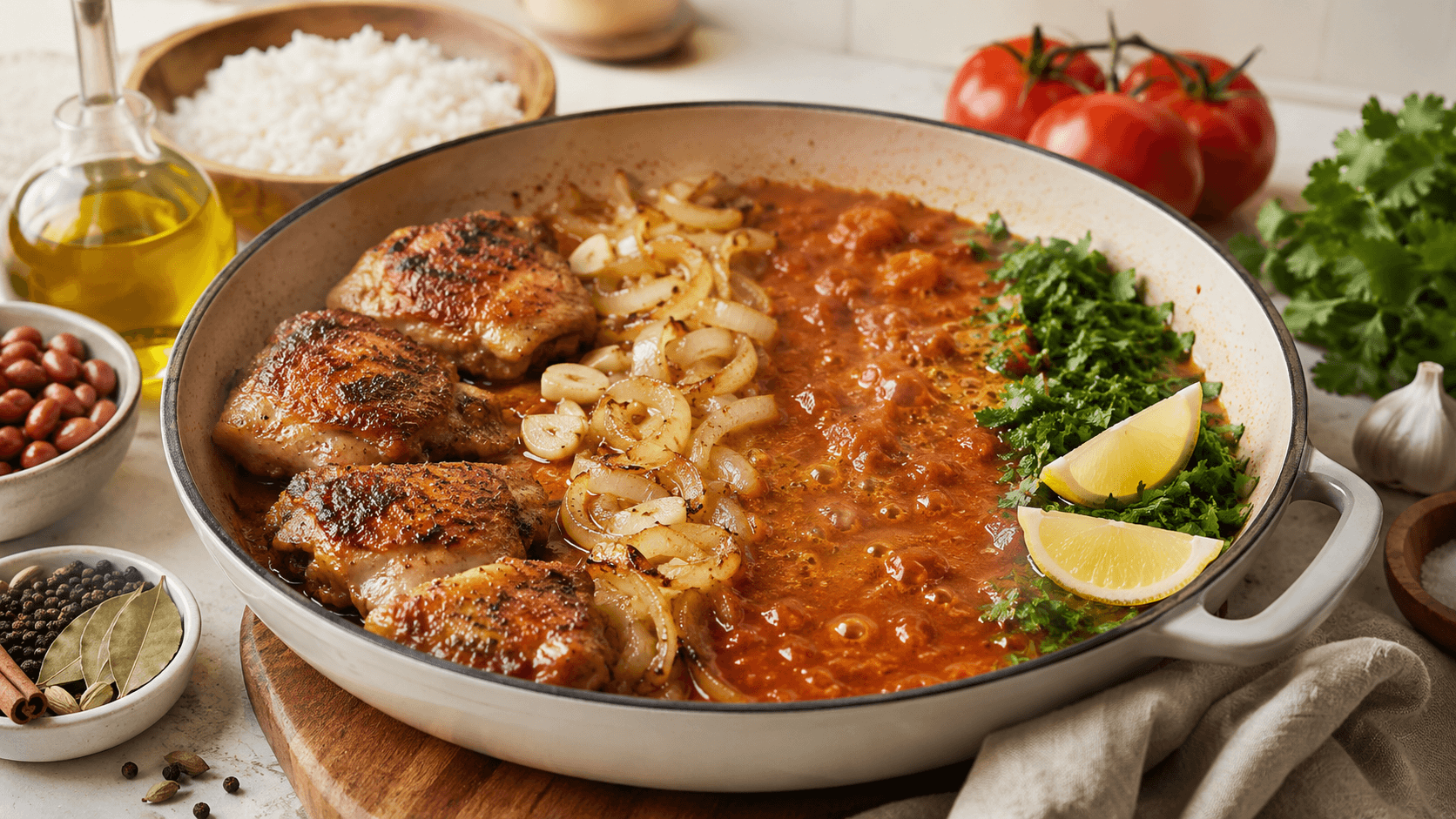
Some one-pan recipes prioritize convenience by cooking ingredients together, which can limit opportunities for separate browning and flavor development.
In some sheet-pan meals, ingredients roast together at a shared oven temperature. Similarly, adding all the ingredients to a skillet at once can limit the opportunities to sear protein, sauté aromatics, and build flavor in stages.
That trade-off does not have to exist anymore.
Modern one-pan home cooking can still follow the real moves of cooking: sear, sauté, deglaze, simmer, and finish. The difference comes from heat control, sequencing, and using the pan properly.
Four Cooking Techniques for a Flavorful One-Pan Dinner
Different one-pan recipes use different combinations of cooking techniques. Searing, sautéing, simmering, and finishing can help build flavor and texture when the dish calls for them.
1. Sear
Searing uses high, dry heat to create a deep exterior on protein or vegetables.
This works well for foods like chicken thighs, mushrooms, paneer, cauliflower, or salmon. The pan should be hot enough that moisture evaporates quickly when food touches the surface.
Crowding kills the sear. If needed, cook in batches.
2. Sauté
Sautéing happens at medium-high heat with a thin layer of fat and regular movement.
This is where onions become sweet, garlic turns aromatic, and spices begin to bloom. It is different from searing because the food moves instead of sitting still.
3. Simmer
Simmering happens once liquid enters the pan and the heat drops.
This is where flavors come together. It is also the step most fast one-pan recipes rush. A sauce that needed eight minutes to simmer will taste different if it only gets three.
4. Finish
Finishing is the final small move that makes the dish feel complete.
It could be a squeeze of lemon, a pat of butter, fresh herbs, chopped coriander, cream, or a final sprinkle of spice. This 30-second step can turn a cooked dish into a served dish.
Why Sequencing Matters More Than Ingredient Count
Two cooks can use the same ingredients in the same pan and still end up with very different meals. The difference is sequencing.
Take a simple example: chicken thigh, onion, garlic, tomato, stock, and rice.
If you cook the rice first and add raw chicken on top without searing it, the chicken will not develop the browned exterior that comes from direct contact with a hot pan.
When cooking manually, sear the chicken first and transfer it to a plate. Sauté the onion in the same pan, adding a little oil if needed, then build the sauce with garlic and tomato. Add the stock and rice, return the chicken, and continue cooking until the chicken is fully cooked.
Same ingredients. Better sequence. Better dinner.
That is the heart of one-pan cooking. When you cannot switch pans, you switch cooking states: hot pan, dry pan, wet pan, lidded pan, open pan, low heat, high heat. Each state creates a new technique without adding another vessel to clean.
Heat Control: Why It Matters in One-Pan Recipes
Poor heat control is one common reason one-pan dinners do not turn out as intended.
Many people set the stove once and leave it there for the full recipe. Real cooking does not work like that. Heat needs to move up and down depending on the step.
A few rules help across most one-pan dinners:
Preheat the pan appropriately for the cookware and cooking technique, following the manufacturer's instructions.
Use high heat for searing.
Lower the heat before adding liquid.
Use the lid carefully.
Remember that the pan keeps cooking even after the heat is turned off.
A lid changes the dish completely. Lid on traps steam and softens food. Lid off lets liquid reduce and flavor concentrate. The right choice depends on the step.
Tip
Sear protein first while the pan is dry and hot. Remove it, then build the rest of the dish. Return the protein near the end so it does not steam in its own juices for the full cook.
Five Multi-Step Dinners Built Around One Main Pan
These recipes illustrate how different cooking techniques can be combined within a single cooking vessel, although some require ingredients to be prepared in advance.
1. One-Pan Biryani Using Pre-Parboiled Rice

Sear marinated chicken pieces in ghee, then remove them.
Sauté sliced onions in the same pan, scraping up the fond, until deep golden. Add whole spices and bloom them for 30 seconds. Add ginger-garlic, yogurt, and tomato to build the masala.
Layer previously parboiled basmati rice over the masala and return the chicken. Cover and cook on low heat until the rice and chicken are fully cooked. This version uses one pan for the final cooking stage but requires the rice to be parboiled beforehand.
Finish with fried onions and mint.
2. Cast-Iron Mushroom Risotto
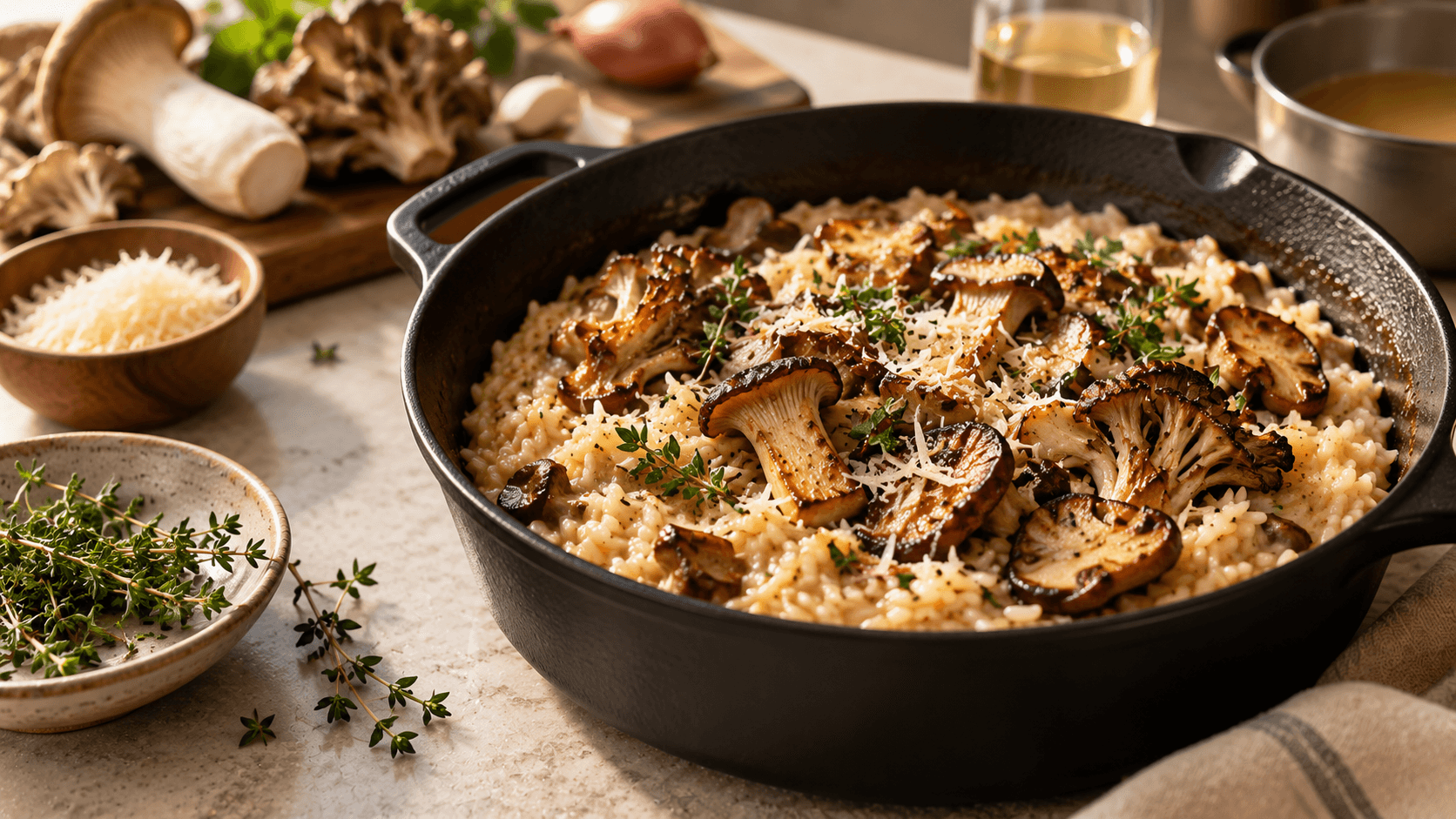
Sear meaty mushrooms like king oyster or maitake until deeply browned, then remove.
Sauté shallot and garlic. Toast arborio rice until the edges turn translucent. Deglaze with white wine.
Gradually add stock from a prepared container, stirring and allowing the rice to absorb the liquid between additions until it becomes creamy. If the stock is kept hot in a separate saucepan, this is no longer a strictly single-vessel preparation.
Fold in butter, parmesan, and mushrooms. Finish with thyme.
3. Skillet Braised Chicken With White Beans

Sear bone-in chicken thighs skin-side down until deeply browned. Flip for two minutes, then remove.
Sauté shallot and garlic in the chicken fat. Deglaze with white wine and reduce.
Add stock and rinsed canned white beans. Return the chicken on top, skin-side up.
Simmer uncovered on low heat until the chicken reaches an internal temperature of 165°F (74°C), measured in the thickest part without touching the bone. Cooking time will vary depending on the size of the thighs. Finish with lemon zest and parsley.
4. One-Pan Dal With Upfront Tempering
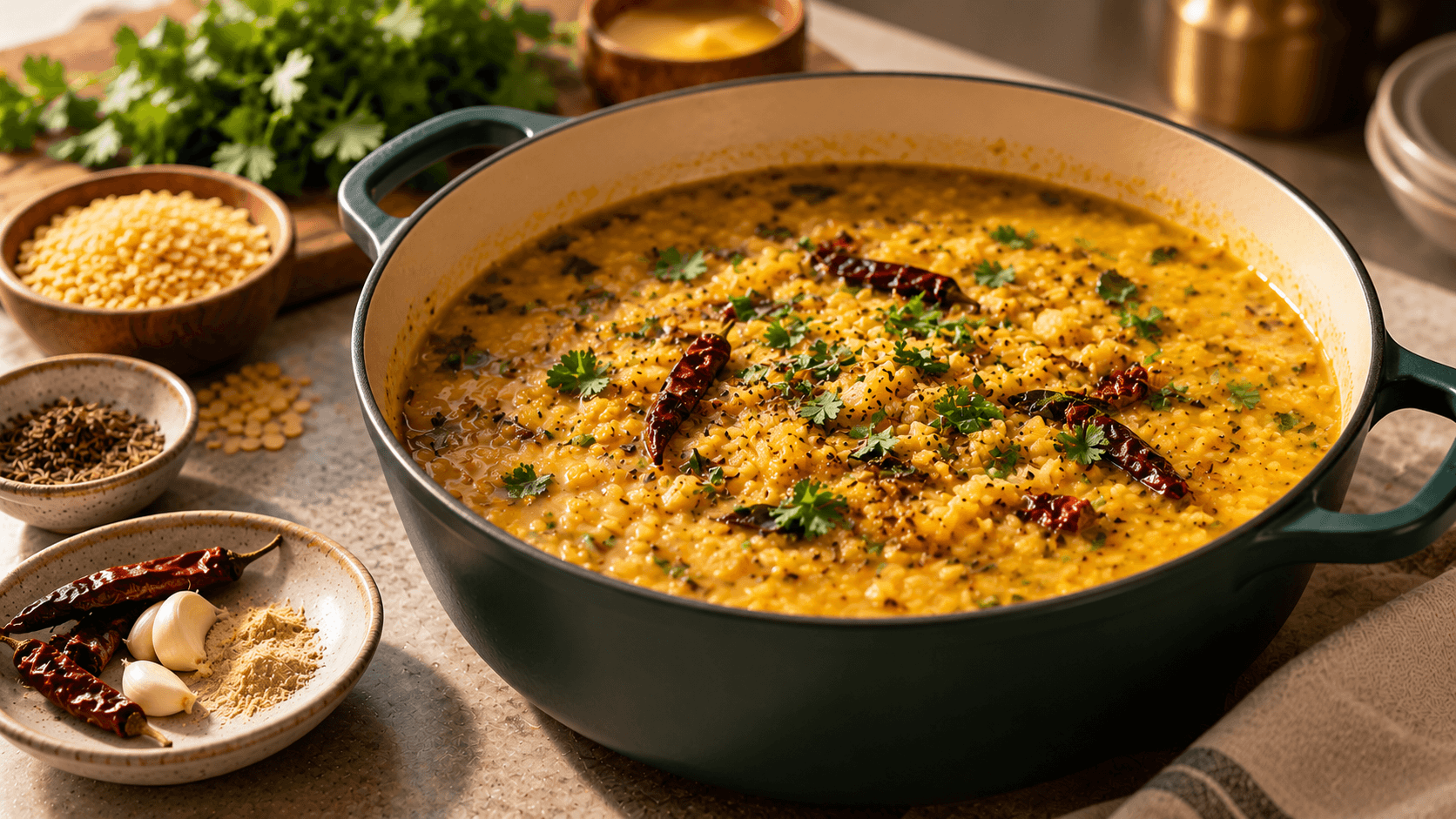
For a single-pan version, prepare the tempering first, then cook the rinsed dal in the same pan. This avoids using a separate vessel for the finishing tadka.
Before cooking the dal, heat ghee in the pan and briefly bloom the cumin, dried chilies, minced garlic, and asafoetida. Add the rinsed dal and water, then cook until tender.
This method incorporates the tempered spices into the dal during cooking, rather than adding a separate finishing tadka.
5. Pan-Seared Salmon With Miso Butter Beans
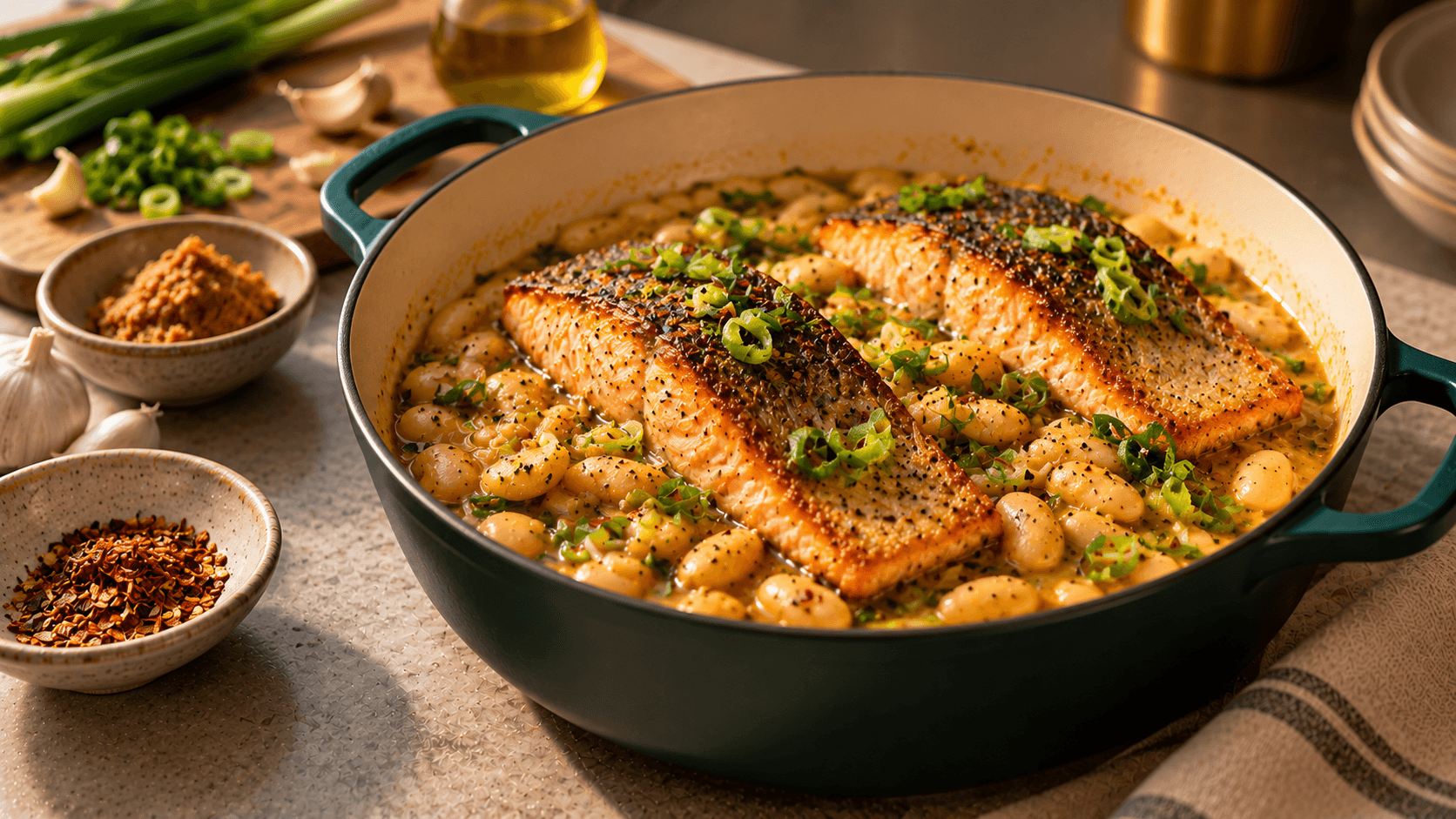
Sear the salmon skin-side down until the skin is crisp and the fish is partially cooked. Flip briefly, then remove it from the pan. Cooking time will depend on the thickness of the fillet.
Sauté garlic in the fat remaining in the pan, adding a little oil if needed. Add canned butter beans and miso whisked into a little stock.
Simmer until the sauce thickens. Return the salmon to the pan and continue cooking gently until the thickest part reaches an internal temperature of 145°F (63°C). Finish with sliced scallion.
The Cleanup Comparison
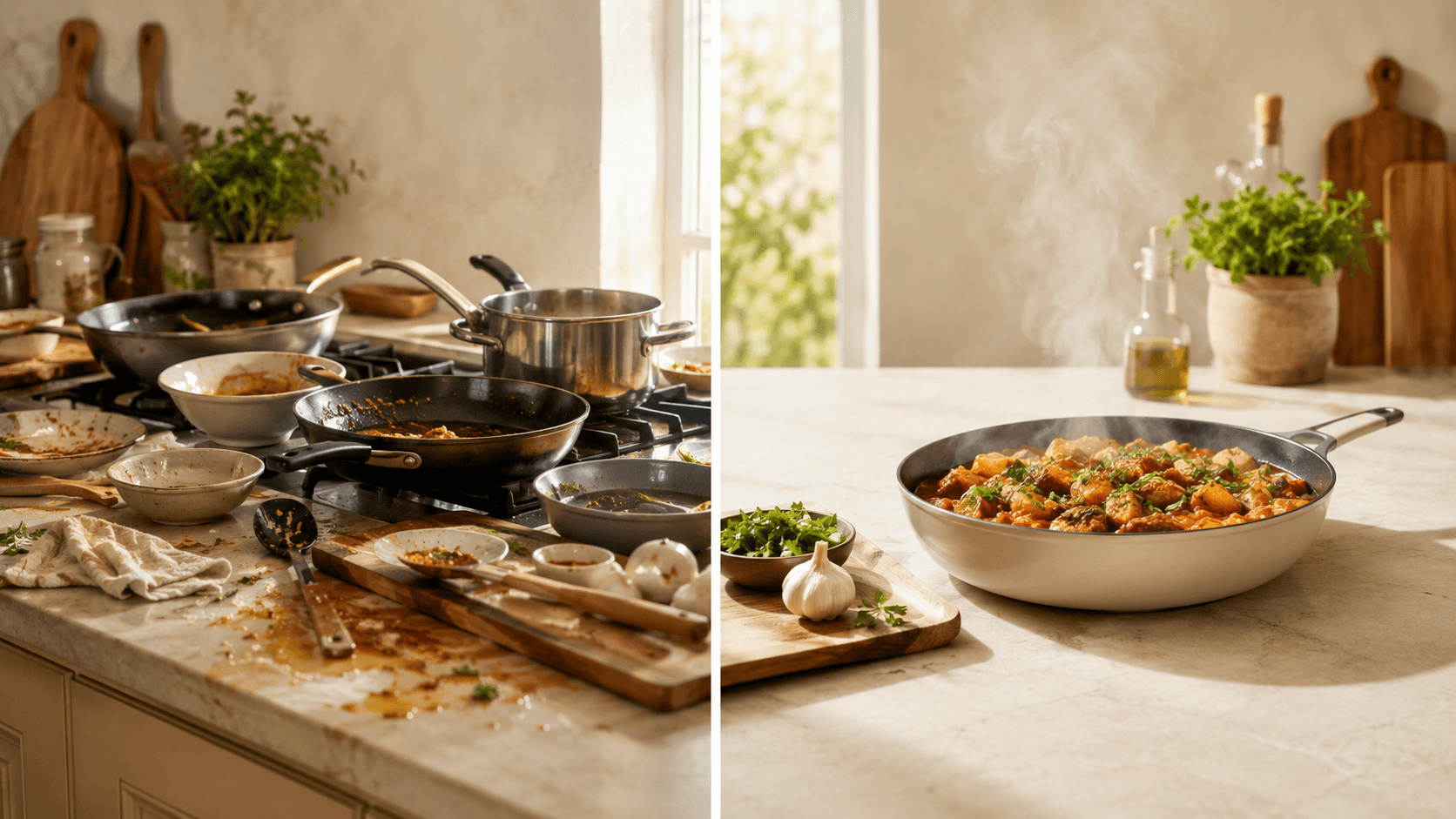
Cleanup is the hidden cost of home cooking.
Cooking time is only part of making dinner. Washing multiple pans and other cooking equipment adds to the time spent in the kitchen.
Here is the simple comparison:
Approach | Cooking vessels | Active involvement | Cooking characteristics | Walk-away time |
Traditional multi-pan | Multiple | Varies by recipe | Different components can cook separately | Varies |
Sheet-pan dinner | Typically 1 | Varies by recipe | Primarily oven roasting | Varies |
One-pan stovetop | 1 | Requires attention to cooking stages | Multiple techniques in one vessel | Varies |
Posha | 1 | Ingredient preparation and other recipe-dependent tasks | Automated cooking with ingredient dispensing, stirring, and heat adjustment | Depends on the cooking stage |
Multi-pan cooking allows different components to be prepared separately, but using multiple vessels can increase cleanup.
Sheet-pan dinners can reduce cleanup, although cooking everything together may limit opportunities to develop flavor through separate cooking stages.
One-pan cooking can reduce the number of dishes while still allowing flavor to develop through searing, sautéing, simmering, and finishing.
Posha’s Take: How One-Pan Multi-Step Automation Works
Posha brings one-pan multi-step cooking into an automated format.
Its detachable, dishwasher-safe pan is designed for induction-driven cooking in a single vessel. It can move through different stages of cooking, from searing to simmering to finishing, without needing someone to stand at the stove the whole time.
The pan still does what a pan should do. What changes is who is controlling the process.
Posha can manage different cooking stages, dispense ingredients in sequence, stir when needed, and adjust heat as the recipe progresses. Its Culinary AI monitors visual cooking cues to help determine how the food is developing.
That means the dish can still follow the rhythm of real cooking, but the kitchen stays calmer.
An illustrative Posha cooking sequence can be described through these decisions, rather than as actual spoken prompts from the device:
The ingredients are browning. Adjust the heat for the next cooking stage.
The onions have softened and browned. Add the tomatoes.
The sauce has thickened. Adjust the heat for the final cooking stage.
This is not just a timer moving through steps. It is cooking that watches, adjusts, and responds.
When One-Pan Cooking Is Not the Right Fit
Not every recipe should be forced into one pan.
Some dishes need different temperatures or separate textures at the same time. A delicate sauce alongside a hard sear may still need another vessel.
One-pan cooking is a useful default. It is not a rule for every dish.
Frequently Asked Questions
Can I Really Sear Properly in a Non-Stick Pan?
Not at the highest temperatures. Recipes that need a strong sear usually need a pan that can handle high heat. Stainless steel, cast iron, and Posha’s pan are better suited for this than most traditional non-stick pans.
What About Acidic Ingredients in Cast Iron?
A short simmer with tomato or lemon is usually fine in well-seasoned cast iron.
Long acidic simmers can affect the seasoning and may create a metallic taste. For longer acidic cooks, stainless steel or enameled cast iron is usually a better choice.
Doesn’t the Pan Get Crowded With All Those Steps?
Not necessarily. Crowding depends on the recipe, ingredient quantities, and pan size.
When cooking manually, treat the pan like a workspace. Sear ingredients in batches if necessary, temporarily transfer them to a plate, and build the remaining components in the same pan. Return the ingredients at the appropriate stage.
This approach allows you to manage different cooking stages without using multiple cooking pans.
How Much Oil Should I Use?
The amount depends on the recipe, ingredients, and pan size.
Use enough oil for the initial sear. If the ingredients release sufficient fat, you may be able to use it for a later sauté. Add more oil when needed to prevent the ingredients from sticking or burning.
Using the same pan allows fat from an earlier cooking stage to contribute to subsequent steps. However, total oil use depends on the recipe, ingredients, and cooking method, so one-pan cooking does not necessarily require less oil than multi-pan cooking.
Will My One-Pan Dinner Be as Good as the Multi-Pan Original?
It can be. Proper sequencing and heat control can help a one-pan dish develop flavor and texture comparable to a multi-pan version, although the result depends on the recipe and cooking method.
In some cases, it can taste even better because the food picks up flavor from the fond left behind in the same pan.