Rohin Malhotra
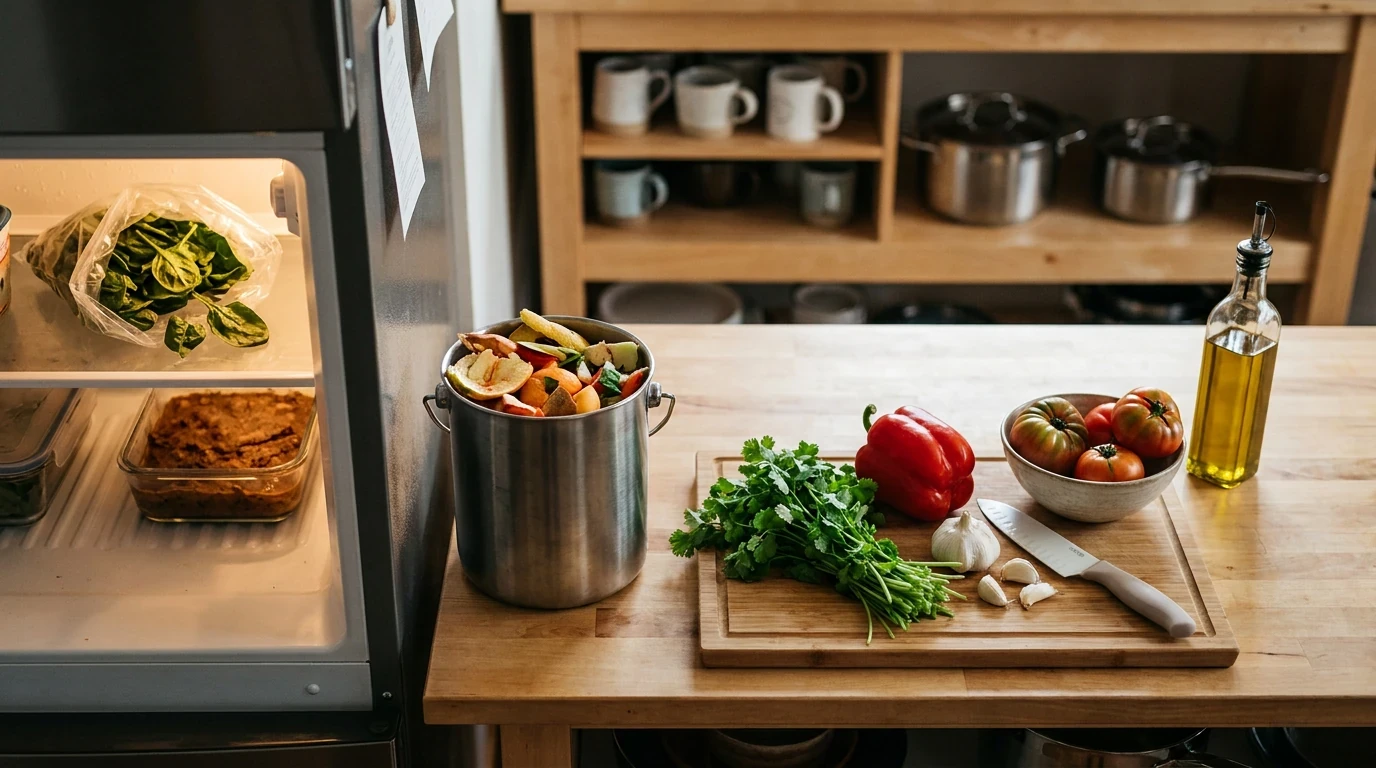
On taco night, you use a handful of cilantro. A few days later, the rest is wilting beside half a can of coconut milk from a curry. You meant to use both, but when you plan the next meal it is easy to think about what to buy before checking what is already there.
The recipes were useful, but they left ingredients with no next meal. Food hidden at the back of the fridge is even easier to forget or buy again. A recipe that makes more than your household will eat creates another kind of leftover. The USDA estimates that 30 to 40 percent of the U.S. food supply is lost or wasted, a figure that reaches well beyond households. In your kitchen, the next decisions are simpler: see what needs using, choose how much to cook, then make the meal. Posha can help with the recipe and the cooking; the first look in the fridge is yours.
Start the next meal with the food you have
Open the fridge before writing a shopping list; the greens at the back may be what you were about to buy again. Move the cilantro and greens, or anything you should use in the next two or three days, into a visible use-first shelf or bin. Then choose two or three meals that use what you already have and buy only the missing ingredients. This follows the EPA's advice to plan meals and shop with a list, starting with the food already in your kitchen.
The same thinking helps with what you buy next. A rotisserie chicken might have three destinations before you bring it home: Monday's dinner, Wednesday's grain bowl, and Thursday's soup. Before buying miso or another specialty ingredient for one dish, name two other uses for it that week. If you cannot, buy the smallest amount available. That half-can of coconut milk is the same test in reverse: find its next meal before buying more.
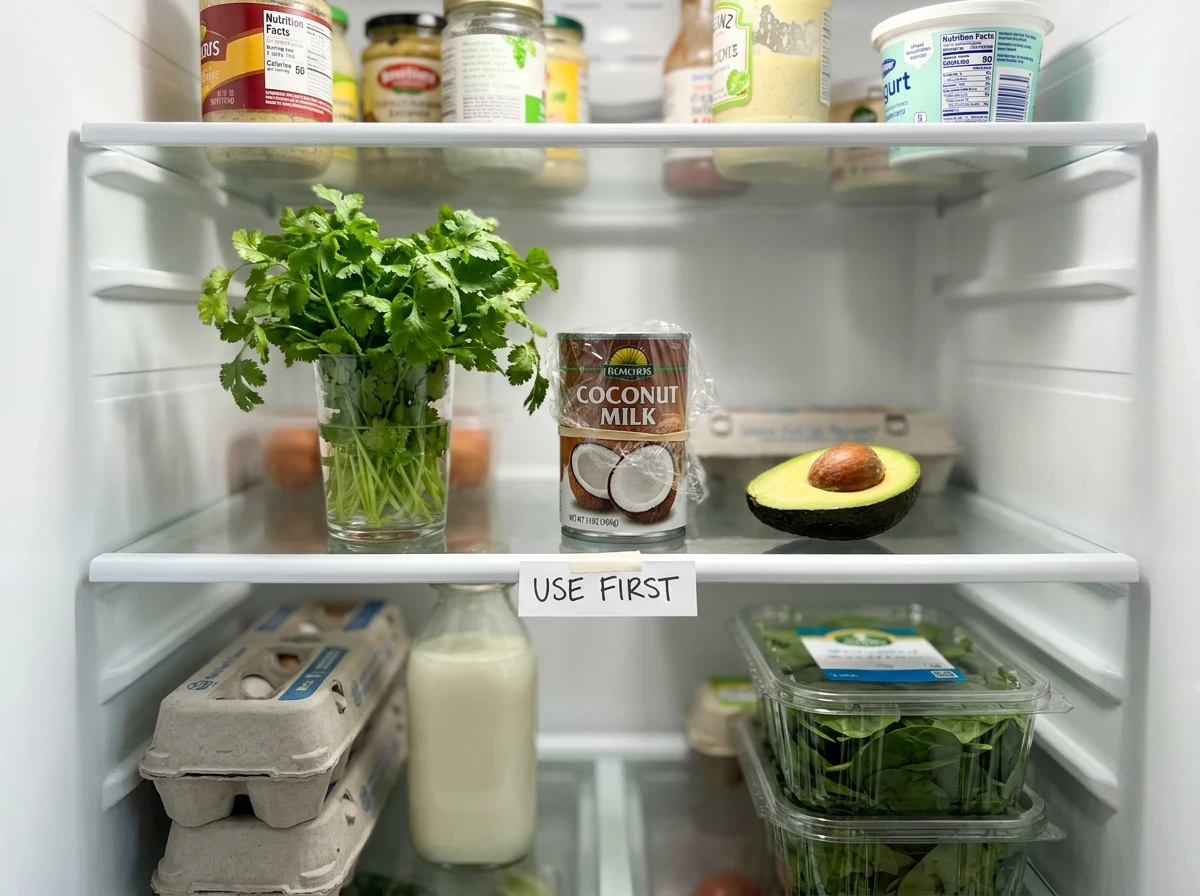
Keep food you need to use soon where you can see it.
That deals with what to cook. A meal can still become unwanted leftovers if you make too much of it.
Decide how much to cook before you begin
Many recipes serve four even when only two people are eating. The U.S. Census Bureau puts the average household at 2.53 people for 2020–2024. If nobody wants the other two portions, the surplus has no plan. Leftovers are useful when you know who will eat them and when; without that decision, the batch may sit in the fridge until it is thrown away.
You can halve the recipe yourself, use a kitchen scale, or use an app that adjusts ingredient amounts when you change the serving count. The work is small for one ingredient and tedious across a whole recipe, which is why it is easy to fall back on the default batch. Choosing the amount before cooking can prevent that excess before you need to store it.
Where Posha helps with the meal you have planned
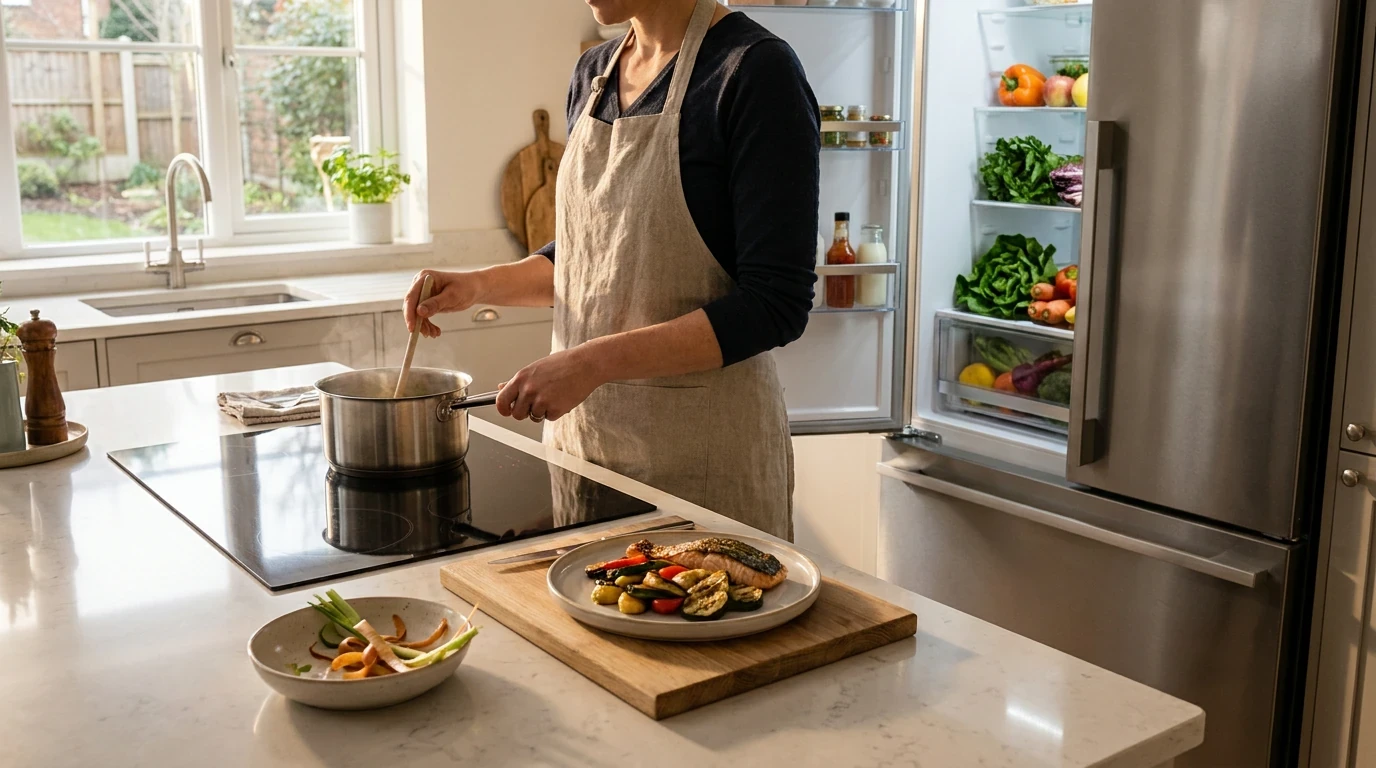
Once you know what needs using and how many people will eat, Posha has a specific job. You choose and buy the groceries, browse for a supported recipe and select its serving size, then prep and load the ingredients. The app shows how much to use and where it goes. If you have an ingredient you want to work into dinner, you can look for a recipe that uses it. Ingredient swaps and other personalization are a beta feature; check the options for the dish you choose.
Once the ingredients are loaded, Posha carries out the multi-step cook for the serving count you chose. A larger batch of rice needs more water in its recipe, while finely chopped vegetables cook differently from larger pieces. Posha's Culinary AI is designed to account for how much food you loaded, how it was prepared, and how it changes during cooking. In supported recipes, Posha adjusts heat, timing, and stirring as the food cooks. That is how a serving choice becomes a meal made at that size, rather than only a shorter ingredient list.
Posha can cook the meal you have chosen; you still decide which ingredients need that meal.
Make it a routine you can repeat
On Sunday, move perishables to the use-first shelf and choose two or three meals around them. Shop for the gaps. Before Monday's dinner, check how many people will eat and set the serving count, by hand or in a supported Posha recipe. By Wednesday, look at the shelf again before planning another meal. These are short checks made when they can still change what you cook.
When the week changes
A routine also needs a way to handle a meal that does not happen. If Thursday's dinner falls through, give its ingredients a new destination while they are still good. Freeze chicken or stock in a container labeled with the date and intended use, such as “chicken stock for risotto.” Travel, odd schedules, and bulk purchases make that habit especially useful.
Short-lived ingredients need a quicker decision. Wash and dry fresh herbs, then freeze them promptly in olive oil in an ice-cube tray. Cook leafy greens, blend them into a smoothie, or wrap them in a damp towel to help them last. Freeze milk in portions; use yogurt in baking while it is still good. Storage and composting help in their own ways; giving food a next use addresses the choices that brought it home.
If you already plan and store food this way, Posha's added value is mainly portion precision and less hands-on cooking. What a Cooking Robot Costs can help you weigh that benefit against the purchase.
Frequently asked questions
How much does wasted food cost a household each week?
The EPA's 2025 estimate puts the cost of wasted food for a U.S. family of four at about $2,913 a year, or $56 a week. Actual households vary. For global context, the UN Environment Programme's 2024 report estimates 79 kilograms of household food waste per person in 2022, including inedible parts. That is a different measure from the U.S. cost figure.
Does a cooking robot actually help reduce food waste, or is it just a marketing claim?
It can help with specific causes: Posha lets you choose servings for a supported recipe and look for dishes that use an ingredient you have. Whether perishables get used in time still depends on the food you buy and the meals you plan.
What's the best way to use ingredients before they go bad?
Keep them visible on a use-first shelf and make one of your next meals around them. Look for a recipe after you know what needs using.
How is Posha different from a pre-portioned meal system?
A pre-portioned service decides quantities before food reaches your kitchen. With Posha, you buy your groceries, select a supported recipe, prep and load the ingredients, and let it handle the cooking sequence. You control which ingredients go into the meal.
Can precise portioning really make a difference?
Yes, when the default recipe makes more than you plan to eat. Choosing the serving count before cooking can reduce the surplus that would otherwise need a place in the fridge.