Rohin Malhotra
Indian meal prep is just batch cooking, Indian-style: you make staples like dal, curries, rice, rotis, and chutneys ahead of time so weeknight dinner is mostly reheating and assembling. It’s also an old habit dressed up with a new name: cooking big pots of food that keep well, often taste even better the next day, and can be mixed and matched across meals.
If you grew up with a Sunday pressure cooker going nonstop (rajma bubbling away, sambar portioned into steel dabbas), you already get the idea. What’s changed is the schedule. Busy professionals (especially in dual-income homes that still want to cook at least a couple nights a week) are turning that instinct into a repeatable routine. If you’re learning Indian cooking from scratch or you’re simply tired of defaulting to takeout, a little structure turns “home food” into something you can actually count on midweek.
Why Indian Food Is Perfectly Suited for Meal Prep
Some foods fall apart the moment they hit the fridge. Many Indian dals, curries, and gravy-based dishes hold up particularly well when prepared ahead. So much of the flavor comes from blooming whole spices, building an onion-tomato base, and letting things simmer until they come together. That doesn’t disappear overnight; it settles in.
Chana masala on Tuesday often tastes more cohesive than it did on Sunday, once the chickpeas have had time to soak up that spiced gravy.
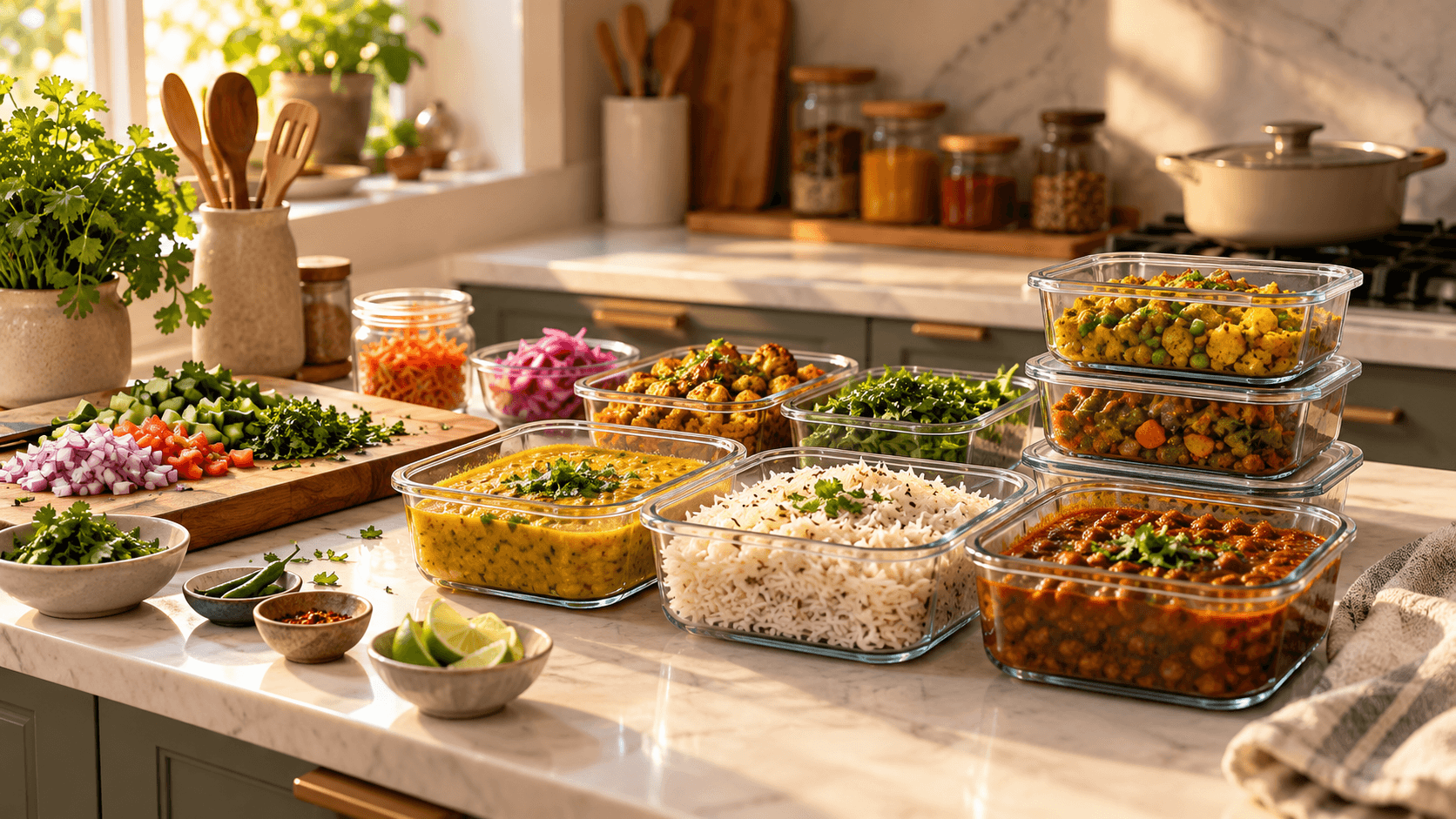
Indian meals are also built from parts, not one-off dishes. Make a pot of tadka dal, a container of jeera rice, and a mixed sabzi, and you can spin that into several different plates just by swapping the extras: raita one day, pickle and papad the next. That modular setup is why Indian meal prep works so well: you’re not cooking seven separate dinners; you’re cooking a handful of components that keep remixing into something that doesn’t feel repetitive.
Food safety matters when you’re cooking ahead. The USDA recommends keeping cooked leftovers in the refrigerator for three to four days or in the freezer for three to four months for best quality. These are general leftover storage guidelines, not storage periods tested specifically for Indian gravies, dals, or rice. Cool cooked food quickly in shallow containers and refrigerate it promptly. Freeze portions you won't eat within the recommended refrigerator storage period.
How Indian Meal Prep Works: The Basic Process
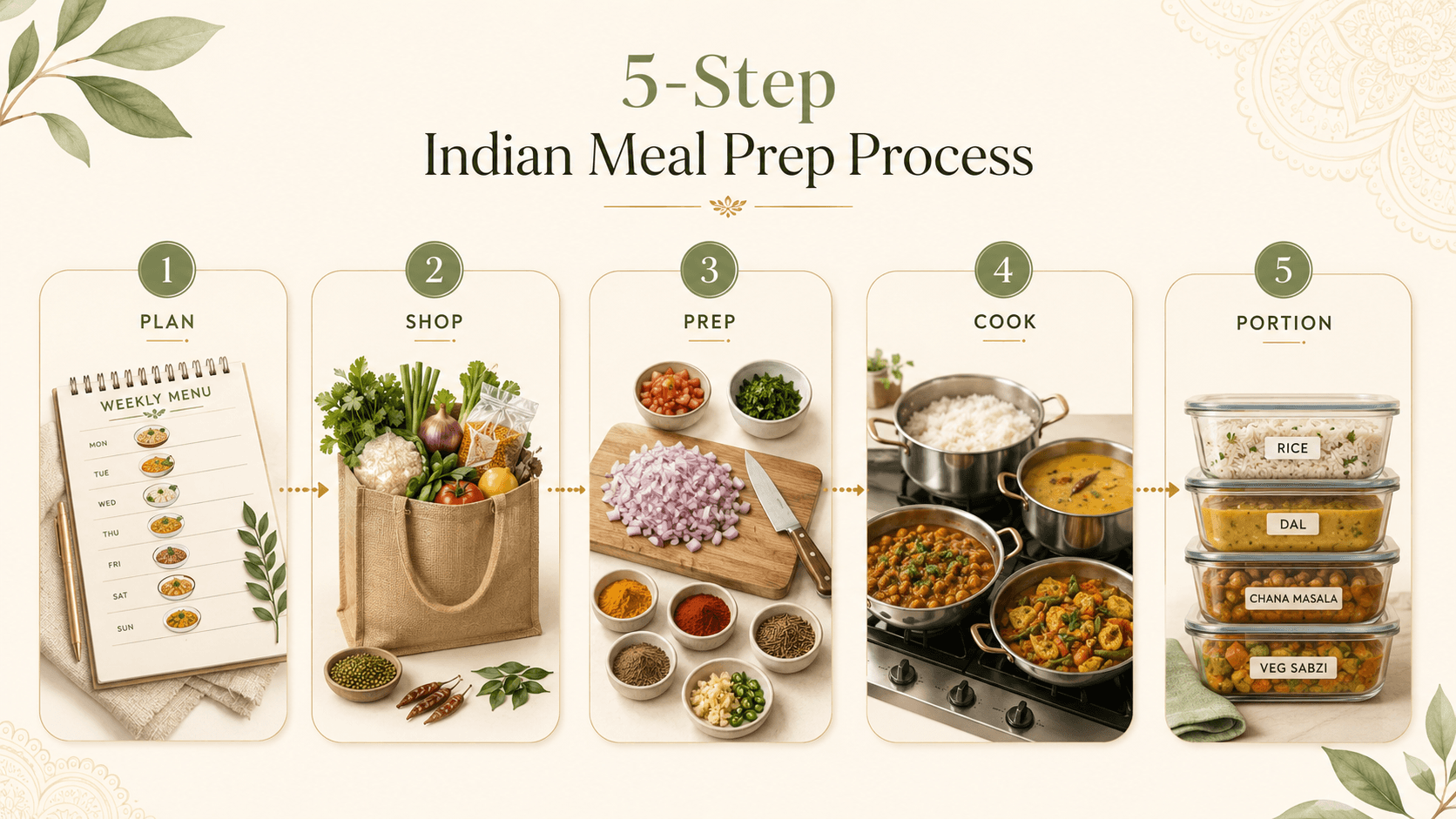
Most weeks, Indian meal prep follows the same loop: plan, shop, prep, cook, portion. Here’s what that looks like when you’re doing it for real, not just thinking about it.
Plan your menu around shared base ingredients. If palak paneer and matar paneer are both on the list, build one onion-tomato-ginger base and split it. Aim for three to four mains, one or two carb options (rice and/or roti), plus a couple of quick sides like raita, chutney, or a simple salad. Put it on paper so you’re not improvising with a hungry family waiting.
Prep before you cook. Soak dal and chickpeas overnight. Do one focused chopping session for onions, tomatoes, ginger, and garlic. Pre-measure your garam masala and other spices. People call this “mise en place” in restaurant kitchens; at home, it’s the difference between a calm Sunday cook and a chaotic one, and it can reduce the time you spend switching between chopping, measuring, and cooking tasks.
Cook strategically. Start with the longest dish first (slow-simmered rajma or nihari) and use that waiting time to knock out faster items like rice, a dry sabzi, or a quick tadka. Pressure cookers and Instant Pots are common for a reason, but the real win is sequencing: overlapping cook times so you’re not stuck doing everything one after another.
Portion and store. Divide cooked food into shallow containers and refrigerate or freeze it promptly, without waiting for it to cool to room temperature. Refrigerate perishable food within two hours, or within one hour if the temperature is above 90°F (32°C). Use glass or BPA-free food storage containers. Label the dish and the date so you’re not playing “mystery curry” on Thursday. Dals and gravies freeze especially well. Rotis can be stacked with parchment between them and frozen flat so you can pull out exactly what you need.
Indian Meal Prep Ideas to Get You Started
Good Indian meal prep is less about chasing variety for its own sake and more about picking dishes that store well, hit your nutrition goals, and still feel like real food by day three. Here’s a workable weekly setup for lunch and dinner for two people.
Category | Dishes to Batch Cook | Storage Life (Fridge) | Freezer-Friendly? |
|---|---|---|---|
Protein-rich dal/legume | Tadka dal, chana masala, rajma | 3-4 days | Yes |
Vegetable curry | Aloo gobi, baingan bharta, palak paneer | 3-4 days | Yes (paneer texture changes slightly) |
Dry sabzi | Bhindi masala, cabbage poriyal, beans thoran | 3 days | Not recommended |
Grain/carb base | Jeera rice, plain basmati, roti/paratha | Up to 3–4 days for properly refrigerated cooked leftovers | Yes |
Condiments/sides | Mint chutney | Varies by recipe and preparation | Recipe-dependent |
Condiments/sides | Raita | Up to 3–4 days under general leftover guidance; refrigerate promptly | No |
Condiments/sides | Mango pickle | Follow the recipe or product label | Follow product guidance |
One simple tip that keeps the week from feeling monotonous: cook two curries that live in different lanes. Make one rich and creamy, the other bright and tangy. Pair a coconut-leaning South Indian sambar with a North Indian-style matar paneer and the rotation feels fresh, like you’re eating from two different kitchens, not the same set of containers.
Common Misconceptions About Batch Cooking Indian Food
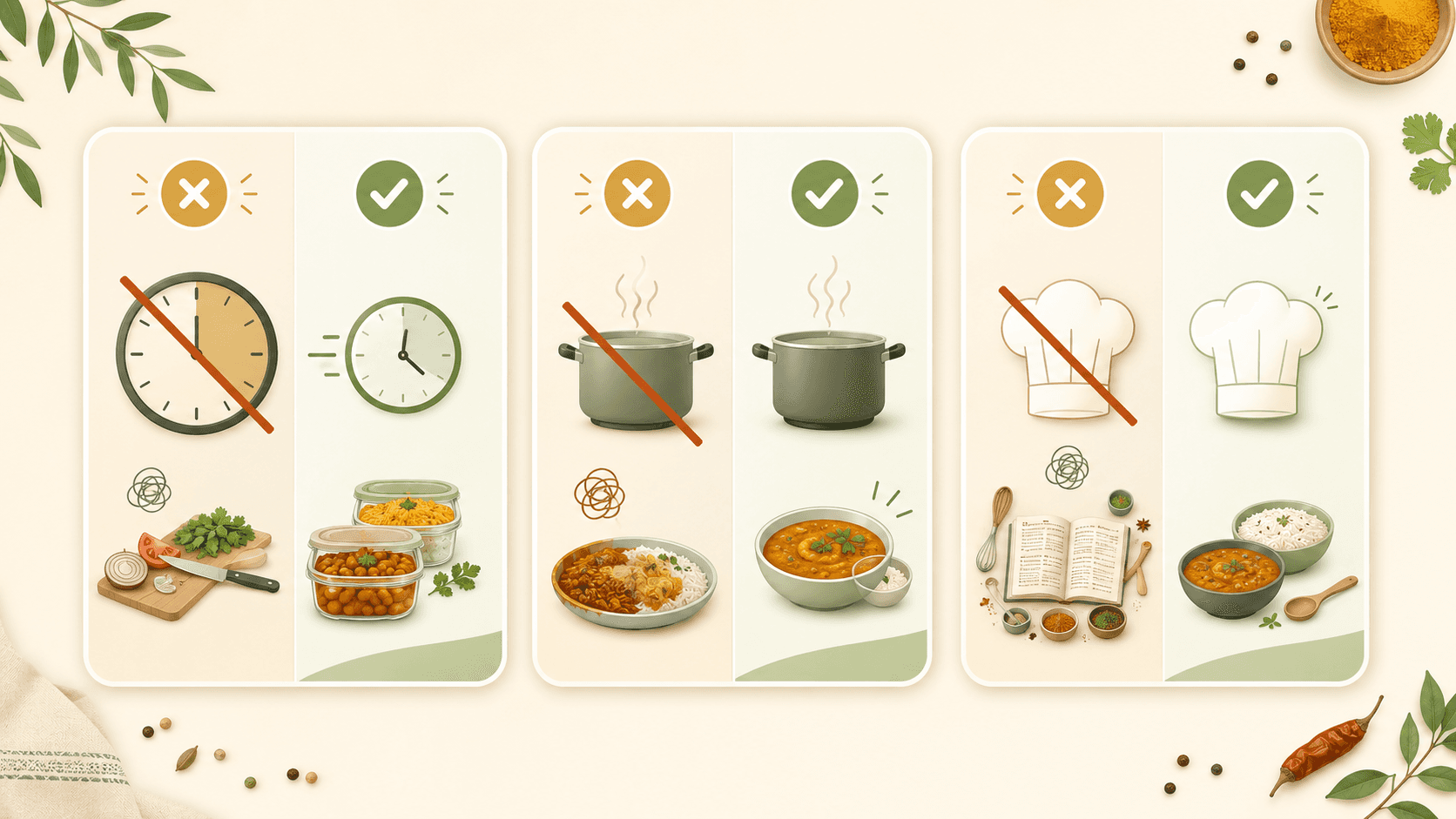
"Indian food takes too long to meal prep." The time needed for a weekly Indian meal-prep session depends on the number of dishes, batch sizes, and cooking equipment. Preparing ingredients ahead and cooking components in parallel can make the process more manageable.
"Reheated Indian food doesn't taste fresh." For most dishes, reheating is where the magic shows up. Spice-forward gravies and dals tend to taste more integrated after a night in the fridge as cumin, coriander, and turmeric settle into the dish. The foods that don’t love leftovers are the ones you already suspect: fried snacks (pakoras, vadas) and fresh salads. Save those for day-of.
"You need advanced cooking skills." If you can sauté onions, measure spices, and follow a recipe, you can meal prep Indian food. The most prep-friendly dishes (dals, rice, straightforward curries) are also forgiving. They don’t demand the precision of dosa batter fermentation or a biryani dum where timing is everything.
Where Posha Fits Into Your Indian Meal Prep Routine
Planning is manageable. Portioning is easy. The part that wears you down is the hands-on cooking, hovering over the stove so dal doesn’t catch, dialing the flame up and down under a curry, waiting for that moment when cumin hits hot oil and turns fragrant. That’s the grind Posha is built to take off your plate.
Posha is an autonomous countertop cook with its own recipe bank. You choose a supported recipe, prepare and load the ingredients, and let Posha manage the active cooking. Its built-in camera, sensors, and cooking intelligence monitor cooking stages while the system coordinates ingredient additions, stirring, and heat adjustments. You can step away to handle homework or a call while Posha cooks the selected dish.
Tip: Posha watches the pot and makes the small adjustments (stirring, heat changes, timing) that keep dal from sticking and curries from overcooking while you’re doing something else. Cooked with love, care, and laser-level precision.
If your Sunday meal prep involves spending a long stretch at the stove, Posha can reduce the hands-on cooking required. Once you prepare and load the ingredients for a supported recipe, Posha manages the cooking while you prepare ingredients for the next dish.
Key Takeaways
Indian meal prep means cooking Indian staples (dals, curries, rice, rotis) ahead so weeknight meals are mostly assemble-and-reheat.
Indian food is especially prep-friendly because spice-forward gravies and dals tend to taste better after a day or two in the fridge.
A focused weekly prep session can cover several meals by preparing a few versatile components that can be combined throughout the week.
The most efficient approach is modular: cook a few base components that can be recombined into different plates.
Tools like Posha’s autonomous countertop cook take over the active cooking, so you can prep ingredients and step away while dinner cooks precisely.
Frequently Asked Questions
How long does Indian meal prep take each week?
The time required depends on how many dishes you're preparing, your batch sizes, and your cooking setup. The biggest time-saver is overlap: get a slow dal going, then chop and cook your sabzi while it simmers.
Which Indian dishes freeze best?
Dals, legume curries (rajma, chana masala), and gravy-heavy dishes freeze well. The USDA recommends using cooked leftovers from the freezer within three to four months for best quality, although this is general guidance rather than a tested storage period for each Indian dish. Rotis and parathas also freeze well. Stack them with parchment between pieces so they don’t stick. Skip freezing raita and fried snacks.
Can I meal prep Indian food if I'm new to Indian cooking?
Yes. The dishes that batch well (tadka dal, jeera rice, aloo gobi) are also some of the easiest to learn. Start with two or three recipes, then add more once the basics feel automatic.
What containers work best for storing Indian food?
Glass containers with airtight lids are a strong choice. They resist turmeric stains and, when labeled microwave-safe, can be used to reheat food and keep most cooked dishes in good shape for three to four days in the fridge.
How does Posha help with Indian meal prep?
Posha is an autonomous countertop cook that takes over the active cooking. Pick a recipe from its built-in recipe bank, prep the ingredients, and Posha stirs, adjusts heat, and tracks progress like a chef would, so you don’t have to stand over the stove during batch cooking.