Rohin Malhotra
You know the loop. Sunday night, you scroll a meal delivery menu, lock in three dinners, and feel that quick hit of relief. By Wednesday, you're tearing open another tiny sauce packet, checking the recipe card again, and asking why dinner still costs so much when you're the one standing at the stove.
For couples and busy households who want real, fresh home cooking, the squeeze is familiar: gym schedules, long commutes, and the couch's pull after 6 p.m. Meal delivery services promise to make dinner easier, but they often replace one routine with another: choosing meals, managing deliveries, unpacking ingredients, cooking or reheating, and cleaning up.
Posha offers a different tradeoff. You buy your own ingredients, prep what the recipe needs, and let the device handle the cooking sequence. This guide compares meal delivery services and Posha on cost, freshness, convenience, variety, cleanup, and long-term value.
Quick Answer: Meal Delivery Services vs Posha
Meal delivery services are best if you want short-term convenience, recipe discovery, and fewer grocery decisions without buying a kitchen appliance. They can reduce planning, but depending on the service, you may still need to cook, reheat, clean up, manage deliveries, and pay per meal.
Posha is best if you already value fresh home-cooked food and want to reduce the active work of cooking over the long term. Instead of paying for each dinner as a delivered product, you buy groceries, choose from Posha recipes, load the ingredients, and let the device handle the cooking process.
What Meal Delivery Services Actually Solve
That first box is fun. Neatly portioned proteins, spice blends you would not normally hunt down, and a glossy recipe card can make a Tuesday dinner feel more intentional. Services like HelloFresh, Blue Apron, CookUnity, Factor, and other prepared-meal or meal-kit brands became popular because they address two real problems: deciding what to eat and getting food into the house.
That does not make meal delivery a bad idea. It can be a useful bridge away from takeout, especially if you want help choosing recipes or easing into home cooking. The better question is practical: does a meal delivery service solve your weeknight dinner problem long term, or does it become another paid routine that still leaves you cooking, cleaning, and managing a subscription?
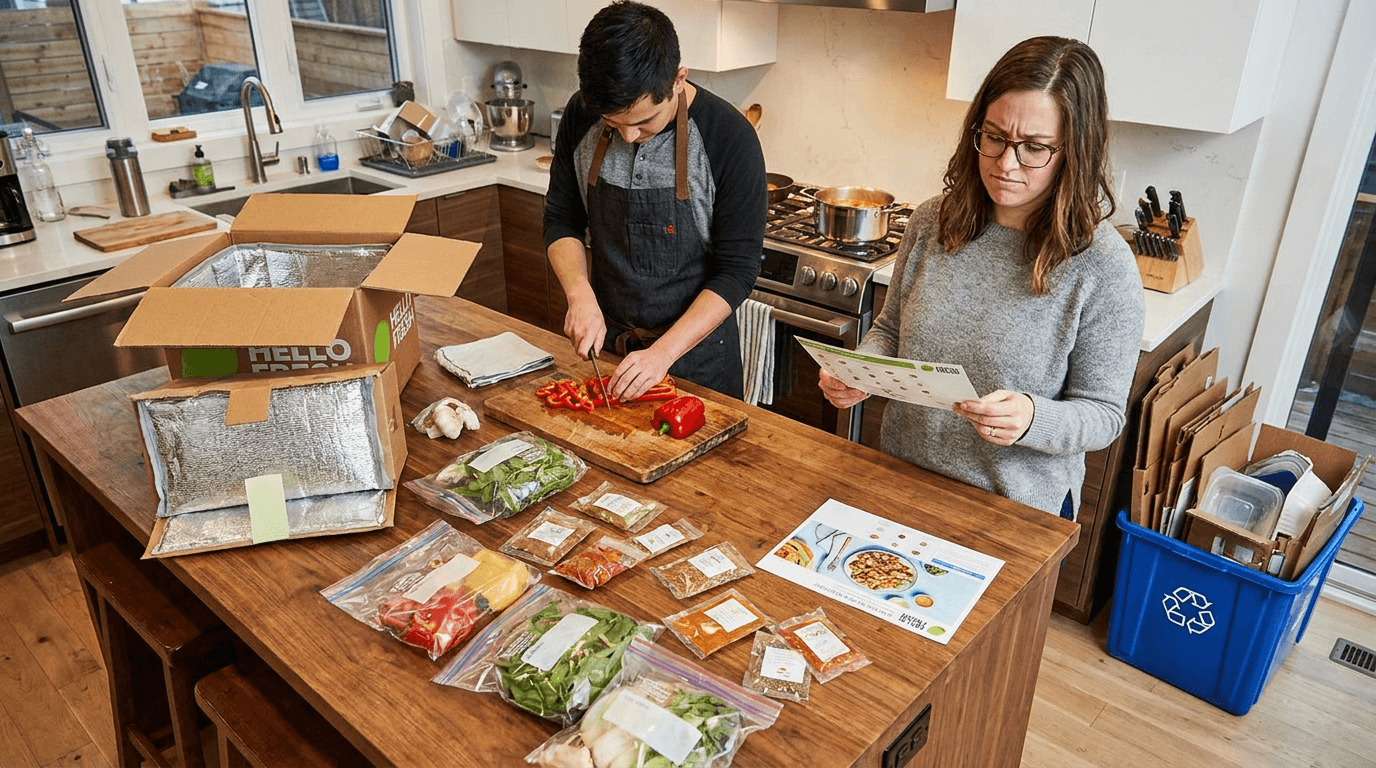
Meal kits cut the grocery run, but the chopping, cleanup, and cardboard pile remain.
How We're Judging the Dinner Dilemma
If you're going to compare food delivery with Posha, the criteria have to match how dinner really plays out in a busy household. A marketing promise does not matter much at 7:15 p.m. when someone is hungry and the sink is already full.
We'll compare both options on five practical factors:
True Cost Over Time: Not just the first-box discount, but the ongoing cost once weekly orders become a habit.
Freshness and Variety : Who chooses the ingredients, and how much control you have over quality.
Hands-On Effort : What you physically do from planning to cleanup.
Variety and Flexibility: Whether dinner keeps feeling new or starts to repeat.
Long-Term Fit: Whether the model still makes sense after the novelty wears off.
The Experience with Meal Delivery Services
Most meal delivery nights follow a similar script. A box shows up, you sort ingredients into the fridge, and when it is time to cook, you follow a recipe card or reheat a prepared meal. The service may save you a grocery run and the "what should we make?" debate. But depending on the service, you may still be doing a meaningful amount of work.
Meal kits usually require chopping, seasoning, cooking, plating, and cleaning. Prepared meal services reduce the cooking, but they can feel closer to premium reheating than fresh home cooking. Both models can be convenient, but both are built around recurring orders.
The first few weeks often feel great. Then the pattern becomes clearer: menus repeat, packaging piles up, and the per-serving price becomes part of your monthly food budget. That is why the real comparison is not "Is meal delivery convenient?" It is. The better question is whether it is the best long-term way to eat fresh, varied dinners at home.
Where Meal Delivery Starts to Feel Limiting
Meal delivery services usually solve planning better than they solve cooking. They can tell you what to make and send the ingredients, but they do not always remove the effort of preparing dinner.
The common pain points are:
You still have to cook many meal kits yourself.
You still have dishes, pans, knives, and cutting boards to clean.
You are limited to the weekly menu or service catalog.
Ingredient quality depends on the service's sourcing, packing, and delivery timing.
You may pay premium prices for meals that still require hands-on effort.
Packaging waste can become frustrating over time.
For some households, that tradeoff is fine. If you dislike planning more than you dislike cooking, meal kits may be enough. But if your bigger problem is the active work of cooking after a long day, a meal kit may only move the friction around.
What Changes When You Use Posha Instead of Meal Delivery
With meal delivery, the company controls the menu, delivery schedule, portioning, packaging, and often the ingredient sourcing. With Posha, you control the groceries and recipe choice, while the device handles the cooking process.
That changes the tradeoff. You still shop and prep, but you are not locked into a weekly box, limited menu, or per-serving subscription. You can choose ingredients from your own grocery store, pick meals from the Posha recipe library, and let the device manage the timing, stirring, temperature, and sequence of cooking steps.
Instead of paying for dinner logistics every week, you are using an appliance to make your own groceries easier to turn into meals.

Load your prepped ingredients and let Posha execute the full cooking sequence automatically.
When Does Posha Make More Sense Financially?
Meal delivery services are easy to start because there is no appliance purchase. The cost shows up gradually as weekly orders, delivery fees, add-ons, and per-serving pricing. Posha works the opposite way: the cost is upfront, while ongoing meals come from regular groceries.
Posha makes the most sense for households that already spend heavily on meal kits, prepared meals, or takeout-style convenience. If you only use meal delivery once in a while, an appliance may not be necessary. But if delivered dinners are part of your weekly routine, the recurring cost can become the bigger commitment over time.
The practical question is not just "Which is cheaper this week?" It is "Which model do you want to live with for the next year: paying per meal, or owning a tool that helps you cook the groceries you already buy?"
Freshness and Variety: Delivered Menu vs Your Groceries
Freshness is one of the biggest differences between the two models. With meal delivery, ingredient quality depends on the service's supply chain. Food is packed, shipped, delivered, and sometimes left on a porch before it reaches your fridge.
With Posha, you choose the produce, proteins, oils, spices, and pantry staples yourself. You can buy from your preferred grocery store, farmers market, butcher, or pantry. That gives you more control over quality, freshness, brands, and substitutions.
Variety works the same way. Meal kits live inside a weekly menu, so "choice" still means picking from a fixed list. With Posha recipes, you can choose across cuisines, comfort-food staples, and everyday dinners, then adjust ingredients based on what you already have or prefer to buy. Because you supply the groceries, you are not waiting for a service to refresh its menu before changing what dinner looks like.
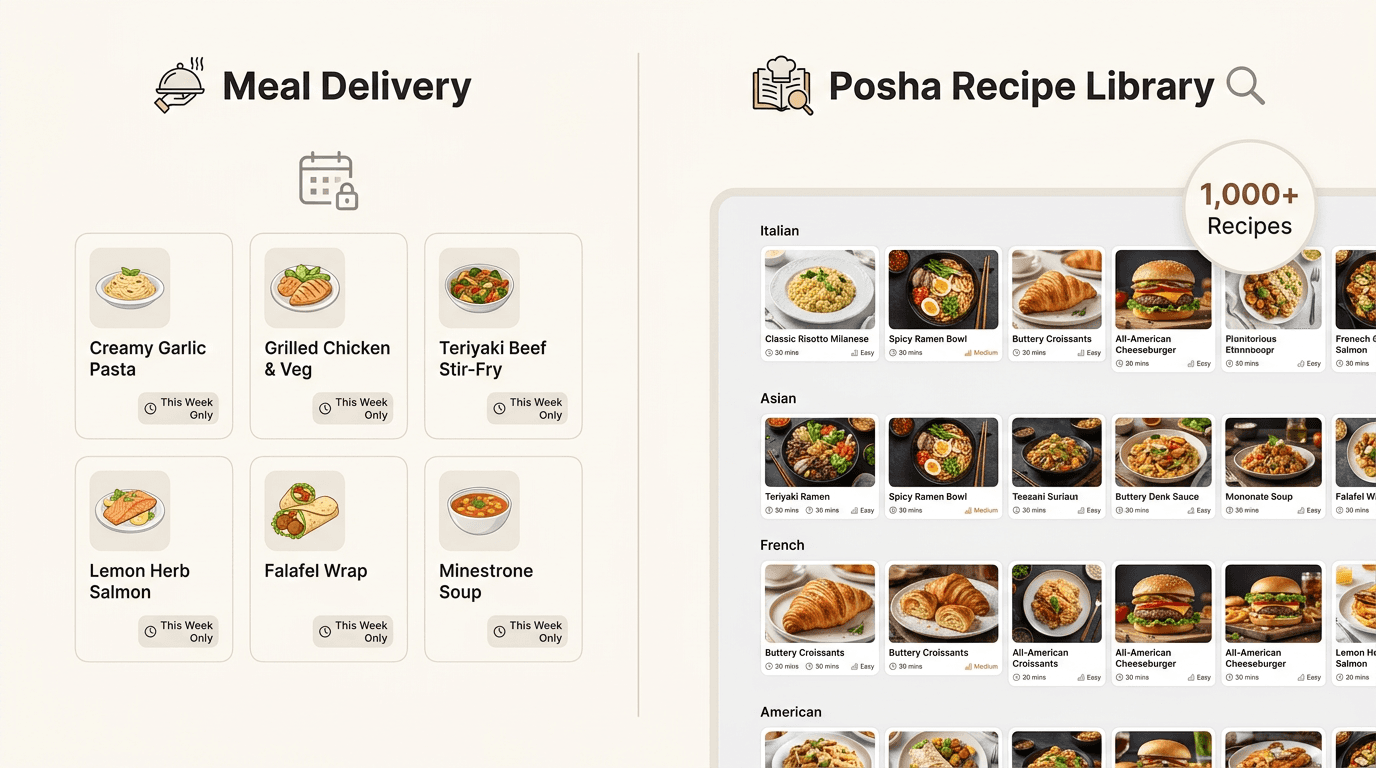
Six meals a week versus 1,000+ recipes, the variety gap between meal kits and Posha.
New Heading 2
Meal delivery often feels convenient until you look at the counter. There may be recipe cards, small sauce packets, insulation, ice packs, cardboard, plastic, and portioned containers. Then, if it is a meal kit, you still use your own pans, knives, cutting boards, and utensils.
Posha does not eliminate cleanup completely. You still prep ingredients and clean the parts you use. But the cooking happens inside one device rather than across multiple pans and burners. That can make cleanup feel more contained, especially compared with a standard stovetop dinner or a multi-pan meal kit.
If packaging waste is one of your biggest complaints about meal kits, Posha has a clear advantage because you are buying normal groceries instead of receiving individually packed meal components.
Head-to-Head: The Dinner Decision Matrix
Here it is, boiled down to the parts that matter after the first month, when the novelty (and the discounts) are gone.
Criteria | Meal Delivery Services | Posha |
|---|---|---|
Best For | Short-term convenience, recipe discovery, and avoiding grocery planning. | Regular home cooking with less active stove time. |
Cost Model | Recurring per-meal or weekly subscription, often with introductory discounts. | Upfront appliance purchase plus the cost of regular groceries. |
Ingredient Control | Limited to what the service sends or offers. | You choose the produce, proteins, oils, spices, and brands. |
Menu Flexibility | Limited to weekly menus or a service's catalog. | Based on Posha's recipe bank and your own grocery choices. |
Active Effort | Unbox, prep, cook or reheat, then clean up. | Prep and load ingredients; cooking is handled by the device. |
Freshness | Varies by delivery timing and packaging; can be a concern. | Cooked fresh from ingredients you choose. |
Packaging | Generates significant waste from boxes, liners, ice packs, and portion packets. | Mostly normal grocery packaging. |
Long-Term Fit | Good for bridging a gap or moving away from frequent takeout. | Better for households building a consistent home-cooking routine. |
The Verdict: Which Approach Earns a Spot in Your Kitchen?
If you want the lowest-friction way to eat a bit better a few nights a week, meal delivery is still the easiest on-ramp: no equipment to buy, no system to learn beyond following a card. If what you actually want is consistently fresh, varied home cooking without standing over the stove every night, automated home cooking with a device like Posha is the better long-term bet. Over time it brings the per-meal cost down, hands you full control over ingredients and variety, and limits your active time to prep and loading.
Best for meal delivery: Couples who are just starting to cook at home, or anyone who needs a short-term off-ramp from takeout. As a bridge, it does the job: fewer delivery orders, fewer "what are we eating?" debates, and some skill-building through repetition. Just be clear-eyed about the trade: it's a recurring expense, and quality and variety hit a ceiling.
Best for Posha: Couples and food-curious households that have already outgrown meal kits and want a more permanent upgrade. You still do the human parts (pick recipes, shop, prep), but the fussy, timing-dependent cooking happens automatically. That's the difference between paying for dinner logistics every week and buying a tool that keeps earning its keep. If you want to see what that looks like with an actual recipe, book a live demo of the Posha and watch it cook something you'd happily eat on a random Tuesday.

Automated home cooking with Posha delivers restaurant-quality results on an ordinary weeknight.
Frequently Asked Questions
Are meal delivery services cheaper than Posha?
Meal delivery services are usually cheaper to start because there is no appliance purchase. Over time, the comparison depends on how often you order, how much you spend per serving, and whether meal delivery is replacing regular groceries or adding another food expense. Posha has an upfront cost, but ongoing meals are based on the groceries you choose.
Is Posha a meal delivery service?
No. Posha does not ship pre-portioned ingredients or prepared meals. It is a home cooking appliance that helps cook meals from ingredients you buy yourself. You choose the groceries, select a recipe, load the ingredients, and let the device handle the cooking sequence.
Do I need a specific ingredient subscription for Posha?
No. Posha does not require a meal-kit subscription or proprietary ingredient box. You can buy ingredients from your regular grocery store, farmers market, online grocery service, or pantry.
How much active cooking time can Posha save compared with a meal kit?
A meal kit can reduce planning and shopping, but you may still need to chop, cook, monitor the stove, and clean several tools. With Posha, the active work shifts toward prep and loading ingredients, while the device handles the cooking sequence. The biggest difference is that you do not have to stand over the stove for the full cooking process.
Is Posha better than meal kits?
Posha is better than meal kits if you want more control over ingredients, less recurring packaging, and less active cooking time. Meal kits may be better if you want pre-portioned ingredients, recipe cards, and no upfront appliance purchase.
Who should stick with meal delivery services?
Stick with meal delivery if you only need occasional help with dinner, dislike grocery shopping, or prefer the structure of pre-selected meals. It can also be useful if you are new to cooking and want step-by-step recipes with ingredients already portioned.
Who should consider Posha?
Consider Posha if you already cook or want to cook at home more often, but you do not want to stand over the stove every night. It is especially useful for busy couples, families, and food-curious households that want fresh meals with less active effort.