Rohin Malhotra
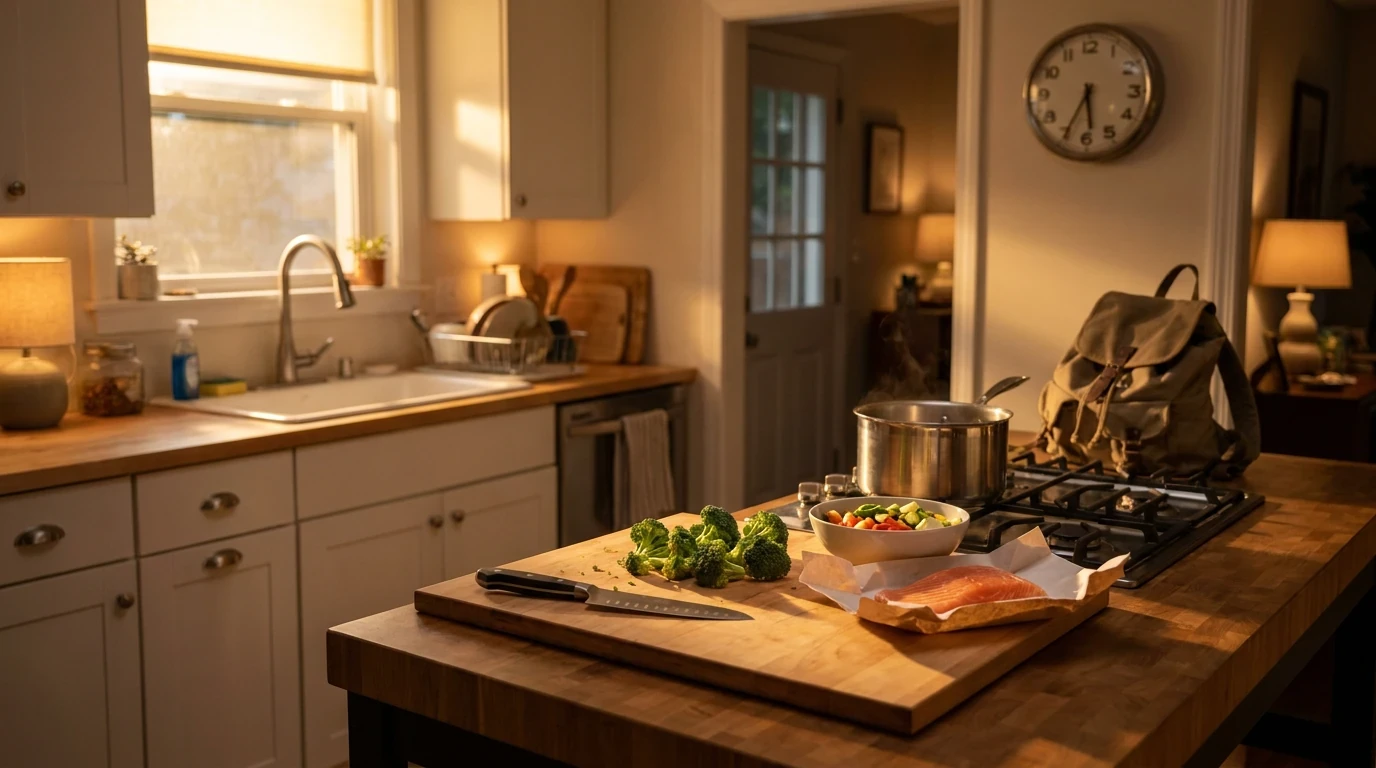
It is 6:32 p.m. The salmon has thawed, the broccoli is still in its bag, and someone needs to leave for practice at 7:15. Dinner is possible, but there is no plan for getting it cooked before everyone has to go. That is when the frozen pizza starts to look easier.
The useful question is what you could have settled before 6:32. A short plan earlier in the week can decide the meals and give everyone a say. For a dish in its recipe library, Posha can then take on much of the active cooking. Your family still decides what healthy means and which dinners it will eat.

Decide what dinner should do for your family
For one household, “healthy” means more vegetables and home-cooked ingredients. For another, it means a particular balance of protein and carbohydrates or a meal that works around an allergy. The Harvard Healthy Eating Plate can help you think about balance, but it cannot tell you what your children will eat or which restrictions you need to manage. A cooking tool cannot make that judgment either. Start with meals that fit your household, and check ingredients yourself when dietary restrictions matter.
Then there are the competing tastes. Chicken may work for one person, while another wants tofu, and a child may reject anything green. If every preference turns into a separate dinner, the work doubles. It is easier to choose a base meal everyone recognizes and decide in advance where a small change will be needed.
Give the busy nights a head start on Sunday
Spend 20 minutes choosing four or five dinners your family will actually eat. A rotation could include a grain bowl, a sheet-pan protein, a soup, a stir-fry, and a vegetable-heavy pasta. Repeating familiar meals is fine. You can change the protein in a bowl, use another grain, or add the vegetable left in the fridge without learning a new recipe every night. A weekly dinner plan has done its job when you no longer have to decide from a blank page at six o’clock.
Ask the people eating what they will accept before you shop. Give the kids one dinner to choose, and, if possible, let a partner take charge of groceries. The plan is a short list of dinners and the ingredients they need, not five finished meals in containers.
Decide which dinner Posha will cook at the same time. Browse its recipes before buying ingredients: you can filter by dietary preference, cooking time, or complexity, then set servings and spice level. Ingredient swaps and other personalization are marked beta, so check the options for the dish you choose, especially if anyone has an allergy. If your family likes chicken and vegetables, Chicken Tinola is a supported soup you can serve with rice on Tuesday. Put salmon and broccoli on Wednesday; if there is no suitable salmon recipe in the library, plan to cook that meal yourself. Both nights now have a plan.
Do only the prep that will still help later. Wash greens, chop an onion, garlic, or ginger, portion proteins, and check whether the staples are in the pantry. Leave vegetables that brown quickly uncut, and skip cooking grains so early that they will turn gummy in the fridge. This little reset does not eliminate the work of dinner; it moves some of it out of the rush.

A short dinner plan can take the deciding out of the evening rush.
Let Posha handle the part that keeps you at the stove
On Tuesday, chicken, vegetables, and rice are on the plan. Cooking them manually means preparing the ingredients, tending the soup, and making rice alongside it. With the supported Chicken Tinola recipe, you still prep and load the soup ingredients as the Posha app directs. Posha handles the soup’s active cooking stages, including dispensing ingredients, stirring, adjusting heat, and monitoring progress. The rice is still yours to make separately. While the soup cooks, you can deal with backpacks or set the table instead of standing over its pan.
That is the difference between prep time, active time at the stove, and total time until dinner. Posha changes the middle part for a supported recipe. You still prepare the ingredients and clean up afterward, and the food takes the time its recipe requires. “Healthy dinner in 30 minutes” is a poor promise for every dish; less time tending the stove is the more useful one. For a closer look, see Can a Cooking Robot Really Make Dinner?.
Keep the plan small enough to survive Thursday
Overplanning is often where a good week unravels. Try one or two new recipes and let the rest be familiar. If Thursday’s plan falls through and you order dinner, you still have the other nights; there is no need to start over. After a couple of weeks, the meals everyone accepts become easier to repeat and adjust.

A missed dinner does not undo the rest of the week.
Keeping the plan manageable gives you more chances to sit down together, a habit linked to healthier eating among children and, in a survey of parents, less family stress. Start with dinners you can manage this week, then repeat the ones everyone enjoyed. For more ideas, see how to eat more home-cooked meals without sacrificing your evenings.
Frequently asked questions
Can the Posha cooking system make healthy meals, or does it only automate what goes into it?
Posha can cook a supported recipe and help you set preferences. You choose the dish and check whether its ingredients and portions suit your family; Posha handles the supported cooking steps after you prep and load.
How long does a healthy family dinner with Posha realistically take?
That depends on the recipe and the preparation it requires. Check the recipe’s listed timing. Posha reduces the time you need to spend actively tending the stove after loading; it does not make every dinner ready in 30 minutes.
Is the Posha cooking system worthwhile for different dietary preferences or restrictions?
It is more useful when the recipes your family will eat are in its library. You can set dietary preferences and spice level, while ingredient customization is a beta feature and varies by recipe. For allergies or other medical restrictions, inspect the ingredients and preparation requirements yourself. A flexible base meal can still be simpler than cooking two entirely different dinners.
How does Posha differ from meal kits or prepared-meal delivery?
A meal kit sends planned ingredients but leaves the cooking to you. Prepared meals arrive ready to heat or eat. With Posha, you choose and prepare your own groceries and load them for a supported recipe; the device handles much of the active cooking.
Can I customize Posha recipes for my household?
You can choose servings, dietary preferences, and spice level in the app. Ingredient swaps, additions, and removals are currently marked beta. Look at the options for the specific recipe before relying on a substitution.