Rohin Malhotra
In a small kitchen, the cutting board, coffee maker, and dinner pot may all need the same patch of counter. A rice cooker can make perfect rice yet crowd that space all week. A coffee maker you use every morning earns different consideration. Each appliance has to justify the room it takes.
The best kitchen appliances for small kitchens in 2026 make an everyday job easier or give you room to do it. Start with the meals you make, then look at these six categories.
Start with how much space each appliance takes in your kitchen
Start by measuring the clear counter space in your kitchen, including depth, overhead clearance, and room to open or work beside an appliance. Once you know what fits, think about your normal week: do you need a better oven, another burner, less time spent stirring, or more room to chop?
Look at three things: how much space the appliance takes, what it can do, and how often you will use it. An appliance saves little space if you still need several other tools to cook or if its parts take up most of a cabinet.
Then choose the cooking appliance that solves your main problem
All-in-one cooking appliances when storage is tight
If a rice cooker, slow cooker, and steamer all compete for storage, a compact multicooker can combine those jobs. Some heated food processors also chop or blend. The functions differ by model.
Posha fits this category for a different reason: it handles the active cooking sequence. You choose a supported recipe, prep and load the ingredients; Posha dispenses them at the right stages, stirs, manages heat, and monitors progress through steps such as sautéing and simmering. You still shop, chop, load, and clean up. It does not replace a food processor or a high-heat wok station.

Here the measurement matters. Posha's device is 20.9 inches wide, 17.9 inches deep, and 16 inches high; it requires at least 27 × 22 × 17 inches of stable counter space for loading and opening the lid. Without that room, a smaller multicooker may be more practical.
Posha lists more than 1,000 recipes; 50 come with the device, while Posha Circle opens the full library. Without membership, owners still have Co-Pilot mode and Essential recipes. Its pan and ingredient containers are dishwasher-safe, relevant when prep and cleanup share one counter.
Smart compact ovens when the built-in oven lets you down
If your apartment has no usable oven, a countertop model can handle baking, broiling, roasting, reheating, and sometimes air frying or steaming. It might replace a toaster oven and air fryer, though it still takes considerable counter space and handles mostly oven-style cooking.
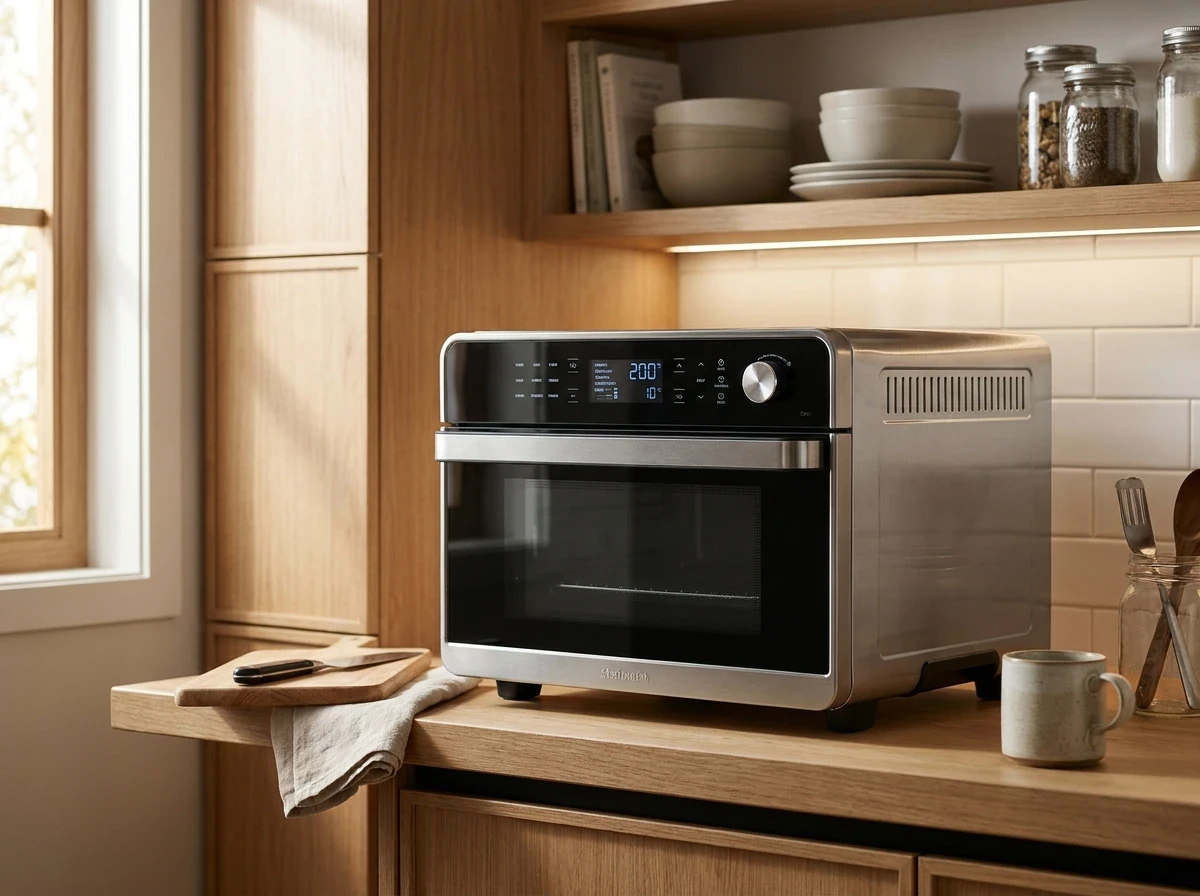
Check the outside dimensions, door swing, ventilation clearance, and pan size. One Breville Smart Oven Air Fryer, for example, is 18.9 inches wide; other models differ. For more criteria, see What to Look for in a Smart Kitchen Appliance.
Portable induction when the burner is the bottleneck
If the oven works but a weak two-burner range slows dinner, a portable induction cooktop adds a responsive cooking zone. Use a cast-iron skillet for searing, then store the unit when you need the counter back.

Check whether a magnet sticks to the flat base of your cookware. Cast iron and some stainless steel work; otherwise, budget for a suitable pan. A single portable unit will not solve a need for several burners at once.
With the main cooking problem addressed, consider the space left for daily routines.
Then make room for coffee and prep
Compact coffee makers
Coffee may be the one appliance you use every day. A pod machine is quick, but pods cost more per cup, create waste, and take cabinet space. Pour-over or an AeroPress uses little counter space but needs a few active minutes. A compact bean-to-cup machine takes more room yet combines grinder and brewer.
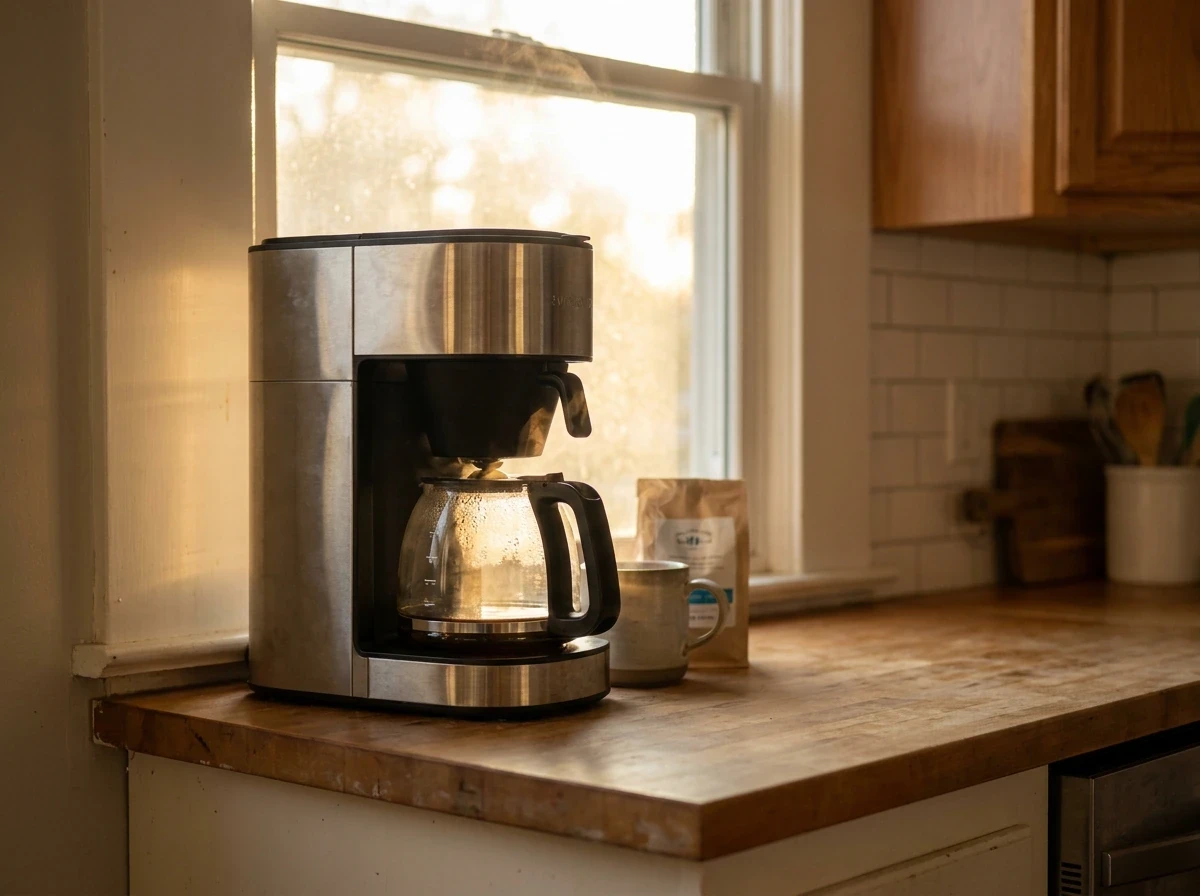
Replacing a separate drip machine and grinder may free space. Count pod storage alongside the machine if that is the route you choose.
Multi-function food prep tools
Before filling a drawer with a mandoline, grater, hand mixer, blender, and food processor, consider two flexible tools. A compact food processor can chop, slice, shred, and purée. An immersion blender with whisk and chopper attachments handles smaller jobs and stores in a drawer.
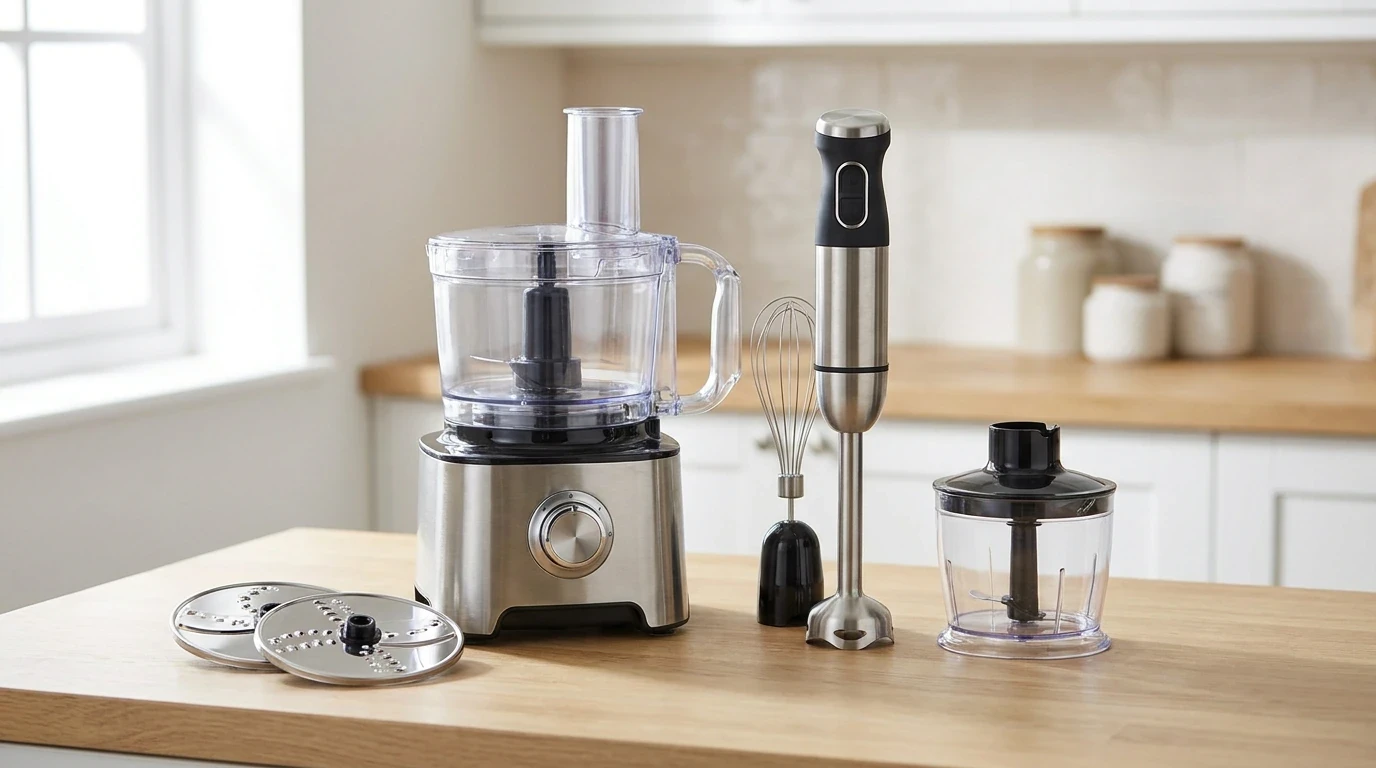
If you bake heavy bread dough weekly, a stand mixer may still earn its place. For high-heat wok cooking, a suitable burner and pan matter more than another attachment. Most weeknight prep does not need those specialist tools.
Storage-smart essentials
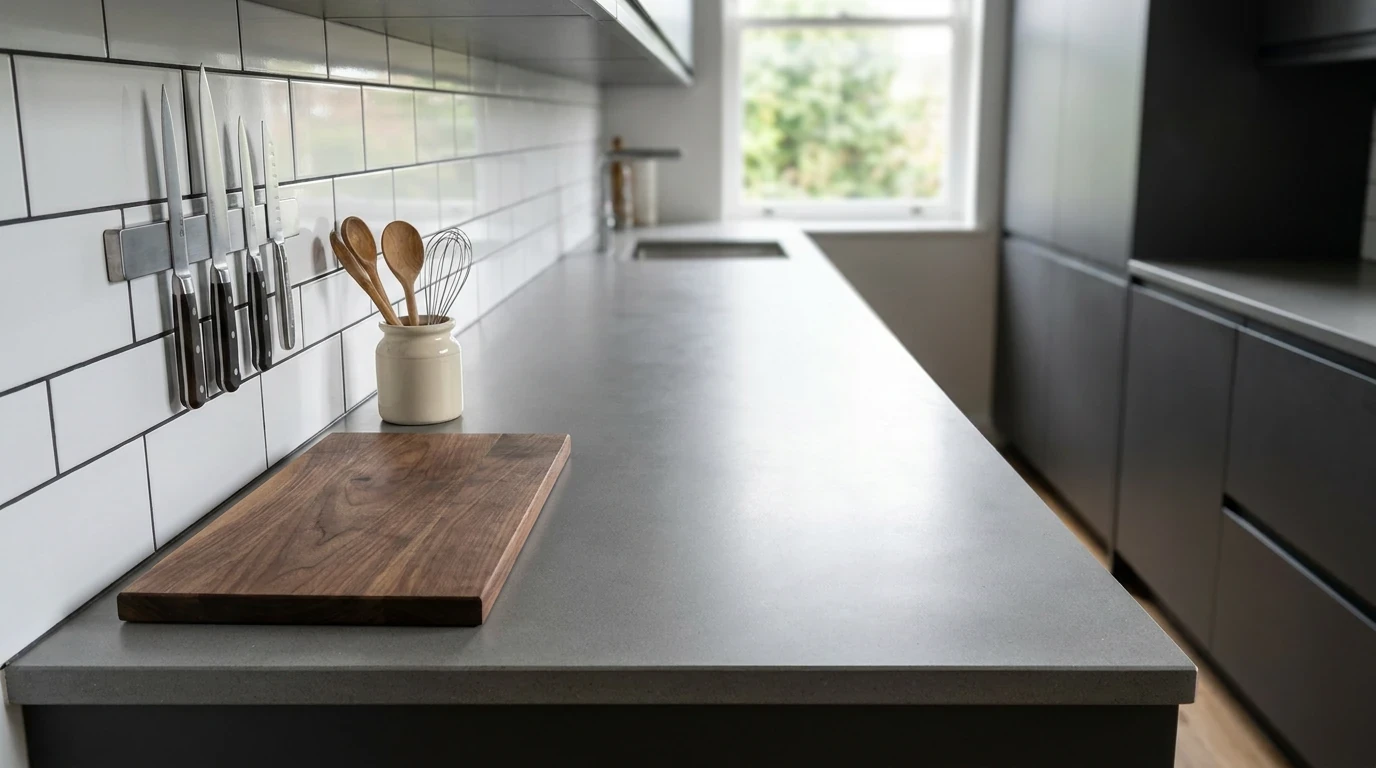
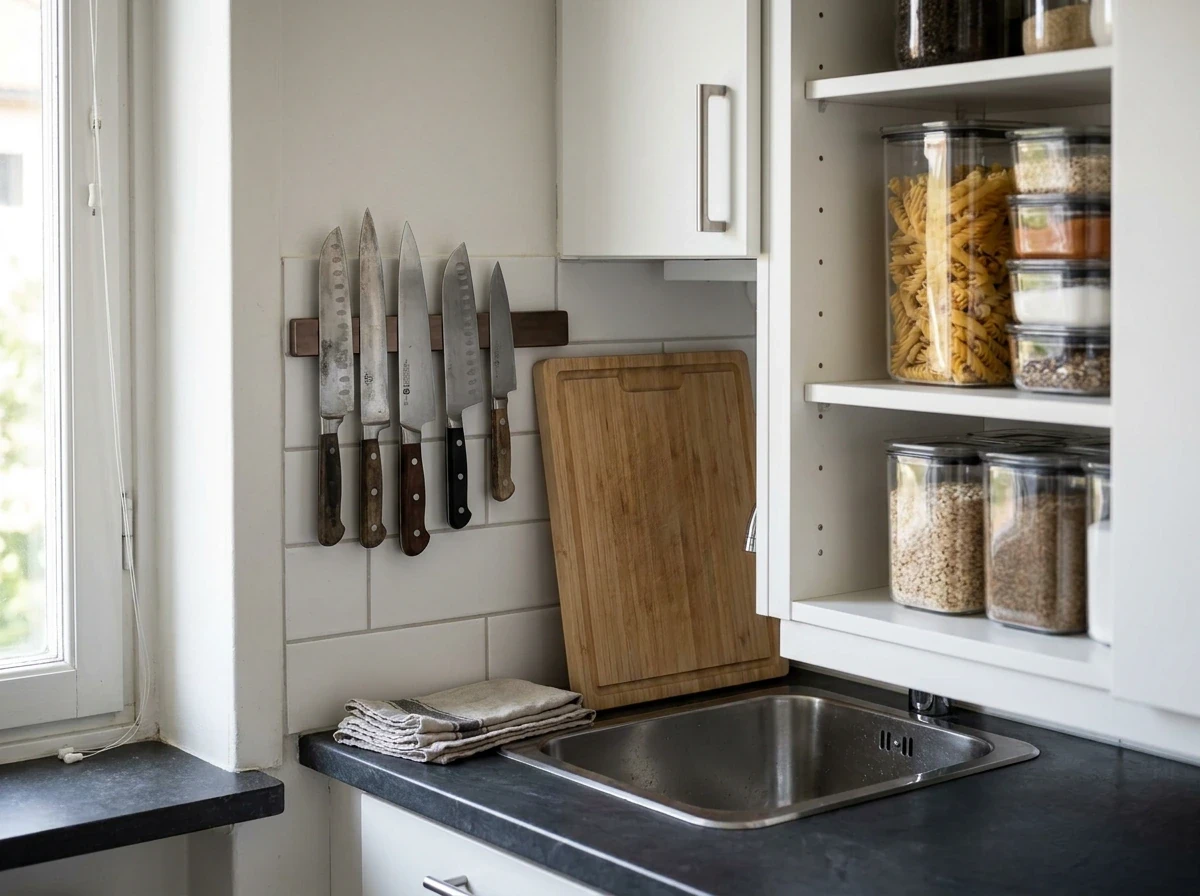
Now look at the surfaces around those appliances. A magnetic knife strip frees a drawer; an over-sink cutting board adds prep space; stackable containers make one cabinet work harder. Matching containers stack better than an assortment of unrelated shapes.
Compare the six choices at a glance
These widths are rough planning ranges, not product specifications. Posha's required clearance is listed separately; check any model against your counter before buying.
Category | Space to plan for | What it does well | What it will not replace | Best fit |
All-in-one cooking appliance | Varies; Posha needs 27 in. clear width | Combines cooking functions or, with Posha, manages active cooking stages | Specialist searing, prep tools; model dependent | Frequent home cooks with space for the chosen device |
Compact coffee maker | Often about 5–10 in. wide, plus supplies | Daily coffee in a small zone | Specialty espresso unless the model supports it | Households that make coffee every day |
Multi-function prep tool | Often about 6–12 in. wide in use | Chop, blend, whisk, or purée depending on attachments | Heavy bread dough in many models | Cooks who prep fresh ingredients |
Smart compact oven | Often about 16–22 in. wide, plus clearance | Bake, roast, broil, reheat; some air fry or steam | Large trays and simultaneous stovetop work | Apartments without a reliable oven |
Portable induction cooktop | Often about 12–14 in. wide for a single burner | Responsive stovetop heat | Several burners at once | Studios with a weak range |
Storage-smart essentials | Wall, sink, drawer, or cabinet space | Create usable prep and storage space | The cooking itself | Any kitchen short on working room |
Choose for the week you actually have
For frequent multi-stage dinners and enough space, Posha can reduce the time you spend at the stove. For a coffee-first household that cooks little, a small brewer and immersion blender may be plenty. For a bad apartment oven, start with a compact oven and add induction only if the burners also fall short.
Buy for this week's meals, not an imaginary Sunday spent baking bread.
Frequently Asked Questions
What appliance is most useful in a small kitchen?
The one that solves the job you do most often. A multifunction cooker can replace several cooking tools if you make dinner regularly; a compact coffee maker may be more useful if that is the daily routine. Posha is worth considering when you want help with the active stages of supported meals and have the counter space it needs.
Are multi-function kitchen appliances as good as dedicated single-use models?
For many everyday meals, they can be. Specialized jobs can still favor dedicated equipment: heavy bread dough may need a stand mixer, while intense searing or wok cooking needs a suitable heat source and pan. Check which functions your actual model performs well.
How should I choose between counter space and cabinet storage?
Keep what you use most days within easy reach. Put occasional tools in cabinets, stacked or stored flat, and use a wall or over-sink area where it makes sense. If an appliance is too awkward to get out when you need it, count that inconvenience before buying it.
Which kitchen appliances for tiny kitchens should I buy first for a new apartment?
First see whether the built-in oven and burners work for the meals you cook. Choose a compact oven if the oven does not; choose a cooker if the daily stovetop routine is the bigger problem. Add a coffee setup or immersion blender when your routine calls for them.
Is an all-in-one cooking robot worth it if I cook only a few times a week?
It can be if it takes over cooking work you value avoiding on those nights and fits your kitchen. If it will sit idle or use the only workable prep area, a smaller multipurpose tool is likely the better first purchase. Compare the meals it supports, the cleaning, and the real footprint before deciding.