Rohin Malhotra
Your counter probably already hosts an air fryer, a slow cooker, and maybe a sous vide wand you swore you would use more. Each one showed up with the same promise: dinner, but easier. In reality, the air fryer just sped up chicken tenders.
The slow cooker made the same pulled pork as always, now with Bluetooth. So when someone says "smart kitchen appliances," it makes sense to squint. Still, something has changed. A few machines in 2026 actually pay attention to the food; they sense what's happening and adjust, instead of just adding an app so you can tap "start" from the couch.
This list compares 15 smart kitchen appliances and devices based on the practical tasks they can automate or simplify. Depending on the product, that may include monitoring temperature, controlling humidity, following a guided recipe, recognising food, adjusting a cooking programme, or helping schedule a meal.
For more context on what AI actually changes about cooking dinner at home, it is useful to look beyond Wi-Fi connectivity and consider how each appliance fits into an everyday cooking routine.
The 15 smart kitchen appliances covered here:
Posha
Brava Smart Oven
Tovala Smart Oven
Suvie Kitchen Robot
Thermomix TM7
CookingPal Multo
Anova Precision Oven
GE Profile Smart Mixer with Auto Sense
Revolution R180 Connect Plus Toaster
10. Breville Barista Touch Impress
11. Bartesian Cocktail Maker
12. MEATER Pro XL Smart Meat Thermometer
13. June Oven
14. CHEF iQ iQ Cooker
15. Greater Goods Nutrition Food Scale
The 15 Best Smart Kitchen Appliances for 2026: A Quick Comparison
Here's the flyover before we get into the weeds. Keep your eye on "Key Intelligence"; that's the line between an appliance that can actually cook and one that just wants permission to send you notifications.
Appliance | Best For | Key Intelligence |
|---|---|---|
Posha | Autonomous stovetop cooking | Reads visual and thermal changes in the pan and adjusts heat in real time |
Brava Smart Oven | Complete one-tray meals | Zone cooking using light-based energy plus camera monitoring |
Tovala Smart Oven | No-prep meal kits | QR code identifies the meal and auto-sequences steam/bake/broil |
Suvie Kitchen Robot | Scheduled dinners | Keeps food refrigerated, then cooks so it lands at your target mealtime |
Thermomix TM6 | Complex guided recipes | Weighs, chops, and heats precisely with step-by-step guidance |
CookingPal Multo | Tech-forward all-in-one cooking | Detachable tablet for guided recipes and remote control |
Anova Precision Oven | Humidity-controlled baking and reheating | Senses and controls humidity along with temperature |
GE Profile Smart Mixer | Baking without guesswork | Infers viscosity from motor torque and stops when the mix is ready |
Revolution R180 Connect Plus Toaster | Perfect toast, every time | Recognizes food type and tunes its heating algorithm |
Breville Barista Touch Impress | Home espresso | Guides grind adjustment, measures dose level, and automatically corrects the next dose. |
Bartesian Cocktail Maker | Consistent cocktails | Reads pod barcode and dispenses the right spirit ratios |
MEATER Pro XL | Roasting and grilling | Dual-sensor temperature prediction and rest-time calculation |
June Oven | Everyday oven replacement | Camera-based food recognition for 100+ items |
CHEF iQ iQ Cooker | Guided pressure cooking and multicooking | Uses a built-in scale, cooking presets,s and app-guided recipes, with automatic pressure release.e |
Greater Goods Nutrition Food Scale | Nutrition tracking | Provides nutrition data for foods selected from its database and totals nutrition information for weighed ingredients |
1. Posha
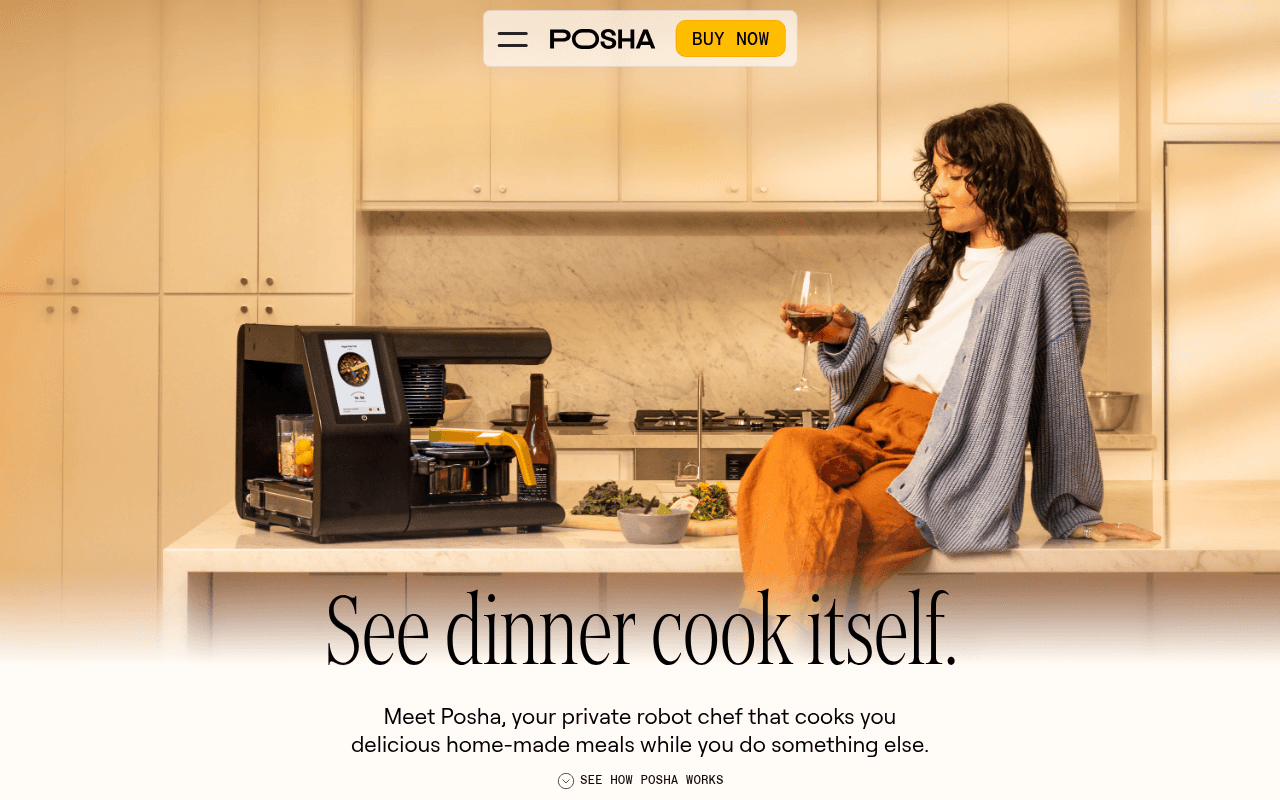
Posha's Culinary AI manages heat, stirring, and timing during supported stovetop recipes.
Posha is designed for people who want help with active stovetop cooking rather than baking, reheating, or guided bowl-based preparation. Its main distinction within this list is its use of a built-in camera alongside automated stirring, ingredient dispensing, and heat control during supported recipes. That makes it relevant for meals that would otherwise require regular attention at the stove, although its capabilities depend on the recipes and cooking processes supported by the system.
Posha uses a built-in camera to monitor visible cooking stages as a supported recipe progresses. Depending on the recipe, the system can manage actions such as ingredient timing, stirring, and heat control. Posha describes the technology behind these functions as Culinary AI. In practical terms, the aim is to reduce the amount of active attention required during compatible stovetop recipes rather than replace every part of meal preparation.
A supported dal recipe illustrates the type of cooking Posha is intended to assist with. Dal may involve changes in heat, timed ingredient additions, and regular stirring as the lentils soften and thicken. Posha can manage compatible cooking steps while using its camera, sensors, and Culinary AI to monitor cooking progress and adjust supported actions such as timing, stirring, and heat, while the user remains responsible for loading the requested ingredients and completing any preparation or finishing steps identified in the recipe. Readers can learn more about cooking lentils for dal, bowls and soups, read about one-pan home cooking, or review the current Posha recipe collection.
Info: A 2023 Deloitte survey of smart-home users found that 85% prioritised devices or functions that addressed their immediate needs rather than working toward the most fully connected home possible. Posha may fit that practical approach for households specifically looking to reduce the active attention required during supported stovetop recipes.
2. Brava Smart Oven
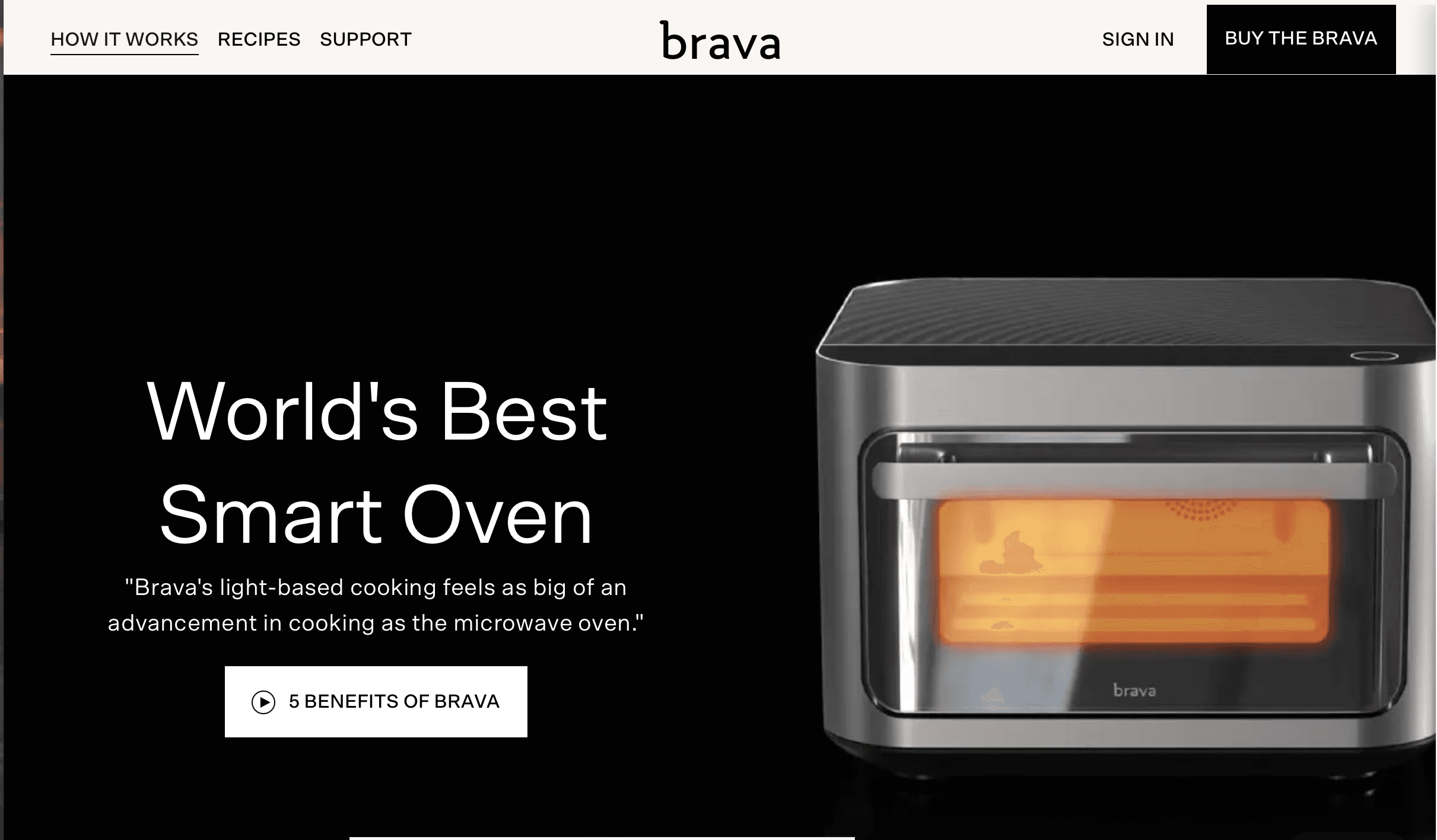
Brava's zone cooking directs different levels of energy across a single tray.
Brava cooks with light, not convection. Its Pure Light system aims infrared energy from above and below with the kind of control that lets you sear a steak on one side of the tray while the green beans next to it cook gently instead of turning to paper.
Yes, there's a camera so you can peek from the app, but that's not the point. The point is zone cooking: the oven treats salmon, asparagus, and sweet potatoes as three different problems and sends each one the energy it needs. It feels less like a tiny oven and more like a purpose-built cooking tool. If your weeknight goal is a full plate from one tray without babysitting, Brava is designed to cook different foods on the same tray using independently controlled cooking zones.
3. Tovala Smart Oven

Tovala sells a cooking system - the oven and meal service work together by design.
Tovala's smartest move is that it doesn't ask you to pick a mode. You scan the QR code on a Tovala meal kit, and the oven runs the exact sequence (steam, bake, broil) that was programmed for that dish. The catch is just as clear: most of that "smart" behavior lives inside the subscription meal service.
You can cook your own food, but then it's closer to a normal countertop oven with a nicer interface. For someone using Tovala's prepared meal service, it can substantially reduce meal preparation and manual oven setup. Just be honest about what you're buying: a system, not just a box that gets hot.
4. Suvie Kitchen Robot

Suvie can refrigerate ingredients before a scheduled cook and then begin compatible cooking functions so the meal finishes near a selected time. Scheduling capabilities depend on the Suvie generation and cooking mode. Suvie 3.0 supports advanced scheduling across its cook functions, while earlier models place more restrictions on functions such as roasting, baking, and broiling.
The intelligence here is scheduling, not sensing. It isn't watching for browning or adjusting on the fly; it's solving the "when do we eat" problem more than the "how is this cooking" problem. That also means it asks for real planning upfront, which isn't nothing. For households that plan meals in advance, Suvie's scheduling system can reduce the amount of active timing required around dinner, provided the selected cooking mode supports advance scheduling.
5. Thermomix TM7
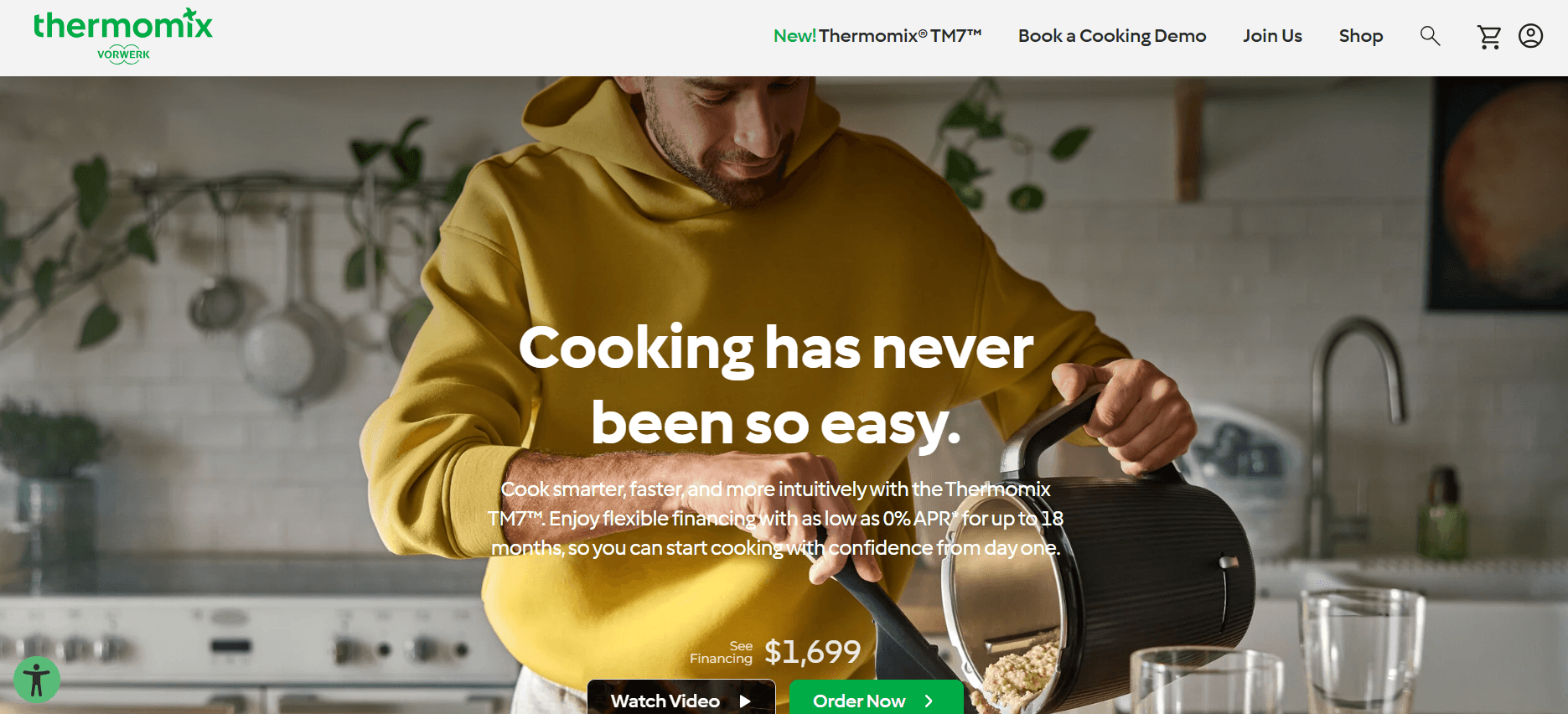
The Vorwerk site showcases the TM6 alongside its Cookidoo guided-recipe platform.
The Thermomix TM7 is the current generation of Thermomix's all-in-one cooking system, combining guided cooking with functions such as weighing, chopping, mixing, heating, and steaming. It weighs to the gram, chops at a specified RPM, and heats to a set temperature without drifting. The "smart" part mostly lives in Cookidoo, the recipe platform that walks you through complicated dishes step by step.
It will tell you "Add 100g of flour," and the built-in scale will confirm when you hit it. The effect is less "robot chef" and more "steady, unflappable sous-chef" (the kind that keeps you from making the dumb mistakes that ruin a sauce). The recipe library is massive and well-worn. If you want to tackle multi-step recipes with built-in guidance and several preparation functions in one appliance, the TM7 is Thermomix's current option for this category.
6. CookingPal Multo

The Multo's detachable Smart Kitchen Hub tablet sets it apart from integrated-screen competitors.
Multo's standout feature is the detachable, water-resistant Android tablet it calls the Smart Kitchen Hub. Where Thermomix integrates its interface into the appliance, Multo uses a detachable Smart Kitchen Hub that you can pick up and move around to the grocery store, to the couch while you plan, or just away from the splatter zone. The base machine runs the familiar chop-mix-heat-steam routine.
It isn't autonomous, but the software is trying to make the human part less annoying: clearer steps, more modern UI, fewer "wait, what did it say?" moments. If you're deciding between Multo and Thermomix, it comes down to what you value more: Thermomix's established Cookidoo recipe ecosystem or a more flexible, techy control surface (Multo).
7. Anova Precision Oven

The Anova app turns complex multi-stage steam-and-roast cooks into a single tap.
Anova's superpower is humidity control. Its temperature and steam controls support bagless sous-vide-style cooking for compatible foods, baking bread with a shattery crust, and reheating last night's pizza so it doesn't taste like warmed sadness.
It holds a specific wet-bulb temperature, which is a fancy way of saying it can control the environment in a way most ovens simply cannot. The app is where this gets practical: multi-stage cooks (steam for 20 minutes, then dry roast for 10) become a button press instead of a juggling act. If you bake bread or you care about leftovers tasting like food again, this is the one.
8. GE Profile Smart Mixer with Auto Sense

The GE Profile Smart Mixer uses motor torque sensing to judge when dough or cream is truly done.
This mixer watches motor torque and speed, which sounds like pure spec-sheet filler until you connect it to the problem it solves. Its Auto Sense technology uses changes in motor torque to monitor mixing progress and can stop automatically at supported target stages. That means fewer over-mixed cookies and fewer deflated meringues.
In other words, it makes a call on "done" (the single most annoying judgment in baking) and takes that guesswork off your shoulders. The tech is straightforward; the payoff shows up fast on finicky recipes.
9. Revolution R180 Connect Plus Toaster

The R180 Connect Plus bundle includes a Toastie Press and Warming Rack, turning it into a full breakfast station.
This is more than a toaster. It's a dedicated breakfast and lunch station. The Revolution R180 Connect Plus bundle comes with a "Toastie Press" accessory that lets you make sealed, grilled-cheese-style sandwiches inside the toaster slots. It also includes a warming rack that sits on top for reviving croissants or pizza.
The core InstaGLO heating is still here, searing bread quickly without drying it out, but the R180 adds Wi-Fi for firmware updates and a screen that can show you the weather or a gallery of your own photos when it's idle. With settings designed for 38 bread types, it's an appliance for someone who wants more control over how different breads and baked goods are toasted or warmed.
10. Breville Barista Touch Impress

The Breville Barista Touch Impress automates grind, dose, and tamping for consistent cafe-quality espresso at home.
Breville's Barista Touch Impress pays attention to the parts that usually derail home espresso: grind size, dose, and tamping. It guides grind-size adjustment, measures the dose after tamping, and automatically corrects the next dose while providing assisted tamping. If your dose is off, it tells you and adjusts for the next shot.
The "intelligent dosing" system is basically a memory of what worked last time, fed back into the next pull. It's a tight little feedback loop, and it gets you to genuinely good espresso faster than a fully manual workflow. If you want cafe-quality results without years of calibration muscle memory, this is the machine to watch.
11. Bartesian Cocktail Maker

The Bartesian uses capsules and glass spirit bottles to mix consistent cocktails in 30 seconds.
The Bartesian works like a single-serve coffee machine, but for cocktails. You fill the glass bottles with your base spirits (vodka, tequila, rum, gin, and whiskey), pop in a cocktail capsule, and the machine reads the capsule's barcode to dispense the correct ingredients. It mixes everything with water from its reservoir and your chosen spirit, creating a consistent drink in about 30 seconds.
You can even select the strength, from a mocktail to a strong pour. While it won't replicate the fresh-squeezed taste of a craft cocktail bar, it's a remarkably consistent and convenient way to serve a variety of drinks at a party without playing bartender all night.
12. Meater Pro XL Smart Meat Thermometer

The Meater Pro XL includes four wireless probes and a WiFi-enabled charging block for unlimited range monitoring.
The Meater Pro XL is for people who cook for a crowd. It comes with four wireless probes, each with five internal sensors and one ambient sensor. This multi-sensor design helps find the true lowest temperature of the meat, which is critical for accuracy. The charger has built-in WiFi, giving you unlimited range to monitor the cook from the app anywhere.
Each probe is fully waterproof, dishwasher-safe, and can handle ambient temperatures up to 1000°F, making it suitable for deep frying or open-flame grilling. The system still predicts your cook and rest times, but the four-probe setup lets you manage multiple cuts of meat, or even different types of meat, all at once.
13. June Oven

The June Oven homepage - its internal camera recognizes over 100 foods and auto-selects settings.
June's internal camera recognizes more than 100 common foods. Put broccoli on the rack, and it suggests a program. Slide in a recognized food, and the oven can suggest an appropriate cooking program. It doesn't have Brava's zone-level precision, but the food recognition is genuinely helpful because it removes the first hurdle: "what settings do I even use?" June feels like a competent assistant that sets the oven for you.
The food-recognition features can simplify oven setup, but buyers should check current availability before considering June as a purchase option because its official store currently lists its oven models as sold out.
14. CHEF iQ iQ Cooker
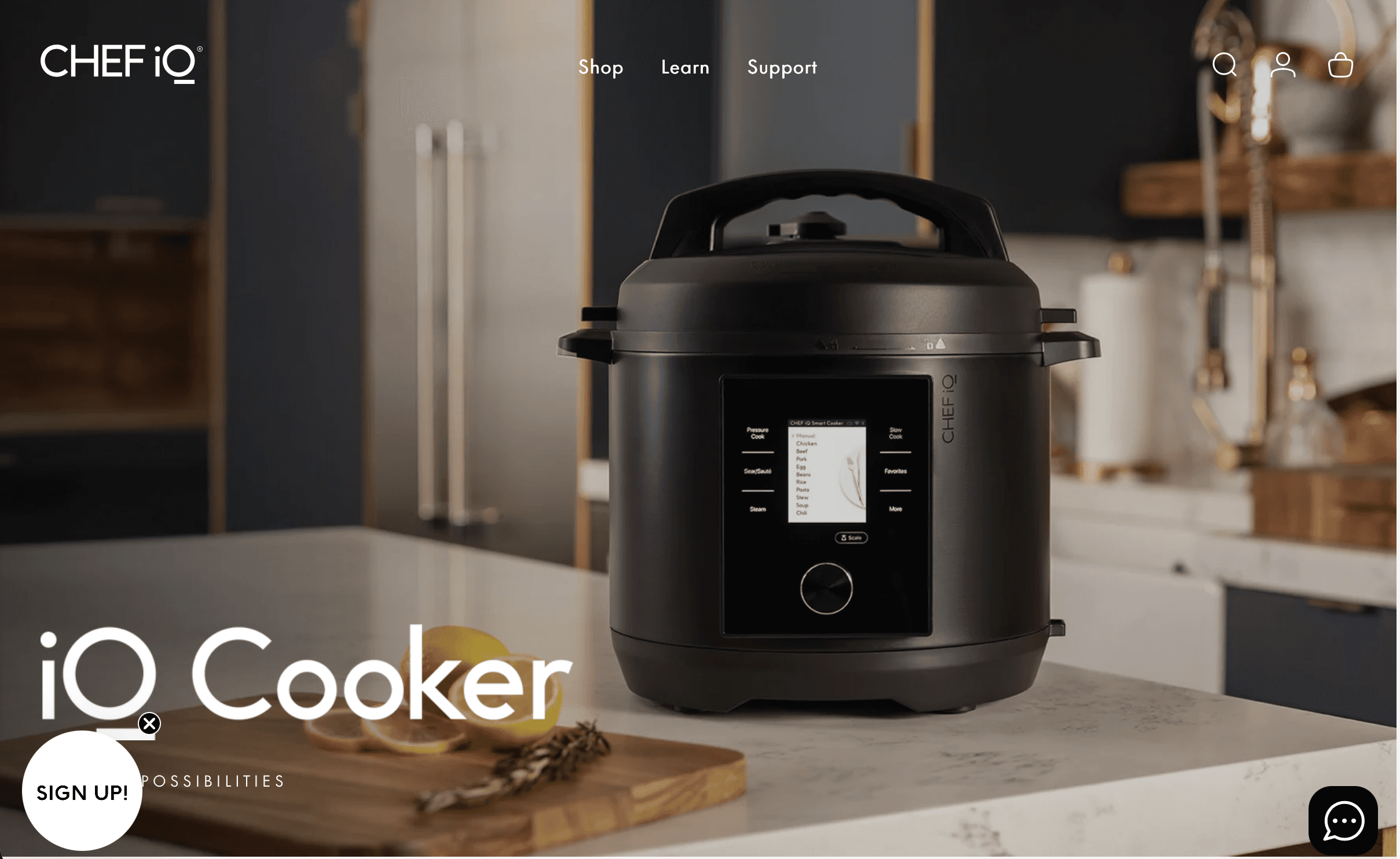
CHEF iQ iQ Cooker, a connected multicooker with guided cooking features and a built-in scale.
The CHEF iQ iQ Cooker combines pressure cooking, slow cooking, steaming, searing, and sautéing in a connected multicooker. Its built-in scale lets you weigh ingredients directly in the cooking pot, while the appliance and companion app provide presets, cooking calculations, and guided recipes.
It can also release pressure automatically using selectable release methods. The system is most useful for cooks who want structured guidance and several cooking functions in one appliance, although it remains a guided multicooker rather than a device that visually monitors food as it cooks. Readers can review the cooker's built-in scale, presets, and connected features on the manufacturer's product page.
15. Greater Goods Nutrition Food Scale

The Greater Goods Wi-Fi Smart Scale automatically syncs body composition data to the Weight Gurus app.
The Greater Goods Nutrition Food Scale is designed for meal prep and nutrition tracking in the kitchen. It includes nutrition data for more than 2,000 foods, supports custom food entries, and can total nutrition information across multiple ingredients in a meal. It also measures ingredients down to the gram and supports tare weighing for combining ingredients. It does not automate cooking, but it can simplify ingredient weighing and nutrition tracking for cooks who want more visibility into calories, macros, and portion sizes.
The Verdict: Which Smart Kitchen Appliance Is Right for You?
According to Fortune Business Insights' smart kitchen appliances market forecast, the global market is projected to grow from $31.55 billion in 2026 to $120.21 billion by 2034. With more connected products entering the category, the most useful choice will depend on the specific task a household wants to simplify, whether that is timing, temperature monitoring, guided preparation, or active stovetop cooking. If you are narrowing down a purchase, these are the key things to look for before buying a smart kitchen appliance.
Our picks by use case:
Best for true autonomous cooking: Posha. It is designed to manage compatible tasks such as ingredient timing, stirring, and heat control during recipes available through its cooking system. It may suit households that want to prepare more home-cooked meals with less active stove time.
Best for the all-in-one meal on a single tray: Brava Smart Oven. Its zone-based light cooking system is designed to apply different cooking programmes to foods placed in separate areas of the tray.
Best for guided, complex recipes: Thermomix. It combines functions such as weighing, chopping, mixing, and heating with step-by-step recipes.
Best single-purpose upgrade: MEATER Pro XL. Its four wireless probes, Wi-Fi-connected dock, and temperature sensors support monitoring multiple foods during cooking.
Best for guided pressure cooking and multicooking: CHEF iQ iQ Cooker. Its built-in scale, cooking presets, app guidance, and automatic pressure-release options may suit users who want more assistance than a conventional multicooker provides.
In a December 2024 survey of 1,006 US homeowners and renters, American Home Shield found that 93% of respondents owned at least one smart-home device. Connectivity can still create friction, however: Parks Associates reports that 52% of DIY smart-home users experience setup or connectivity problems. For buyers comparing smart kitchen products, the practical question is whether a device's connected features meaningfully simplify the task it is designed to perform.
Dinner keeps moving, even after you step away from the stove.
Frequently Asked Questions
Do most smart kitchen appliances require a subscription to work?
Subscription requirements vary. Some appliances work manually without a subscription but require payment for expanded recipe libraries, meal plans, or connected services. Posha offers certain non-member functionality, while access to its full recipe library requires a Posha Circle membership. Other products on this list may have their own optional or required subscriptions, so readers should check current pricing and access terms before purchasing.
What's the difference between a 'smart oven' and an 'all-in-one cooking appliance'?
A smart oven (like Brava or Tovala) focuses on controlling how heat reaches your food, using sensors and software to run the cook once you've loaded it. An all-in-one cooking appliance (like Thermomix TM7 or CookingPal Multo) combines chopping, mixing, weighing, heating, and steaming in a single bowl, and it expects you to actively follow steps. One replaces your oven. The other replaces a cluster of tools (food processor, scale, and saucepan) with a guided workflow.
Are these smart kitchen gadgets hard to clean?
Cleanup depends on the design, not the "smart" label. Thermomix TM7 can clean its bowl with warm water and a drop of soap on a quick spin cycle. Smart ovens like Brava and June rely on removable trays and racks that can go in the dishwasher. More compartment-heavy devices (like Suvie) ask for more disassembly. As a rule, fewer parts and a simpler cooking chamber mean less cleanup hassle.
Can I use my own recipes with smart cooking appliances?
It depends on the appliance. Products with manual temperature, time, or speed controls may allow users to adapt their own recipes, although automated features generally work best with recipes developed specifically for the device. Posha's automated cooking functions are centred on its supported recipe collection.
Is kitchen technology reliable enough to leave unattended?
Smart appliances can reduce the need for continuous attention, but they should always be operated according to the manufacturer's safety guidance. Some ovens, multicookers, and temperature probes can continue through a programmed cycle without the user standing beside them. Posha is similarly designed to manage compatible stovetop steps during supported recipes. This does not mean that any cooking appliance should be left running while the user is away from home.