Rohin Malhotra
You already own an air fryer. Possibly a sous vide circulator. Maybe a smart slow cooker that pairs with an app you opened twice and forgot. So when someone says "modern kitchen appliances" in 2026, you are right to squint. This category has been oversold for years, and a lot of what got called smart was really just Wi-Fi bolted onto a box, with zero impact on how dinner turned out.
This year, something finally feels different. The newest gear is not "smarter" in the press-release sense; it is smarter in the way a good line cook is smarter than a recipe follower. It pays attention, then it adjusts. What follows is what that looks like when you are actually trying to feed people: which machines genuinely stand apart, and what one full dinner with Posha feels like from prep to plate.
What "Smart" Actually Means Now
For most of the last decade, kitchen tech meant connectivity. Your oven could preheat from the parking lot. Your coffee maker could guess your alarm. Sometimes that is handy. It rarely changes the meal. You still end up making the real calls: heat, timing, and when to intervene before something sticks or dries out.
The more meaningful shift in kitchen technology is from basic connectivity to appliances that can monitor and manage parts of the cooking process. Posha, for example, uses a built-in camera and cooking intelligence to detect cooking stages, add ingredients at the appropriate time, adjust heat, and control stirring during supported recipes. These functions go beyond remote app controls because they are designed to reduce active stove-side monitoring. See how Posha's cooking technology works.
Modern kitchen technology is becoming more useful when it reduces hands-on cooking rather than simply adding connectivity. The important distinction is whether an appliance can monitor cooking conditions, manage transitions, and make practical adjustments while a recipe is in progress. Posha is designed around this more autonomous approach to smart home cooking, helping users prepare complete meals without having to remain at the stove throughout every stage.
The Machines That Are Actually Different
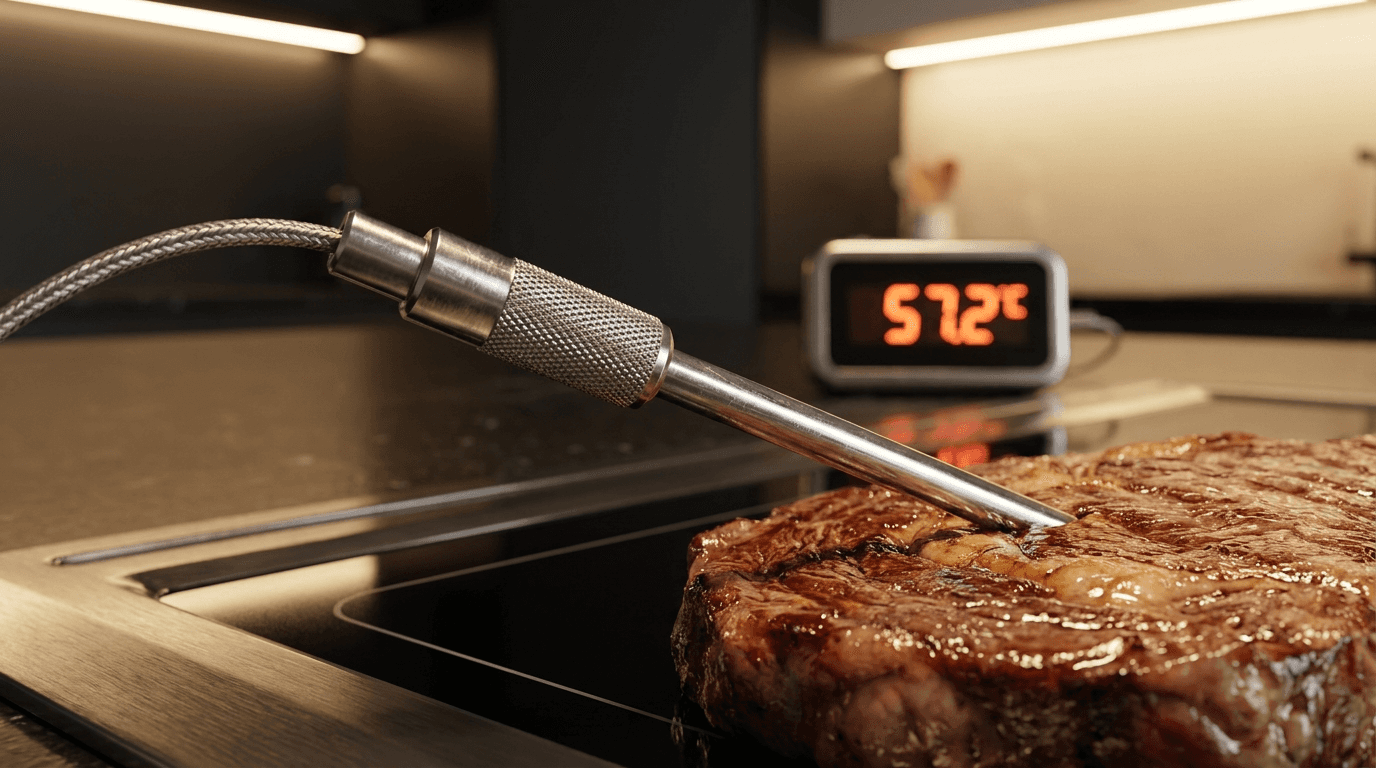
Real-time internal monitoring is what separates truly autonomous modern kitchen appliances from guided ones.
The honest answer: not many. But the few that are meaningfully different are different in a way you feel immediately. Here is a quick comparison of the countertop systems getting real attention in 2026.
Cooking approach | Core capability | What it still needs you to do | Best fit |
|---|---|---|---|
Posha autonomous cooking | Manages supported recipe stages, including ingredient timing, heat, stirring, and cooking transitions. | Prepare and load ingredients as directed in the Posha app. | Households that want fresh, home-cooked meals with less active stove monitoring. |
Guided cooking appliance | Provides step-by-step instructions and may combine functions such as weighing, mixing, chopping, or heating. | Follow prompts and remain involved throughout the recipe. | Cooks who want structure, precision, and hands-on control. |
Smart countertop oven | Automates oven temperature and cooking time for supported foods or programs. | Prepare, portion, and place food in the oven. | Households focused mainly on roasting, reheating, or oven-style meals. |
Meal-kit cooking system | Pairs pre-portioned ingredients or prepared meals with preset cooking instructions. | Purchase compatible meals and complete any required preparation. | Households prioritizing convenience over grocery flexibility. |
Single-purpose countertop appliance | Performs one main function, such as air frying, slow cooking, blending, or pressure cooking. | Manage the other preparation and cooking stages separately. | Households that regularly need one specific cooking function. |
The main distinction is the level of involvement required. Guided appliances help users complete individual steps, while Posha is designed to manage multiple stages of a supported recipe after the ingredients are prepared and loaded. See how Posha's automatic cooking process works.
One Dinner, Start to Finish
“Tuesday. A supported multi-stage dinner. Not from a jar.
In a supported multi-stage recipe, the Posha app provides the required preparation and loading instructions. Once the ingredients are loaded as directed, the appliance can manage functions such as ingredient timing, heat changes, and stirring as the dish progresses. The exact sequence varies by recipe, so preparation details should follow the instructions provided in the Posha app. See what Posha's autonomous cooking process involves.
Tip: As a supported recipe progresses, Posha can use visual and sensor feedback to identify cooking stages and adjust heat or stirring when needed. The exact response depends on the selected recipe and the conditions detected during cooking.
That ability to manage changes during a recipe is central to Posha's value. Its built-in camera and cooking intelligence are designed to monitor cooking stages, while the system adjusts heat, stirring, and ingredient timing for supported recipes. This is different from an appliance that only follows a fixed timer or displays step-by-step instructions. Learn what an automatic cooking machine does during dinner.
While it cooks, you can set the table, help with homework, or take care of other tasks. Posha is designed to manage recipe stages, heat, and stirring with less active supervision. This is where Posha's approach to autonomous cooking differs from appliances that simply display instructions or run fixed timers. The goal is not to remove every part of meal preparation, but to reduce the amount of time users need to spend monitoring the stove.
For households comparing automated cooking with subscription services, Posha offers a useful breakdown of how a robot chef compares with meal kits. The comparison covers the practical differences between buying your own groceries, preparing fresh meals at home, and relying on pre-portioned or prepared food deliveries.
The Counter Space Calculation

A compact smart cooker on a modern kitchen island, illustrating how countertop cooking appliances fit into a kitchen alongside other everyday appliances.
The smart kitchen appliance category is growing, but market growth alone does not show whether a product deserves permanent counter space. The more useful question is whether an appliance reduces meaningful cooking work and supports the kinds of meals a household regularly prepares. For Posha, that value comes from managing multiple cooking stages rather than performing only one isolated task.
The real counter space math is not square inches. It is whether the machine earns its footprint by changing what you cook, not merely how you do the same old things. The air fryer earned its keep because it made weeknight proteins faster and crispier than the oven. The next tier earns its keep by making dishes you would not have tried on a Tuesday when you are already running behind.
For families trying to eat more home-cooked meals without sacrificing their evenings, the main obstacle is often the work involved in monitoring heat, stirring, and coordinating cooking stages. Posha is designed to reduce that active cooking time. Its guide to healthy home-cooked meals for busy families offers additional ideas for making fresh weeknight cooking more manageable.
What to Actually Look For
Ignore the spec sheet for a minute. These are the questions that tell you what a machine is really doing.
Questions worth asking before buying any new cooking appliance:
Does it respond to what is happening during cooking, or does it run the same fixed program regardless of the result?
Can it cook complete recipes with Posha, or does it only assist with individual preparation or cooking steps?
What does it replace on your counter, and is that trade worth it for the way you actually cook?
Does the appliance offer a useful and regularly updated recipe selection that fits the meals your household actually wants to cook?
When something goes sideways mid-cook, does it alert you, adjust, or just keep going?
The U.S. Department of Energy finalized updated energy-conservation standards for residential cooking products in 2024. Compliance with those standards is required for covered products manufactured on or after January 31, 2028, so they should not be described as 2026 requirements.
The standards also do not establish that every new appliance will be more efficient than the specific product it replaces.
Watch a full dinner play out with Posha handling the transitions. EXPLORE POSHA.
Frequently Asked Questions
What makes modern kitchen appliances in 2026 different from earlier smart appliances?
Earlier "smart" appliances mostly meant connectivity: remote preheat, app control, voice commands. A newer category of kitchen appliances goes beyond basic connectivity by using sensors, cameras, and software to monitor parts of the cooking process and adjust controlled functions while a recipe is in progress. That can include camera-based cooking-stage detection, temperature sensing, adjustments to heat and stirring, and ingredient timing as a supported recipe progresses.
Is Posha a meal kit service or a cooking appliance?
Posha is a countertop cooking appliance rather than a meal-kit subscription. Users purchase their own groceries, prepare ingredients as directed, and load them for the selected recipe. Posha then manages supported cooking functions such as ingredient timing, heat, stirring, and recipe-stage transitions. Learn how Posha compares with meal kits.
How does Posha compare to Thermomix for someone who already cooks regularly?
Thermomix Guided Cooking provides step-by-step instructions and automatically presets parameters such as time, temperature, and speed during supported recipes. Add an official Thermomix/Cookidoo citation to this sentence. The two systems divide cooking responsibility differently. Thermomix Guided Cooking leads users through successive recipe steps while automatically controlling parameters such as time, temperature, and speed within those steps. Posha is designed to manage multiple cooking-stage transitions during supported recipes after ingredients are prepared and loaded as directed.
Are there meaningful energy-efficiency differences among cooking technologies?
Yes, although efficiency depends on the appliance and how it is used. The U.S. Department of Energy states that induction appliances can be up to three times more efficient than gas stoves and up to 10% more efficient than conventional smooth-top electric ranges. Updated federal standards for covered residential cooking products were finalized in 2024, but compliance begins in 2028 rather than 2026.
What should I look for when evaluating smart kitchen appliances for a busy household?
Prioritize machines that react to real cooking conditions instead of running fixed programs, can execute full recipes instead of isolated steps, and have a recipe library that is actively maintained. Then do the unglamorous part: count what it replaces. A system that manages several stages of a complete recipe may provide more day-to-day value than an appliance that performs only one isolated function. Buyers should still compare its capabilities with the appliances they already use rather than assuming it will replace every countertop tool.
The Counter Space Question Answers Itself
Fortune Business Insights estimates that the global smart kitchen appliances market will grow from $31.55 billion in 2026 to $120.21 billion by 2034. That forecast indicates growing interest in connected and automated kitchen products, but it does not establish that every smart appliance delivers practical value. Counter space is still best judged by how often a product is used and how much active cooking work it reduces.
That threshold is not price, connectivity, or how many recipes fit in an app. It is whether the machine changes what dinner looks like on a Tuesday when everyone is tired, and nobody wants to hover over a stove. Once the appliance can handle its own transitions, the counter space debate tends to end on its own.
Browse the recipes. SEE THE RECIPES +