Rohin Malhotra
Weeknight cooking does not fail because it takes forever. It fails because it takes you the whole time. You can chop at lunch and you can deal with the dishes later, but that 45-minute stretch where the onions want babysitting and the dal wants stirring is where your evening disappears. According to the U.S. Bureau of Labor Statistics' American Time Use Survey, people who prepared food or cleaned up on an average weekday spent about 64 minutes doing it. The hacks worth keeping are the ones that change what those 64 minutes actually ask of you.
These 15 habits are grouped by where they do the most damage to stove duty: the order you cook in, how you handle heat, and what you can push out of the evening altogether. Each one works solo. None of them requires buying another appliance. Here is the full list before we zoom in.
All 15 habits at a glance:
1. Start the slowest thing first
2. Sequence your proteins by cook time
3. Use the oven as a holding environment
4. Prep your masala base ahead
5. Build your mise en place before the first burner turns on
6. Learn your pan's actual hot spots
7. Use residual heat deliberately
8. Hold a dal at a true low simmer
9. Bloom your tadka last, not first
10. Match lid discipline to the dish
11. Batch your aromatics on Sunday
12. Par-cook grains earlier in the day
13. Freeze proteins in weeknight portions
14. Make a double masala and refrigerate half
15. Write a two-line plan before you start
Habits that change the order you cook in
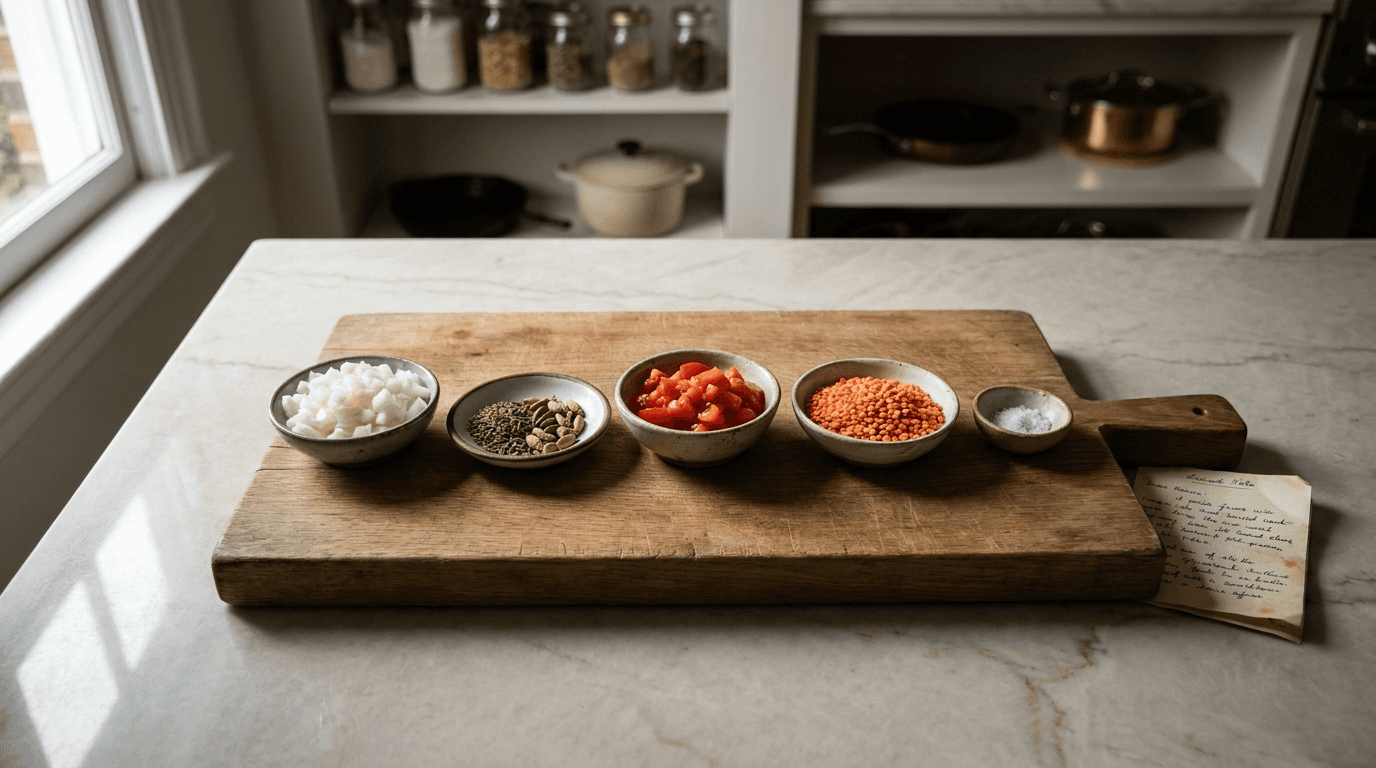
Mise en place is not a chef affectation — it is how you stop mincing garlic while oil smokes.
None of these makes a pot boil faster. The point is that the slow, mostly-unattended parts start running while you are still doing something useful.
1. Start the slowest thing first. Beans, stocks, braises, and whole grains all have a long stretch where they just need steady heat and occasional checks. Get them going before you do anything else. Dinner should orbit their clock, not the other way around.
2. Sequence your proteins by cook time. If dinner is chicken thighs plus a quick-sauteed vegetable, the thighs go in first. While they are 20 minutes into the oven, you can prep and cook the vegetable without that low-grade panic that something else is falling behind. This is one of the most ignored weeknight cooking tips in home kitchens.
3. Use the oven as a holding environment. Many finished dishes, including roasted vegetables and covered casseroles, can wait briefly in a low oven while you complete the remaining components. Delicate foods such as fish may continue cooking, so check them carefully. Used this way, the oven is basically a warm, quiet staging area.
4. Prep your masala base ahead. Efficient Indian cooking lives or dies on this. A cooked-down base of onion, ginger, garlic, and tomato can take 25 minutes of active stirring. Make it on a weekend afternoon, stash it in a jar, and your weeknight curry starts where most recipes finally get interesting: add protein, add spices, keep moving. This one habit changes the feel of easy Indian dinners at home.
5. Build your mise en place before the first burner turns on. Measure, chop, and park each ingredient in its own bowl before you apply heat. It sounds like extra work until you do it once and realize you are no longer mincing garlic while oil smokes and timers scream.
Habits that change how you manage heat
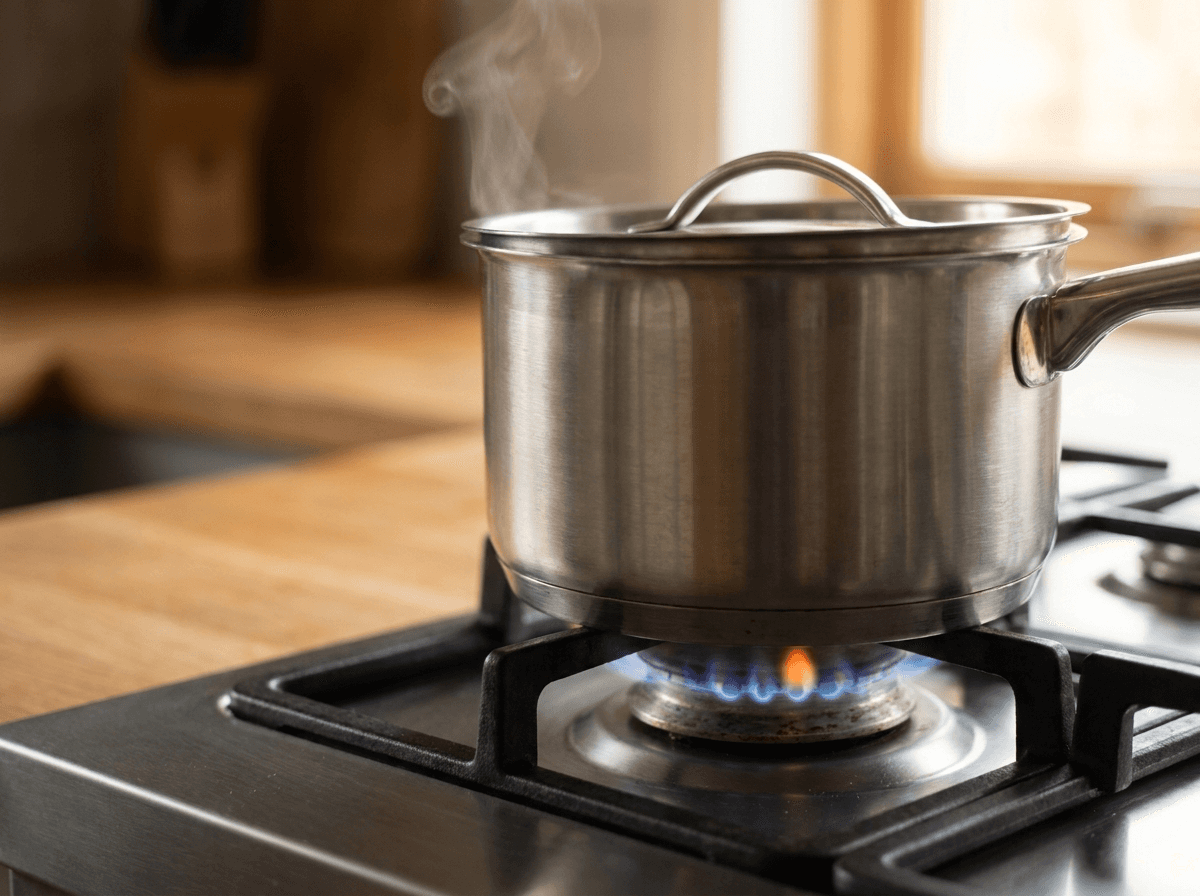
A gentle simmer and a slightly ajar lid are the real kitchen hacks for hands-off dal.
Most stove-watching is really heat anxiety: you do not trust the burner, the pan, or the margin for error. These habits replace constant supervision with a few small, repeatable checks.
6. Learn your pan's actual hot spots. Every pan has them, even the expensive ones. Dust a cold pan with a thin layer of flour and warm it gently; the areas that brown first are where the heat concentrates. Once you know the map, you stop hovering just to keep things from scorching.
7. Use residual heat deliberately. Cast iron and heavy stainless do not stop cooking when you turn the knob. Eggs, fish, and thin vegetables can finish on the stored heat after the flame is off. This is not a hack so much as remembering how metal works.
8. Hold a dal at a true low simmer. Dal should be boring once it is simmering. The usual failure mode is running it too hot, so it catches, foams over, or dries out and demands constant rescue. Aim for a gentle bubble, leave the lid slightly ajar, and check only occasionally until the lentils reach the texture your recipe requires. In Indian cooking, this is one of the most useful one-pan principles you can internalize.
9. Bloom your tadka last, not first. Tadka, tempering whole spices and aromatics in hot fat, takes about 90 seconds. Do it at the start of a long braise and those bright notes flatten out. Do it at the end and pour it over the finished dish, and you get the full aromatic hit without standing at the stove for the previous 40 minutes. Tadka sequencing is oddly underexplained in a lot of Indian recipe writing.
10. Match lid discipline to the dish. A lid on a braise traps moisture and buys you time away from the stove. A lid on a pan sauce stops reduction and forces you to hang around, fiddling with heat to make up for it. Knowing when to cover and when to let things breathe is the difference between a dish that runs itself and one that keeps calling you back.
Habits that move work off the evening entirely
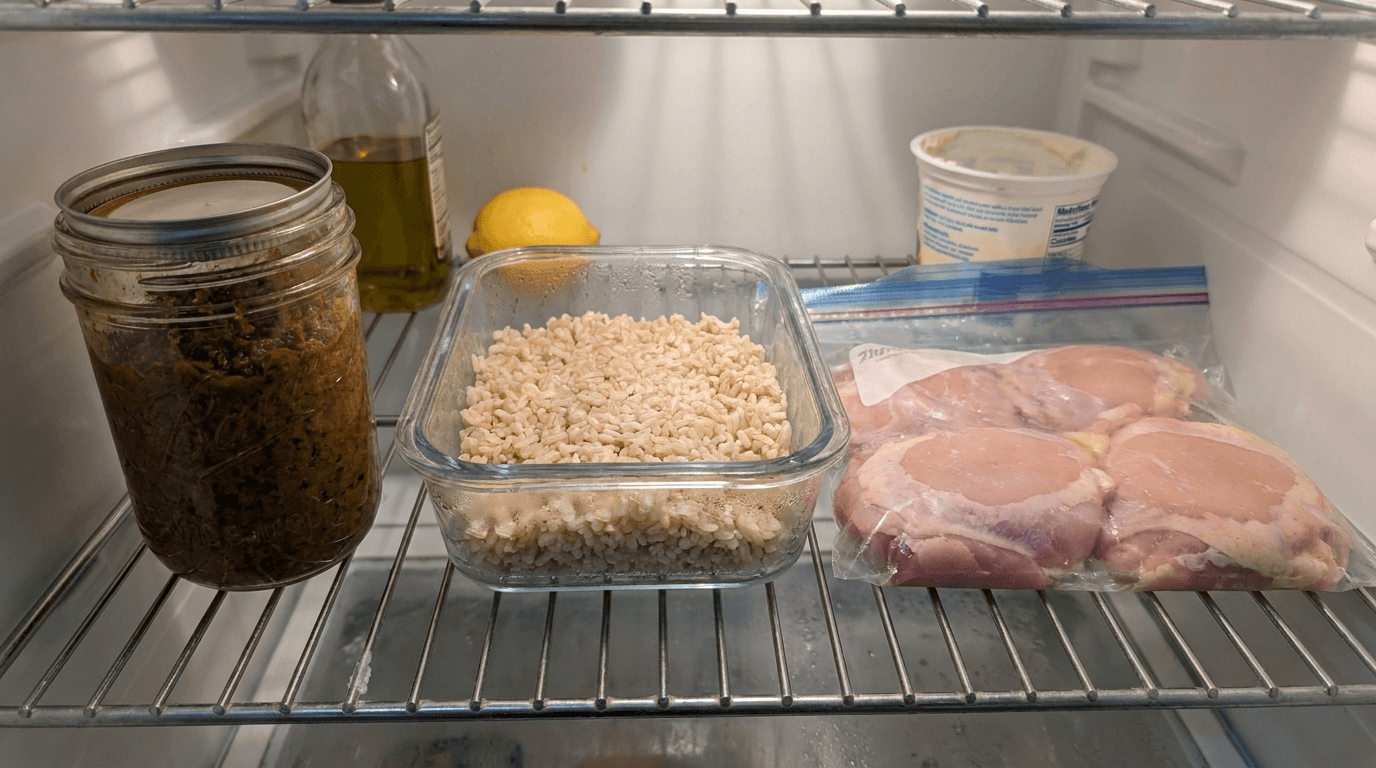
Sunday prep work — masala base, par-cooked grains, portioned proteins — buys back your weeknight evenings.
A company-commissioned 2026 survey estimated that respondents spent more than six hours per week on meal planning, grocery shopping, cooking, and cleanup. These habits are about moving that load around so less of it lands on Tuesday at 6pm. If you want a more structured version of this idea, the meal prep ideas archive has a range of starting points.
11. Batch your aromatics on Sunday. Caramelized onions, fried shallots, roasted garlic: all of them are simple, all of them are attention-hungry when you do them from scratch. Make a big batch on the weekend, keep it in the fridge, and weeknight flavor becomes a 30-second decision.
12. Par-cook grains earlier in the day. Brown rice, farro, and barley can take 40 to 50 minutes from raw. Cook them to about 80 percent, refrigerate, and they finish in around 10 minutes on the stovetop with a splash of water. If you eat a lot of grains, this is one of the most dependable meal prep hacks around.
13. Freeze proteins in weeknight portions. One pro-kitchen trick that holds up at home: if you need to slice raw chicken or bacon thinly, freeze it for 10 minutes so it firms up. More importantly, portion proteins before you freeze them. You will defrost exactly what you need and skip the Tuesday night ritual of prying apart a frozen brick. Keeping the right protein foods worth keeping in your kitchen stocked and portioned is half the battle.
14. Make a double masala and refrigerate half. If you cook Indian food regularly, this habit pays rent fast. The masala base for a chicken curry and a chickpea curry is nearly the same. Make twice as much, use half tonight, and the other half buys you Thursday with 10 minutes of active cooking instead of 35.
15. Write a two-line plan before you start. Not a recipe. Just two lines: what goes on first, and what finishes last. This kills the most expensive kind of stove-watching: standing there trying to decide the next move while something else quietly overcooks.
When the habits run out
These 15 habits will get you off stove duty on most nights. Technique does have a ceiling, though. Some dishes really do demand a person: risotto, a proper reduction, anything where you are reading the pan and reacting in real time. And some evenings are just a mess, even if your plan is solid. That is where habits stop and a different kind of help starts. Posha is designed for that gap: the stirring, heat adjustments, ingredient timing, and cooking-stage decisions that still require attention after the prep is done. It is not a smart oven or a subscription meal kit. It is a countertop cooking system that handles ingredient additions, stirring, heat adjustments, and cooking-stage decisions during supported recipes, reducing the parts of dinner that usually keep you beside the stove. If you want to see what that looks like in practice, the Posha private chef experience is the right place to start.
Frequently Asked Questions
What is the single most effective kitchen hack for reducing active stove time?
Start the slowest part of the meal first. When the dal, grain, or braise is already doing its long, steady thing, everything else becomes calmer prep instead of urgent cooking. It is the habit that makes most of the others easier to pull off.
Are these cooking hacks specific to Indian food, or do they apply broadly?
Most of them travel well across cuisines. Tadka timing and the masala base are specific to Indian cooking, but the idea underneath them - add aromatics at the moment they matter, and batch your flavor bases - shows up in French, Italian, and Mexican weeknight cooking too. The easy Indian dinners at home recipes show the weeknight version in context.
How much prep time do these meal prep hacks actually require on the weekend?
The highest-return habits - batching aromatics, doubling masala, and par-cooking grains - usually fit into about 45 to 60 minutes on a Sunday. That one session can can meaningfully reduce the chopping, browning, and simmering required across several weeknight dinners. The math is not subtle.
Do I need any special equipment to use these cooking timesavers?
No. A heavy-bottomed pot, a reliable oven thermometer, and a few small prep bowls cover almost everything here. This is mostly sequencing and heat discipline, not gear. Equipment starts to matter after you have already wrung technique dry.
What is the difference between these kitchen tips and just using a slow cooker?
A slow cooker runs one dish unattended over a long window. These habits reorganize an entire meal - multiple components, different heat levels, different finish times - so none of it requires continuous attention. They work well together: let the slow cooker handle the braise, then use sequencing to build the rest around it.
Ready to take the next step
Technique can get you most of the way off stove duty. Something still has to handle the rest. EXPLORE POSHA to see what that looks like, or SEE THE RECIPES + to put these habits to work tonight.