Rohin Malhotra
Protein is often associated with fitness goals, but its role reaches far beyond the gym. It helps your body repair, maintain, and function every day, and getting enough often starts with the meals you make at home. If you have ever wondered what protein does for your body beyond "build muscle," the honest answer is: a lot. And dinner can be a practical opportunity to add protein, especially if breakfast or lunch was lighter.
The catch: knowing protein is "good" is not the same as getting a workable weeknight plate on the table. We'll unpack what protein does, why it matters for everyday goals, and how to reliably hit your number at the meal that tends to anchor the evening.
What Protein Does Inside Your Body
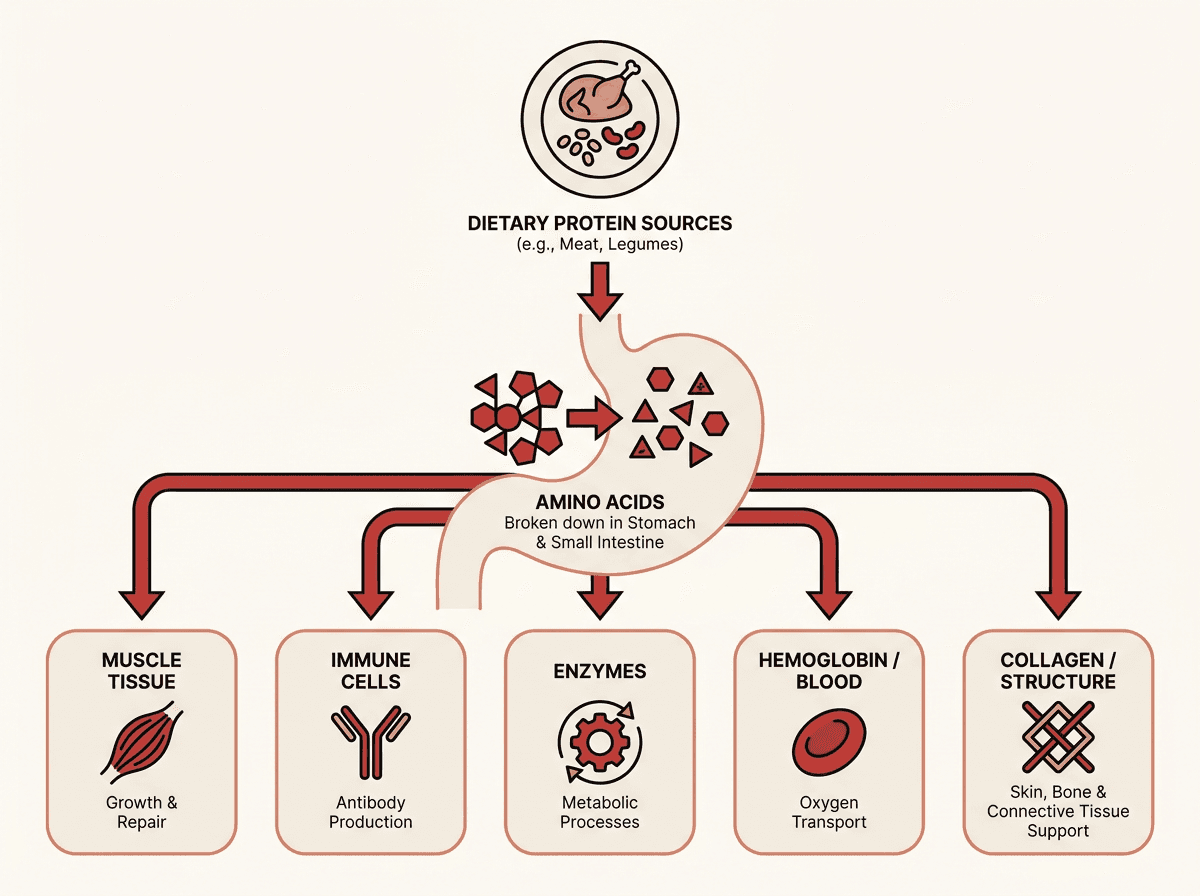
Protein is everywhere: muscle, bone, skin, hair, and pretty much any tissue you can name. According to Harvard T.H. Chan School of Public Health, proteins make up the enzymes that drive chemical reactions and the hemoglobin that carries oxygen through your blood. Zoom out, and the scale is wild: at least 10,000 different proteins help define you biologically.
Those jobs cluster into a few buckets. Structural proteins like collagen give connective tissue its strength. Enzymatic proteins speed up tasks like digestion and energy production. Transport proteins move vitamins and minerals to where they are needed. Immune proteins (antibodies) help defend against infection. Signaling proteins act as hormones, coordinating everything from hunger cues to sleep cycles. MedlinePlus (2021) puts it plainly: proteins "do most of the work in cells and are required for the structure, function, and regulation of the body's tissues and organs."
When you eat a chicken thigh or a bowl of black beans, digestion takes that food protein apart into amino acids. There are 20 types of amino acids, and 9 are considered essential because your body cannot make them on its own. Each meal is basically a chance to restock those nine building blocks.
Why Is Protein Important for Your Daily Life?
Protein's value is not limited to gym lore. Adequate protein supports the maintenance and repair of body tissues and can help meals feel more satisfying. Protein needs vary by age, activity level, health status, and overall diet, so it is better to focus on consistent intake than to promise a specific effect on energy, cravings, or soreness.
The Recommended Dietary Allowance (RDA) for a healthy adult with minimal physical activity is 0.8 grams of protein per kilogram of body weight per day (Wu, 2016). For a 150-pound person, that works out to about 55 grams. People who train regularly may need more than the RDA. Sports-nutrition guidance commonly places most exercising individuals around 1.4 to 2.0 g/kg/day, depending on training type, intensity, age, and goals.
Wherever you land, dinner can be a practical place to add protein, especially when earlier meals have been lower in protein. It is still helpful to spread protein-containing foods across the day rather than relying on one meal to provide most of it.
Tip: A quick way to estimate your minimum daily protein need: divide your weight in pounds by 2.2, then multiply by 0.8. That gives you grams per day at the RDA baseline.
Protein Examples That Belong on Your Dinner Plate
Protein only helps if you can point to what it looks like in the fridge. Below are practical protein examples by category, with approximate grams per standard serving, so you can mix and match without doing math every night.
Animal-based sources:
Chicken breast (3 oz cooked): ~26 g protein
Salmon fillet (3 oz cooked): ~22 g protein
Eggs (2 large): ~12 g protein
Greek yogurt (3/4 cup): ~15 g protein
Lean ground beef (3 oz cooked): ~22 g protein
Plant-based dinners can absolutely carry the load, especially when you build variety across the day. Lentils, chickpeas, tofu, and edamame all hit double digits per serving. For more options beyond meat, best plant-based protein sources lays them out for everyday home cooking. If you want to stock the pantry once and stop thinking about it, protein foods worth keeping in your kitchen are a solid checklist.

Common Misconceptions About Protein
"You need a protein shake to hit your numbers." Most adults can meet their protein needs through regular foods across the day. A dinner built around chicken, fish, eggs, tofu, beans, lentils, or dairy can make a substantial contribution. Protein powders may be useful in specific situations, but they are not required for most people.
"Plant proteins are incomplete and therefore useless." Some individual plant foods are lighter on one or two essential amino acids, but eating a mix of grains, legumes, and seeds over the day covers all nine essentials. You do not have to engineer the perfect combo in a single meal.
"More protein is always better." Your body does not store amino acids as a separate protein reserve. Protein beyond immediate needs can be broken down and used for energy, while excess calories from any source may contribute to body-fat storage. For most people, consistently meeting an appropriate daily amount matters more than chasing an extreme total.
How to Get Enough Protein at Dinner (Without a Second Job)
The hard part is not the science. It's the 6:45 p.m. reality: you walk in, the fridge is half-stocked, and the couch has a strong argument. Protein at dinner slips not because people do not know what to do, but because cooking competes with everything else the evening demands.
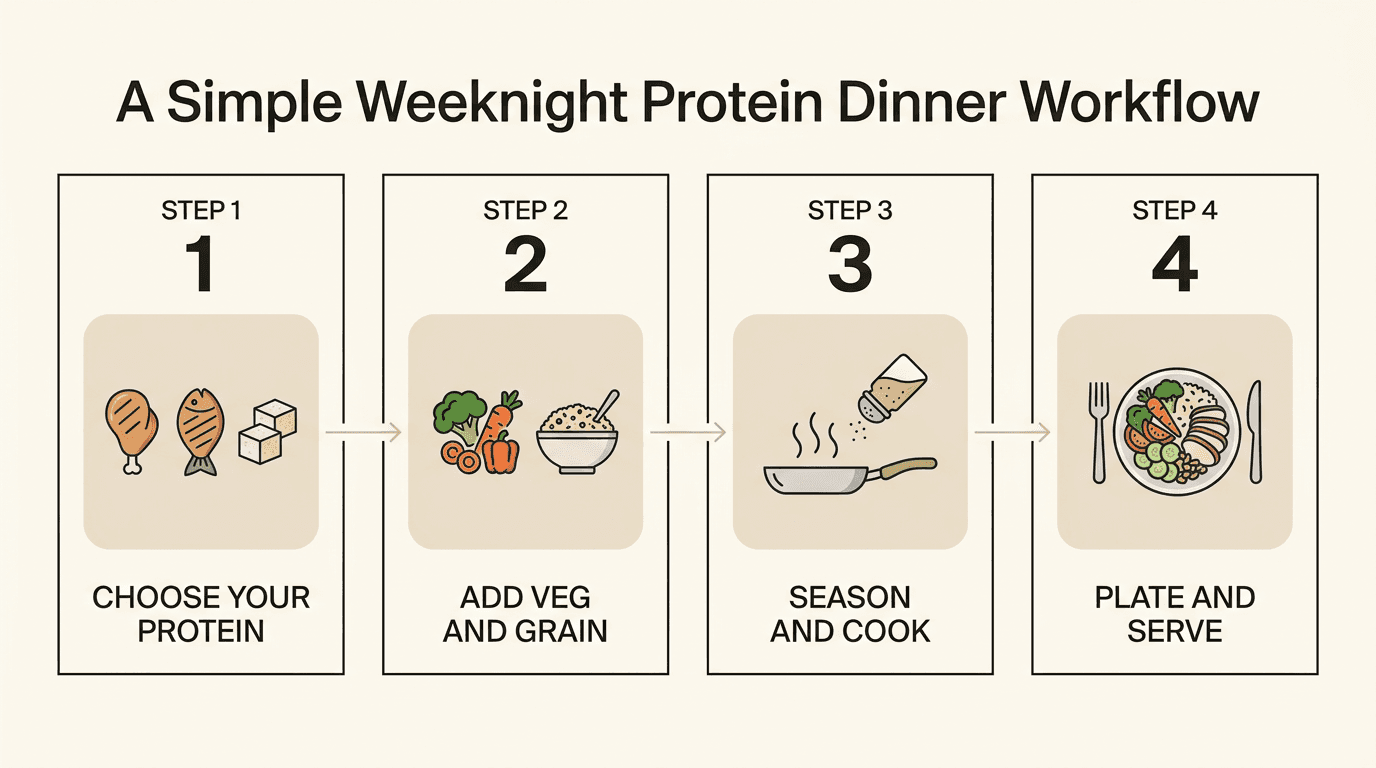
A useful pattern is to pick three or four reliable proteins for the week, then swap the vegetables, grains, and sauces around them. Chicken thighs with a quick tadka of cumin and mustard seeds over dal one night; salmon with roasted broccoli the next; tofu stir-fry on Wednesday. The protein stays familiar, the flavors keep moving. If you want a longer list, high-protein meals that are easy to cook have plenty of at-home options.
Building protein-rich dinners often comes down to more than knowing what to eat; it comes down to having the time and attention to prepare every step. This is where the Posha cooking system fits into real weeknight cooking.
Choose a recipe, prep and load the ingredients, and Posha takes care of the cooking process, adding ingredients at the right moments, watching progress, stirring, and adjusting as it cooks. So you can enjoy a thoughtfully prepared home-cooked meal without having to stay beside the stove. Posha thinks and adjusts as it goes. When a sauce needs more time, the cooking continues. When the pan needs stirring, or the heat needs changing, Posha handles the next step. The result is a home-cooked meal where Posha handles the small decisions and cooking adjustments along the way.
If you're after broader meal inspiration (not just protein math), healthy dinner ideas rounds up balanced plates worth keeping in rotation.
A little planning, the right ingredients, and a cooking system that handles the details can make protein-rich dinners easier to enjoy consistently. With Posha, multi-step meals can come together while you focus on the moments around dinner.
Key Takeaways
Protein does structural, enzymatic, transport, immune, and signaling work across virtually every tissue in your body.
The RDA baseline is 0.8 g per kg of body weight, while active adults are often better served with more.
Dinner can be a useful opportunity to round out your daily protein intake.
Animal and plant sources can both deliver meaningful protein when you choose them with intention.
Week-to-week consistency beats a "perfect" single meal.
Posha can handle the active cooking sequence after ingredients are prepared and loaded, making multi-step protein dinners easier to keep in regular rotation.
Frequently Asked Questions
What does protein do for your body day to day?
Protein is constantly at work: repairing damaged cells, building new tissue, making enzymes and hormones, supporting immune function, and moving nutrients through the bloodstream. Because those jobs never stop, steady daily intake matters.
How much protein should I try to get at dinner?
There is no single dinner target for everyone. For exercising adults, sports-nutrition guidance often discusses about 20 to 40 grams of high-quality protein per eating occasion to support muscle protein synthesis, although individual needs vary based on body size, age, activity level, health, and overall daily protein intake. A registered dietitian can help calculate an individualized target.
Can I get enough protein from plants alone?
Yes. Lentils, chickpeas, tofu, tempeh, edamame, and quinoa all bring substantial protein. A mix of plant foods across the day covers all nine essential amino acids, without having to combine them in a single meal.
Why is protein important if I don't exercise much?
Even without intense workouts, protein helps maintain muscle mass, supports bone density, repairs everyday wear and tear, and produces enzymes that drive digestion and metabolism. Sedentary adults still need enough protein to keep those baseline functions running.
Does the way I cook food change its protein content?
Cooking changes the structure of proteins, but it does not usually remove most of the protein from a food. The amount shown per ounce can change because food gains or loses water during cooking. Very high heat or prolonged cooking may affect some amino acids and digestibility, so use food-specific nutrition data when exact numbers matter.