Rohin Malhotra
Chicken lo mein sits right at the center of Chinese-American takeout: glossy noodles, a savory-sweet sauce, tender chicken, and vegetables that stay crisp at the edges. "Lo mein" comes from Cantonese for "tossed noodles," which is exactly what you're doing here. And that's what separates it from chow mein: chow mein leans on frying the noodles, while lo mein boils them first, then coats them in sauce so they turn chewy and silky instead of crunchy. When you want something comforting and fast, this easy chicken lo mein hits the spot and usually beats waiting on delivery.
Making it at home also means you get to steer the flavor. Prefer it less sweet, a little saltier, or with a touch more heat? Easy. You can also load it up with more vegetables without changing the basic method. Below are the classic steps for a saucy, weeknight-friendly chicken lo mein that tastes like the takeout version people crave.
Why You'll Love This Recipe
Quick and Easy: A full dinner on the table in about 30 minutes.
Better Than Takeout: Freshly cooked, boldly flavored, and easy to tweak.
Balanced Flavors: Savory, a little sweet, and plenty of umami in every forkful.
Versatile: Swap the protein or clean out the crisper with whatever vegetables you have.
Chicken Lo Mein Ingredients
A good lo mein is mostly about having the right building blocks ready to go. A few ingredients are common in Asian cooking, but you can usually find them in the international aisle at most supermarkets.
For the Chicken and Marinade
1 lb boneless, skinless chicken breasts or thighs, thinly sliced against the grain
1 tablespoon soy sauce
1 teaspoon cornstarch
9 teaspoon sesame oil
8 teaspoon white pepper
For the Lo Mein Sauce
8 cup low-sodium soy sauce
2 tablespoons oyster sauce (or hoisin sauce for a different flavor profile)
1 tablespoon dark soy sauce (for color and depth)
1 tablespoon honey or brown sugar
1 tablespoon Shaoxing wine (or dry sherry)
2 teaspoons sesame oil
8 teaspoon white pepper
For Assembly
1 lb fresh or dried lo mein noodles (or spaghetti/linguine in a pinch)
2 tablespoons vegetable or canola oil, divided
3 cloves garlic, minced
1 tablespoon fresh ginger, grated
1 medium carrot, julienned
1 red bell pepper, thinly sliced
4 oz shiitake mushrooms, sliced
1 cup broccoli florets, lightly steamed or blanched
2 scallions, sliced on the diagonal, for garnish
Toasted sesame seeds, for garnish
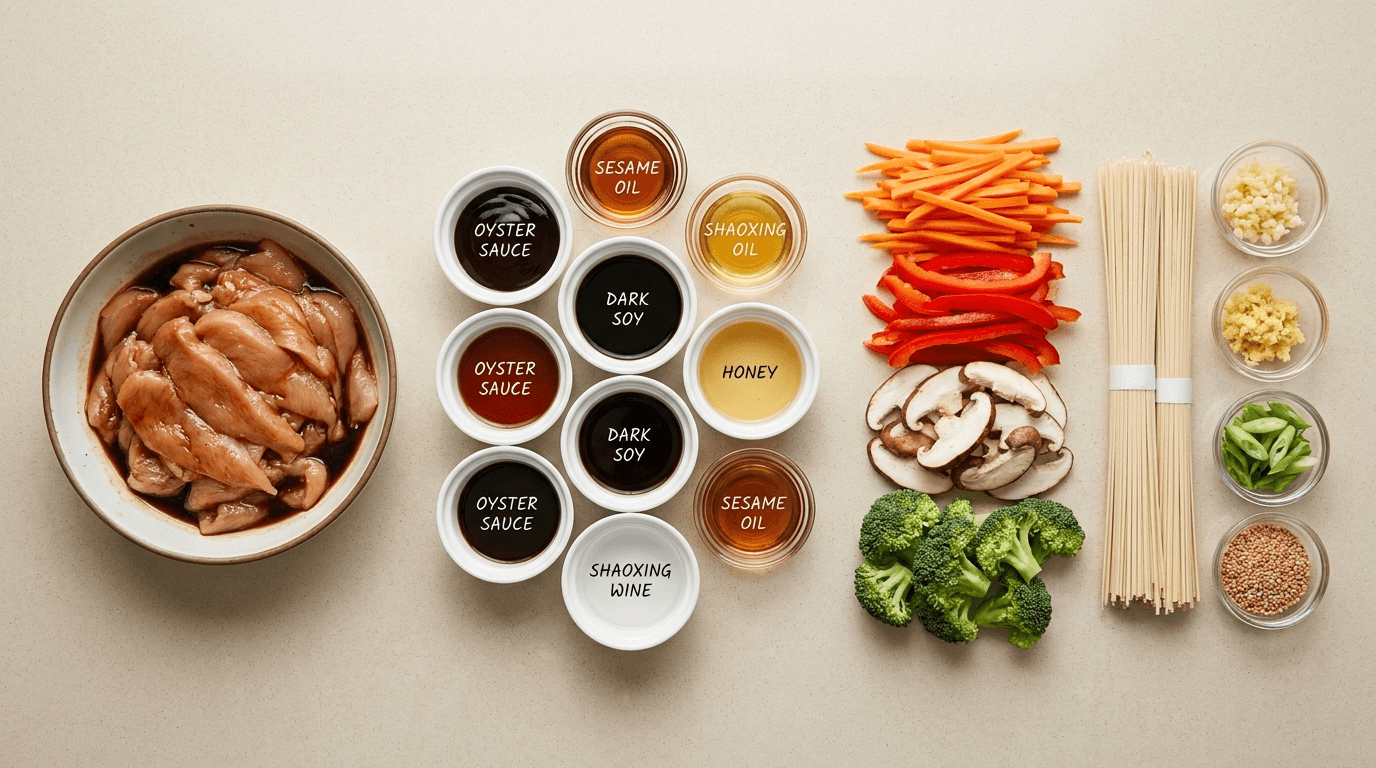
Having every ingredient measured and ready before cooking makes stir-frying fast and stress-free.
How to Make Chicken Lo Mein: Cooking Instructions
Stir-fries move quickly, and lo mein is no exception. Slice the chicken, chop the vegetables, and mix the sauce before you turn on the heat so you can cook without scrambling.
Step 1: Marinate the Chicken
In a medium bowl, toss the sliced chicken with 1 tablespoon soy sauce, cornstarch, 9 teaspoon sesame oil, and white pepper until every piece is coated. That cornstarch-and-soy combo is a simple version of velveting, and it helps the chicken stay juicy instead of turning tough in a hot pan. Let it sit while you prep the rest.
Step 2: Prepare the Sauce and Noodles
Whisk the sauce in a small bowl: low-sodium soy sauce, oyster sauce, dark soy sauce, honey, Shaoxing wine, 2 teaspoons sesame oil, and white pepper. Keep it nearby. Cook the lo mein noodles according to the package until al dente, then drain well. Rinse with cold water to stop the cooking and keep them from clumping, and if you like, add a tiny drop of sesame oil to help them stay loose.
Step 3: Cook the Chicken and Aromatics
Set a large wok or skillet over high heat and add 1 tablespoon vegetable oil. When the oil shimmers, spread the chicken out in a single layer and let it sear, about 2 to 3 minutes per side, until golden and cooked through. Transfer the chicken to a plate. Add the remaining tablespoon of oil, then stir-fry the garlic and ginger for about 30 seconds, just until they smell fragrant (they can burn fast at this heat).
Step 4: Stir-Fry the Vegetables
Add the carrots, bell pepper, and shiitake mushrooms to the wok and keep them moving. After 3 to 4 minutes they should be crisp-tender: softened, but still with some bite. Add blanched broccoli now. If you're starting with raw broccoli, toss it in earlier with the carrots so it has time to cook through.
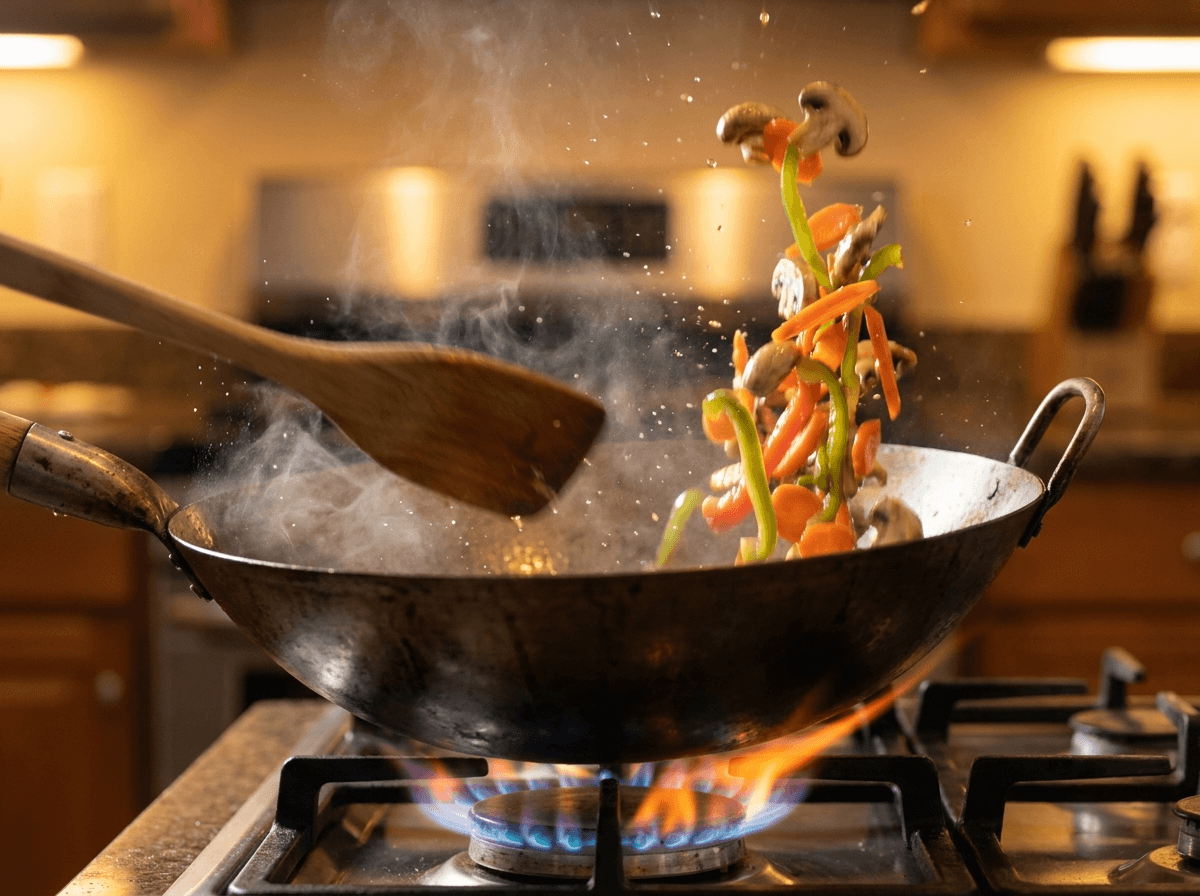
Keep vegetables moving constantly in the wok for a crisp-tender finish.
Step 5: Combine and Serve
Slide the chicken back into the wok, then add the drained noodles. Pour the sauce over the top and use tongs to toss for 1 to 2 minutes, until everything is hot and the noodles are evenly lacquered. You're not trying to reduce the sauce into a glaze so much as coat and warm everything. Finish with sliced scallions and toasted sesame seeds, and serve right away.
Serving Suggestions and Success Tips
Chicken lo mein happily stands on its own, but it also plays well with a couple of simple sides. If you're chasing that takeout-night feeling, start with something crunchy or brothy.
Perfect pairings include:
Crispy spring rolls or egg rolls
Steamed or pan-fried dumplings (potstickers)
A simple, refreshing cucumber salad
Wonton soup as a starter
Tips for the Best Chicken Lo Mein
Don't Overcook the Noodles: Keep them al dente; they'll soften a bit more when they hit the hot wok and sauce.
High Heat is Your Friend: A properly hot wok or skillet gives you stir-fry texture without steaming the ingredients into softness.
Prep Everything First: Once cooking starts, it goes fast. Have the sauce mixed and everything chopped and measured before the pan heats up.
Slice Chicken Thinly: Thin slices cooked against the grain stay tender and cook in minutes.
Storage, Reheating, and Substitutions
Lo mein keeps well, but noodles can dry out if you reheat them aggressively. Here are the simple storage rules, plus a few swaps that still keep the dish in its comfort-food lane.
How to Store and Reheat
Refrigerate leftover chicken lo mein in an airtight container for 3 to 4 days. To reheat, microwave in 30-second bursts, stirring between rounds so it warms evenly. For the best texture, reheat in a skillet over medium heat with a splash of water or chicken broth, tossing until the noodles loosen and everything is warmed through.
Common Recipe Substitutions
Protein: Trade chicken for thinly sliced beef, shrimp, or pressed tofu for a vegetarian option.
Vegetables: Bok choy, snow peas, bean sprouts, or cabbage all work well here.
Noodles: No lo mein noodles? Spaghetti, linguine, or ramen noodles (discard the seasoning packet) are solid stand-ins.
Gluten-Free: Use tamari instead of soy sauce and pick gluten-free noodles, such as rice- or corn-based noodles.
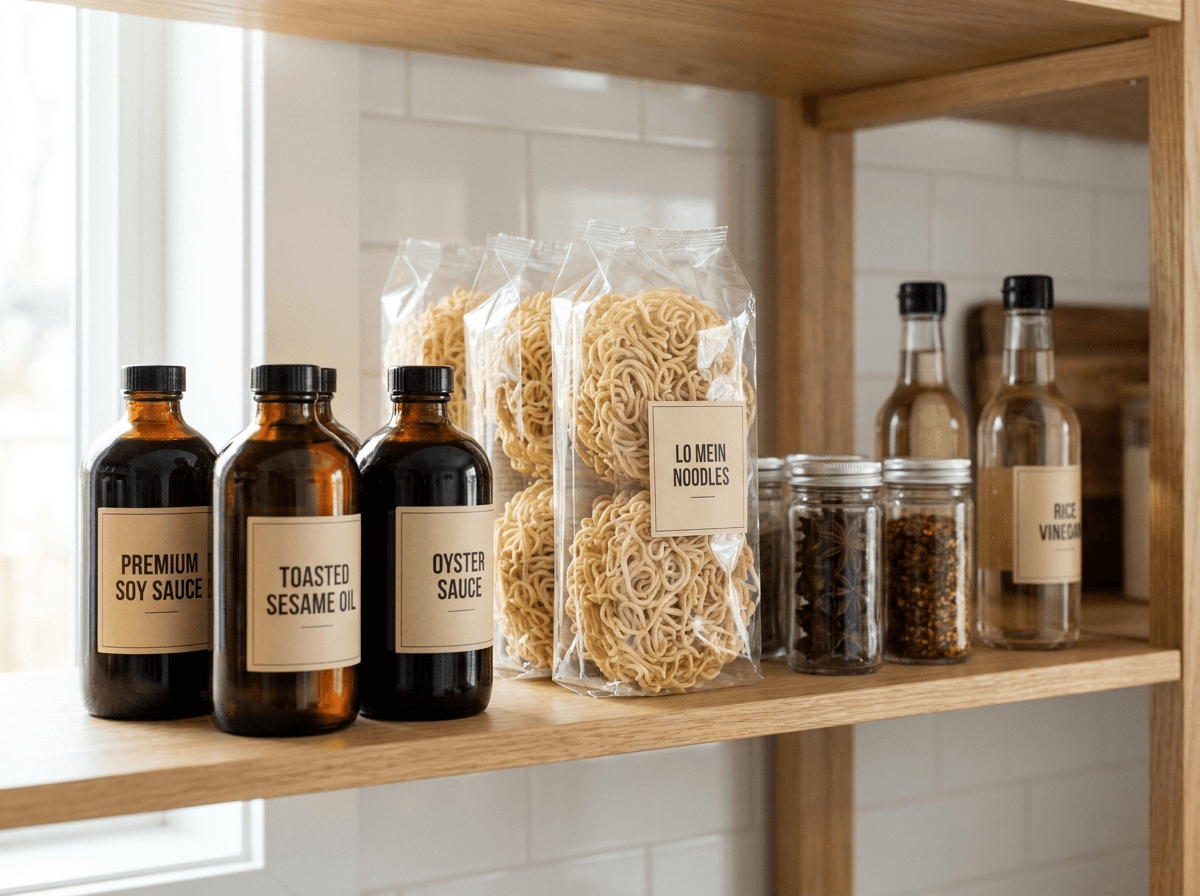
A well-stocked pantry makes it easy to whip up your favorite recipes anytime. For more ideas, check out our collection of easy dinner recipes.
Frequently Asked Questions
What is the difference between Lo Mein and Chow Mein?
It mostly comes down to the noodles. Lo mein translates to "tossed noodles": they're boiled, then mixed with sauce and stir-fried ingredients. Chow mein translates to "fried noodles," and the noodles are stir-fried more aggressively, often turning crisper.
Can I make this recipe vegetarian?
Yes. Skip the chicken and bump up the vegetables, or add a plant-based protein like firm tofu or edamame. A vegetarian oyster sauce works well here, and hoisin sauce is another good option.
Is this an authentic Chinese recipe?
Lo mein has roots in Chinese cooking, but the takeout version most Americans know is a Chinese-American adaptation. This recipe aims for that familiar, slightly saucier restaurant style.
What kind of noodles are best for lo mein?
Chinese egg noodles (fresh or dried) are the classic choice because they stay pleasantly chewy under sauce. If you can't find them, spaghetti or linguine are the closest everyday substitutes.
How can I make my chicken extra tender?
Don't skip the cornstarch marinade. That velveting step is what gives you tender, restaurant-style chicken that stays juicy in a hot wok.
Nutritional Information
These nutrition estimates are approximate and will shift depending on the exact ingredients you choose and how you portion the dish. The numbers below are for one serving, assuming the recipe makes four servings.
Approximate per serving:
Calories: 550 kcal
Protein: 35g
Carbohydrates: 60g
Fat: 18g
Fiber: 5g
For a more specific reference point, a 200g serving of typical chicken lo mein contains about 260 calories, 18g of protein, and 32g of carbohydrates.
A New Weeknight Favorite
This chicken lo mein is proof you can get the takeout-style payoff without placing an order: saucy noodles, tender chicken, and vegetables that still taste fresh. Once you have the sauce and prep rhythm down, it's also easy to customize, which is exactly what makes it a weeknight regular. If you want another low-lift dinner, try this hands-free recipe with Posha, or browse more delicious recipes for your next cooking project.
Cook it yourself
Multiple steps | Hands-on the whole time
Or Let Posha Cook
2 steps to set up, then walk away