Rohin Malhotra
Learning how to intermittent fast has less to do with grit and more to do with the clock. Johns Hopkins Medicine puts it simply: intermittent fasting is about when you eat, not what you eat, by rotating between set periods of fasting and eating. Once you frame it that way, it stops feeling like an extreme plan and starts feeling like a schedule you can live with.
Most people don't fail because they "can't do fasting." They run into a very normal problem: it's 12 p.m. or 1 p.m., your eating window finally opens, and you have nothing ready. This walks through a straightforward, sustainable setup, from picking a schedule to making sure a real meal is waiting right when it matters.
Compact beginner meal-planning
Eating window | First meal | Snack | Dinner |
|---|---|---|---|
12 p.m.–8 p.m. | Paneer, egg, or lentil bowl | Greek yogurt, fruit, or nuts | Posha-cooked dal, grain bowl, curry, or roasted vegetable meal |
Step 1: Understand What Intermittent Fasting Actually Is
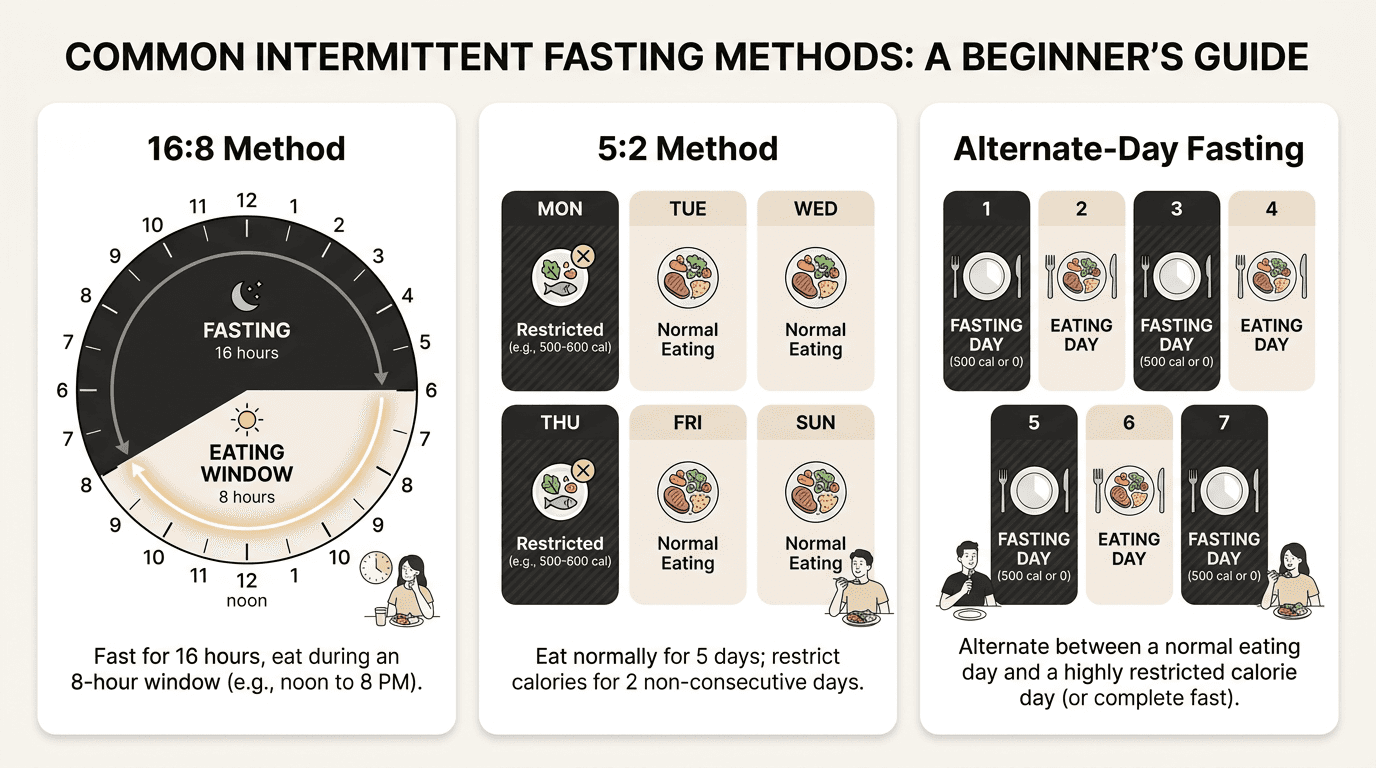
The three most common IF methods — each fits a different lifestyle and weekly rhythm.
Intermittent fasting isn't a traditional diet. There's no macro math, no banned food groups, no special shopping list. You're picking a daily (or weekly) eating window and letting the rest of the time be your fast. As the Harvard T.H. Chan School of Public Health explains, the most common formats include time-restricted feeding like the 16:8 method (fast for 16 hours, eat within 8), whole-day fasting like the 5:2 diet (eat normally five days a week and restrict calories on two non-consecutive days), and alternate-day fasting.
If you're new to this, 16:8 is usually the easiest place to start. It tucks neatly around sleep, so a big chunk of the fast happens while you're already offline. A common version runs from noon to 8 p.m.: you skip breakfast and make lunch your first meal. If your days run earlier or later, slide the window to match your actual life.
The research doesn't paint intermittent fasting as magic; it looks more like another workable tool. A 2025 systematic review of 99 clinical trials, covered by the Harvard T.H. Chan School of Public Health, found weight loss results similar to traditional calorie-restricted diets. Johns Hopkins Medicine also notes that IF may improve blood pressure, resting heart rates, and other heart-related measurements. Helpful, but only if the routine is one you can keep without turning your week into a constant negotiation with hunger and schedules.
Step 2: Choose Your Intermittent Fasting Schedule
Before you plan meals or buy groceries, lock in a schedule you'll actually follow. The best intermittent fasting schedule is the one that fits your routine with minimal drama. Use these questions to narrow it down:
Questions to help you pick your eating window:
What time do you naturally feel hungry in the morning? If you rarely want breakfast before 10 a.m., a noon-to-8 p.m. window is a small adjustment.
When does your workday end? If you finish at 5 p.m. and want to eat dinner with family, a 1 p.m. to 9 p.m. window may suit you better.
Do you exercise in the morning? Some people prefer eating before a workout; others train fasted without issue. Adjust accordingly.
Are you someone who gets headaches when hungry? Start with a 14-hour fast and work up gradually rather than jumping straight to 16 hours.
Intermittent fasting is not recommended for everyone. People who are pregnant, have a history of disordered eating, or manage conditions like diabetes should speak with a doctor before starting. Early on, some people deal with headaches, fatigue, and irritability while their body adapts.
Step 3: Plan Your IF Meal Plan Around the Window
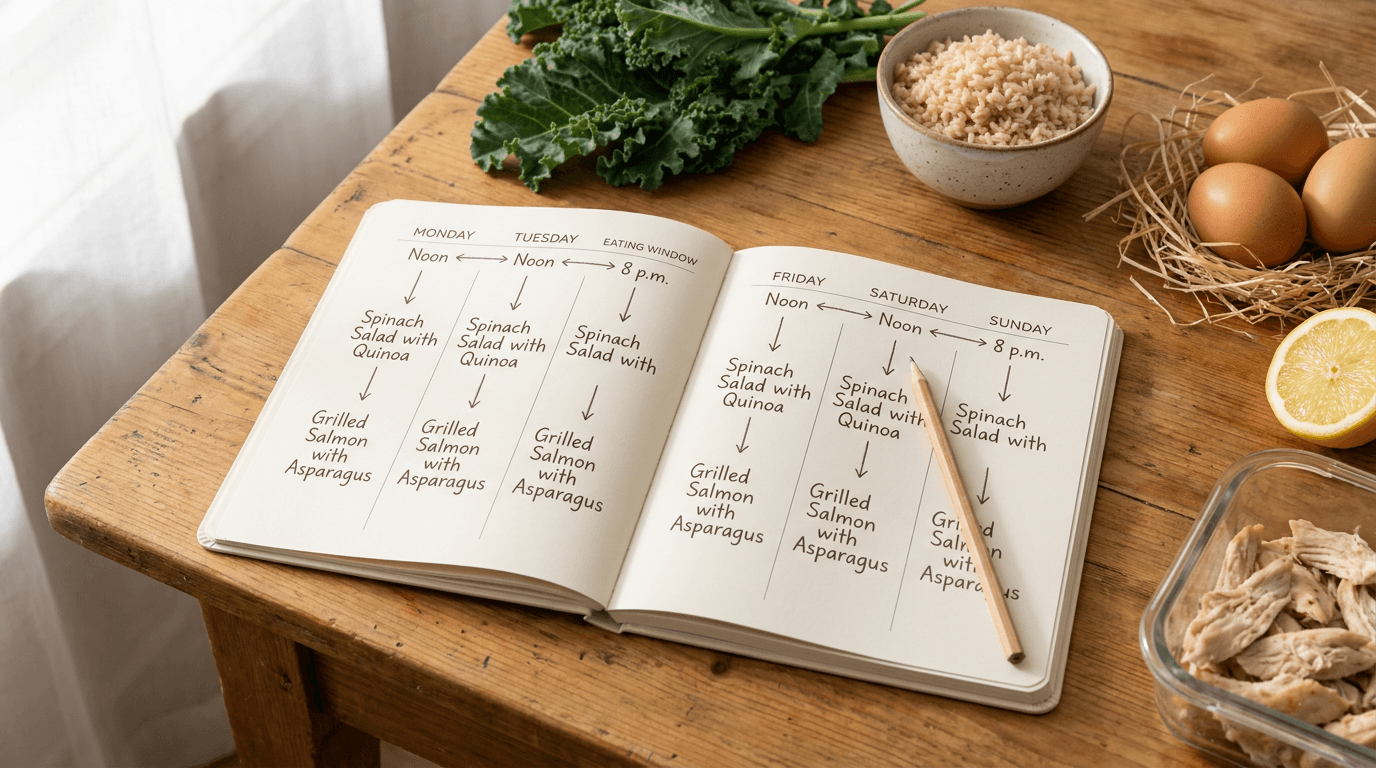
A simple weekly planner keeps your intermittent fasting eating window balanced and stress-free.
An IF meal plan doesn't need to look like a spreadsheet. Inside your eating window, aim for two or three filling, balanced meals that carry you through until the next window. The job is to eat enough when you are eating, not pile extra restriction on top of the fast.
On a noon-to-8 p.m. schedule, a simple rhythm works well: a real first meal around noon (protein, healthy fats, and complex carbs), an optional snack around 3 to 4 p.m., and dinner before 8 p.m. Many people drop the snack once things feel normal, and that's fine. If you want ideas you can repeat without getting bored, the meal prep ideas on Posha's blog are a solid starting point for building a weekly rotation.
When you're trying to stay comfortable through the fasting hours, protein and fiber do a lot of heavy lifting. They digest more slowly and keep you satisfied longer. Eggs, legumes, whole grains, leafy greens, Greek yogurt, and lean meats all work well as anchors. If South Asian flavors are already in your kitchen, easy paneer meal ideas are an easy way to add a high-protein first meal that still feels like normal food.
Step 4: Time Your Cooking So the Meal Is Ready When You Are
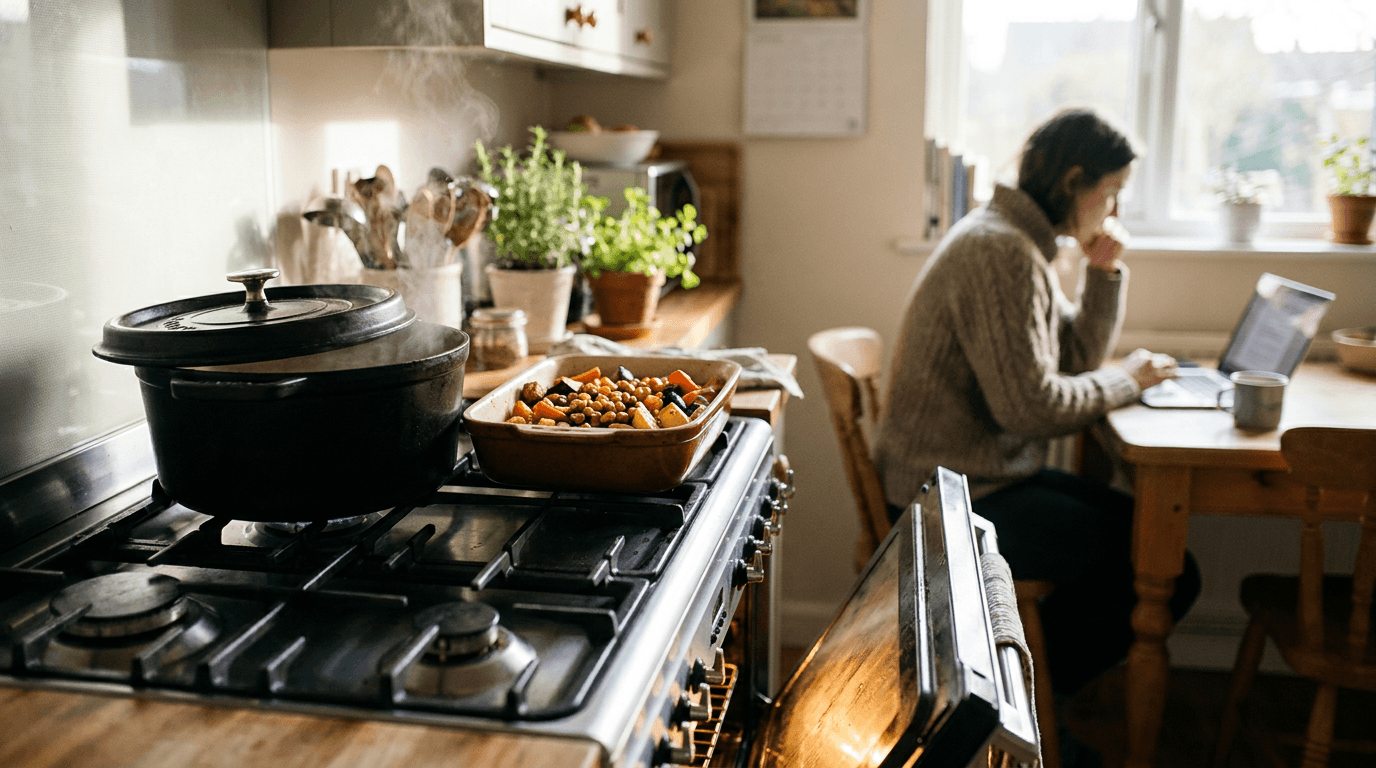
Start cooking before your window opens — the meal handles itself while you work.
This is the point where many beginners get tripped up. Your window opens, you're hungry, and the kitchen is empty. So you reach for the quickest option, and "quick" tends to beat "balanced." The fix isn't more discipline. It's setting up your cooking so food shows up on time.
Good cooks don't hover. They start dinner early, then let the stove and oven do their thing. You can borrow that same mindset for fasting. If your eating window starts at noon, begin something at 11 a.m. that lands on the table at 12:05. A grain bowl needs about 20 minutes of mostly hands-off simmering. A sheet pan of roasted vegetables and chickpeas can run for 30 minutes while you answer emails. You don't need to be cooking at the exact moment your window opens; you just need to have pressed start at the right time.
Posha's Robot Chef is designed around that exact problem: making cooking happen while you're busy. Posha's Robot Chef is designed around that exact problem: helping you cook while you're busy. Guided by Posha's culinary AI, it automates key cooking steps like stirring and temperature control, so you can start a recipe before your eating window opens and get back to work. When your window opens, a proper meal can be ready. When your window opens, a proper meal is already done. With Posha Circle Membership, you get unlimited access to recipes and cooking programs, which makes it much easier to keep an IF meal plan on repeat without burning out.
Tip: Batch-cook proteins and grains on Sunday. Cooked lentils, quinoa, or shredded chicken in the fridge mean your weekday eating window meals come together in minutes, not 40 minutes.
Step 5: Manage the Fasting Hours Without Overthinking Them
During the fasting window, stick with water, black coffee, and plain tea. Those cover most of what you want: hydration, a little appetite control, and something warm to sip. Hunger also tends to behave differently than people expect. It's usually not a steady climb; it spikes, then fades after 20 to 30 minutes, especially once you're past the first week.
The simplest trick is to stay occupied. Fasting feels hardest when you're parked on the couch watching the clock. Put your most demanding work, errands, or a distracting project in the late-fasting stretch. Then your eating window arrives, and you can move straight into the meal you planned instead of improvising.
Common Mistakes to Avoid When Starting Intermittent Fasting
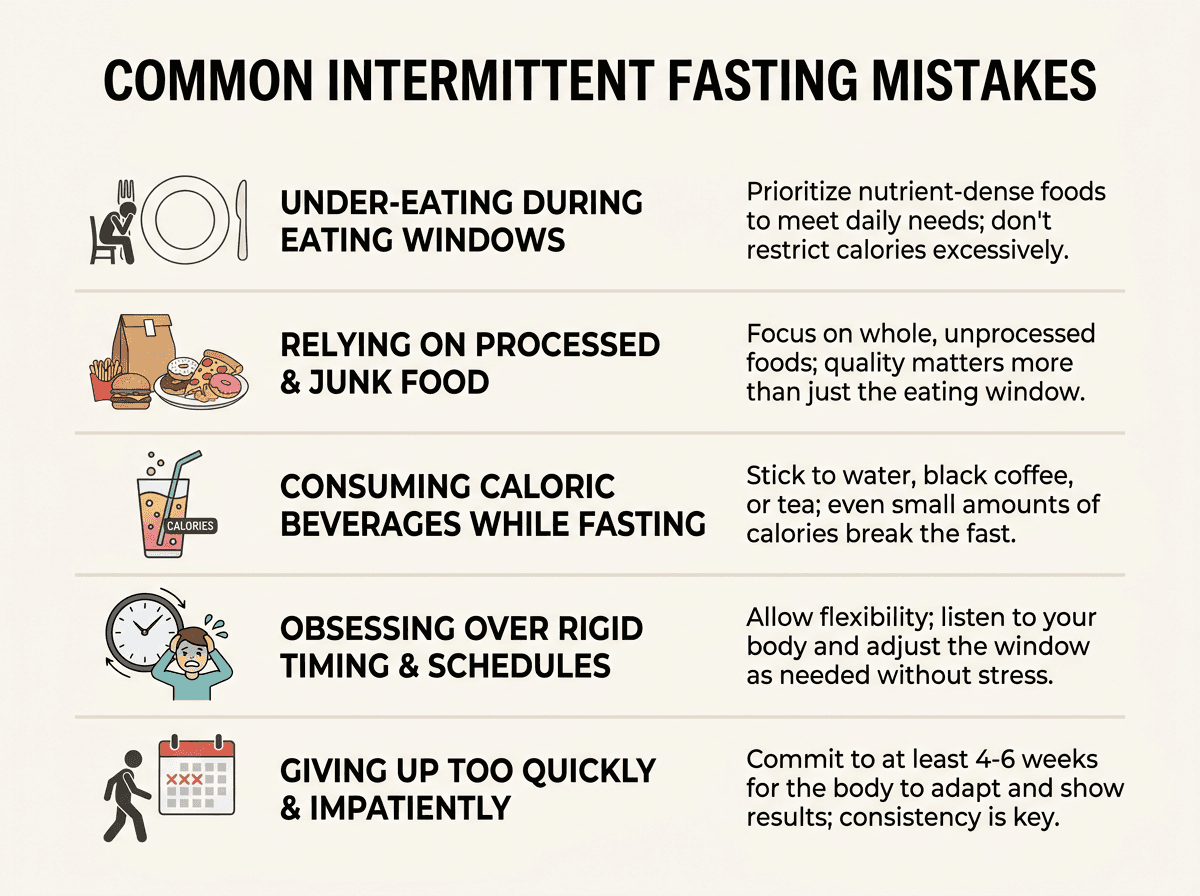
Recognizing these five patterns early can save weeks of frustration and false starts.
Watch for these five patterns, especially in the first two weeks:
Under-eating during the window. Fasting isn't the same as undereating. If you close your window after fewer than two real meals, you'll feel wiped out. Eat enough.
Eating low-quality food because you are too hungry. When the window opens and nothing is ready, convenience food wins. Meal prep and better timing prevent the scramble.
Drinking caloric beverages during the fast. Milk in coffee or a flavored sparkling water with sugar can knock you out of a fasted state. Keep it plain during fasting hours.
Being too rigid with the window time. Real life doesn't run on perfect timestamps. If your window shifts by 30 minutes one day, it's not a failure. Sustainability comes from flexibility.
Quitting after three days. The first week is often the roughest. Headaches and irritability are common while your body adjusts, and many people feel noticeably better by day 10.
Building a Sustainable Routine Beyond Week One
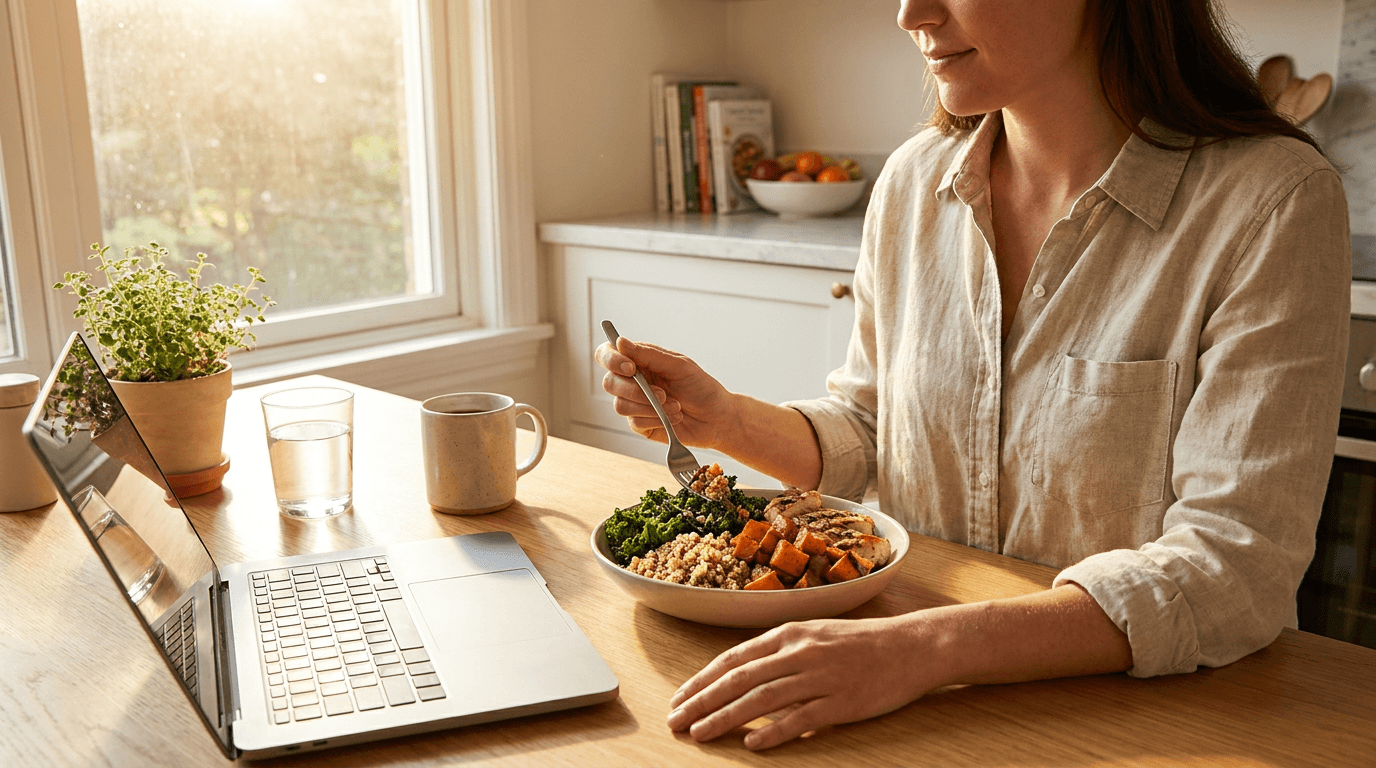
By week two, intermittent fasting starts to feel like a rhythm, not a restriction.
After week one, the goal isn't "getting through" fasting anymore. It's building something that feels normal. Rotate your eating-window meals so you aren't stuck in a boring loop, plan one or two slightly more involved dishes each week so it stays enjoyable, and don't be afraid to move your window if the original plan doesn't match your days.
If you like mixing up flavors, an Indian meal prep guide is a good way to add variety with dishes that tend to be naturally high in fiber and protein. A little range inside the window is often what turns intermittent fasting from a short experiment into a routine you can stick with.
Over time, some people notice their schedule loosens up on its own. After a few weeks on 16:8, a 14:10 weekend can make social plans easier without feeling like you're "breaking" anything. That's a good sign, not a problem. Learning how to intermittent fast is really about finding a rhythm that fits your life, not locking yourself into a protocol forever. If you're weighing different ways to keep meals consistent, the best meal kit alternative breakdown compares a robot chef to other options for maintaining this kind of routine.
Quick Recap: Your First Week of Intermittent Fasting
Here is the simple sequence to follow:
Day 1-2: Choose your eating window (noon to 8 p.m. is a good default). Drink water and black coffee during fasting hours. Don't stress about perfect meals yet.
Day 3-4: Prep two or three go-to meals you can cook on a timer. Notice which protein and fiber sources keep you satisfied the longest.
Day 5-7: Start your cooking early so the first meal is ready when the window opens. Batch-cook one item (grains, legumes, or protein) for the week.
Week 2 onward: Adjust the window if needed, add variety to your IF meal plan, and let the routine run in the background.
Frequently Asked Questions
What can I drink during the fasting window?
Water, plain black coffee, and unsweetened tea work during the fasting period. Skip anything with calories, including milk in coffee, flavored syrups, or juice. Those can interrupt the fasted state and undercut your intermittent fasting schedule.
How do I know if 16:8 fasting is right for me?
For many healthy adults, 16:8 is a sensible starting point because much of the fasting time overlaps with sleep. If 16 hours feels like too much in week one, start at 14 hours and extend gradually. If you have a medical condition, a history of disordered eating, or you're pregnant, talk with a doctor before starting.
Will I lose muscle on an intermittent fasting plan?
Not if you're eating enough protein during your window. Research suggests that with adequate protein intake, intermittent fasting preserves lean muscle mass similarly to continuous calorie restriction. Keep it simple: include a protein source at each meal.
Can I exercise during the fasting period?
Many people do fine training fasted, especially for low-to-moderate intensity workouts. If you prefer food before exercise, or you're doing high-intensity training, adjust your eating window so it opens before your workout. Treat it as a practical experiment and stick with what feels best for your body.
How does Posha help with intermittent fasting meal prep?
Posha's Robot Chef, guided by its culinary AI, helps automate cooking while you move through the fasting hours. Start a recipe before your window opens, and your meal can be ready on time, which removes a common reason people break their plan: nothing prepared. Start a recipe before your window opens, and your meal is ready on time, which removes a common reason people break their plan: nothing prepared. Posha Circle Membership includes unlimited access to recipes designed for balanced, satisfying eating-window meals.