Rohin Malhotra
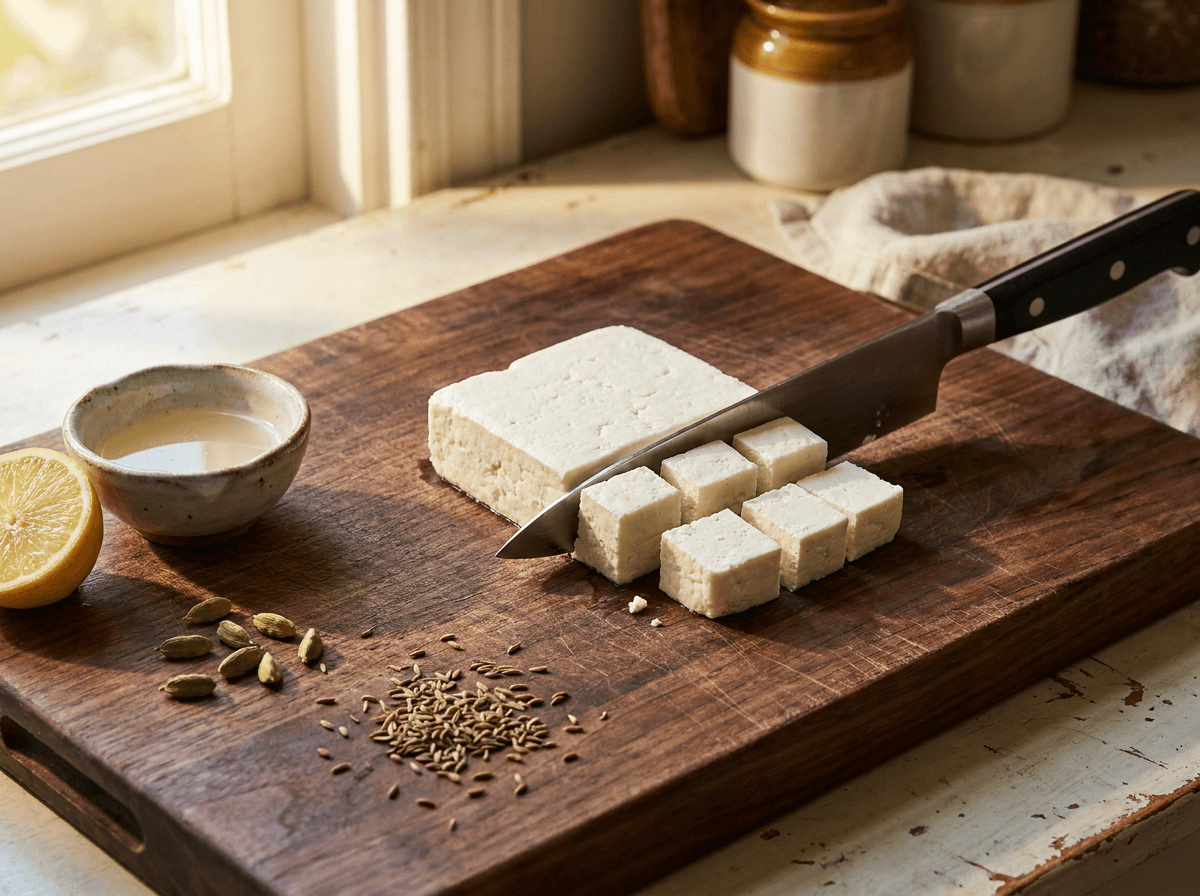
Paneer is a fresh, acid-set cheese that you make by curdling whole milk with something acidic (lemon juice or vinegar), then pressing the curds into a firm block. It shows up everywhere in South Asian cooking because it stays mild, brings real protein to vegetarian meals, and keeps its shape in sauces or on a hot grill.
If Indian vegetarian food has been on your radar, paneer is a friendly place to start. It is hard to mess up, easy to find in many grocery stores, and flexible enough for everything from a quick scramble to a slow, restaurant-style curry. You will get a clear sense of what paneer tastes like, how it stacks up against tofu and halloumi, how to store it, and which beginner paneer dishes are worth making first.
What is paneer, exactly, and why do so many Indian vegetarian dishes rely on it?
You will often hear paneer described as "Indian cottage cheese," but that comparison only goes so far. American cottage cheese is soft, wet curds; paneer is pressed into a sliceable block with much less moisture. According to the official FSSAI paneer standard, standard paneer should contain no more than 60% moisture and at least 50% milk fat on a dry-matter basis. That dense, pressed structure is the whole point: it is what lets paneer stay intact when you cook it.
Paneer is made without rennet and it is not aged, so it stays fresh-tasting and gentle. You do not get cheddar sharpness or the funky edge of aged cheeses. That plainness is exactly why it works: paneer soaks up whatever you put around it, from a garlicky spinach sauce to a smoky tikka marinade. And because it does not melt into the pan, you end up with distinct cubes instead of a dairy fog in your curry.
How does paneer cheese taste, and what does it feel like in a dish?
Paneer tastes like milk with a faint tang, and not much else. It is not salty like feta, not sharp like parmesan, and not smoky like aged gouda. If you try a cube plain and wonder what the fuss is about, that is normal: paneer is meant to be a backdrop, not the lead singer.
In a dish, the texture is where paneer earns its keep. It is firm enough to cube and brown, but soft enough that you can cut it with a fork once it hits a sauce. Simmer it for a few minutes and the outside turns tender while the middle stays creamy. It does not squeak the way halloumi can, and it will not crumble like a dry feta unless you intentionally break it up for something like paneer bhurji.
Why doesn't paneer melt, and how is it made?
Paneer stays solid because of the specific way the curds are formed and pressed. Heat whole milk, add an acid (lemon juice, vinegar, or yogurt), and the proteins denature and gather into curds. Drain those curds in cheesecloth, then press them under weight for 30 minutes up to a few hours. Pressing pushes out moisture and tightens the protein network; without rennet and without aging, you never get the stretchy structure that makes mozzarella melt.
Paneer vs tofu vs halloumi: which one should you actually use?
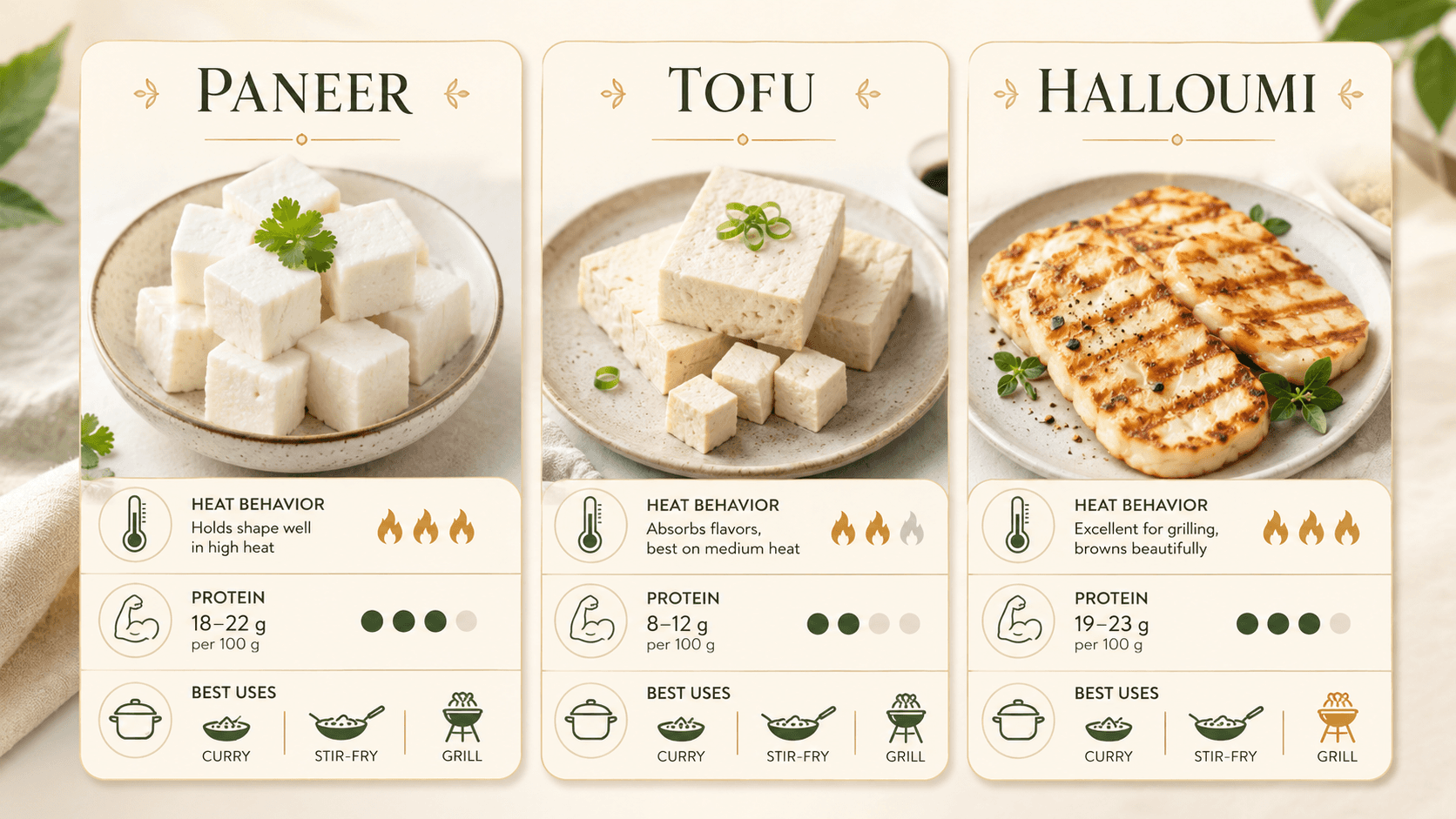
People ask about paneer vs tofu all the time, usually because they want a clean swap. You can swap sometimes, but they are not twins. Tofu is soy-based, drinks up marinades fast, and can fall apart if you stir too aggressively.
Paneer is dairy-based, takes on flavor more slowly, and stays sturdier in a wet sauce. If you are grilling, halloumi is closer in behavior, but it brings a lot more salt and that signature squeak paneer does not have. The Healthline comparison of paneer and tofu lays out the nutrition side if that is what you are trying to optimize.
Feature | Paneer | Tofu (firm) | Halloumi |
|---|---|---|---|
Base ingredient | Dairy (cow or buffalo milk) | Soy | Dairy (sheep/goat/cow milk) |
Flavor | Mild, milky, lightly tangy | Neutral, slightly beany | Briny, salty |
Texture | Firm; turns tender when simmered | Soft to firm depending on type | Dense, squeaky |
Behavior with heat | Keeps its shape; browns when seared | Can crumble; soaks up sauce well | Grills and pan-fries without melting |
Protein per 100g (approx.) | 16g | 8-17g (varies by firmness) | 16-21g |
Best uses | Curries, skewers, scrambles | Stir-fries, soups, bowls | Grilled salads, skewers, wraps |
What does paneer nutrition actually look like, and what should you not assume?
Paneer's nutritional values vary by brand and milk composition. One published comparison lists approximately 299 calories, 16 grams of protein, and 15 grams of fat per 100 grams. These figures are illustrative rather than universal, so check the package label for the paneer you use. Paneer can contribute protein to vegetarian meals alongside ingredients such as lentils and beans.
The catch is that paneer is not automatically "light." The fat is part of the package, and reduced-fat versions can vary a lot by brand. Packaged paneer that is flavored or marinated is also not guaranteed to be low-sodium. The label matters here: check serving size, saturated fat, and sodium instead of guessing. Paneer can support protein goals in a balanced diet, but it is not a low-calorie ingredient by default.
What is a good paneer substitute when you cannot find it at the store?
A good substitute depends on what you are trying to do with paneer. For saucy curries like palak paneer or matar paneer, extra-firm tofu that has been pressed dry is usually the easiest stand-in; it will soak up the sauce, but it will also be softer and easier to break. For grilling or skewers, halloumi gets you closer to that firm bite, but it is much saltier, so you will want to dial back the salt elsewhere. For crumbled fillings in wraps or parathas, firm ricotta or well-drained cottage cheese can work, even though neither browns the way paneer does. There is no perfect one-to-one swap across every technique, so match the substitute to the method and you will be happier with the result.
How do you use paneer from package to plate, and what mistakes should you avoid?
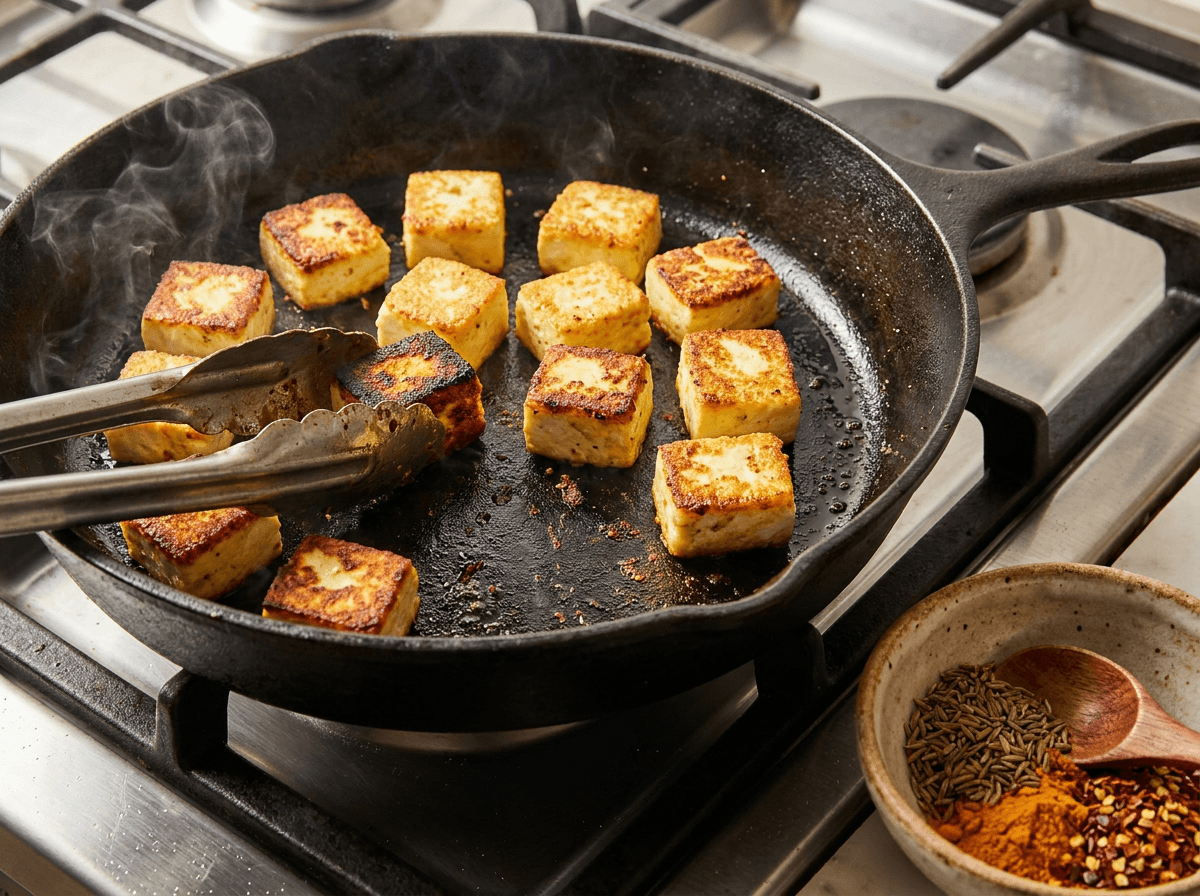
A 2-minute sear per side gives paneer its golden crust without turning rubbery.
Packaged paneer often benefits from a quick warm soak. Cube it, then let it sit in warm salted water for 10 to 15 minutes to rehydrate and soften any dry edges from the fridge. Dry the cubes well before they hit the pan, or they will steam instead of sear. If your paneer is very fresh (from a local dairy or homemade), you can usually skip the soak.
From there, pick your path. A fast pan-sear in a little oil or ghee over medium-high heat gives you golden edges. A gentle simmer in sauce turns the cubes tender and saturated with flavor. Air-frying or grilling is great for tikka-style bites. Two mistakes show up again and again: cooking it too long and being timid with seasoning. Paneer can turn rubbery under prolonged dry heat, so keep searing to about 2 minutes per side. And because paneer itself is mild, your marinade or sauce has to do the heavy lifting, with enough salt, acid, and aromatics to make the whole dish pop.
Which paneer recipes should you cook first?
If you want a couple of reliable starters, go for palak paneer (paneer in a spiced spinach sauce) or a straightforward paneer tikka masala. Both are forgiving, built around pantry spices, and they teach the same foundational move: building a good masala base.
If you prep ginger-garlic paste and a simple onion-tomato masala on the weekend, either dish can land on the table in under 20 minutes on a weeknight. When you are ready to branch out, BBC Good Food's paneer recipes has a solid mix of classics and weeknight-friendly spins.
On nights when you need food fast, paneer bhurji is hard to beat: crumble the paneer and scramble it with onions, tomatoes, and spices, and you are done in about 10 minutes. Sheet-pan paneer tikka bowls with peppers and onions are another dependable option when you want minimal stovetop work. Either way, a squeeze of lemon and a pinch of chaat masala at the end does a lot to keep the flavors bright.
If you cook paneer more than once a week, batch cooking starts to make sense. Sear a whole block's worth of cubes and stash a bigger batch of basic masala base. Then you can fold in spinach for palak paneer, stir in frozen peas for matar paneer, or tuck the cubes into kathi wraps with yogurt and chutney on another night.
If you want more consistent results without hovering over the stove, see how Posha cooks supported recipes by handling steps such as adding ingredients, stirring, and adjusting heat.
How do you store paneer, and can you freeze it?
After opening paneer, refrigerate it promptly in a sealed container and follow the package's storage and use-by instructions. Keep unopened packaged paneer refrigerated according to its label. If it develops an unusual sour smell, sliminess, or discoloration, discard it. Do not rely on appearance or smell alone to determine whether paneer is safe to eat.
You can freeze paneer, with one trade-off: the texture usually comes back a bit spongier after thawing. In curries, that is not a problem (it can even help the cubes drink up sauce). Freeze the block tightly wrapped, or freeze cubes on a tray and then move them to a bag. Thaw overnight in the fridge before cooking.
Common misconceptions about paneer worth clearing up
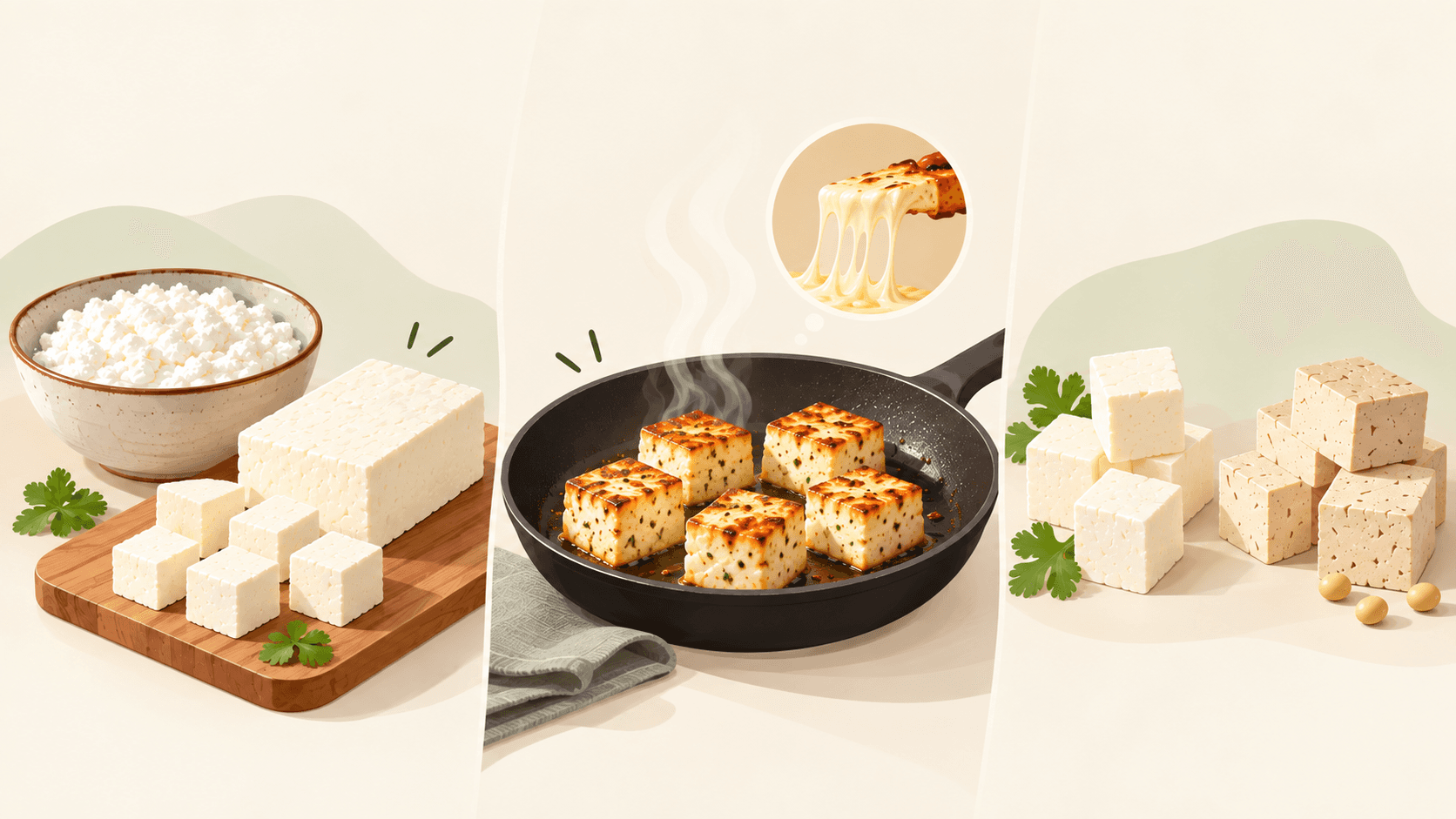
Paneer is not cottage cheese, does not melt, and is not a direct tofu substitute.
Three things people often get wrong:
Paneer is just regular cottage cheese. American cottage cheese is wet, loose curds in cream. Paneer is pressed into a firm block you can slice and cube. Both are fresh cheeses, but they cook nothing alike.
Paneer should melt like mozzarella. It will not. Because it is acid-set and rennet-free, paneer stays solid at cooking temperatures. If you want melt, you need a different cheese.
Tofu and paneer are always interchangeable. Tofu picks up flavor faster, breaks more easily in sauces, and feels different when you bite into it. The swap can work, but it changes the dish.
Key takeaways: paneer in plain English
Everything you need to remember:
Paneer is a fresh, acid-set Indian cottage cheese that does not melt and holds its shape in heat.
On its own it is mild and milky, but it takes on spices and sauces well.
Paneer provides protein, but its calorie and fat content vary by product. One published comparison lists approximately 16 grams of protein per 100 grams. Check the package label for the specific nutritional values.
For curries, extra-firm tofu is usually the easiest substitute. For grilling, halloumi is closer in texture but much saltier.
Soak packaged paneer in warm salted water before cooking. Sear briefly, season boldly, and add it to sauces near the end to keep it tender.
Refrigerate opened paneer in a sealed container and follow the package's storage instructions. Paneer can also be frozen for later use in curries, although its texture may change after thawing.
Start with palak paneer or paneer bhurji. They are beginner-friendly and teach the core techniques that open up the rest of the cuisine.
Frequently Asked Questions About Paneer
Is paneer the same as Indian cottage cheese?
People call paneer "Indian cottage cheese," but the match is mostly about freshness, not texture. American cottage cheese is loose, wet curds in cream; paneer is pressed into a firm, sliceable block with low moisture. Both are unaged cheeses, but they are not good substitutes for each other in recipes.
Can I eat paneer raw, or does it need to be cooked?
Paneer is safe to eat straight from the package. You can cube it for salads or snack on it with a sprinkle of chaat masala. Still, a quick sear usually makes it more enjoyable by improving the texture and helping it pick up flavor from the dish.
How long does paneer last in the fridge after opening?
How long opened paneer lasts depends on the product and its storage instructions. Refrigerate it promptly in a sealed container and follow the manufacturer's guidance for use after opening. Discard paneer if it develops an unusual smell, sliminess, or discoloration, or if it has been stored outside the recommended conditions.
What's the best paneer substitute for palak paneer?
For palak paneer, extra-firm tofu pressed dry is the most practical substitute. It holds up decently in the spinach sauce and takes on the spices well, but it will be softer than paneer, so stir gently. Halloumi can also work, but it will make the dish noticeably saltier.
Is paneer healthier than tofu?
Neither one wins in every situation. Paneer is typically higher in fat and calories, and often higher in protein per serving than many tofu options. Tofu is plant-based and usually lower in saturated fat, which can matter depending on your goals. The better pick depends on your diet, protein needs, and whether you avoid dairy.