Rohin Malhotra
Rabdi, also called rabri, is one of those Indian desserts that feels almost unfairly rich: creamy, fragrant, and full of soft layers. It starts with whole milk and a long, gentle simmer, slowly concentrating into a dense, off-white (sometimes pale yellow) sweet. The dish has deep roots across the subcontinent, with references in texts like the Chandimangala as far back as the 1400s. The method takes time, but the payoff is a flavor and texture you cannot fake.
This is the kind of dessert that shows up when you want something a little ceremonial: holidays, family get-togethers, or any night that calls for a proper treat. The slow reduction builds those toasty, caramelized notes that shortcuts miss, while the surface cream turns into luscious ribbons of malai throughout. Done right, Rabdi is thick but not stodgy, sweet but still balanced, and perfumed with cardamom and saffron.
Why You'll Love This Recipe
Authentic Flavor: It sticks to the classic slow-simmer method, so you get real depth instead of just sweetness.
Luxuriously Creamy: Saving the malai as it forms gives you that signature lachha (layered) texture.
Perfectly Balanced: Sweet without being cloying, with cardamom warmth and saffron's gentle aroma.
Versatile Dessert: Serve it chilled by itself, or spoon it over jalebi, malpua, and more.
Beginner-Friendly: It takes patience, not fancy skills; once you know what to watch for, it's straightforward.
Rabdi Ingredients
Rabdi doesn't ask for much, which means ingredient quality matters. Full-fat milk is the whole point here: it's what gives you the creamy body and the malai layers that make Rabdi taste like Rabdi.
6 cups (1.5 liters) Whole Milk: Skip low-fat or skim; without enough fat, you won't get proper malai. Buffalo milk is the traditional choice because it's naturally richer, but full-fat cow's milk works well too.
1/3 cup Granulated Sugar: Adjust to taste. If you're serving it with very sweet sweets like jalebi, you may prefer it on the less-sweet side.
1/2 teaspoon Ground Cardamom: This is the main fragrance. Freshly ground seeds have the cleanest, brightest flavor.
A generous pinch of Saffron Strands: Saffron adds the classic tint and a subtle, floral richness.
2 tablespoons Slivered Nuts: Almonds and pistachios are the usual mix for crunch and color. Blanch almonds first if you want the skins off before slivering.
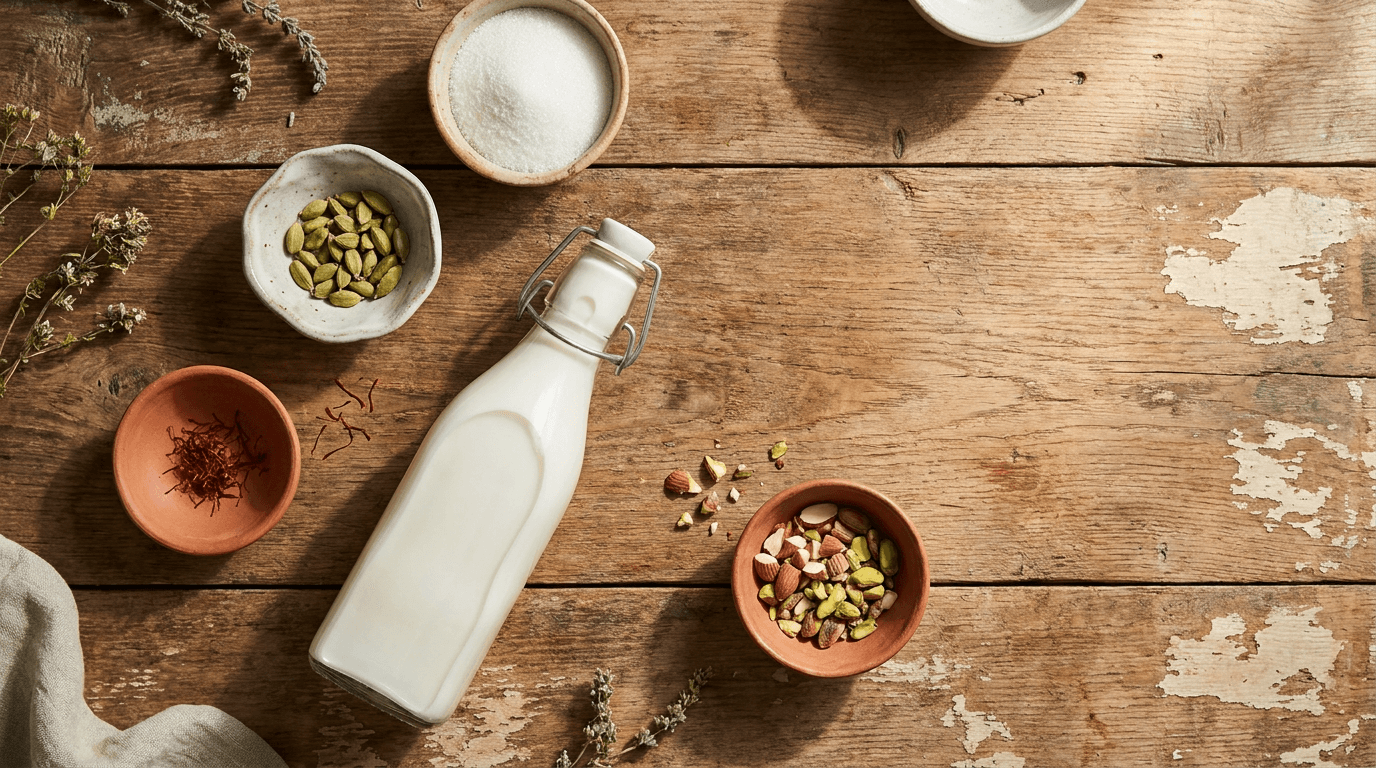
Full-fat milk and fragrant spices — the simple foundation of an authentic Rabdi.
How to Make Rabdi: Step-by-Step Cooking Instructions
Rabdi is mostly a waiting game, with just a few moments where technique matters. Keep the milk at a quiet simmer, and treat the surface cream like it's precious (because it is). If you use a tool like the Posha cooking assistant for other dishes, it's great for hands-off stirring and timing; Rabdi is the opposite. Here, your attention is what builds the texture.
Step 1: Simmer the Milk
Pour the milk into a wide, heavy-bottomed pan or kadai. Width helps: more surface area means faster, more even reduction. Bring the milk to a gentle boil over medium heat, stirring now and then so nothing catches on the bottom. As soon as it boils, turn the heat down low and settle into a steady simmer.
Step 2: Collect the Cream (Malai)
Once the milk is simmering, you'll see a skin of cream (malai) form on top. Use a spatula to nudge that layer from the center toward the edge, then stick it to the inside wall of the pan just above the milk line. Keep the heat low and let the next layer form; you'll get a new one every few minutes. Repeat, building up those creamy sheets along the sides. Go easy on stirring: if you agitate the milk constantly, the skin won't set, and you lose the classic lachha texture.
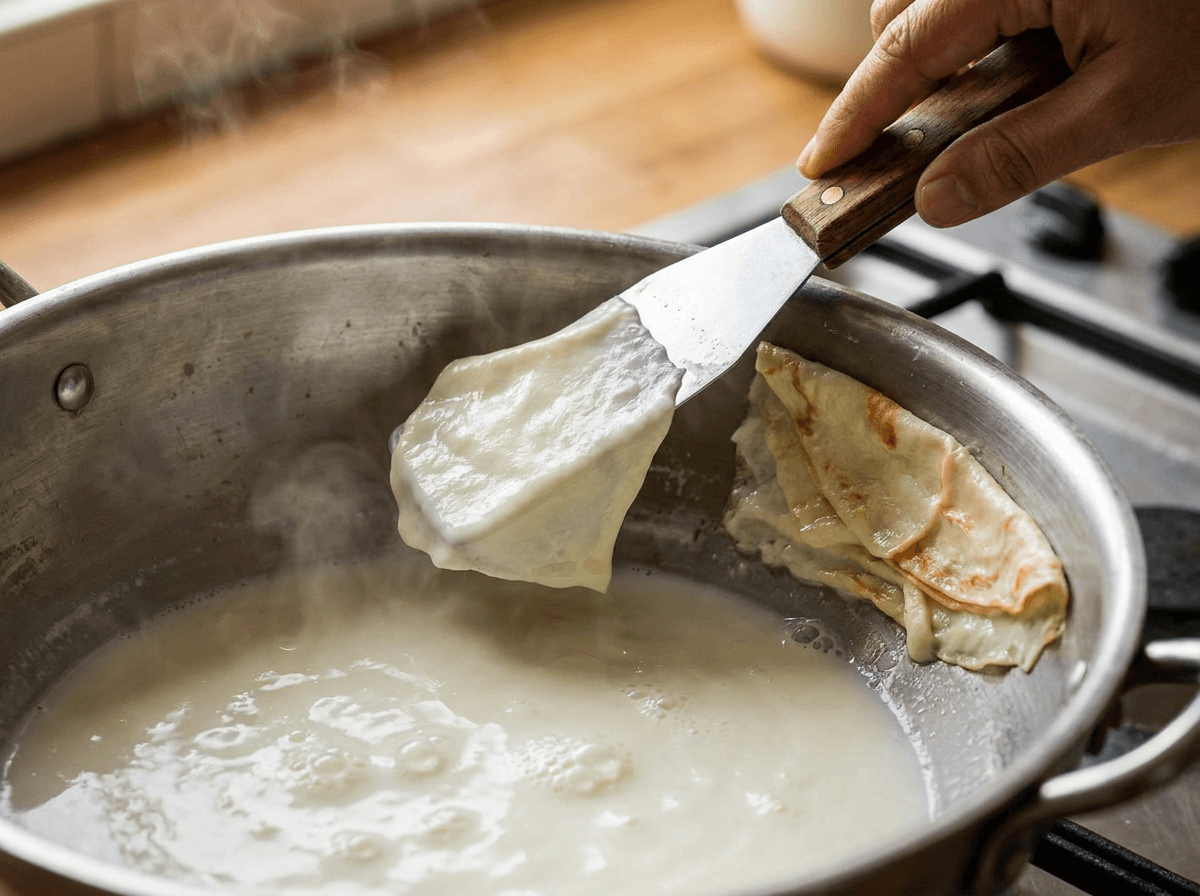
Gently pushing each malai layer to the pan wall builds the signature lachha texture of Rabdi.
Step 3: Reduce and Thicken
Keep simmering and collecting malai for 60 to 90 minutes, until the milk reduces to about one-third of where it started. You'll notice it turn thicker and slightly yellowed, with a more concentrated aroma. Every 10 to 15 minutes, gently scrape the bottom to prevent scorching, especially as the milk gets denser.
Step 4: Add Flavorings
When the milk has reduced, add the sugar, cardamom, and saffron. Simmer another 5 to 7 minutes, stirring gently, until the sugar dissolves fully and the saffron releases its color and perfume into the milk.
Step 5: Final Mix and Cool
Turn off the heat. Scrape the reserved malai from the sides of the pan and fold it back into the thickened milk; those little creamy pieces are what make Rabdi feel special. Let it cool to room temperature, then chill if you like it cold (it will thicken as it cools). Finish with slivered almonds and pistachios right before serving.
Tips for the Best Rabdi Recipe
Use a Heavy-Bottomed Pan: Thin pans scorch easily; a sturdy base keeps the simmer gentle and even.
Be Patient: Low heat is where the flavor happens. Turn it up and you'll risk burning before it reduces properly.
Use Full-Fat Milk: Without enough fat, you won't get the richness or the malai layers.
Stir Gently and Infrequently: Stir only to protect the bottom. Too much stirring breaks up the cream and flattens the lachha effect.
Cool Completely: Rabdi tightens up as it cools. For the thickest, creamiest bowl, cool it fully and then refrigerate.
What to Serve with Rabdi
You can absolutely eat Rabdi by the bowlful, warm or chilled. It also shines as the creamy counterpoint to syrupy, crisp, or fried sweets, where it softens the edges and adds richness. A few classic pairings:
Jalebi: Hot, crunchy jalebi dipped into cold Rabdi is the contrast people crave.
Malpua: These soft, sweet pancakes love a generous spoonful (or two) of Rabdi.
Gulab Jamun: Nestle warm gulab jamun in chilled Rabdi for an extra-indulgent plate.
Shahi Tukda: Pour Rabdi over syrup-soaked fried bread for that classic "royal" dessert feel.
Fresh Fruit: Mango, berries, or pomegranate add brightness if you want something lighter.
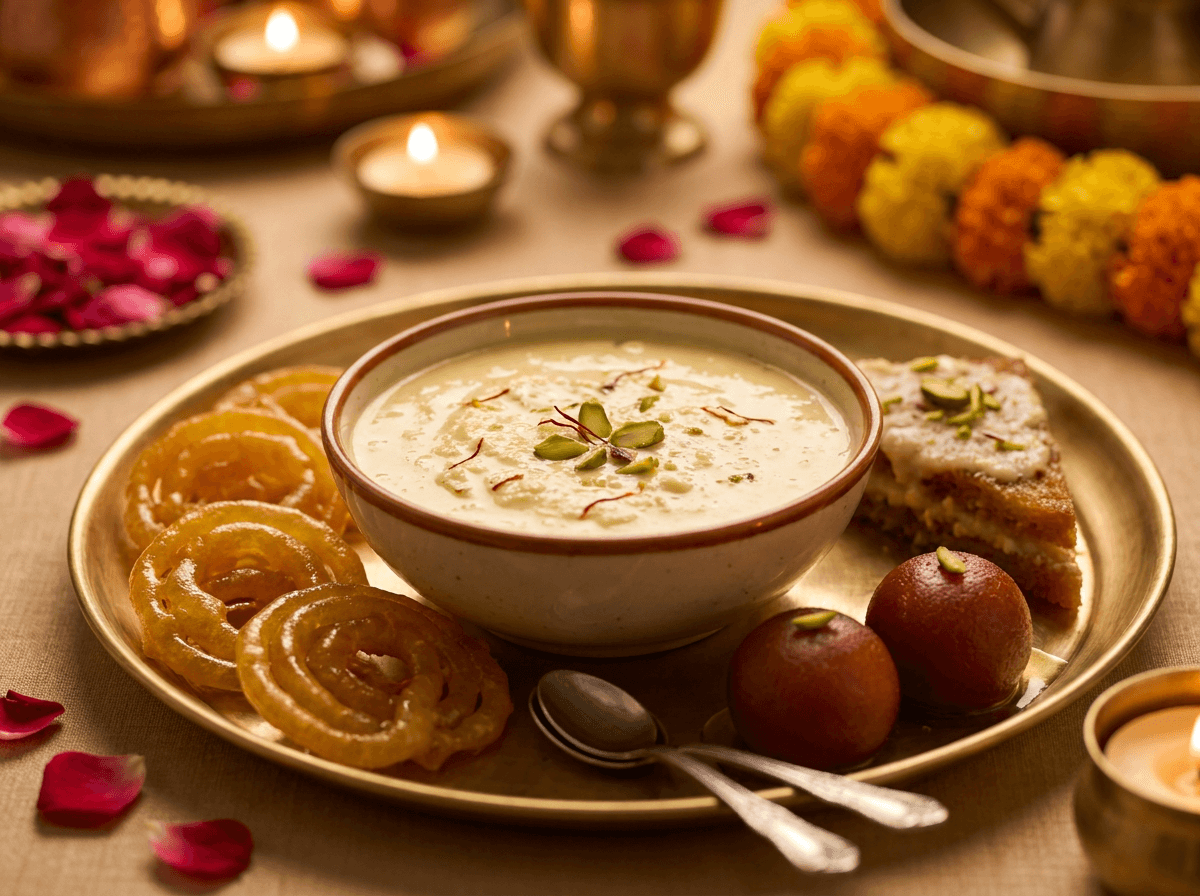
Rabdi pairs beautifully with classic Indian sweets for a truly festive spread.
How to Store Rabdi
Rabdi keeps well, which is good news because it often tastes even better after a chill. Let it cool to room temperature first so you don't trap steam and water it down in the container.
Follow these simple instructions for storage:
Refrigeration: Spoon cooled Rabdi into an airtight container and refrigerate for 3 to 4 days. Expect it to thicken as it gets cold.
Freezing: Rabdi can be frozen for longer storage. Use a freezer-safe container and leave a little headspace for expansion; it keeps up to 2 months.
Thawing and Reheating: Thaw overnight in the refrigerator. The texture can shift a bit after freezing; if it separates, whisk gently or warm on low heat with a splash of milk to bring it back together.
Frequently Asked Questions
Can I make a quick Rabdi recipe?
Yes. Shortcuts with condensed milk, milk powder, or ricotta can get you something Rabdi-like in under 30 minutes. This recipe sticks to the traditional slow reduction, which is what gives you the deeper, more layered flavor and the real malai texture.
What are some common Rabdi substitutions?
Whole milk is the foundation, but you can tweak the flavor. Some versions add rose water or kewra water along with the cardamom for a different aroma. For a vegan approach, you can try full-fat coconut milk or a blend of nut milks, keeping in mind the taste and texture will come out noticeably different.
Why didn't my Rabdi get thick?
Usually it's one of two things: the milk didn't reduce enough, or the milk was too low in fat. Keep simmering until you're down to about one-third of the original volume, and start with full-fat milk so the mixture can concentrate properly.
What is the difference between Rabdi and Basundi?
They're both reduced-milk desserts, but the texture is the giveaway. Rabdi is thicker and intentionally "chunky" with visible malai layers. Basundi is generally smoother and more uniform, with a looser, pourable consistency.
My Rabdi burned at the bottom. How can I prevent this?
Use a heavy-bottomed pan, keep the heat low, and scrape the bottom gently every 10 to 15 minutes as it reduces. A tiny smear of ghee in the pan before you add the milk can also help reduce sticking.
Rabdi Nutrition Information
Here is an approximate nutrition estimate for one serving (about 1/2 cup) of homemade Rabdi. Numbers will vary depending on your milk's fat content and exactly how much sugar you use.
Calories: 350 kcal
Protein: 10g
Carbohydrates: 38g
Fat: 18g
Calcium: 300mg
Treat this as a general reference. If you need precise nutritional data, consult a professional source.
A Sweet Conclusion
Rabdi is proof that a short ingredient list can still produce something dramatic. With nothing more than milk, sugar, and a few aromatics, slow heat turns the pot into a thick, creamy dessert threaded with malai. It's a classic for a reason, and once you make it from scratch, the method clicks: simmer, collect, reduce, and let time do the heavy lifting. If you're looking for more easy Indian recipes, Rabdi is a great place to start, and it fits right alongside weeknight-friendly cooking when you plan ahead. For more easy weeknight recipes and fresh ideas, browse our blog.
Cook it yourself
Multiple steps | Hands-on the whole time
Or Let Posha Cook
2 steps to set up, then walk away