Rohin Malhotra
Immunity shots are now a regular sight in grocery store fridges, usually tagged at three to six dollars for a single two-ounce bottle. If you grew up with a grandmother stirring haldi into warm milk or simmering ginger into kadha when sniffles hit, the idea is hardly new, even if the label is. These little bottles are not magic, but the ingredients inside them come from real kitchen tradition and have at least some backing in nutrition research.
Below is a plainspoken look at what immunity shots tend to include, what the evidence can (and cannot) support, and how to make a solid version at home for far less than store prices. You will find: what immunity shots are, the core ingredients and what they do, clear benefits and limits, a batchable immunity shot recipe, and how tools like the Posha Robot Chef can make the prep feel doable on a normal week.
What Are Immunity Shots, Really?
OSF HealthCare's overview of wellness shots describes them as small one-to-three ounce juice drinks made from concentrated blends of extracts, herbs, and spices. The point is density: a noticeable amount of active compounds in a quick pour, without committing to a full meal or a supplement lineup.
They also overlap with what plenty of South Asian kitchens have long called kadha: a simmered herbal drink built on ginger, tulsi, black pepper, and turmeric. The modern difference is mostly presentation and pricing. Store-bought shots are pasteurized, designed to travel, and easy to grab. Homemade ones are fresher, cheaper, and adjustable. Neither is a stand-in for a balanced diet. Both can sit alongside one.
Wellness shots support your existing habits. They are not a substitute for vegetables, sleep, or actual meals. If the rest of your day is chaotic, a ginger shot will not compensate.
Core Ingredients and What They Actually Do
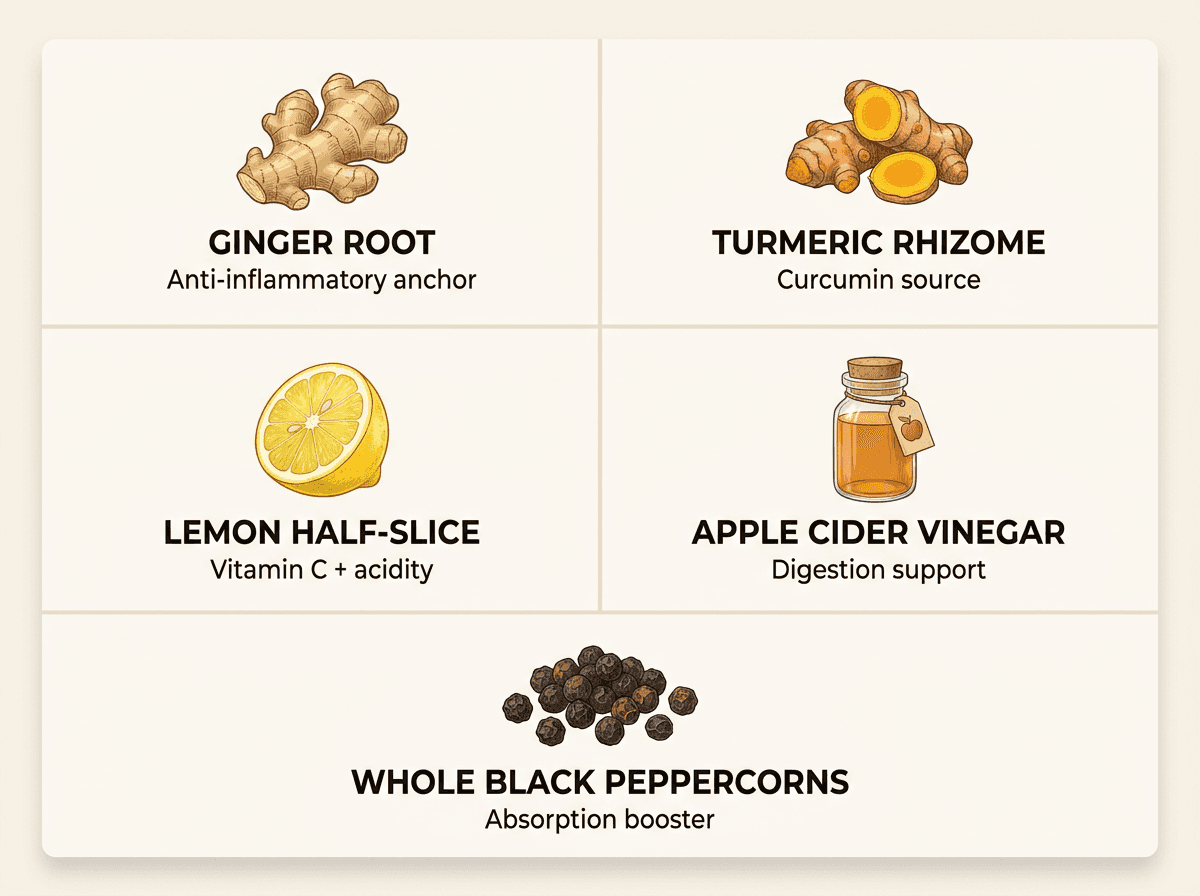
Each ingredient in a typical immunity shot plays a distinct and measurable role.
Most immunity shots pull from the same short roster. Here is what each ingredient contributes, minus the sales pitch.
Key ingredients in wellness shots and ginger turmeric shot formulas:
Ginger: The anchor of almost every ginger shot. Gingerols, the active compounds in fresh ginger, are associated with anti-inflammatory effects and are often used for digestion. Plenty of people also find ginger genuinely calming when the stomach feels off.
Turmeric: Curcumin is why a turmeric shot looks like liquid gold. It is associated with immune support and anti-inflammatory effects, but it is notoriously hard to absorb on its own, which is why turmeric is usually paired with black pepper.
Black pepper: Easy to overlook, but piperine in black pepper can increase curcumin absorption by up to 2000% in older pharmacokinetic research. If you are using turmeric, this is the small ingredient that does the heavy lifting.
Lemon juice: Brings Vitamin C and the acidity that makes ginger and turmeric taste less muddy. Vitamin C plays an important role in immune function, but in a shot, the lemon is doing flavor work as much as nutrition work.
Apple cider vinegar: Common in commercial immune boosting drinks. Some people use it for digestion; the evidence for broader immune claims is thin, so it belongs in the background, not at center stage.
One caution on add-ins like ginseng or echinacea, which show up in some store-bought bottles: OSF HealthCare notes they can interfere with certain medications. If you take prescriptions, read the label before turning a commercial shot into a daily routine.
Honest Benefits and Limitations
The real advantage of wellness shots is simple: concentration. You can get a meaningful hit of ginger, turmeric, and Vitamin C in a small glass without cooking a meal or fussing with capsules. On a rushed morning, that kind of shortcut can be useful.
What they do not do is cure illness, prevent infection on their own, or replace medical care. A ginger turmeric shot has legitimate nutritional value, but bodies are not vending machines where you drop in turmeric and get out perfect health. If you are trying to support immune function, consistent food, sleep, and stress management will matter more than any single shot.
What most people get wrong about immunity shots: they treat them as a rescue remedy taken when they already feel sick. The better use is as a daily ritual that reinforces other good habits, not as a last-minute fix.
How to Make an Immunity Shot Recipe at Home
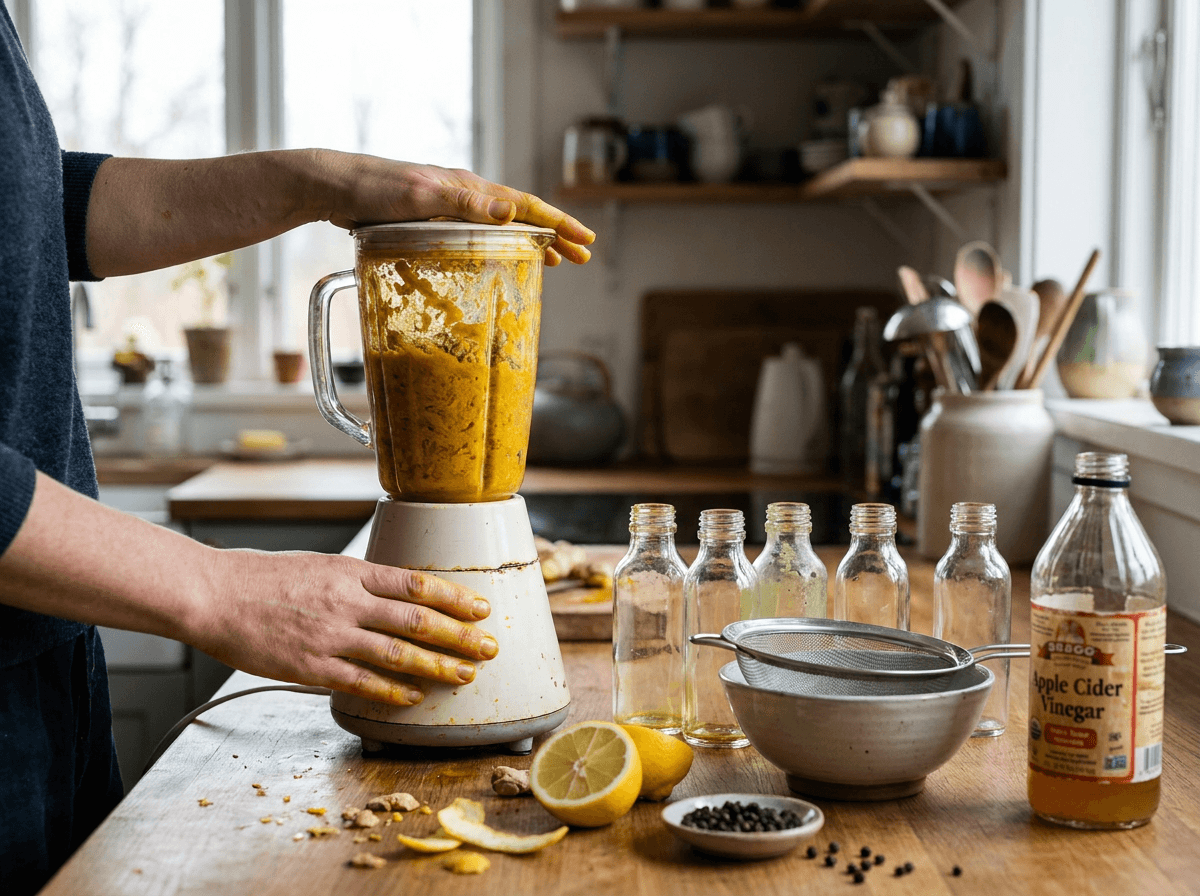
A weekly batch of homemade immunity shots takes about fifteen minutes with basic kitchen tools.
Homemade wellness shots generally keep for two to three days in the refrigerator if you store them in sealed glass bottles. Make a batch on Sunday and you have a few mornings handled. Here is a straightforward base recipe:
Basic ginger turmeric immunity shot recipe (makes 6-8 shots):
3-inch piece of fresh ginger, peeled and roughly chopped
2-inch piece of fresh turmeric (or 1 teaspoon ground turmeric as a substitute)
Juice of 2 lemons
1/4 teaspoon black pepper
1 tablespoon apple cider vinegar (optional)
1/2 cup water
Blend everything on high for 60 seconds, then strain through a fine mesh strainer or cheesecloth. Pour into small glass bottles and refrigerate, then shake before each use. Expect it to be sharp and earthy, not sweet. If it hits too hard, loosen it with a splash of cold water or a small amount of orange juice.
A tool like the Posha Robot Chef can make this kind of prep easier to keep up with. Posha takes on the cooking and processing, so batching shots, making kadha, or getting dinner going does not require you to hover over every step. When the prep friction drops, the healthy routines tend to stick around longer.
Store-Bought vs. Homemade: A Practical Comparison
Store-bought immune boosting drinks from brands like Suja or Pressed Juicery usually land between three and six dollars per shot. A batch of eight homemade shots with fresh ginger and turmeric comes out to roughly two to three dollars total. The savings are obvious, but convenience is not imaginary. If you will not make them, a store-bought bottle beats skipping the habit entirely.
If your household already cooks, homemade tends to win on freshness, control over ingredients, and cost. It also lets you sidestep preservatives and added sugars that show up in some commercial versions. If your week is packed, a meal-prep rhythm (especially with a smart cooking device like Posha) lets you batch shots alongside dinner prep instead of turning them into one more separate chore.
Posha is best positioned as a smart cooking helper for homemade meals and stovetop-style recipes, not as a dedicated immunity-shot maker. Its recipe page highlights 1,000+ recipes across cuisines and diets, including Indian dishes and soups, which makes it a better fit for supporting broader homemade wellness routines than for claiming it specifically makes kadha.
Key Takeaways
What to carry forward from this guide:
Immunity shots are concentrated, not miraculous. Ginger, turmeric, and lemon bring real nutritional value, but they are there to support a good diet, not replace it.
Black pepper matters if you are using turmeric. Without it, curcumin absorption is minimal.
Homemade immunity shot recipes cost far less than store-bought and keep two to three days in the fridge.
If you take medications, read labels on commercial wellness shots, especially ones that include ginseng or echinacea.
The best shot is the one you actually take regularly. Batch prep, with or without a cooking device, removes the friction that usually kills good habits.
Frequently Asked Questions
How often should I take an immunity shot?
Once a day is the most common pattern, often in the morning before eating. There is no established clinical dose for wellness shots, so consistency matters more than perfect timing. If the taste is too intense, every other day is a perfectly reasonable cadence.
Can a ginger shot help when I am already sick?
Ginger is associated with anti-inflammatory effects and is commonly used to ease nausea and throat discomfort, so many people find it comforting when they feel run down. It is not an illness treatment. Rest, hydration, and medical care when needed are what actually address sickness.
Is a turmeric shot safe to take every day?
For many healthy adults, yes. Turmeric in food and typical shot amounts is generally considered safe. If you take blood thinners, have gallbladder issues, or have a history of liver problems, check with a doctor before making high-dose turmeric a daily habit, since curcumin can interact with certain conditions and medications.
Do store-bought wellness shots actually work?
They use many of the same active ingredients as homemade versions, so the nutritional value is real. The open question is how much concentration and bioavailability hold up through pasteurization and shelf storage. Fresh homemade shots keep more volatile compounds, but a commercial shot can still be a sensible choice if it fits your routine.
Can I use ground spices instead of fresh ginger and turmeric?
Yes, with the tradeoff that flavor and potency will shift. Ground turmeric works fine in a pinch. Fresh ginger tends to taste sharper and deliver a more potent result than powder. If you go with ground spices, start with 1/2 teaspoon each and adjust to taste.