Rohin Malhotra
How to track macros sounds like an easy question until you're in the kitchen at 6:45 PM, the store was out of chicken breasts, and you're staring at thighs like they just sabotaged your whole plan. You and your partner agreed on protein and carb targets. The spreadsheet looked clean on Sunday. By Wednesday, it feels like you picked up a part-time job.
Home cooking doesn't follow your app. A heavy hand with olive oil, a casual handful of spinach, or a last-second swap can make your log feel useless fast. But macro tracking is only fragile if you treat it like a lab experiment. The system below is built for real weeknights: it takes the chaos, smooths it out, and still gets you consistent results. Here's the route from scattered to steady:
Your 6-step system for tracking macros at home:
1. Calculate your baseline macros.
2. Choose your tracking style (meticulous vs. intuitive).
3. Build a macro-friendly pantry.
4. Master batch cooking and portioning.
5. Learn to estimate smartly, not obsessively.
6. Keep ingredient swaps from wrecking your macros.
Step 1: Get Your Numbers (Without Getting a PhD in Nutrition)
Before you weigh a single chicken breast, you need a target. Treat it like a starting point, not a tattoo. You'll adjust as you go, so don't burn a week chasing "perfect" on day one.
Macronutrients are the nutrients your body needs in large amounts to provide energy: carbohydrates, proteins, and fats (Cedars-Sinai, 2022). Each one earns its spot. Protein helps repair and build muscle tissue. Carbohydrates keep your workouts and your brain running. Fats support hormones and help you absorb vitamins. When people say they're "hitting their macros," they're talking about eating specific gram targets of each one every day.
To set those targets, start with your TDEE (Total Daily Energy Expenditure) - a fancy label for "how many calories you burn in a day, including exercise." Use a reputable online macro calculator. It'll ask for age, weight, height, activity level, and your goal (fat loss, muscle gain, or maintenance), then give you a calorie target broken into grams of protein, carbs, and fat. The USDA's recommended macronutrient ranges for adults are 45-65% of daily calories from carbohydrates, 10-35% from protein, and 20-35% from fat, but your split should match what you're actually trying to do.
This is also where IIFYM (If It Fits Your Macros) shows up. IIFYM isn't a diet with a rulebook; it's a way of thinking. If you hit your macro targets, you get flexibility in how you get there. A bowl of white rice and a bowl of sweet potato can both be fine carb choices if the grams match. It's a framework built on flexibility rather than restriction, which is exactly what you want when you're cooking at home and making normal-person decisions.
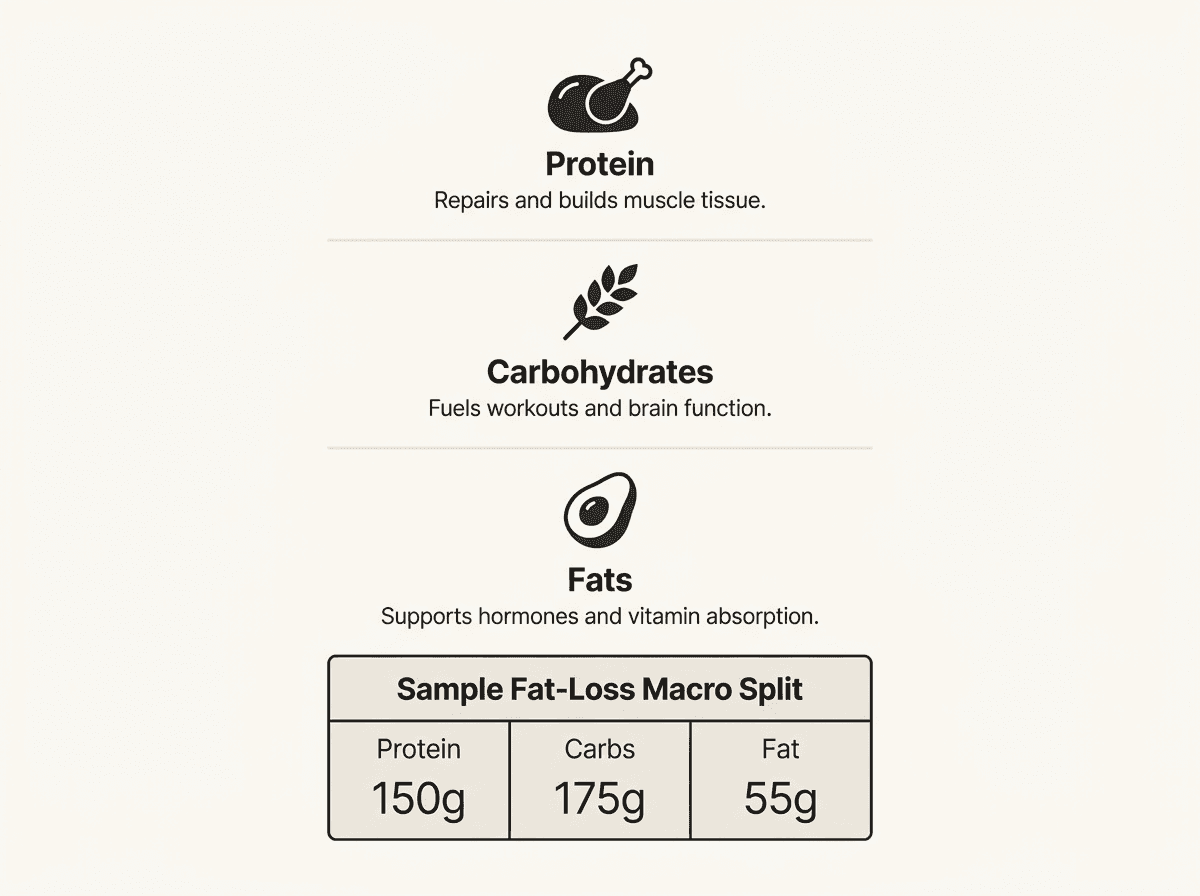
Each macro has a distinct role, knowing them makes your daily targets feel purposeful, not arbitrary.
Your macro targets are personal. Borrowing someone else's numbers (a fitness influencer, a friend, a generic plan) skips the stuff that matters: your body, your activity, your goal. Run your own numbers.
Step 2: Choose Your Tracking Style
Once you have numbers, you need a method you can live with. There are two main ways to count macros at home, and the right choice has more to do with temperament than fitness level. Pick a style that fights your personality and you'll bail in two weeks. Pick the one that fits and it becomes routine.
The Meticulous Method: For the Data-Driven
This lane is for people who like spreadsheets, anyone brand new who needs to train their eye on portions, or anyone with a short-term, aggressive goal (like a bodybuilding prep or a wedding cut). You'll use a digital food scale and a tracking app like MyFitnessPal or Cronometer. Ingredients get weighed. Barcodes get scanned. Meals get logged. It's the most accurate option, and also the most demanding. Use it like training wheels: once you learn what 150 grams of cooked rice actually looks like, you don't unlearn it.
The Intuitive Method: For the Habit-Builders
This is for couples who find meticulous tracking stressful, or who care more about staying consistent for months than being perfect on Tuesday. Your tools are your hands: a palm-sized portion of protein, a fist-sized portion of carbs, a thumb-sized portion of fat. Prioritize protein, load up on vegetables, add a sensible carb, and move on with your night. It's less precise and more sustainable. If you're new and apps and scales make you want to quit, this is often the smarter on-ramp.
Meticulous vs. Intuitive: Which Tracking Style Fits You?
Meticulous Method | Intuitive Method | |
|---|---|---|
Best For | Data lovers, beginners learning portions, short-term goals | Stress-prone trackers, long-term habit builders, maintenance phases |
Pros | Most accurate, builds portion awareness quickly | Low friction, sustainable for months or years, avoids app burnout |
Cons | Time-heavy, can tip into obsessing, awkward in social settings | Less exact, depends on some portion awareness, slower feedback |
Tools Needed | Digital food scale, tracking app (MyFitnessPal, Cronometer) | Hand-based portion guides, a general protein target |
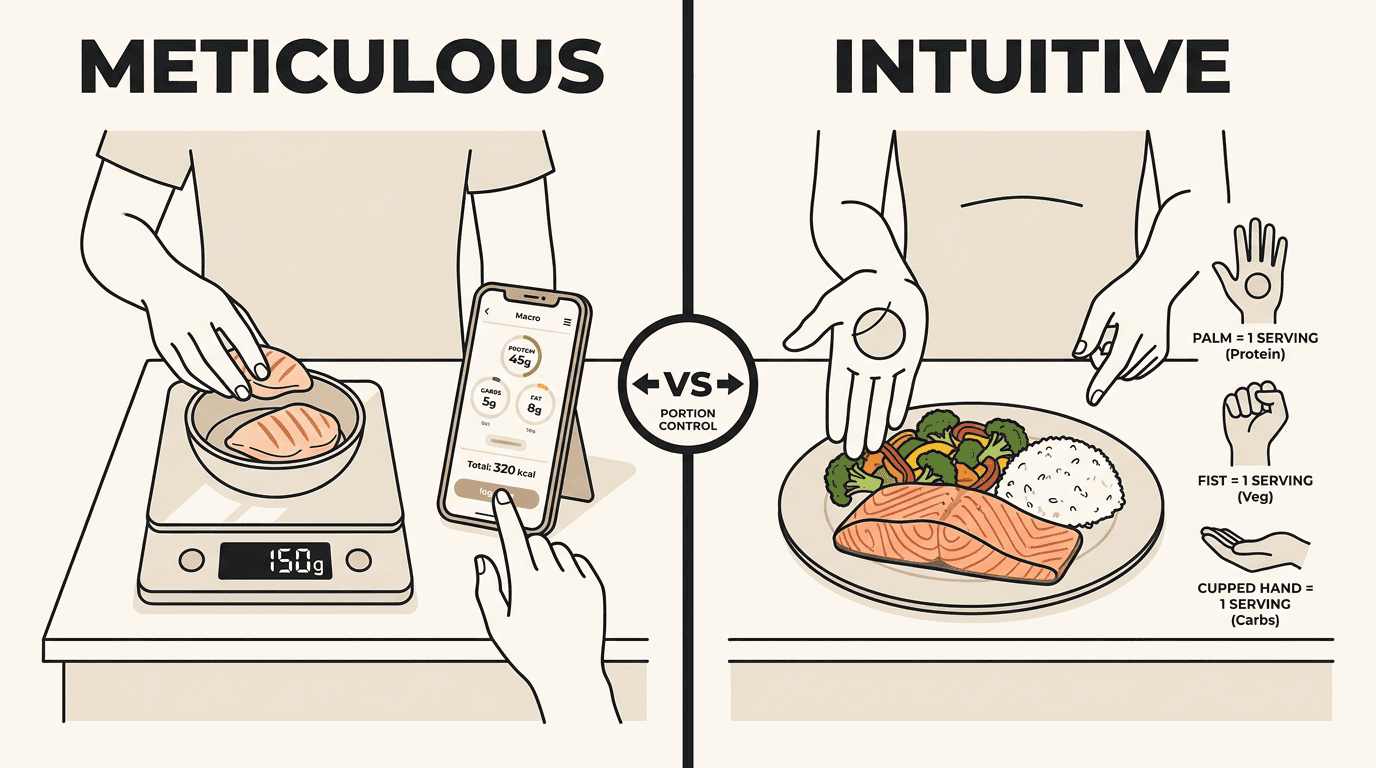
Two approaches to how to track macros, choose the one that fits your personality, not just your goals.
Step 3: Build Your Macro-Friendly Kitchen
Macro tracking gets easier at the grocery store, not at the dinner table. Stock your fridge with versatile, easy-to-measure staples and macro friendly meals start assembling themselves. Fill it with random impulse buys and every dinner turns into a math quiz.
This isn't a restriction play. It's a framework that keeps weeknights moving. Shop by categories, not by perfectionist lists:
Your macro-friendly pantry framework:
Lean proteins: Chicken breast, ground turkey (93/7), canned tuna, shrimp, eggs, Greek yogurt, protein powder.
Complex carbs: Rice (or pre-portioned rice cups for busy nights), oats, sweet potatoes, whole wheat pasta, quinoa.
Healthy fats: Avocado, olive oil, nuts, nut butters, cheese (measured, not free-poured).
Free vegetables: Spinach, broccoli, bell peppers, zucchini, mushrooms. These are so low in calories that precise tracking is unnecessary.
Your real MVPs are the foods that come with built-in math. A can of tuna has the macros on the label. A scoop of protein powder is already measured. A single-serve rice cup is 200 calories of carbs with zero weighing. On nights when cooking feels like too much, these staples let you build a plate that still hits your targets in under five minutes.
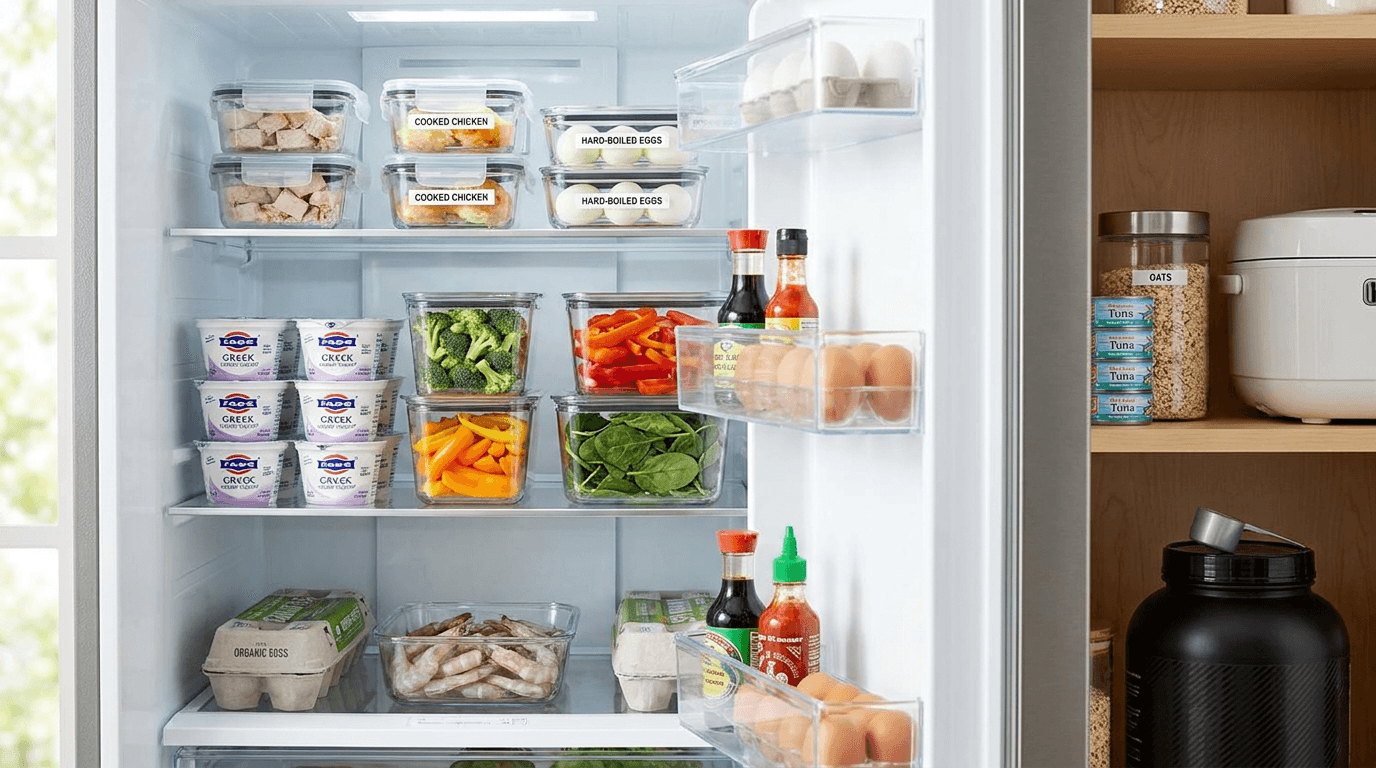
A macro-friendly kitchen does the heavy lifting before you ever open a food diary.
Step 4: Master the 'Cook Once, Eat Thrice' Method
Batch cooking is the biggest lever you can pull to simplify macro tracking at home. You weigh and calculate once, then you eat accurately for the next three or four days without living on a scale.
The workflow is straightforward. Pick one day (Sunday works for most couples). Cook a large batch of protein: 3 pounds of chicken breast, seasoned however you like. Cook a large batch of carbs: 2 cups of dry rice or quinoa. Roast a sheet pan of mixed vegetables. When it's done, weigh the total cooked output of each component, divide by the number of servings you want, and portion it into containers.
Here's the part that makes it click. If you cooked 3 pounds (1,360 grams) of raw chicken breast and it yielded 1,020 grams cooked, and you want 6 servings, each container gets 170 grams of cooked chicken. You already know the macros for that portion because you did the math once using the raw weight and the USDA database entry. That's how you count macros without the daily grind. A 2019 secondary analysis of the SMART weight loss trial found that consistent self-monitoring was associated with greater weight loss. Batch cooking is the easiest way to stay consistent without turning dinner into paperwork.
Label your containers with the date and the macros per portion. Masking tape and a marker takes 10 seconds and saves you from re-calculating mid-week.
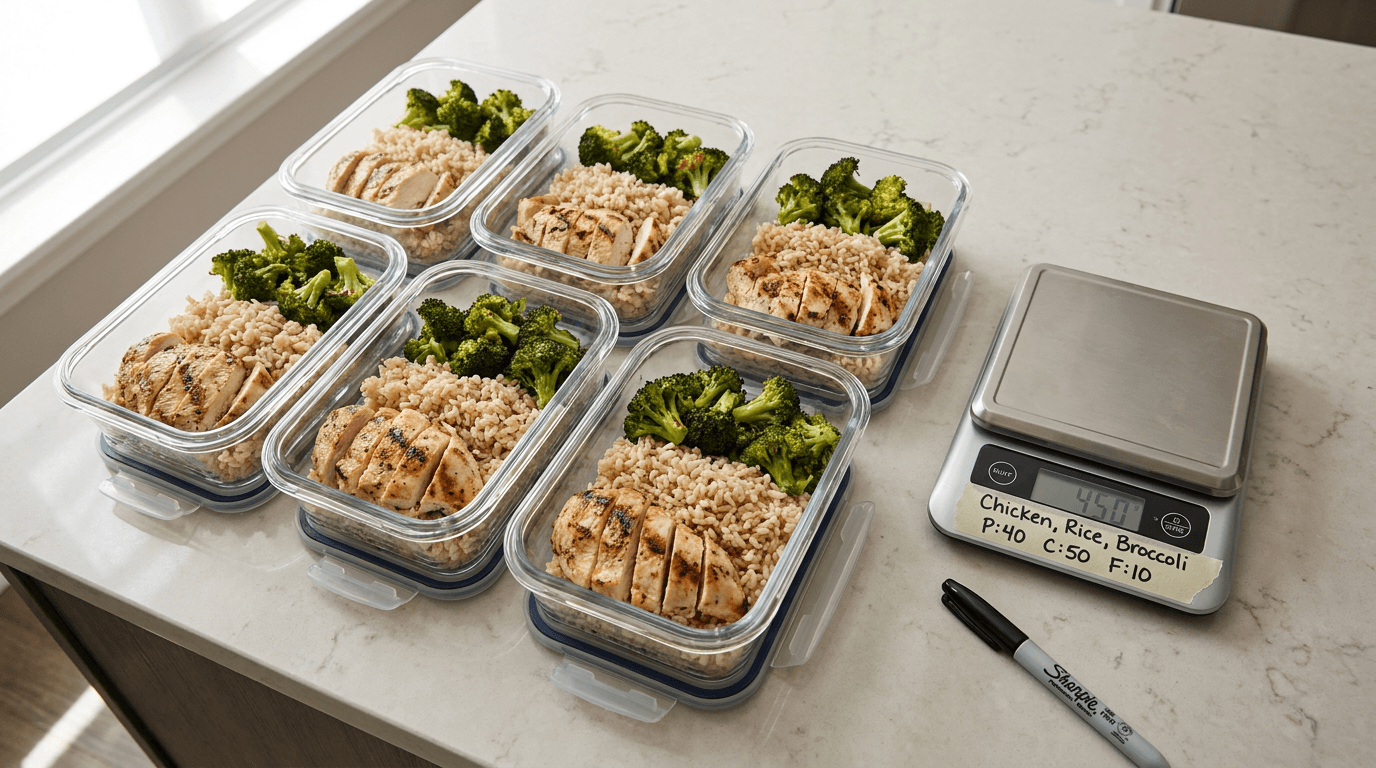
Six meals, one calculation, batch cooking makes how to track macros a weekly task, not a daily one.
Step 5: Embrace Smart Estimation (and Ditch the Guilt)
This is the point where most macro tracking plans collapse. You stick to the script for three days. Then Thursday you make a stir-fry and add a splash of sesame oil you didn't measure. Friday you grab chicken thighs instead of breasts because they're on sale. Saturday your partner makes pasta and you have no clue how much butter went into the sauce. Suddenly your log feels "wrong," so you stop.
Pause. This is where the 80/20 rule earns its keep. If your core meals (breakfast and lunch, or your batch-cooked dinners) are tracked precisely, you've covered roughly 80% of your intake. The remaining 20% - sauces, cooking oils, a different vegetable, the handful of nuts you ate while cooking - can be estimated without wrecking your progress. Perfection isn't the standard. Repetition is.
Good estimation comes down to a small cheat sheet of common swaps. These are the ones that trip people up over and over:
Chicken breast to chicken thigh: Adds roughly 5-7g of fat per 4oz serving. Protein stays nearly identical.
Olive oil (1 tablespoon): 14g of fat, 120 calories. If you drizzled "a little" into the pan, log 1.5 tablespoons. You probably used more than you think.
White rice to brown rice: Nearly identical macros. Brown rice has slightly more fiber and fat, but the calorie difference per cup is negligible.
Ground beef 93/7 to 85/15: Adds about 6g of fat and 50 calories per 4oz raw serving.
Regular pasta to whole wheat pasta: Similar calories, but whole wheat has more fiber and slightly more protein per serving.
Memorize three or four of those and you can keep cooking without stopping to do phone math. That's the difference between a system that holds up on a random Thursday and one that falls apart the first time you improvise.
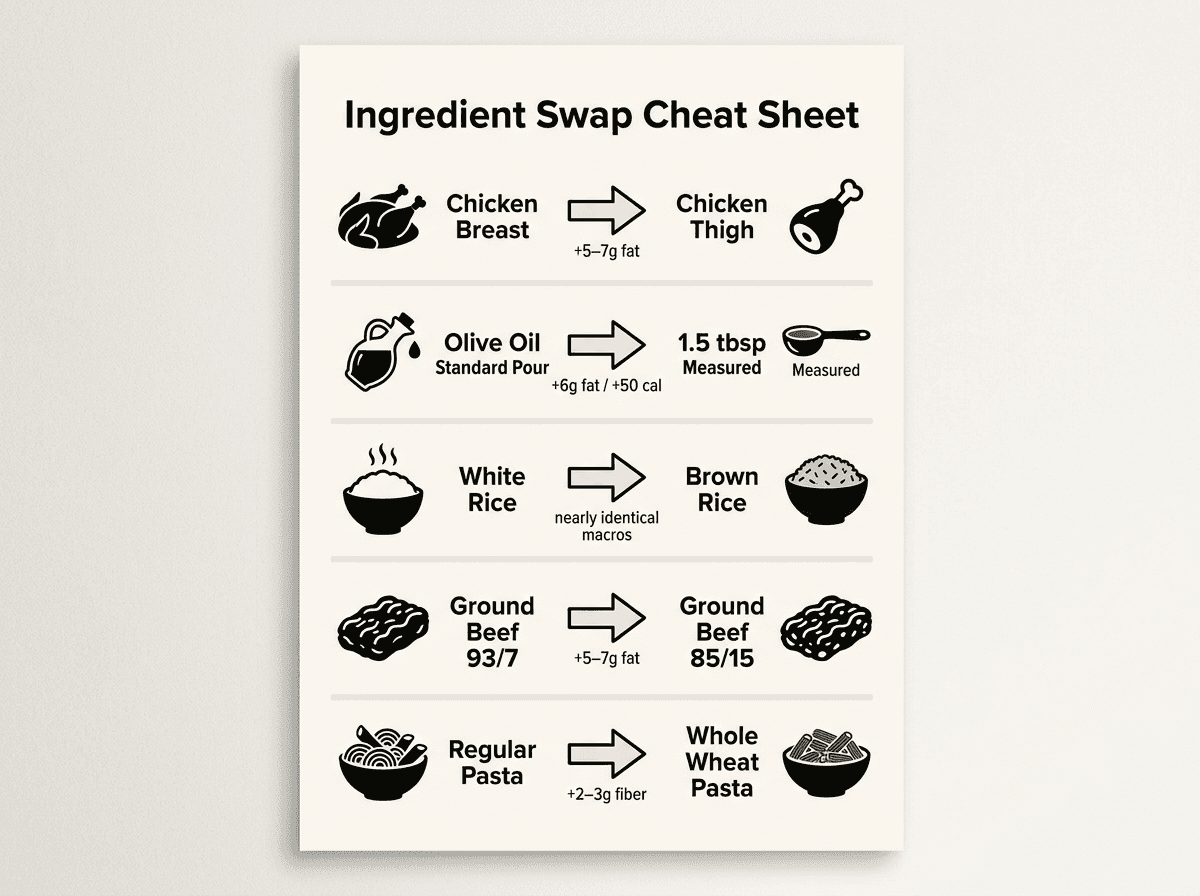
Five ingredient swaps that cover most weeknight improvisation, no phone math required.
Step 6: Let Your Kitchen Do the Math for You
Steps 1 through 5 give you a system that works when dinner goes according to plan. But home cooking rarely does. The store is out of your usual protein. You run out of rice. Your partner grabs Greek yogurt instead of coconut milk. Suddenly the recipe still works, but the macros are different enough to make you second-guess the whole meal.
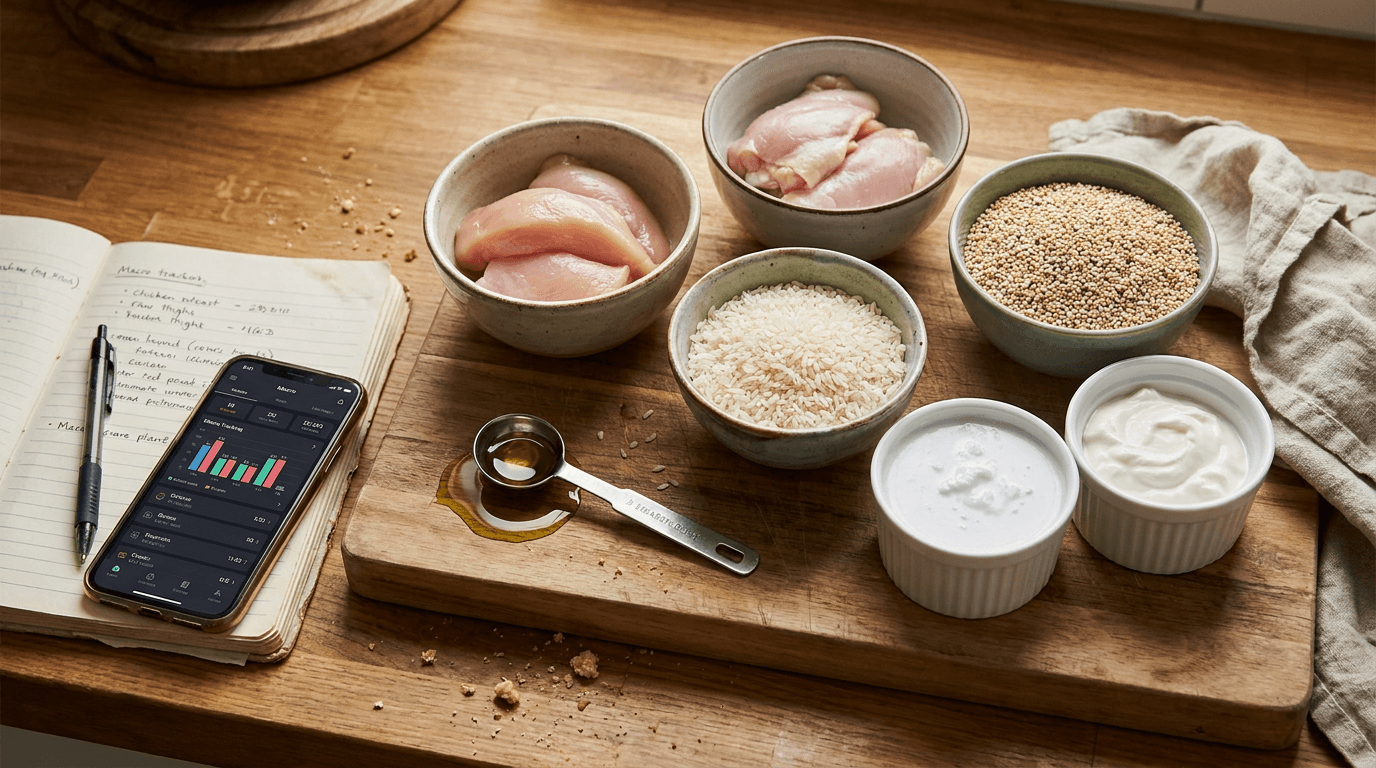
Ingredient swaps for macro tracking at home with Greek yogurt, coconut milk, rice, quinoa, chicken, and olive oil on a kitchen counter
This is where you need a simple swap rule: when an ingredient changes, adjust the macro category it belongs to. Don't recalculate the entire dish from scratch unless it's a major ingredient. Just identify what changed and make the closest reasonable update.
Start with the big three:
Protein swaps: Chicken breast to chicken thigh, turkey to beef, tofu to shrimp. These usually change protein and fat.
Carb swaps: White rice to brown rice, pasta to potatoes, quinoa to rice. These usually change carbs, fiber, and sometimes portion volume.
Fat swaps: Coconut milk to Greek yogurt, olive oil to butter, avocado to cheese. These can shift calories fast, even when the portion looks small.
Say you're making a chickpea curry. The recipe calls for coconut milk, but you only have Greek yogurt. That's not just a flavor swap. Coconut milk brings more fat and calories, while Greek yogurt usually adds more protein and less fat. Your macro log should reflect that change, even if the recipe still tastes great.
The cooking may need a small adjustment too. Yogurt can split if it's boiled hard, while coconut milk can handle a richer simmer. So instead of treating swaps like a disaster, treat them like a quick two-part check: what macro changed, and does the cooking method need a tweak?
You don't need perfect math here. You need a repeatable habit. When a swap happens, update the main macro difference, keep the portion close, and move on. That's how you keep tracking realistic without turning every weeknight dinner into a nutrition audit.
Common Mistakes When Tracking Macros at Home (and How to Fix Them)
Even with a solid setup, a few mistakes take out almost everyone at some point. Spot them early and you skip a lot of unnecessary frustration.
Forgetting the invisible calories. Cooking oils, sauces, dressings, and drinks are the quiet budget-busters. A tablespoon of olive oil, a drizzle of ranch, a glass of orange juice with breakfast - none of it feels dramatic, but it can stack up to 300-500 untracked calories in a day. Log them. Every time.
Chasing daily perfection. One "off" day doesn't erase your progress. Your body doesn't reset at midnight. What matters is the weekly average. If you hit your protein target six days out of seven, you're doing the work. The guilt spiral after a single untracked meal makes more people quit than the meal itself ever will.
Never re-calculating. Your macro targets aren't set-and-forget. As your weight changes, your activity shifts, or your goals move, your numbers should move too. Re-run your macro calculator every 4 to 6 weeks, or whenever progress stalls for more than two weeks. While high-protein diets can help preserve muscle during weight loss, the effect has its limits and doesn't replace the need for exercise. A 2017 review in Advances in Nutrition found that while higher protein intake helps preserve muscle mass, it does not necessarily improve muscle strength on its own. Your calorie and macro targets must still align with your current body and activity level.
Copying someone else's macros. Your coworker's 2,200-calorie plan isn't a template for your body. Even partners in the same house can be 500+ calories apart based on body weight, muscle mass, and activity. Run your own numbers. Always.

Spot these four mistakes early and avoid the frustration that makes most people quit tracking.
From Chore to Choice: Making Macro Tracking Stick
You have the full playbook now: set a baseline, pick a tracking style you won't hate, stock a kitchen that makes targets easy, batch cook so you're not doing daily math, estimate when life gets messy, and lean on smart tech when variability shows up.
The goal was never to live inside a spreadsheet. Macros are a tool, use them to understand what you're eating and fuel your body, then let habits (and the right technology) carry the weight. Cooking data from the study on Europe PMC (2025) shows that 52% of men and 72% of women now cook regularly, up significantly from two decades ago. More people are cooking at home than ever. The missing piece isn't motivation, it's a system that doesn't punish you for cooking like a normal human.
That's what Posha is built to do. It takes the variability of real home cooking, keeps your macros accurate through swaps and portion changes, and applies a chef's judgment so the food still tastes right. No spreadsheets. No guilt. Just steady results, meal after meal.

With the right system, tracking macros becomes something you barely notice.
Frequently Asked Questions
Should I weigh food raw or cooked?
Raw is usually the cleaner option. Food loses water (and weight) as it cooks, so the same ingredient can look wildly different on the scale before and after heat. Most nutritional databases, including the USDA's, list values for raw ingredients. If you prefer weighing cooked food, keep it consistent and use entries labeled "cooked" (for example, "cooked chicken breast"). The big errors happen when you mix raw weights with cooked database entries in the same meal.
How precise do beginners need to be when tracking macros?
Close counts. If you're new, hitting total calories and protein within about 5-10% is a real win. Don't get stuck trying to nail every gram of fat and carbs in the first few weeks. Consistent logging beats perfect entries. Tighten things up over time as your portion awareness improves.
What's the easiest way to track macros when eating out?
Start with chain restaurants that publish nutrition info online. If you don't have that, break the plate down into parts: protein, carb, and fat. Then estimate portions with the hand method ("that looks like a palm and a half of salmon"). When you're unsure, overestimate fats and oils - restaurants use them more aggressively than most home cooks. One restaurant meal won't wreck your week if the rest of your tracking is steady.
Can tracking macros help you build muscle and lose fat at the same time?
Yes. It's called body recomposition, and it tends to work best for beginners or people coming back after a break. The setup is a small calorie deficit (or maintenance) with high protein intake, roughly 1g per pound of body weight, plus consistent resistance training. Tracking matters here because the margin is tight: without it, most people drift into too little protein or too many calories and wonder why nothing changes.
Is IIFYM the same thing as flexible dieting?
Yes. People use the terms interchangeably. Both mean the same idea: hit your daily macronutrient targets and you have flexibility in the foods you choose. IIFYM is about moderation, not loopholes. It doesn't mean eating junk all day. It means no single food is automatically "off-limits" if it fits inside your macro budget for the day.