Rohin Malhotra
Paleo diet eating borrows from what our hunter-gatherer ancestors would have recognized: whole, minimally processed foods. In practice, that means leaning on lean meats, fish, fruits, vegetables, nuts, and seeds, and setting aside grains, legumes, dairy, and refined sugars. Short-term studies point to possible benefits for weight management and blood pressure, though long-term clinical research remains limited.
If you have ever scrolled through paleo recipes and thought, "This looks amazing, but who has two hours on a Wednesday night?", you are in good company. For busy dual-income households, especially if you love the layered spice work of Indian cooking, the idea of going fully from-scratch every evening can feel like a nonstarter. But paleo is less about kitchen heroics and more about smart choices: start with the right ingredients, then let something (or someone) you trust handle the patient parts. That is cooking with love in real life: great inputs, steady technique, and enough breathing room to let the process do its job.
The 'Why' Behind Paleo: More Than Just a Food List
The argument for paleo is simple, even if you do not buy every part of it. Humans spent roughly 2.5 million years eating what was available before agriculture showed up around 10,000 years ago. Refined grains, ultra-processed foods, and industrial seed oils are newcomers by comparison. The paleo hypothesis suggests that this shift toward refined grains, added sugars, and ultra-processed foods may contribute to poorer metabolic health for some people. The proposed fix is not magic. It is a return to nutrient-dense whole foods your body is built to handle.
So, is paleo healthy? It depends on what your version looks like. A plate built around vegetables, quality protein, and healthy fats is nutrient-rich by any reasonable standard. Research summarized by the NIH's StatPearls resource reports short-term improvements in satiety, some blood lipid markers, and blood sugar stability, but the evidence is still stronger for short-term outcomes than long-term disease prevention. The pushback from places like Harvard's T.H. Chan School of Public Health is practical: cutting out dairy, grains, and legumes can leave you short on nutrients like calcium and vitamin D if you do not plan for it. Paleo diet benefits are real, but they come from how you build your plate, not from how many foods you banish.
So, What Do You Actually Eat on the Paleo Diet?
For paleo for beginners, the first mistake is treating it like a list of "no." Turn it around. The paleo diet food list is long, bright, and (if you grew up around an Indian spice box) surprisingly familiar. Use this as a quick reference for what to eat on paleo, written in a way you can actually stick on the fridge and use.
Your Paleo Kitchen at a Glance
🟢 Embrace These Foods | 🔴 Avoid These for Now |
|---|---|
Proteins: Chicken, lamb, wild-caught fish, eggs, shrimp | Grains: Wheat, rice, oats, barley, corn |
Vegetables: Spinach, cauliflower, sweet potatoes, zucchini, bell peppers | Legumes: Dal, lentils, chickpeas, peanuts, black beans |
Fruits: Berries, mangoes, apples, bananas, citrus | Dairy: Milk, paneer, yogurt, cheese (ghee is often accepted) |
Healthy Fats: Coconut oil, avocado, olive oil, ghee | Processed: Refined sugar, soy sauce, canola oil, packaged snacks |
Nuts & Seeds: Almonds, walnuts, cashews, pumpkin seeds | Sweeteners: White sugar, high-fructose corn syrup, artificial sweeteners |
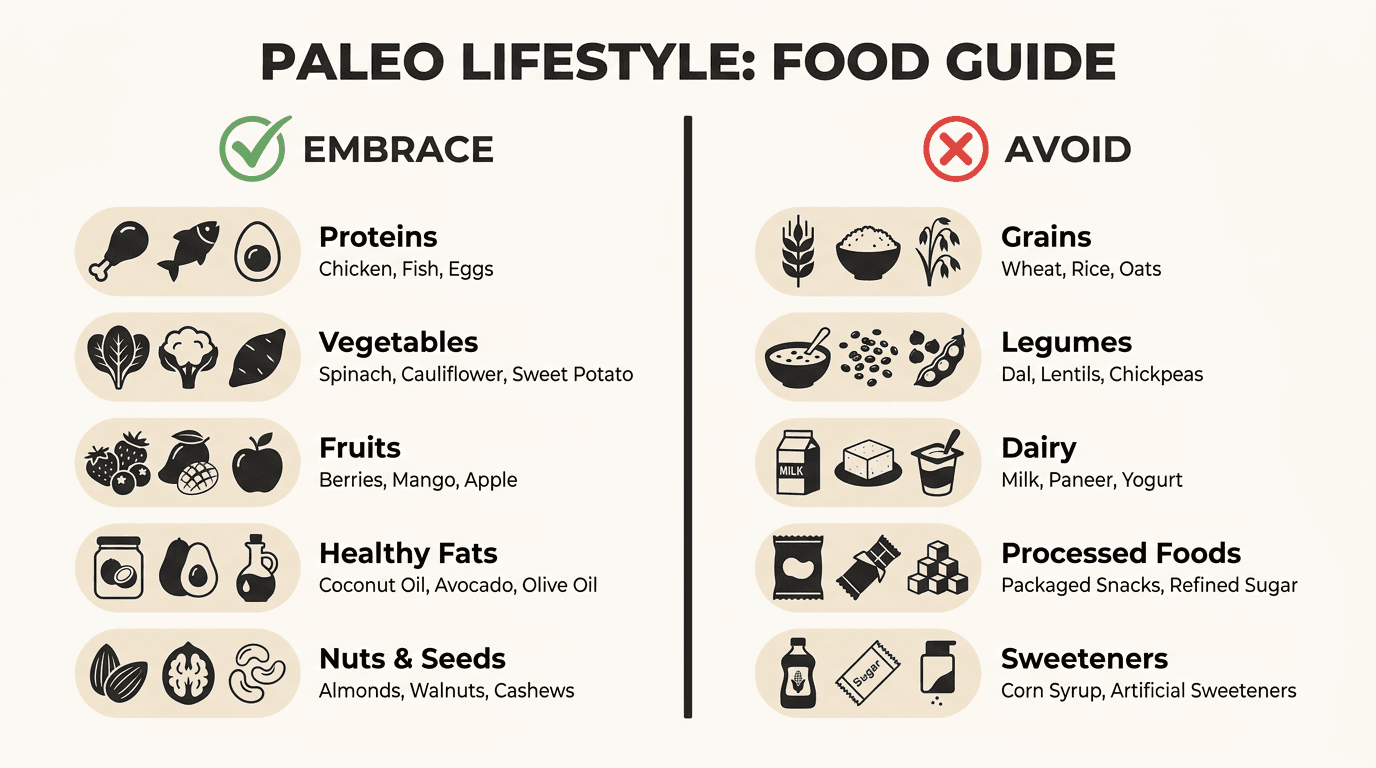
Pin this paleo food reference to your fridge before your next grocery run.
Indian-American Paleo Swaps Worth Knowing
Paleo does not ask you to give up the flavors that make dinner feel like home. Coconut milk slides neatly into curries where cream would normally go. Almond flour or tapioca flour can get you surprisingly workable rotis. Cauliflower rice stands in for basmati and still does the job: it soaks up sauce and makes a korma feel complete. Coconut yogurt makes an easy raita base. And your spice rack (turmeric, cumin, mustard seeds, garam masala) stays exactly where it is. The cuisine carries over; the base starches and legumes are what change.
Paleo in the Real World: A Weeknight Dinner, Reimagined
It is 6:15 PM. You and your partner walk in, drop the bags, and pull out chicken thighs, a can of coconut milk, and a handful of Chettinad spices. Ten minutes of work gets you there: chop onions, crush ginger-garlic, measure the masala. Then it all goes into Posha, waiting on the counter like a calm, capable cook who is happy to take the next shift.
Posha keeps an eye on the temperature in the pot, tracking how fast the coconut milk is coming up to heat. It adjusts stirring so the sauce emulsifies instead of splitting (anyone who has walked away from a coconut-milk curry knows that heartbreak). It handles timing and doneness, including when the chicken hits the internal temperature that gives you tender, pull-apart meat. Meanwhile, you are doing homework triage, folding laundry, or sitting down for the first time all day. Thirty-five minutes later, dinner is a deeply spiced, paleo-friendly Chicken Chettinad with cauliflower rice. No hovering. No flavor tradeoff.
A paleo meal plan does not require a brand-new complicated recipe every night. Make a big batch of paleo curry on Monday with Posha, then turn leftovers into lunch bowls for Tuesday and Wednesday.
This is what cooking with love looks like when it fits into a real week. You bring the care: good ingredients, a recipe your family actually wants. Posha brings the steady hand: temperature control, timed stirring, and hands-off execution. The payoff is food that tastes like someone tended the stove for an hour, even though nobody had to.

Posha handles the stove so weeknight paleo cooking fits a real family evening.
Beyond Dinner: Simple Paleo Meal Ideas for Busy Mornings and Packed Lunches
Dinner gets all the glory, but breakfast and lunch are where many people get stuck. Paleo breakfast ideas can start feeling repetitive, and portable lunches can turn into sad desk food fast. These options stay simple, travel well, and keep the whole thing from turning into a project.
Quick Paleo Breakfast Ideas
Scrambled eggs with sauteed spinach, cherry tomatoes, and half an avocado (under 10 minutes).
A smoothie with coconut milk, frozen berries, a scoop of almond butter, and a pinch of cardamom.
Almond-flour pancakes made in a weekend batch and reheated during the week. Add fresh fruit and a drizzle of raw honey.
Lunches and Snacks That Travel
Leftover paleo curry over greens makes a lunch bowl that actually satisfies. Big salads with grilled chicken, walnuts, and an olive-oil dressing hold up well in a container. For snacks, keep it plain and reliable: a handful of almonds and an apple, beef or turkey jerky, or sliced vegetables with guacamole. The pattern stays consistent: whole foods, minimal packaging, and as little friction as possible.
Common Misconceptions About the Paleo Diet
"Paleo is all meat, all the time." Nope. A solid paleo plate is heavy on vegetables and fruit, with protein and healthy fats rounding it out. If your meals look like a steakhouse greatest-hits list, it is time to rebalance.
"You can never eat grains or dairy again." Plenty of people treat paleo as a default, not a lifetime vow. An 85/15 approach is common: paleo most of the time, flexible the rest. This is not a religion. It is a framework for feeling better, and the occasional dal or slice of sourdough is not going to erase your progress.
"It is too expensive." It can get pricey if you insist on grass-fed, organic everything, all the time. But frozen vegetables, eggs, canned fish, and seasonal produce are all paleo and often budget-friendly. The Harvard Nutrition Source notes that smart shopping makes the diet accessible across income levels.
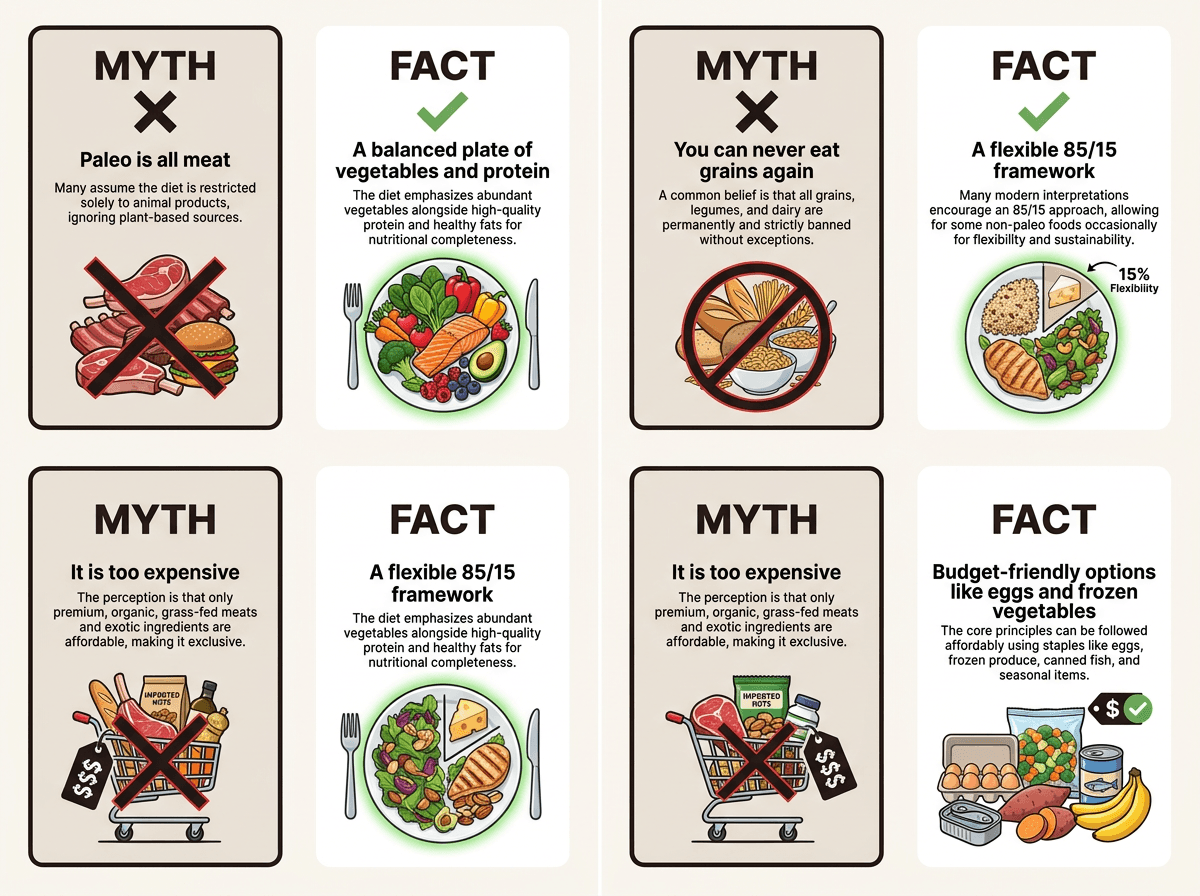
Three paleo myths that stop people before they start.
Frequently Asked Questions
Is the paleo diet good for weight loss?
Short-term studies suggest many paleo eaters lose weight, in part because higher-protein, higher-fiber meals tend to satisfy and naturally curb overall calorie intake. Long-term data is still limited, so steady activity alongside paleo gives you a stronger base.
Can I drink coffee or tea on the paleo diet?
Yes. Black coffee and unsweetened tea are generally accepted. Leave out the sugar and dairy creamer; coconut milk or almond milk fits more cleanly. Chai made with coconut milk and whole spices is an easy paleo-friendly option.
Isn't eating a lot of meat unhealthy?
Paleo is not meant to be a meat-only plan. Vegetables, fruits, nuts, and healthy fats should make up most of your plate, with protein playing a supporting role. Prioritize quality proteins (wild-caught fish, pasture-raised poultry) and keep the balance plant-forward.
How do I get enough calcium on paleo without dairy?
Leafy greens (kale, bok choy, collard greens), sardines with bones, almonds, and broccoli all bring meaningful calcium and fit paleo rules. For the first few weeks, it helps to track what you are getting so any gaps show up early.
Is the paleo diet expensive to follow?
It does not have to be. Eggs, canned wild salmon, frozen vegetables, sweet potatoes, and seasonal fruit can carry a week without blowing up your budget. Buying in bulk, cooking larger batches with Posha, and reusing leftovers goes a long way.
Cooking with Love, Not Labor
The paleo diet is not supposed to feel like punishment. Done well, it is a shift toward foods most of us do better with anyway: quality proteins, vibrant vegetables, nourishing fats, and the spices that make a kitchen smell like home. It also plays nicely with Indian-American cooking once you swap in coconut milk, almond flour, and cauliflower rice. And if the sticking point is effort, that is exactly where a cooking partner helps: one that watches, adjusts, and decides so you do not have to hover.
Key Takeaways
The paleo diet emphasizes whole, minimally processed foods and skips grains, legumes, dairy, and refined sugars.
Indian-American cooking adapts well to paleo with coconut-milk curries, almond-flour rotis, and cauliflower rice.
A paleo meal plan is easier to stick with when you batch-cook and reuse leftovers across meals.
Paleo diet benefits include improved satiety, steadier energy, and nutrient-dense eating, though long-term studies are still ongoing.
Hands-off cooking with Posha turns complex paleo dinners into a ten-minute prep commitment.
The best meals are made on purpose: good ingredients chosen with care, cooked with respect for the process, then shared with the people you love. Posha protects that intention by taking on the precise, patient work of cooking. Your Tuesday-night Chicken Chettinad deserves both.