Rohin Malhotra
Ghee is clarified butter that goes one step further. You simmer butter until the water cooks off and the milk solids separate, brown, and get strained away. What you are left with is a golden, shelf-stable fat that tastes nutty and handles higher heat than regular butter, which is why it shows up everywhere from weeknight saute pans to roasted vegetables and finishing drizzles.
If you have noticed ghee on the shelf or seen it pop up in an Indian recipe, the questions come fast. How is it different from butter? Is it worth the extra cost? Should it live in the pantry or the fridge? Below, you'll find the practical answers: how ghee is made, where it fits in everyday cooking (far beyond one cuisine), how to store it safely, what to use when you are out, and what to look for when you buy a jar.
Why Ghee Earns a Spot in a Modern Pantry
Ghee sticks around for the same reasons cooks keep reaching for it. With the water and milk solids removed, it can take higher heat without burning as quickly as butter. The flavor is also more concentrated and toasty, so you can often use a smaller amount and still get that buttery payoff. And while butter demands refrigerator space, an unopened jar of ghee can hang out in a cool pantry for months.
A quick reality check on the wellness hype: ghee is a cooking fat, and it brings the same big-picture math as butter or oil - plenty of calories and plenty of fat. It is not a superfood, and it is not a fix for anything. Use it the way you would olive oil or coconut oil: on purpose, in amounts that make sense for your overall diet.
Ghee is high in fat. Avoid treating it as a "health cure." Like other cooking fats, use it purposefully and in reasonable amounts.
How Ghee Is Made (and What It Tastes Like)
Ghee begins as plain butter. Melt it gently, then keep it at a quiet simmer. As the water evaporates, foam rises to the top. The milk solids fall to the bottom, where they slowly turn golden brown and perfume the pot with a toasted, almost caramel-like aroma. When those solids are deeply browned (but not burnt), strain the clear liquid through cheesecloth. That clear, golden butterfat is ghee.

Ghee differs from clarified butter by toasting the milk solids before straining.
That browning is the whole point, and it is what sets ghee apart from standard clarified butter. With clarified butter, you strain as soon as the solids separate, before they pick up color. Ghee keeps going long enough to toast those solids, which builds its signature depth. The finished flavor is rich and nutty, less "milky" than butter, and because it is essentially concentrated fat, a little really does carry far.
Ghee has a rich, nutty flavor, so a little can go a long way. Start with 1 to 2 teaspoons for finishing a dish and 1 tablespoon for sauteing a pan of vegetables.
Ghee vs Butter vs Clarified Butter
When people compare ghee vs butter (or ghee vs clarified butter), they are usually talking about three things: how each one is made, how it tastes, and how it behaves over heat. Here's the quick breakdown.
Butter | Clarified Butter | Ghee | |
|---|---|---|---|
How it's made | Churned cream | Butter melted, milk solids skimmed off before browning | Butter simmered until milk solids brown, then strained |
Flavor | Creamy, mild | Clean, mild buttery | Nutty, toasted, deeper |
Milk solids / water | Contains both | Solids removed; trace water | Solids removed and browned; virtually no water |
Typical smoke point | ~350 F (175 C) | ~450 F (232 C) | ~485 F (250 C)* |
Best uses | Baking, spreading, low-heat cooking | Sauteing, sauces | High-heat sauteing, roasting, frying, finishing |
Storage | Refrigerate; weeks | Refrigerate; weeks to months | Pantry or fridge; months |
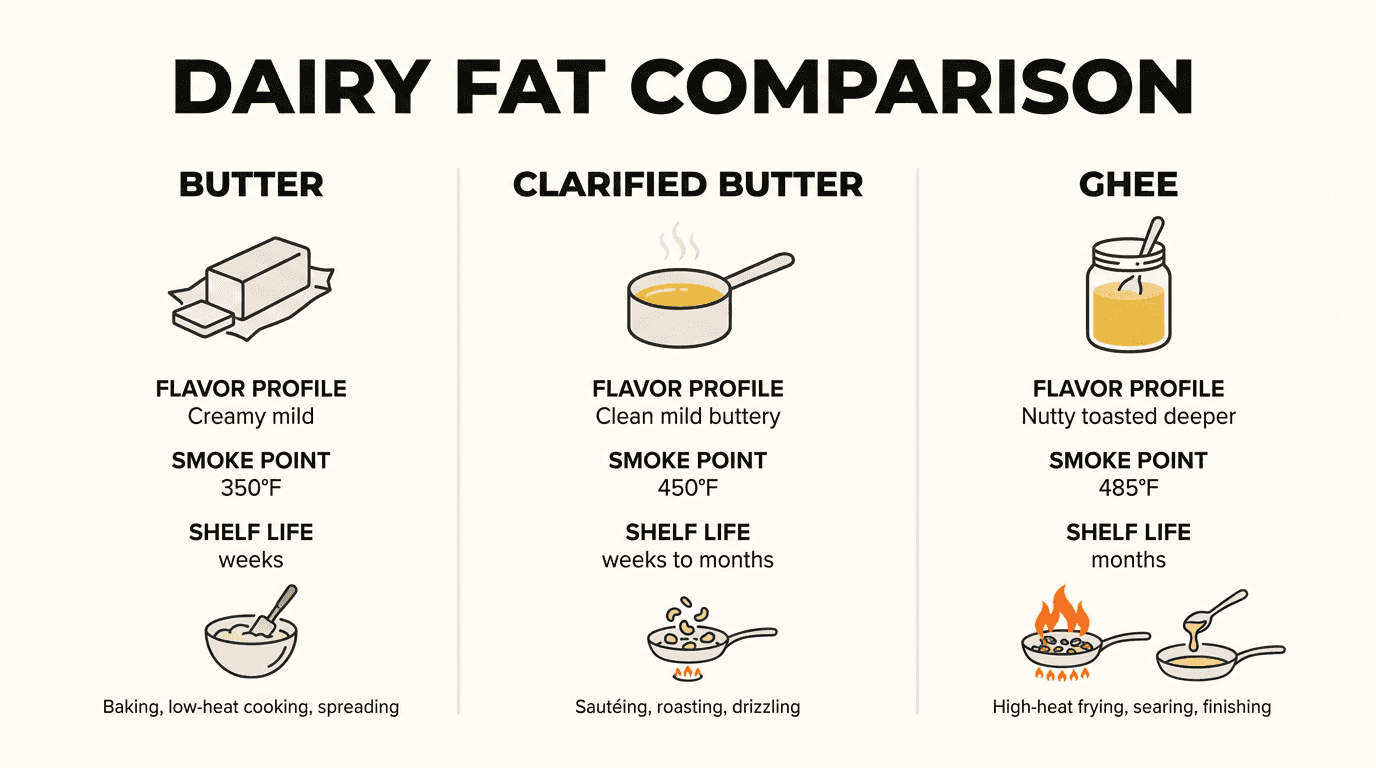
Ghee, clarified butter, and butter each suit different cooking tasks and heat levels.
If you want one rule of thumb: reach for ghee when you need heat tolerance and a toasty finish. Use clarified butter when you want a cleaner, milder dairy fat (especially for sauces). Keep butter for baking and for anything where that creamy, milky flavor matters. For a deeper look at the nutritional differences between ghee and butter, Healthline lays out the comparison in detail.
How to Use Ghee for Cooking
Ghee is a staple in Indian kitchens, but it is not boxed in by geography. With a smoke point around 485 F (250 C), it can handle searing, roasting, and stir-frying without breaking down the way butter does. Here are a few easy, everyday ways to use it.
Use ghee for sauteing, roasting, blooming spices, and finishing dal or rice.
Practical ways to cook with ghee:
Bloom spices (tadka): Warm a teaspoon of ghee, add cumin seeds or mustard seeds, and let them pop before stirring into dal or soup.
Roast vegetables: Toss sweet potatoes, cauliflower, or carrots with melted ghee before roasting hot so the edges caramelize.
Fry eggs: A small spoonful in a hot skillet helps you get crispy, lacy edges without the quick scorching butter can give.
Finish rice or grains: Stir a teaspoon into cooked basmati rice for a subtle, buttery richness.
Spread on toast or parathas: Swipe a little on warm bread or flatbreads; it melts in and tastes like comfort.
If you like hands-off weeknight cooking, Posha can help with ghee-friendly dishes like dal, curries, and vegetable sides by managing heat, stirring, and cooking stages while you prep toppings or set the table.
Buying, Making, and Storing Ghee
For the best ghee to buy, start with the ingredient list: ideally it reads "butter" or "cream" and nothing else. Some jars say "ghee" and others say "clarified butter," but true ghee is usually a deeper gold and smells distinctly toasted. Grass-fed and organic versions can taste a touch richer to some cooks, though the difference tends to be subtle. You will pay more per ounce than butter, but remember that you often use less at a time.
Homemade Ghee: Worth the Effort?
Homemade ghee is very doable, but it asks for your attention. Melt unsalted butter over medium-low heat, let it simmer until the bubbling quiets down and the solids at the bottom turn golden, then strain through cheesecloth into a clean, dry jar. Plan on about 20 to 25 minutes. You also get to choose the flavor: toast the solids lightly for a gentler taste or go darker for more nuttiness. The trade-offs are real: step away too long and it can scorch, and straining can be a little messy. A programmable appliance that holds low, steady heat can make the process much easier.
How to Store Ghee (and Does Ghee Need Refrigeration?)
Ghee lasts longer than butter because it contains very little moisture. Once opened, a jar kept tightly sealed in a cool, dark pantry usually stays good for three to six months. Pop it in the fridge for even more runway, especially if your kitchen runs warm or humid. The habit that matters most is simple: use a clean, dry spoon every time. Moisture and crumbs can lead to mold. If the ghee smells rancid, tastes bitter, or shows any mold, throw it out.
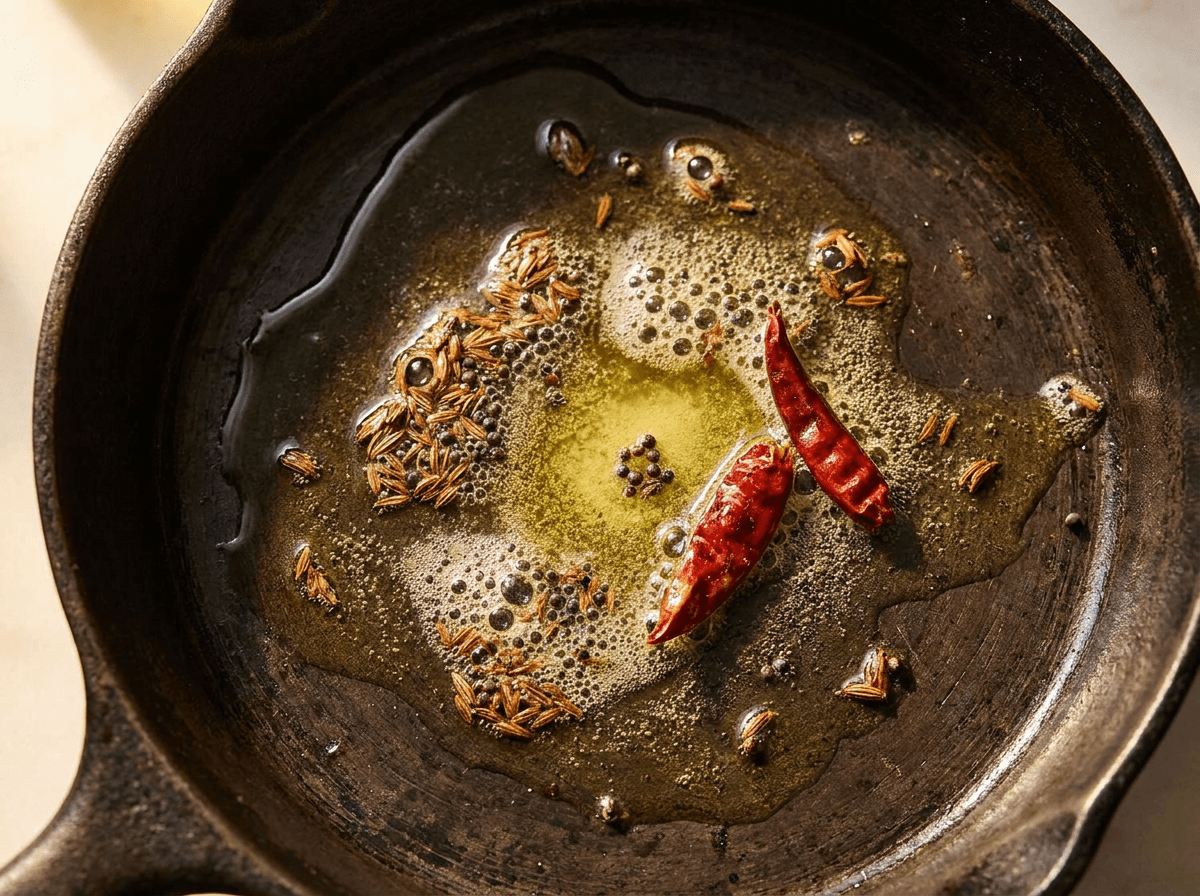
Blooming whole spices in ghee — known as tadka — unlocks deep, layered flavor in seconds.
Ghee Substitute Options When You Run Out
If you are out of ghee, choose a substitute based on what you are cooking. Clarified butter is the closest stand-in: it performs similarly over heat, just with a milder flavor. Regular butter can work for lower-heat sauteing, but keep an eye on the milk solids, which brown fast. For dairy-free cooking, coconut oil makes sense in curries and some baked goods, while a neutral oil like avocado oil is better for high-heat roasting. Olive oil is a solid pick for medium-heat vegetable dishes. Swap 1:1 by volume, then season to taste - none of these options perfectly replicate ghee's nutty finish.
Common Misconceptions About Ghee
"Ghee is automatically healthy." Ghee is almost entirely fat. Tablespoon for tablespoon, the calories are in the same neighborhood as butter or other oils. Online claims about "boosting metabolism" or "detoxing the body" tend to outrun the evidence. The grounded takeaway is simpler: ghee is a useful cooking fat, and moderation still applies.
"Ghee and clarified butter are totally different things." They are close relatives. Ghee is a type of clarified butter, just cooked long enough for the milk solids to brown before you strain them out. That extra time is where the deeper flavor comes from.
"It never goes bad." Shelf-stable does not mean forever. Moisture, food bits, or lots of heat and light will shorten its life. Treat ghee the way you treat any pantry fat: store it well, and give it a quick sniff before you cook.
Key Takeaways
Ghee is butter with the water and milk solids removed and browned, which gives it a nutty flavor and makes it better for high-heat cooking.
With a smoke point around 485 F, it is well-suited to sauteing, roasting, and frying.
Ghee vs butter: ghee tolerates heat and keeps longer; butter still wins for baking and spreading.
Ghee vs clarified butter: both are clarified, but ghee browns the solids for deeper flavor.
Store ghee sealed and use a dry spoon; it can sit in the pantry for months, and refrigeration keeps it fresh longer.
When you need a substitute, clarified butter is closest; otherwise use butter for lower heat, or coconut oil or a neutral oil depending on the dish.
Ghee is high in fat, so treat it like any cooking fat: use it intentionally and in moderation.
Frequently Asked Questions
Does ghee need refrigeration after opening?
Not always. Because ghee has very little moisture, it can sit at room temperature for three to six months if it is sealed tightly and kept away from heat and light. Refrigeration stretches that timeline and is a smart move in warm or humid kitchens. Check your jar's label for brand-specific guidance.
What's the difference between ghee vs butter for baking?
Butter brings water and milk solids, which help with structure, moisture, and browning in baked goods. Ghee is essentially pure fat, so a 1:1 swap can make cookies spread more and can make pastry dough less flaky. For most baking projects, butter is the safer pick. Ghee is great for greasing pans or brushing onto flatbreads.
Is ghee the same as clarified butter?
They are closely related, but they are not quite the same. Both start with butter that is melted so the milk solids can be removed. Clarified butter is strained once the solids separate; ghee simmers longer so those solids brown first, which makes the flavor nuttier and the color slightly darker.
What is the ghee smoke point, and can I use it for frying?
Ghee typically smokes around 485 F (250 C), compared with butter at about 350 F (175 C). That higher smoke point makes ghee a good option for pan-frying, deep-frying, and high-heat roasting. Smoke points vary by brand and purity, so watch for visible smoke and back the heat down if you see it.
Can I make homemade ghee from salted butter?
Yes, but unsalted butter gives you more control. As the water evaporates, the salt concentrates, so ghee made from salted butter will taste noticeably saltier. If salted butter is what you have, plan to reduce or skip added salt in the dish you are cooking.