Rohin Malhotra
Popcorn is not a slam-dunk keto food, but a small portion can work on a more flexible low-carb plan. One cup of air-popped popcorn has about 6.2g of total carbs and 1.2g of fiber, which comes out to roughly 5g of net carbs. Scale that up to a typical 3-cup bowl and you are at about 15g of net carbs, a big bite out of the 20-50g daily range most keto plans use.
If you track carbs loosely, that is probably enough to make the call. If you run strict keto, the margin for error is smaller. Either way, it helps to know what is actually in the popcorn you are eating and how it was made, because that is often where the carbs quietly pile up.
What Are the Carbs in Popcorn, Exactly?
Popcorn numbers start with the kernel itself. USDA FoodData Central lists 100 grams of air-popped popcorn at 77.8g of total carbohydrates and 14.5g of fiber. That looks intense on paper, but 100 grams of popcorn is a mountain of it since popcorn weighs almost nothing. In the serving sizes people actually eat, the carb count is a lot more reasonable.
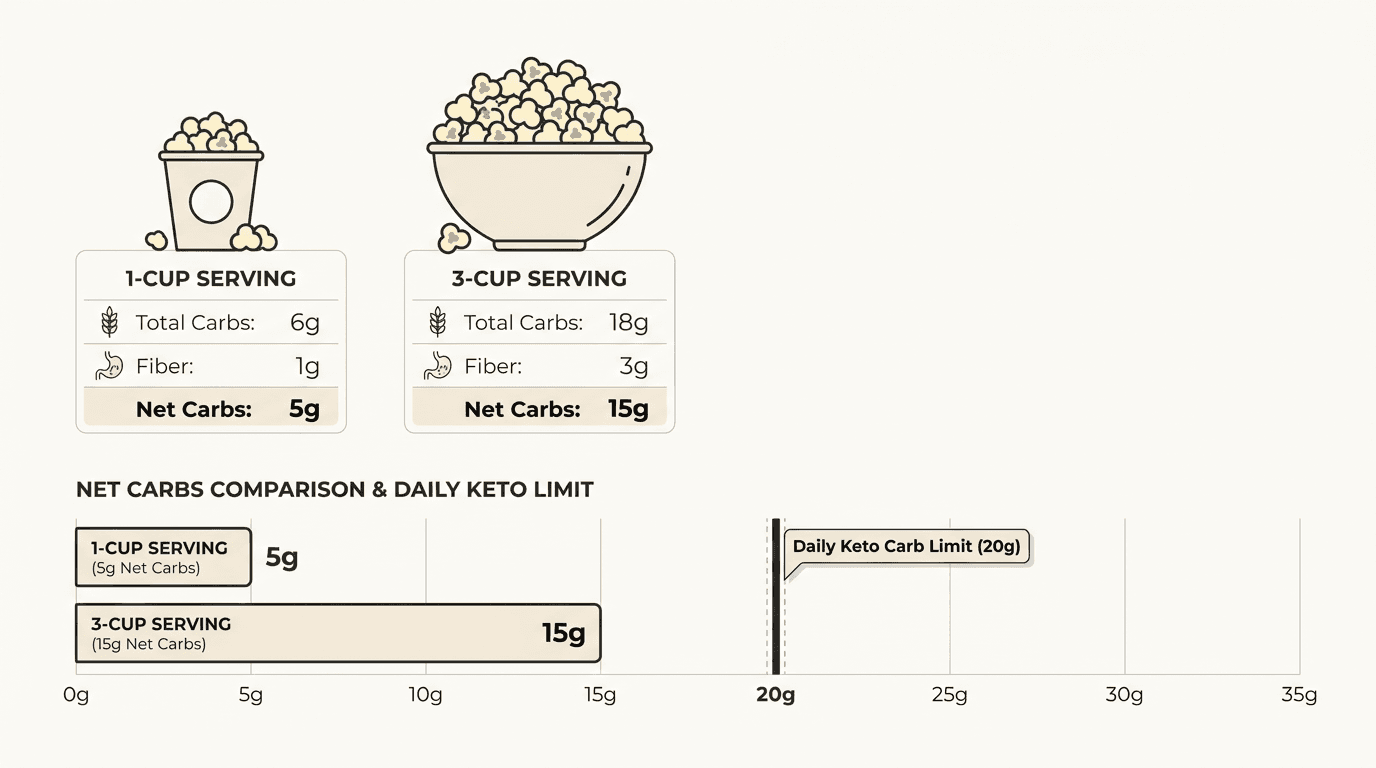
At 3 cups, air-popped popcorn delivers ~15g net carbs — still under a strict keto daily limit.
Here is what plain, air-popped popcorn looks like when you break the carbs down by a realistic portion:
Air-popped popcorn carb breakdown (plain, no toppings):
1 cup: ~6.2g total carbs, 1.2g fiber, 5g net carbs, ~31 calories
3 cups: ~18.6g total carbs, 3.6g fiber, ~15g net carbs, ~92-100 calories
Net carbs = total carbs minus fiber (fiber does not raise blood sugar)
The Mayo Clinic Health System notes that 3 cups of plain, air-popped popcorn comes in at about 95 calories and counts as a whole grain with a meaningful amount of fiber. That fiber is the reason net carbs popcorn numbers feel less scary than the total carbs line.
Is Popcorn Keto? The Honest Answer
Popcorn on keto mostly comes down to how strict you are. The ketogenic diet is a very low-carb, high-fat eating pattern meant to push your body into ketosis, where fat becomes the main fuel source. Most versions cap daily intake at 20-50g of net carbs.
Strict keto (under 20g net carbs/day): A 3-cup serving of popcorn takes about 75% of your whole daily carb budget. For most people, that makes popcorn a no. Moderate keto (20-50g net carbs/day): A 1-cup portion (about 5g net carbs) can fit, as long as the rest of the day stays pretty low-carb. Lazy or flexible low-carb: Popcorn can be a decent snack. The catch is the coatings and "butter" flavors, which add carbs fast.
So, is popcorn keto? No single food wears a permanent "keto" or "not keto" label; it depends on your portion and your day. If you are tracking loosely, one measured cup of plain popcorn is one of the easier crunchy snacks to budget for. A big bowl you refill during a movie is where popcorn stops being "fine" and starts crowding out your carbs.
Does the Type of Popcorn Change the Carb Count?
Yes, and it is not subtle. Plain air-popped popcorn is the baseline. Once you add oil, butter, sugar, cheese powder, caramel, or other coatings, the carb and calorie totals climb quickly. Here is how the common versions compare:
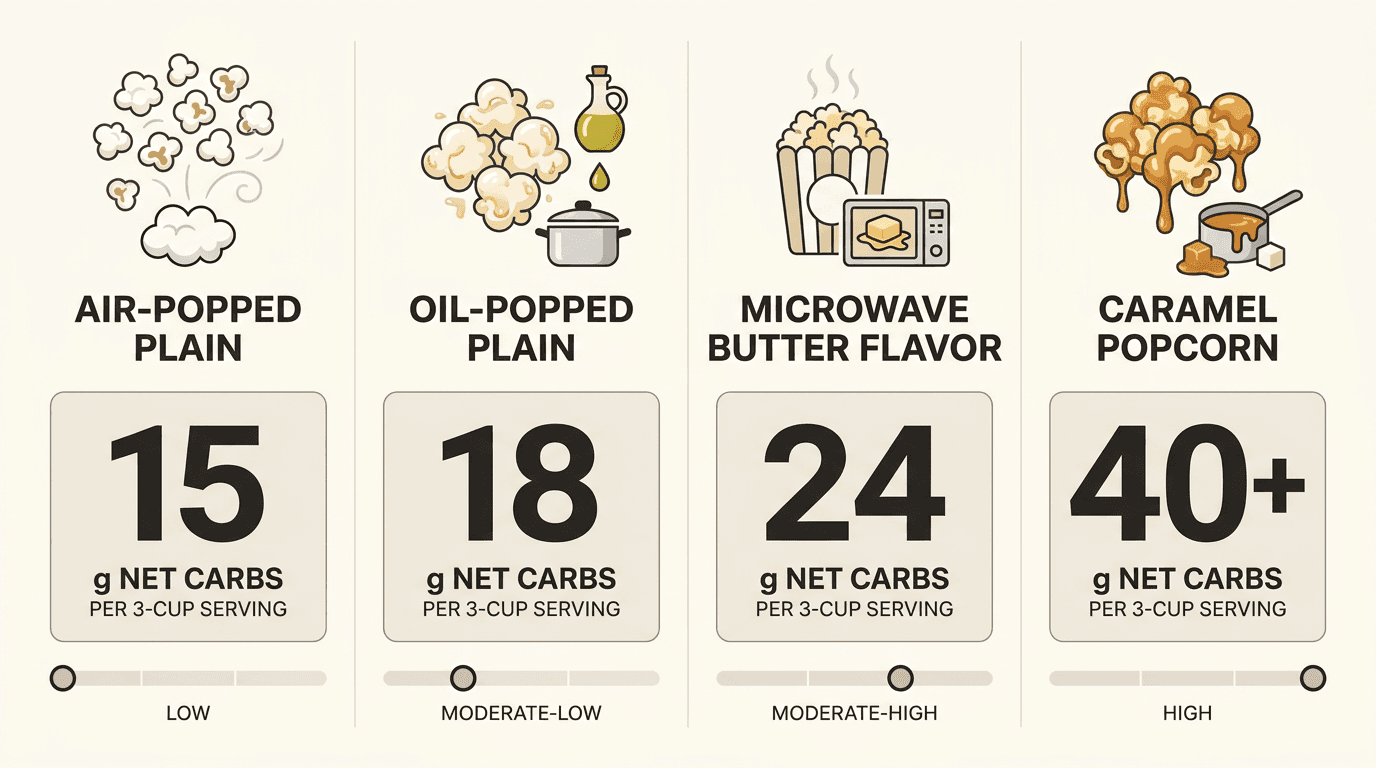
From air-popped to caramel, carbs in popcorn can more than double depending on preparation.
Net carbs per 3-cup serving by popcorn type (approximate):
Air-popped, plain: ~15g net carbs (lowest carb option)
Oil-popped, plain: ~15-17g net carbs (fat goes up, carbs stay similar)
Microwave butter flavor: ~18-22g net carbs (additives and coatings add up)
Kettle corn: ~22-26g net carbs (sugar coating bumps carbs noticeably)
Caramel popcorn: ~35g+ net carbs per cup (a keto dealbreaker)
If you are watching carbs, plain air-popped is the one that makes sense. Once you get into flavored bags and sweet glazes, popcorn stops being a borderline snack and turns into a straight-up high-carb treat.
What About the Glycemic Index? Does Popcorn Spike Blood Sugar?
Plain air-popped popcorn has a glycemic index around 55, which is considered moderate. White bread is above 70, and most candy is higher than that. A GI of 55 suggests popcorn digests more gradually than many refined carbs. Its fiber helps slow digestion, which can soften the glucose rise compared with lower-fiber snack foods.
If you are managing blood sugar and carbs at the same time, that moderate GI matters. It does not turn popcorn into a freebie, but it does put it ahead of many processed snacks that deliver similar carbs with less fiber.
Common Misconceptions About Popcorn on a Low-Carb Diet
Misconception 1: "Popcorn is basically just air, so the carbs don't count." Popcorn feels light, but carbs do not care about fluff. Three cups of air-popped popcorn still adds up to about 15g of net carbs, even if it barely registers on a scale.
Misconception 2: "All popcorn is the same nutritionally." The kernel starts the same, but the end product can be wildly different. Caramel popcorn and plain air-popped popcorn share a name, not a nutrition profile, because the extras are doing most of the damage.
Misconception 3: "Popcorn is a protein snack." Popcorn is a whole grain, not a protein source. A 3-cup serving has roughly 3g of protein. If you are using it to stay full between meals, pair it with something higher in protein, or expect hunger to come back quickly.
Posha handles the real dinner so a snack stays a snack. When your meals are dialed in with the Posha Robot Chef, a small bowl of popcorn does not need to carry nutritional weight it was never designed to carry.
Key Takeaways
Everything you need to know about carbs in popcorn:
One cup of air-popped popcorn has ~5g of net carbs (6.2g total minus 1.2g fiber)
A 3-cup serving has ~15g of net carbs, which is 30-75% of a strict keto daily budget
Popcorn is not keto-friendly at standard serving sizes on strict keto protocols
On flexible low-carb diets, a 1-cup portion of plain popcorn fits reasonably well
Plain air-popped popcorn has a moderate glycemic index of ~55, lower than most processed snacks
Flavored and sweetened varieties (kettle corn, caramel) add significant carbs and are best avoided on any low-carb plan
Popcorn is a whole grain with fiber benefits, but it is not a protein source and will not keep you full for long

A single measured cup of plain popcorn contains roughly 5g net carbs — the portion that fits a flexible low-carb plan.
Frequently Asked Questions
How many net carbs are in a cup of popcorn?
One cup of plain, air-popped popcorn has about 5g of net carbs (6.2g total carbohydrates minus 1.2g of fiber). For keto tracking, net carbs popcorn counts are usually the number people watch, since fiber does not raise blood sugar.
Is popcorn keto-friendly?
Not on strict keto. A 3-cup serving comes in around 15g of net carbs, which can take up most of a strict keto dieter's 20g daily limit. If your plan allows closer to 50g per day, a 1-cup portion of plain popcorn is easier to fit. So is popcorn keto? Only in small portions, and mostly on more relaxed versions.
What type of popcorn has the fewest carbs?
Plain air popped popcorn carbs are the lowest among the common options, at about 5g net carbs per cup. Oil-popped plain popcorn is in the same neighborhood. Kettle corn and caramel popcorn add sugar and coatings that push net carbs much higher.
Does popcorn raise blood sugar quickly?
Usually not as fast as many processed snacks. Plain popcorn has a moderate glycemic index of around 55, so it tends to digest more slowly than refined carbs like white bread or crackers. The fiber in popcorn helps slow glucose absorption, which is why popcorn nutrition often looks better than the total carb number suggests.
Can popcorn still work as a snack if I am watching carbs?
Yes, if you treat the portion as the whole point. A single measured cup of plain air-popped popcorn is a reasonable healthy snack carbs option for people tracking loosely: it has whole-grain fiber, stays under 35 calories, and hits the crunchy-snack itch without the usual packaged additives. Measuring matters here, because eating straight from the bag is how the carbs sneak up.