Rohin Malhotra
Carbs catch heat mostly because nutrition advice loves a morality play. One day you are told to cut carbs to the bone; the next, you are urged to pile on whole grains. That whiplash leaves you with a pantry full of mixed signals and a plate that feels weirdly stressful. Skip the guilt and stick to logistics: what to buy, what to ease out, and how to cook the better options so they actually get eaten.
The difference between carbohydrates is not a referendum on willpower or "clean eating." It is about how fast they digest and what they deliver along the way. Stock the slower, more nutrient-dense choices, and a lot of the decision fatigue disappears.
What Actually Makes a Carb "Good" or "Bad"
Here is the cleanest split: complex carbs break down slowly, so blood glucose rises more gradually, and you get fiber plus vitamins and minerals along with the calories. Simple carbs move fast, which can mean a sharper blood sugar jump and that familiar "hungry again" feeling soon after (UCLA Health, 2024). The Heart and Stroke Foundation of Canada (2024) boils it down even further: "good" carbs usually come from whole, less-processed foods with real nutritional value, while "bad" carbs tend to be the ones padded with added sugar, salt, or fat and not much else.
If you want a shorthand that works in a grocery aisle, Harvard Health points to the glycemic index as a practical tool. Low-GI foods raise blood sugar more slowly; high-GI foods push it up quickly. It lines up closely with the complex-versus-simple divide, which is why it is handy for pantry shopping without turning dinner into a homework assignment.
Fiber is your most reliable tell. According to the Mayo Clinic (2025), dietary fiber helps lower cholesterol, control blood sugar, manage weight, and maintain bowel health. When a carb is meaningfully high in fiber, it is usually a keeper.
The Head-to-Head: Good Carbs vs Bad Carbs
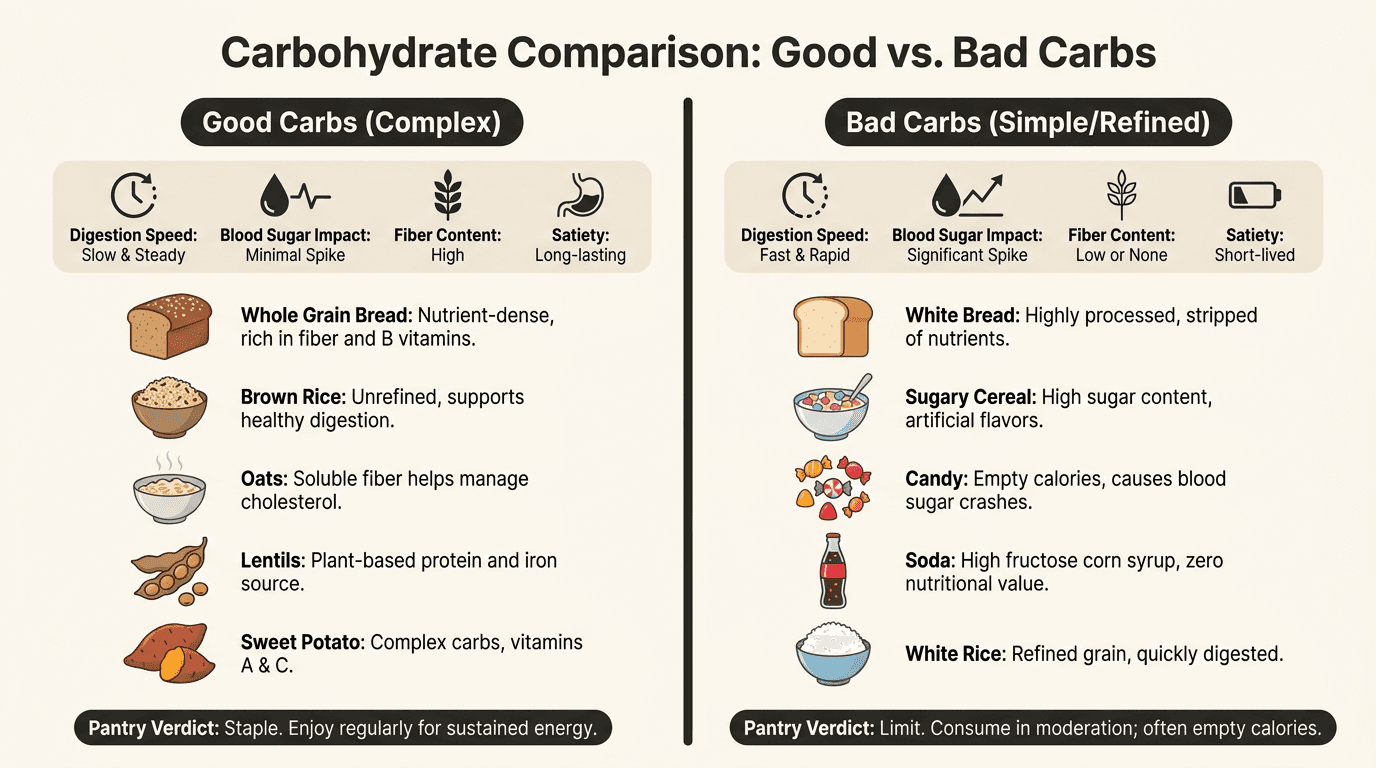
Complex carbs vs simple carbs: what to stock and what to scale back.
Good Carbs vs Bad Carbs at a Glance
Feature | Good Carbs (Complex) | Bad Carbs (Simple/Refined) |
|---|---|---|
Digestion speed | Slow and steady | Fast and spiky |
Blood sugar impact | More gradual rise | Sharp spike, then crash |
Fiber content | High | Low to none |
Nutrient density | Vitamins, minerals, fiber | Mostly empty calories |
Satiety | Fills you up longer | Hunger comes back quickly |
Examples | Oats, lentils, brown rice, sweet potato | White bread, soda, candy, pastries |
Pantry verdict | Keep stocked | Limit or phase out |
The carbs worth limiting are not subtle. Refined grains with the bran and germ stripped away, sugary drinks, and packaged snacks built around high-fructose corn syrup show up again and again. Cleveland Clinic (2022) is blunt about the tradeoff: high-fiber carbs like legumes and whole grains bring far more nutrients than refined grains and sweets. You do not have to ban them, but they should not be the default building blocks of your pantry.
Your Healthy Carbs List: What to Actually Stock
A useful healthy carbs list fits on one shelf. Get a dozen staples right and you can cover most of the dinners you will ever want to throw together. The NHS (2022) suggests centering meals on higher-fiber starchy carbs such as wholewheat pasta, brown rice, and potatoes with the skins on, since they help you stay full longer. That is the kind of advice that holds up on a busy week.
Pantry staples worth stocking:
Rolled oats (breakfast, baking, overnight oats)
Brown rice or wild rice (grain bowls, stir-fries, sides)
Wholewheat pasta (weeknight dinners, pasta salads)
Lentils, red and green (soups, curries, salads)
Canned chickpeas and black beans (fast protein-rich meals)
Sweet potatoes (roasted, mashed, in stews)
Quinoa (complete protein, works as a rice substitute)
Barley (hearty soups and grain salads)
Whole grain bread (sandwiches, toast, sides)
These also tend to be the best good carbs for weight loss, and the reason is refreshingly unsexy: fiber makes food more filling. When your carbs come with fiber (and, in the case of legumes, more protein), you get more staying power than you do from refined options (Cleveland Clinic, 2022). If you want dinner ideas that start with what is already in your cupboard, healthy pantry recipes can help you put these staples to work.
Turning Your Pantry Into Actual Dinners
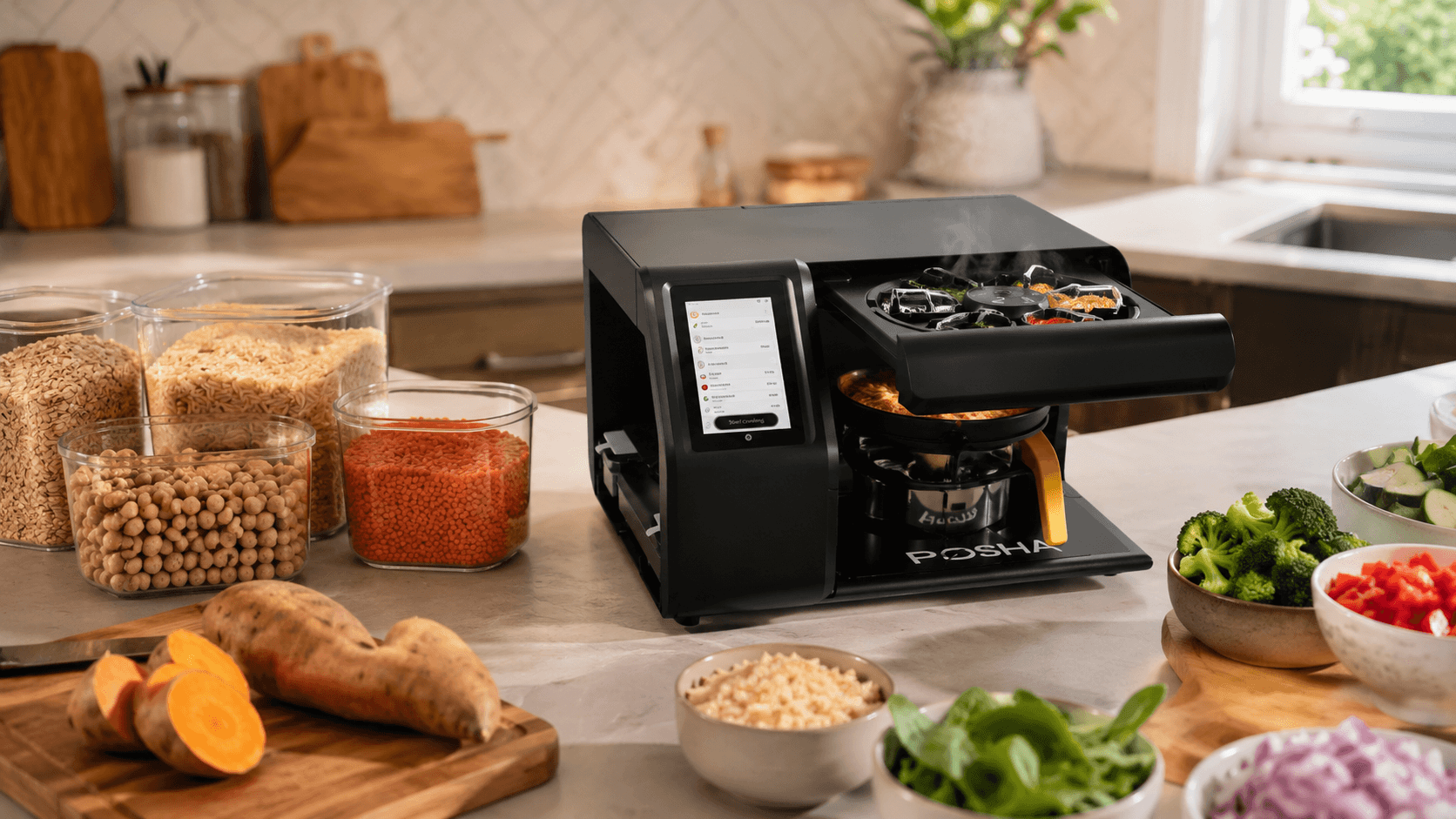
Posha Robot Chef preparing a healthy pantry meal with whole grains, legumes, and vegetables.
Stocking better carbs is a strong start, but the real test comes on a busy weeknight. Brown rice, lentils, chickpeas, oats, and sweet potatoes are useful only if they turn into meals you actually want to cook and eat.
That is where the Posha Robot Chef can help. Instead of leaving you to juggle recipes, timings, and guesswork, Posha guides you step by step from pantry staples to finished meals. It makes whole-ingredient cooking feel more manageable, especially when you want the benefits of high-fiber carbs without spending hours planning dinner.
Meal kits and prepared meals can be convenient, but they often work around your pantry rather than helping you use it. Posha is a better fit if your goal is to cook more from real ingredients, reduce decision fatigue, and make staples like legumes, whole grains, and vegetables part of your regular routine.
With the right pantry and the right guidance, good carbs stop feeling like a nutrition rule and start becoming dinner.
Frequently Asked Questions
What counts as good carbs?
Good carbs are complex carbohydrates from whole, minimally processed foods. They tend to be higher in fiber, digest more slowly, and come with vitamins and minerals. Common examples include oats, legumes, whole grains, and starchy vegetables such as sweet potatoes.
Which carbs are worth limiting?
The usual ones: refined grains (like white bread and white rice), sugary drinks, candy, and ultra-processed snack foods. These simple carbs digest quickly, can spike blood sugar, and do not offer much nutritional value in return.
Do good carbs work for weight loss?
In practice, yes. High-fiber complex carbs like lentils, oats, and brown rice keep you full longer than refined alternatives, which can reduce overall calorie intake without micromanaging meals. Cleveland Clinic (2022) notes that high-fiber, high-protein carbs provide more satiety than low-fiber refined grains.
What is the difference between simple carbs and complex carbs?
Simple carbs have shorter molecular chains and digest quickly, which can lead to faster blood sugar spikes. Complex carbs have longer chains, digest more slowly, and produce a steadier rise in blood glucose. Most whole plant foods skew complex; most refined and sugary foods skew simple.
How do I cook with these pantry staples without spending hours in the kitchen?
One practical option is a guided cooking device like the Posha Robot Chef, which walks you through each step using the whole ingredients you have stocked. Another is to batch-cook grains and legumes on the weekend and keep them in the fridge, so weeknight meals are mostly assembly. Either way, the heavy lifting gets done once you have the right staples on hand.