Rohin Malhotra
Low carb pasta alternatives used to mean sad, watery zucchini noodles that collapse into soup the second you look away. If you have ever watched a pan of zoodles go from "hey, this might work" to mush in about 40 seconds, you know the pain. The upside is that every swap below has a real, repeatable fix, and a couple barely need babysitting at all.
If you are doing keto, cutting carbs for health reasons, or just trying to keep pasta night alive without wheat, these are the swaps that actually eat like dinner, not punishment. According to the Mayo Clinic's guide to low-carb diets, limiting refined carbohydrates found in traditional pasta can support weight loss and improved blood sugar markers. The six options ahead are: zucchini noodles, shirataki noodles, spaghetti squash, hearts of palm pasta, chickpea pasta, and lentil pasta.
Low-carb pasta swaps are usually not hard because of the ingredient itself; they are hard because moisture, heat, and timing have to be controlled carefully. That is where a tool like the Posha Robot Chef can make pasta night more consistent.
Quick Comparison: Taste, Texture, and Carbs at a Glance
All carb counts are approximate per standard serving.
Alternative | Taste Profile | Texture | Net Carbs (approx.) | Biggest Risk |
|---|---|---|---|---|
Zucchini Noodles | Mild and fresh | Tender-crisp when timed right; mush if you push it | ~3g per cup | Overcooks in about 30 seconds |
Shirataki Noodles | Mostly neutral with a faint earthy note | Chewy and slippery | ~1g per cup | Rubbery unless you rinse and dry-toast |
Spaghetti Squash | Gently sweet | Fibrous strands that grab sauce | ~7g per cup | Too short a bake leaves crunchy strands |
Hearts of Palm Pasta | Mild with a slight tang | Firm, closest to al dente | ~3g per cup | Can taste tinny straight from the can |
Chickpea Pasta | Nutty and earthy | Stays firm if you nail the timing | ~30-35g per 2oz (high fiber) | Two extra minutes turns it gluey |
Lentil Pasta | Earthy with a hint of sweetness | Dense and holds its shape | ~25g per 2oz (high fiber) | Goes gummy if the water is not salted |
Zucchini Noodles (Zoodles)
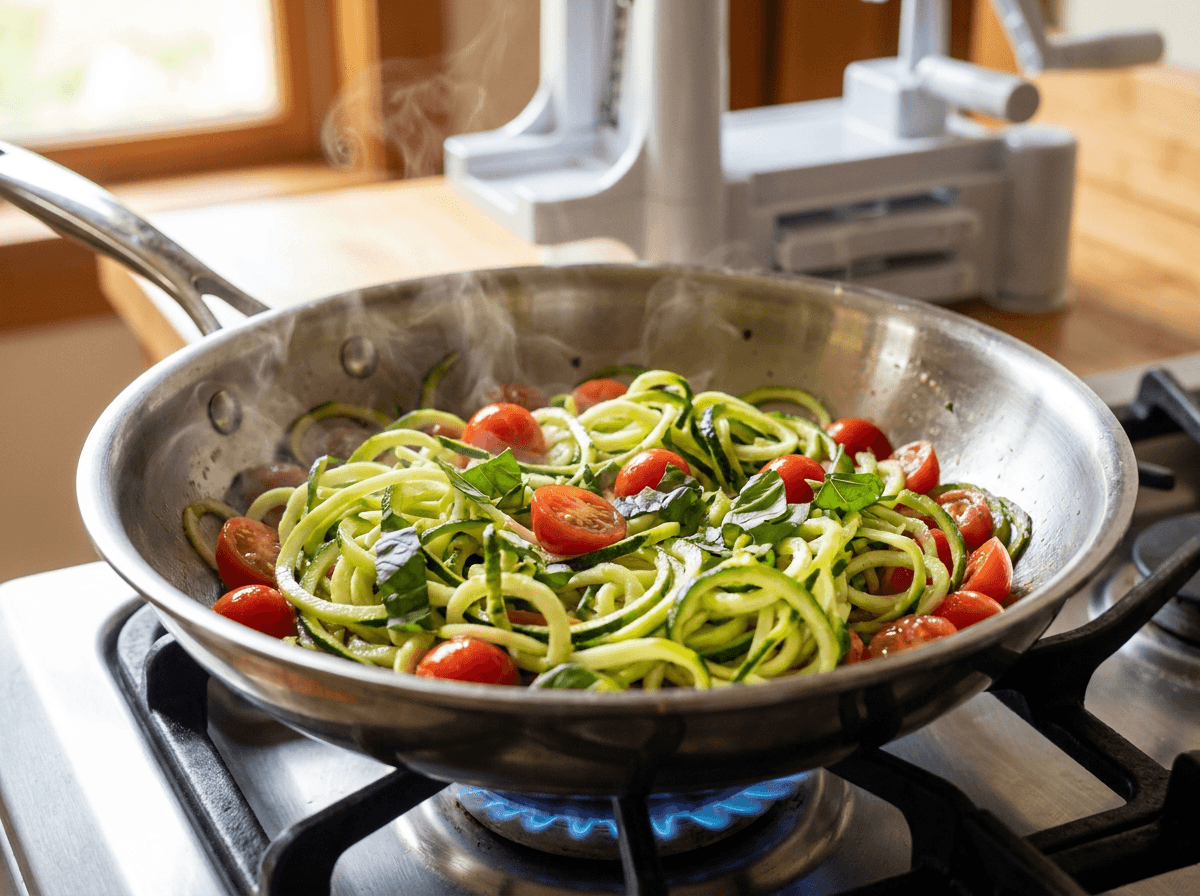
Zoodles cook in 60–90 seconds — pull them early to keep the texture.
Zucchini noodles are the poster child for healthy pasta swaps, and also the one I have messed up the most (not burned, exactly, but definitely drowned). A 1-cup serving has only about 4 grams of carbohydrates compared to roughly 45 grams in traditional pasta, and a medium zucchini clocks in at just 33 calories and 6 grams of total carbs. That is the kind of math that makes you want zoodles to work.
The whole battle is moisture. Zucchini is about 95% water, and once it hits heat, it dumps that water fast. The fix that finally made zoodles behave: salt the spirals in a colander for 10 minutes, then pat them bone-dry with a kitchen towel before they go anywhere near the pan. Get the skillet ripping hot, toss in the noodles for 60 to 90 seconds max, then get them out. You want a little bite left. If you are using a Posha Robot Chef, its built-in cooking intelligence helps manage timing, stirring, and heat so delicate ingredients are less likely to turn watery or overcooked. It handles zoodles the same way, catching the moment the extra water cooks off before the texture gives up.
Best with: pesto, aglio e olio, or a fast brown butter sauce. Skip heavy, watery tomato sauces unless you reduce them on their own first.
Shirataki Noodles
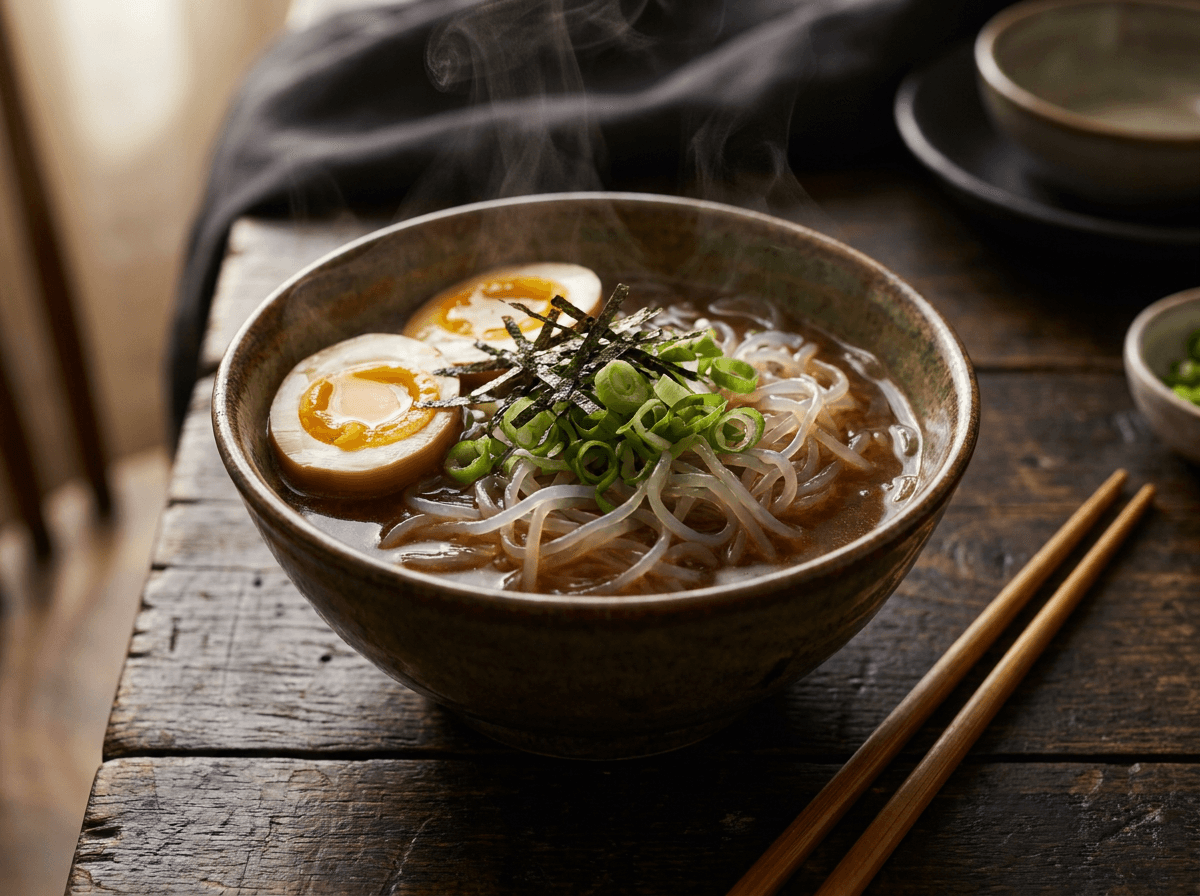
Shirataki noodles absorb bold broths beautifully — a near zero-carb swap for traditional pasta.
If you are chasing the closest thing to a zero-carb keto pasta substitute, shirataki noodles are the obvious move. They are made from glucomannan, a soluble fiber pulled from konjac root, and your body does not digest that fiber, which is why the carbs land near zero (Medical News Today, 2021). That same soluble fiber also slows carbohydrate absorption, which Cleveland Clinic confirms can help avoid blood sugar spikes (Cleveland Clinic, 2024).
Just do not skip the prep. Out of the package, they can smell fishy and feel weirdly rubbery. Drain them, rinse under cold water for a full minute, then dry-toast in a hot skillet with no oil for two to three minutes. That one step knocks out the odor and tightens the texture in a way that actually matters. From there, they are basically a sauce sponge. They shine in Asian-style dishes: stir-fries, cold sesame noodles, or a simple ginger-scallion broth. If you want the full nutrition rundown, Medical News Today's shirataki noodle breakdown lays it out clearly.
Spaghetti Squash
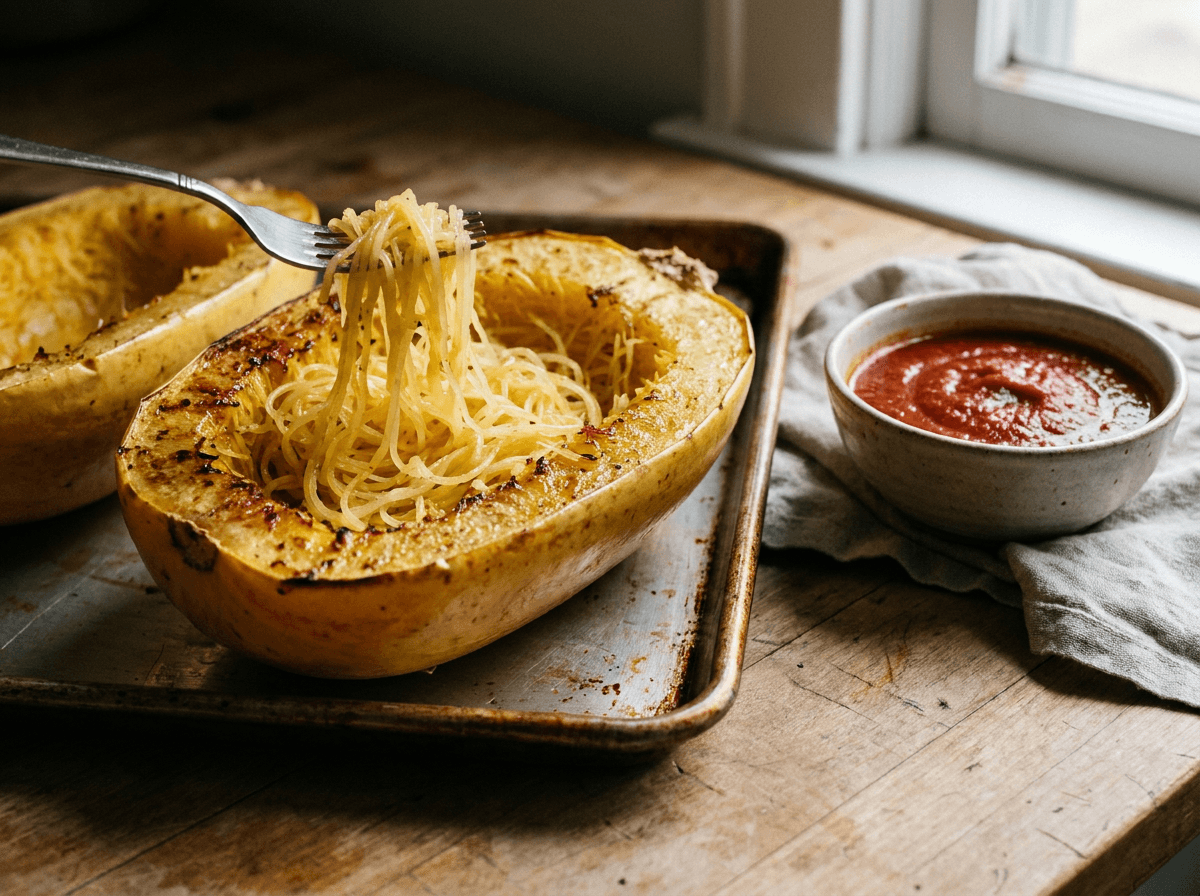
Roasting face-down traps steam inside, giving you longer, more distinct strands.
Spaghetti squash is the most forgiving option here, mostly because the oven does the heavy lifting. Roast it face-down at 400 degrees Fahrenheit for 35 to 40 minutes and you are basically done. The strands hang onto sauce better than zoodles, and the lightly sweet flavor plays nicely with louder, savory toppings like meat sauce or roasted garlic. At roughly 7 grams of net carbs per cup, it is not the lowest-carb pick on this list, but it is whole food, filling, and actually satisfying.
Tips for perfect strands every time:
Roast face-down so steam stays trapped inside and cooks the flesh evenly.
Check doneness by pressing the skin: it should give a little, not cave in.
Let it rest five minutes before you rake out the strands, or they clump.
Salt after you pull the strands, not before, so you do not invite extra moisture.
Hearts of Palm Pasta
Hearts of palm pasta is the sleeper hit. It shows up pre-cut into noodle shapes from the core of certain palm trees, and it has a firm, slightly tangy bite that lands closer to al dente than most of the veggie options. Net carbs are about 3 grams per cup, and it barely needs cooking: a quick two-minute saute in a hot pan warms it through and takes the edge off that canned, tinny note.
Where it really earns its keep is with creamy sauces. Alfredo, carbonara-style, or a simple lemon-caper butter clings to that firm texture without turning it soggy. If you have never tried hearts of palm pasta, start with one of those. The downside is price: it usually costs more than zoodles or shirataki at the store, but one can typically feeds two people generously.
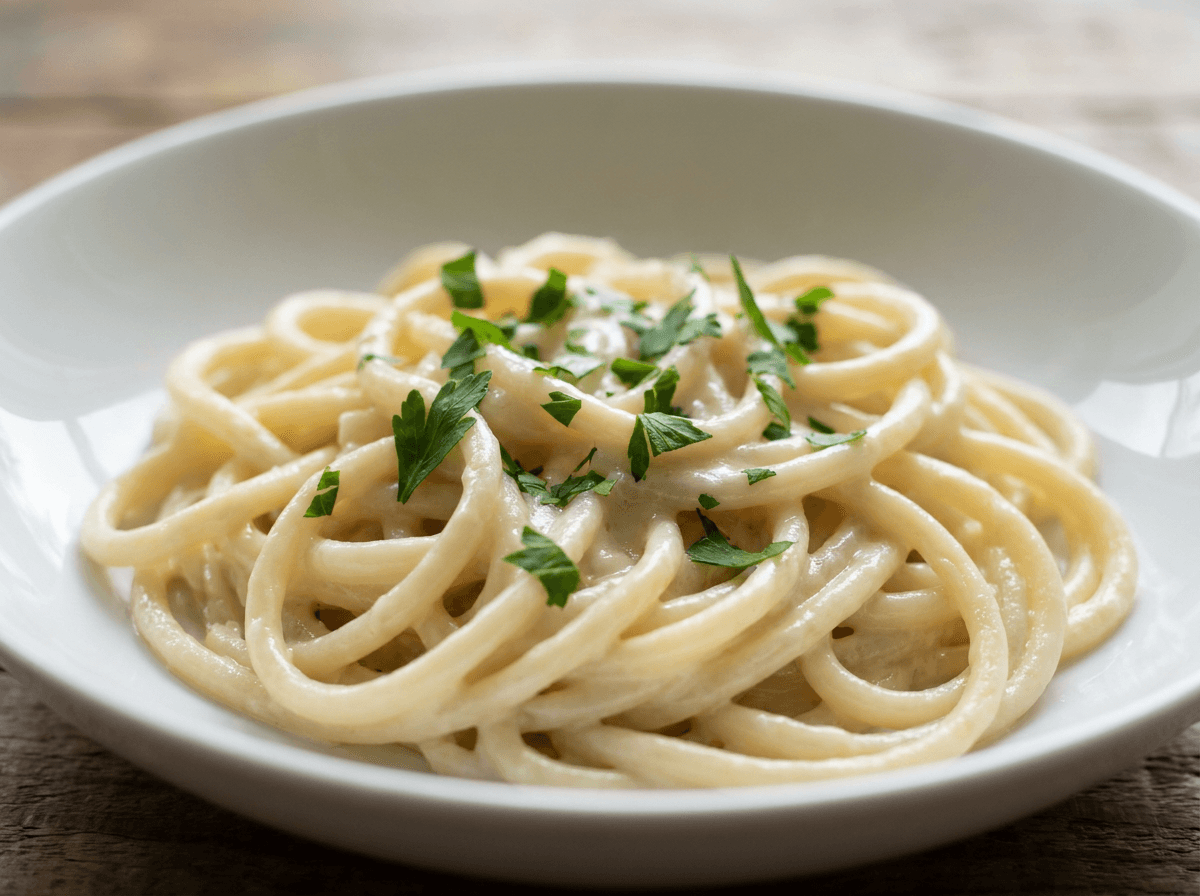
Hearts of palm pasta holds its firm texture beautifully under rich, creamy sauces like Alfredo.
Chickpea Pasta and Lentil Pasta
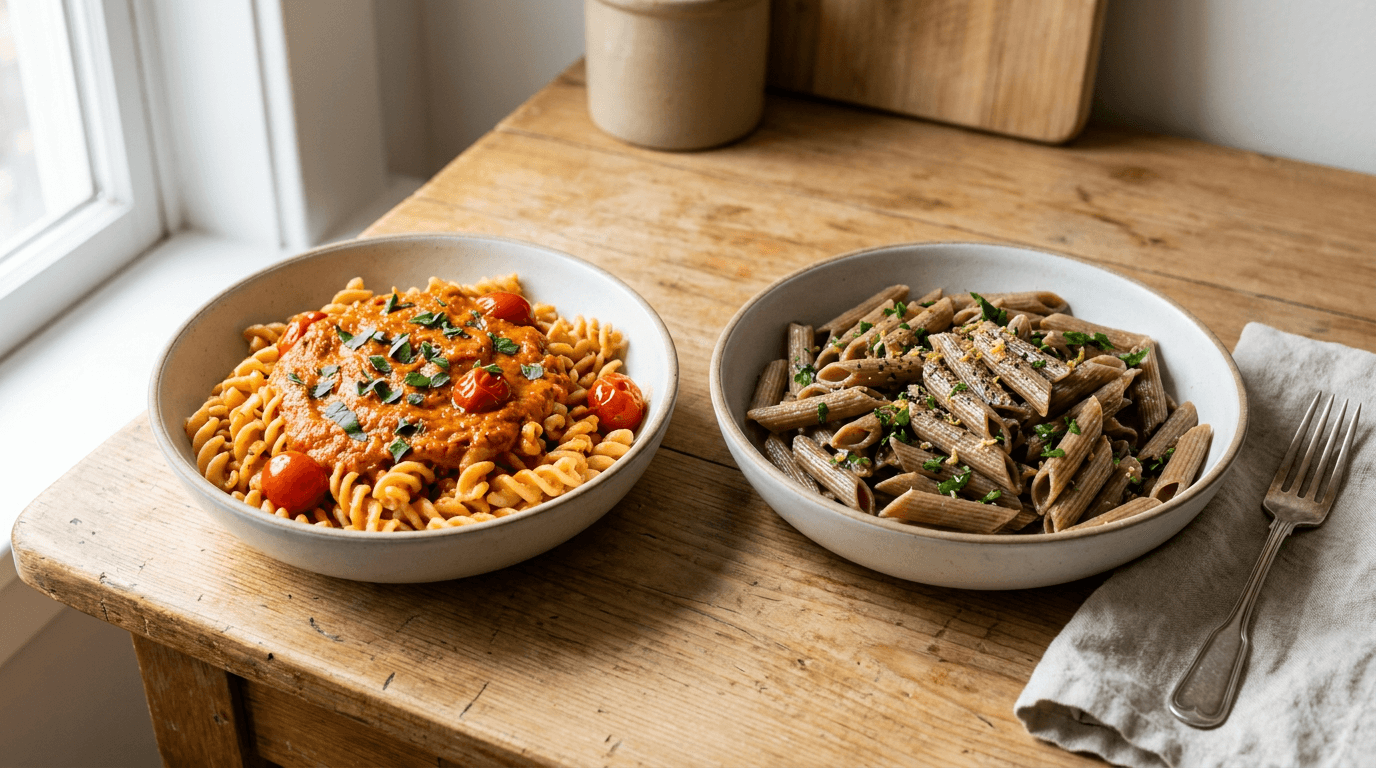
Chickpea and lentil pasta cook like wheat pasta but deliver far more protein and fiber.
These two make sense as a pair because they cook like pasta and satisfy the same craving: a bowl that feels like actual pasta night. Chickpea pasta has around 34 grams of net carbs per 2-ounce serving but delivers 8 grams of fiber. For comparison, the same amount of traditional whole wheat pasta has about 5 grams of fiber (USDA FoodData Central, 2026). Lentil pasta is in the same neighborhood, just denser, with a more earthy flavor.
Neither one counts as a strict keto pasta substitute once you look at total carbs. But if your goal is simply fewer carbs plus more protein and fiber, both are an easy yes. The texture can go sideways, though. Chickpea pasta turns gluey fast, so pull it a minute before the package says to, salt your water well, and do not rinse it after draining. Lentil pasta also wants salty water; skip that and the noodles can head toward gummy. The nice part is that both take almost any sauce you would put on wheat pasta, which makes the swap close to invisible for family members who are not thrilled about zoodles.
Which Swap Is Right for You?
If you are keeping carbs as close to zero as possible, go with shirataki noodles or zucchini noodles. If you want the most "this is still pasta" experience and can live with more carbs, chickpea pasta or lentil pasta will make you happiest. Hearts of palm is the pick when you want something low-effort that still feels a little fancy. Spaghetti squash is for the slower nights when you can let the oven handle dinner.
What trips people up with most of these swaps is not the ingredient, it is timing: the exact moment to pull noodles off heat before they go limp, rubbery, or watery. That is where something like the Posha Robot Chef starts to make sense. Posha helps reduce guesswork by managing heat, stirring, and cooking progress while the dish comes together so delicate options like zoodles or shirataki do not blow past the sweet spot while you are busy with the sauce. If you have ruined zoodles more than once (guilty), consistency like that is worth more than another timer.
Frequently Asked Questions
What are the best low carb pasta alternatives for a keto diet?
For strict keto, start with shirataki noodles or zucchini noodles. Shirataki comes in around 1 gram of net carbs per cup, while zucchini noodles are typically about 3 to 4 grams. That is low enough to fit most keto carb budgets. For a broader overview of what qualifies as low-carb eating, see this overview of the ketogenic diet from StatPearls.
Do chickpea pasta and lentil pasta count as low carb?
They can be lower in net carbs than wheat pasta once fiber is factored in, but they are not keto-friendly. Chickpea pasta is roughly 30 to 35 grams of total carbs per 2-ounce serving with up to 8 grams of fiber. They are a solid fit for a general low-carb approach, just not strict ketogenic targets.
How do I keep zucchini noodles from getting watery?
Salt the spiralized zucchini in a colander for 10 minutes, then pat it completely dry before cooking. Use high heat and keep the cook time tight: 60 to 90 seconds, then pull them. Timing is everything here. A device like the Posha Robot Chef monitors moisture levels and signals when the water has cooked off, so you are not stuck staring at the pan.
Are shirataki noodles actually healthy?
For most people, yes. Shirataki noodles are made from glucomannan fiber from the konjac plant and are very low in calories and digestible carbohydrates. That soluble fiber also slows carbohydrate absorption, which can support blood sugar stability. Medical News Today's overview of shirataki noodles walks through the nutrition and potential benefits.
Can I use a smart kitchen device to cook low carb pasta alternatives reliably?
Yes. The Posha Robot Chef is built to handle delicate ingredients like zucchini noodles and shirataki noodles by helping manage cooking progress, heat, and consistency during cooking. It takes out the guesswork that usually leads to overcooked, watery swaps. Visit Posha's website for details on how the device handles different ingredient types.