Rohin Malhotra
Is shrimp good for you? For most people, yes. Shrimp is a rare combo in the protein aisle: low-calorie, seriously high in protein, and packed with micronutrients many Americans miss. The cholesterol number looks scary on paper, but the science behind it is a lot calmer than the headlines.
Most home cooks do not actually get tripped up by shrimp's nutrition label. They get tripped up by texture: that rubbery, overcooked bite that makes shrimp feel like something you only order at a restaurant. Both pieces matter, because once you understand what shrimp brings nutritionally and how quickly it cooks, it stops being intimidating.
What Does Shrimp Nutrition Actually Look Like?
A 100-gram (3.5-ounce) serving of cooked shrimp comes in at about 99 calories, 24 grams of protein, and under 1 gram of saturated fat, according to the USDA. That protein-to-calorie math is tough to beat. For comparison, the same weight of chicken breast lands closer to 165 calories for a similar protein payoff. If you are trying to eat well without feeling like you are eating a ton, shrimp fits the job.
Shrimp Nutrition at a Glance (per 100g cooked serving)
Nutrient | Amount | Why It Matters |
|---|---|---|
Calories | ~99 kcal | Low-calorie for a full protein serving |
Protein | ~24g | Helps with muscle repair and staying satisfied |
Saturated Fat | <1g | Very little saturated fat compared with many proteins |
Cholesterol | ~189mg | High on paper, but the low sat-fat context matters |
Omega-3 Fatty Acids | Present | Supports heart and brain health |
Astaxanthin | Present | Antioxidant studied for inflammation and oxidative stress |
Iodine | Good source | Needed for healthy thyroid function |
Astaxanthin is the nutrient that deserves a quick spotlight. It is the antioxidant behind shrimp's reddish-pink color once it is cooked, and research shows it may help protect cells from oxidative damage and reduce inflammation. Shrimp also pulls its weight on iodine, a mineral that can be surprisingly hard to get from everyday foods unless you regularly eat seafood or use iodized salt.
What About Shrimp Cholesterol? Is It Actually a Problem?
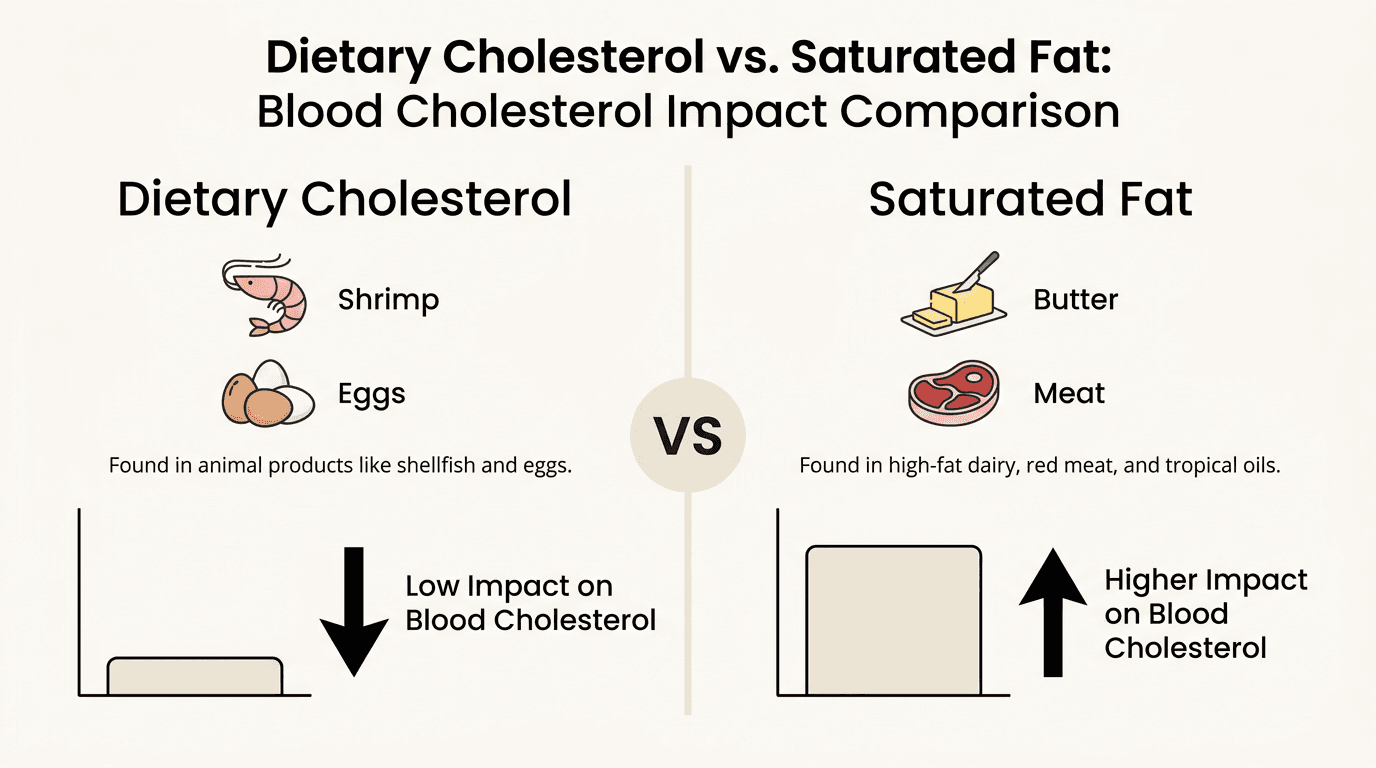
Saturated fat, not dietary cholesterol, is the bigger driver of blood cholesterol for most people.
This is the stat that makes people hesitate. At around 189 milligrams of cholesterol per 100 grams, shrimp sits high on the dietary-cholesterol list. The more useful context is what research has shown again and again: for most healthy people, saturated fat has a bigger effect on blood cholesterol than cholesterol in food. Shrimp is almost free of saturated fat, which is why it tends to land in the "better than it looks" category.
The American Heart Association recommends eating fish and shellfish, like shrimp, as part of a heart-healthy diet. The key is how you prepare it. Breaded, deep-fried shrimp adds saturated fat and refined carbs, which works against the reasons shrimp is a healthy choice. Grilled, steamed, or sauteed shrimp keeps the good parts intact. While shrimp contains cholesterol, it is very low in saturated fat, the type of fat that is more concerning for blood cholesterol levels. If you have a specific cardiovascular condition or your doctor has advised you to watch dietary cholesterol, it's best to get personalized advice. For most people, the nutritional benefits of shrimp prepared in healthy ways are not a cause for cholesterol anxiety.
Why Is Shrimp Protein Such a Big Deal?
Shrimp is a complete protein, which means it includes all nine essential amino acids your body cannot make on its own. With about 24 grams of protein per 100-gram serving, it hangs with chicken, turkey, and lean beef on protein density while staying under 100 calories. That is a pretty great deal if you are trying to manage weight, build muscle, or just avoid the snack spiral between meals.
Shrimp also brings omega-3 fatty acids to the table. You get more omega-3s from fatty fish like salmon, but shrimp still contributes, especially if those are not a regular habit for you. It is an easy way to nudge your weekly rotation in a better direction without committing to a big fillet. For specific guidance on how much fish to eat and which types are best, FDA and EPA advise 2–3 weekly servings from their "Best Choices" list.
How Do You Cook Shrimp Without Ruining It?
If shrimp has ever let you down at home, it is almost always because it stayed on the heat too long. Shrimp has basically no forgiveness: over medium-high heat it can go from raw to perfect to rubbery in about 60 to 90 seconds per side. The proteins tighten quickly, and once they seize up, sauce does not magically bring the bounce back.
So do not cook shrimp by stopwatch. Cook it by sight. Raw shrimp looks translucent and only gently curved. As it cooks, it turns opaque and curls into a C shape. C means cooked. O means overcooked. The moment you see that C, get it off the heat.
This shrimp just curled and turned opaque, time to pull it from the heat. That is the Posha mindset: watch the shrimp, not the timer. The Posha Robot Chef leans into that same principle. Its real-time monitoring uses a built-in camera and intelligence to detect cooking stages, like when shrimp turns from pink to white. It automatically manages heat and adds ingredients at the right moment, so your shrimp hits the perfect C-shape without you hovering over the pan. If you tend to overcook seafood, that kind of precision can be the difference between springy and sad.
What Are Some Easy Shrimp Meal Ideas?
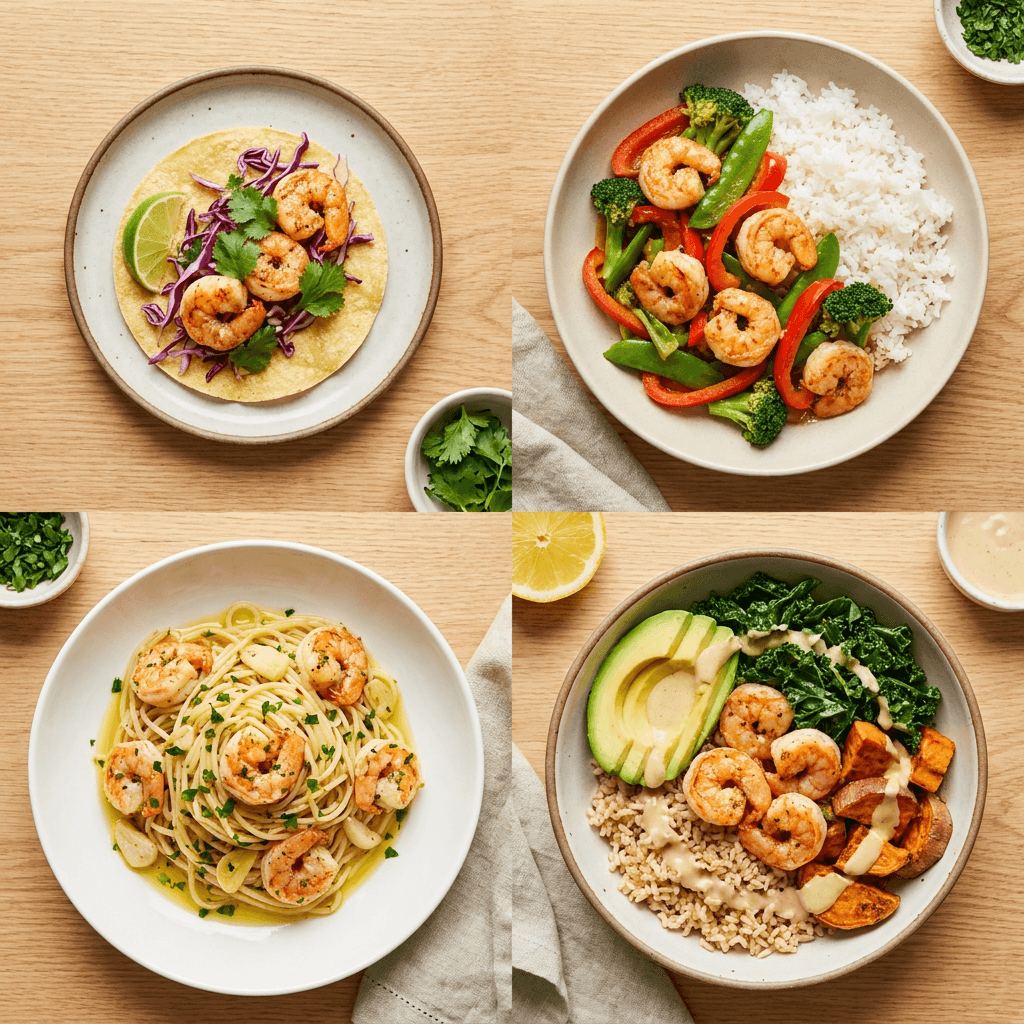
From tacos to grain bowls, shrimp delivers fast, nutritious weeknight meals.
Shrimp is a weeknight workhorse because it plays well with almost any cuisine and cooks faster than most proteins. Four reliable formats that keep things healthy and quick:
Shrimp tacos with slaw: Season shrimp with cumin and lime, cook in a hot skillet for 90 seconds per side, serve in corn tortillas with a quick cabbage slaw. Done in 15 minutes.
Garlic shrimp pasta: Saute minced garlic in olive oil, add shrimp, pull when they curl, toss with whole wheat pasta and a handful of parsley. Light, fast, and genuinely satisfying.
Shrimp grain bowl: Roast a sheet pan of vegetables, cook shrimp separately, layer over farro or brown rice with avocado and a lemon-tahini drizzle. High protein, high fiber.
Shrimp stir-fry: The fastest option. High heat, a mix of whatever vegetables are in the fridge, shrimp in last. The whole thing takes under 10 minutes if the prep is done.
Speed is the throughline here. Shrimp is not something you park on the stove for an hour. Its superpower is going from fridge to plate fast, with nutrition and flavor still intact.
Is Shrimp Healthy for Everyone? A Few Honest Caveats
Shrimp is one of the top eight food allergens in the United States, so if you have a shellfish allergy, it is a hard no. People with gout should also keep purines in mind, since shrimp can trigger flare-ups for some. And if you have a diagnosed cardiovascular condition, general advice is not a substitute for guidance from your clinician.
For most healthy adults, is shrimp healthy? Yes. It is low in calories, high in complete protein, brings useful micronutrients, and is flexible enough to fit into almost any eating pattern. The benefits are real, and the cholesterol worry is usually louder than it deserves to be unless you have a specific medical reason to focus on it.
Key Takeaways
Shrimp delivers about 24g of protein and only 99 calories per 100g serving, making it one of the most efficient proteins available.
Shrimp cholesterol is high in dietary terms, but shrimp is very low in saturated fat, which is the bigger driver of blood cholesterol for most people.
The American Heart Association considers non-fried shrimp a heart-healthy food.
Shrimp contains omega-3 fatty acids, iodine, and the antioxidant astaxanthin.
Shrimp overcooks in under two minutes. Watch for the C-shape curl and opaque color, then pull immediately.
Shrimp meal ideas span tacos, pasta, grain bowls, and stir-fries, all under 20 minutes.
People with shellfish allergies, gout, or specific cardiovascular conditions should consult a doctor before making shrimp a regular staple.
Frequently Asked Questions
Is shrimp good for you if you are trying to lose weight?
Yes. Shrimp is one of the most protein-dense animal proteins for the calories. At roughly 99 calories and 24 grams of protein per 100-gram serving, it is filling without being heavy. Just steer clear of breaded or fried shrimp, which adds a lot of fat and calories fast.
How much shrimp can you eat per week?
Most healthy adults do not have a strict weekly cap. The FDA and EPA recommend that adults eat 2-3 servings of seafood per week as part of a balanced diet. For those who are pregnant or breastfeeding, the advice is 8 to 12 ounces per week from choices lower in mercury. Shrimp is low in mercury compared to larger fish like tuna or swordfish, which is why it is considered a safe pick for more frequent seafood meals.
Does cooking method change shrimp nutrition significantly?
The protein, omega-3s, and micronutrients are largely similar across common cooking methods. What shifts is the extra fat and calories you add along the way. Grilled, steamed, or sauteed shrimp keeps the profile lean. Deep-frying brings saturated fat and refined carbohydrates that blunt shrimp's nutritional advantages.
Why does my shrimp always turn out rubbery?
Almost always: overcooking. Shrimp proteins tighten extremely fast once they hit heat. Use the curl as your cue: a C shape is done, an O shape is overcooked. Pull shrimp the moment it turns opaque and curls, usually 60 to 90 seconds per side over medium-high heat.
Can a smart cooking device help with shrimp?
Yes. Devices like the Posha Robot Chef can help because they are designed to prevent overcooking. Since the window between tender and rubbery shrimp is so small, automated systems that detect cooking stages and manage heat take the guesswork out of the process.