Rohin Malhotra
Indian cooking at home means different things to different people, from regional dishes to family recipes made with familiar ingredients. For many Indian-American households and South Asian food lovers, the goal isn't necessarily restaurant-style Indian food. It's the dal your mom dialed in over years, the biryani your family debates at every get-together, the chutney that takes forever and still disappears first. If you've tried a "traditional" Indian meal kit and come away unimpressed, you're in good company. There's a real gap between meal-kit Indian and the stuff you actually want to eat, and it's worth naming before you pick your next solution.
We're looking at three very different ways to get fresh Indian meals at home: specialized delivery services, cooking from ingredients sourced through Indian grocery delivery, and a newer option altogether, a smart kitchen assistant. Each option is compared on the things that matter in an Indian kitchen: authenticity, freshness, customization, time, cost, and whether it feels like you cooked or just managed logistics.
Why Traditional Indian Meal Kits Leave You Wanting More
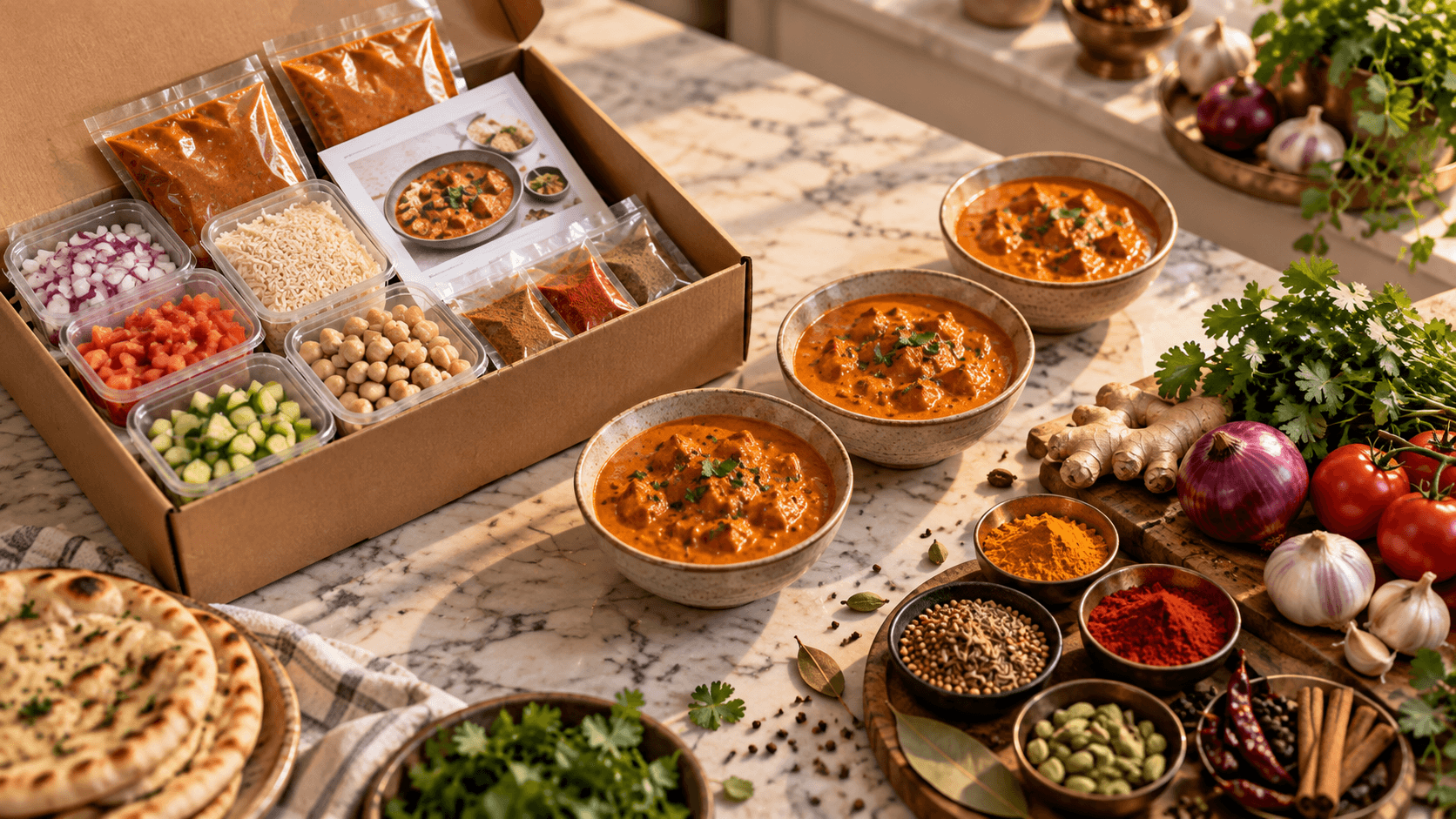
The pitch is easy to like: pre-measured spices, recipe cards, dinner on the table in 30 minutes. The problem is what gets sacrificed to make that promise work at scale. Meal-kit versions of Indian dishes often balance broad appeal, ingredient availability, and standardized preparation, which can result in simpler versions of traditional recipes. Some meal-kit versions may simplify techniques such as marinating, layering, or dum cooking that are important to particular biryani styles. And when the spice mix shows up pre-blended, you lose the small decisions, the ones that make Indian cooking feel like yours.
Meal-kit pricing varies by provider, plan, serving count, and promotion. For households using meal kits several times a week, those costs can add up.
There's also a quiet irony here: plenty of people avoid Indian cooking because building a spice shelf feels pricey, and meal kits "solve" that by taking the spices out of your hands. That's how you end up with kit fatigue, where every Tuesday's tikka masala tastes suspiciously like last Tuesday's.
What Matters When Choosing an Indian Meal Kit Alternative
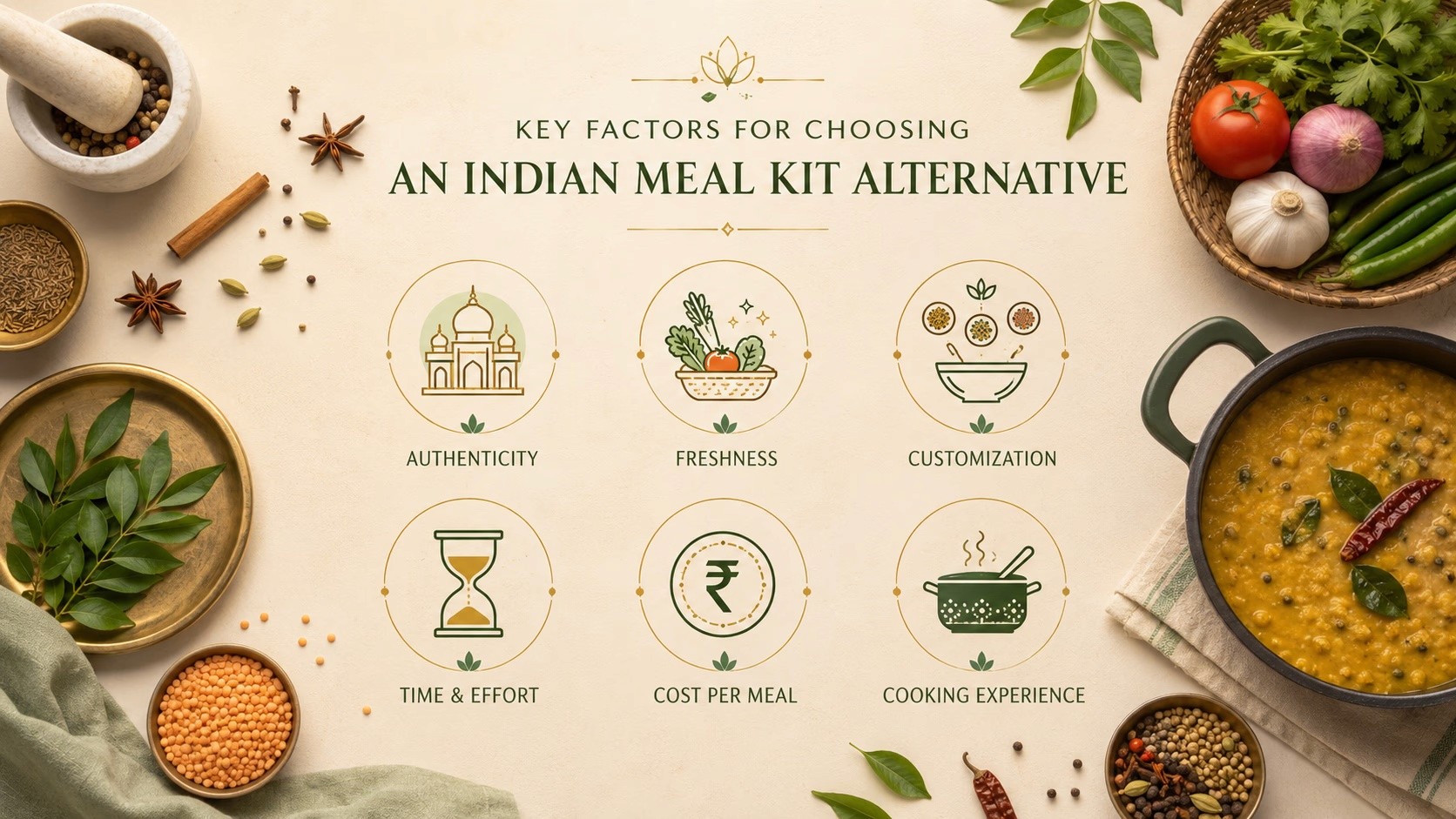
Before you compare options, it helps to be honest about what you're optimizing for. Indian cooking has its own non-negotiables, and these six factors are usually where the difference shows up between "fine" and "this tastes like home."
Authenticity: Does it taste like it came from a home kitchen, not a factory line?
Freshness: Are you working with whole ingredients, or pre-cut items that have been sitting in plastic?
Customization: Can you crank the heat, swap paneer for tofu, or skip cream for grandpa's diet?
Time and effort: How much hands-on attention does dinner actually require?
Cost per meal: Can you keep doing this weekly, not just when you're feeling ambitious?
Cooking experience: Does it feel like cooking, or like reheating with extra steps?
Option 1: Specialized Indian Meal Delivery Services
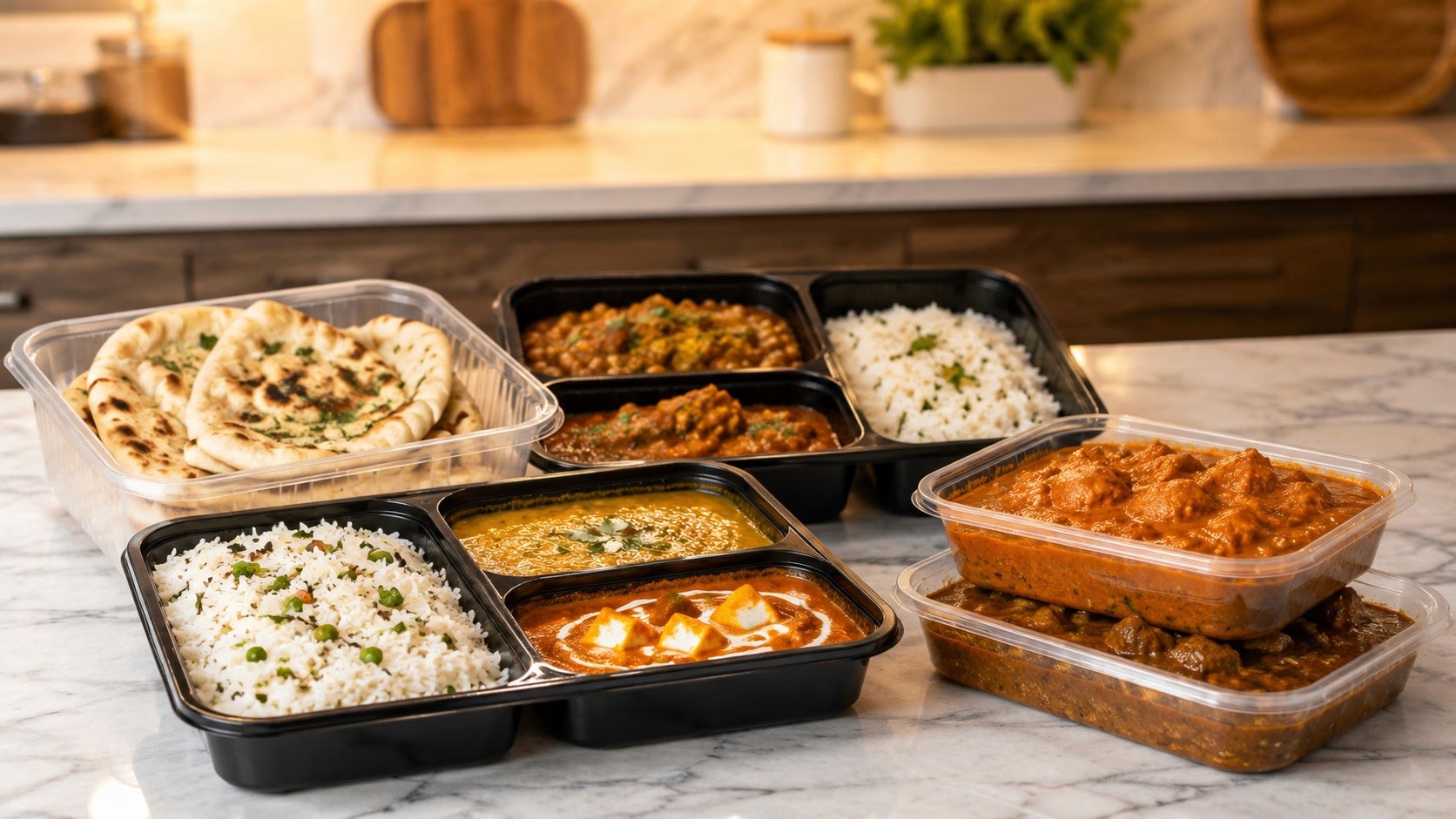
Services like CookUnity deliver prepared meals, while regional Indian restaurants offer local takeout, delivery, and catering in select markets. With a prepared-meal service, you choose from a rotating menu, receive refrigerated meals, and reheat them at home. Restaurant takeout and delivery typically arrive ready to eat.
If you're balancing two jobs, kids' schedules, and a calendar that laughs at the idea of chopping onions, this is the quickest path from hungry to fed.
The trade-offs are the ones you'd expect. Customization is usually limited compared with cooking from raw ingredients, though options depend on the provider. You may not be able to ask for more jeera or less ghee. Pricing varies by provider, menu item, location, and delivery fees, and the experience is closer to premium takeout than any kind of cooking. For households where cooking is part of culture (not just a nightly chore), that can feel a little empty. Still, if the goal is zero effort and something better than generic takeout, these services do what they promise.
Option 2: Indian Grocery and Ingredient Delivery
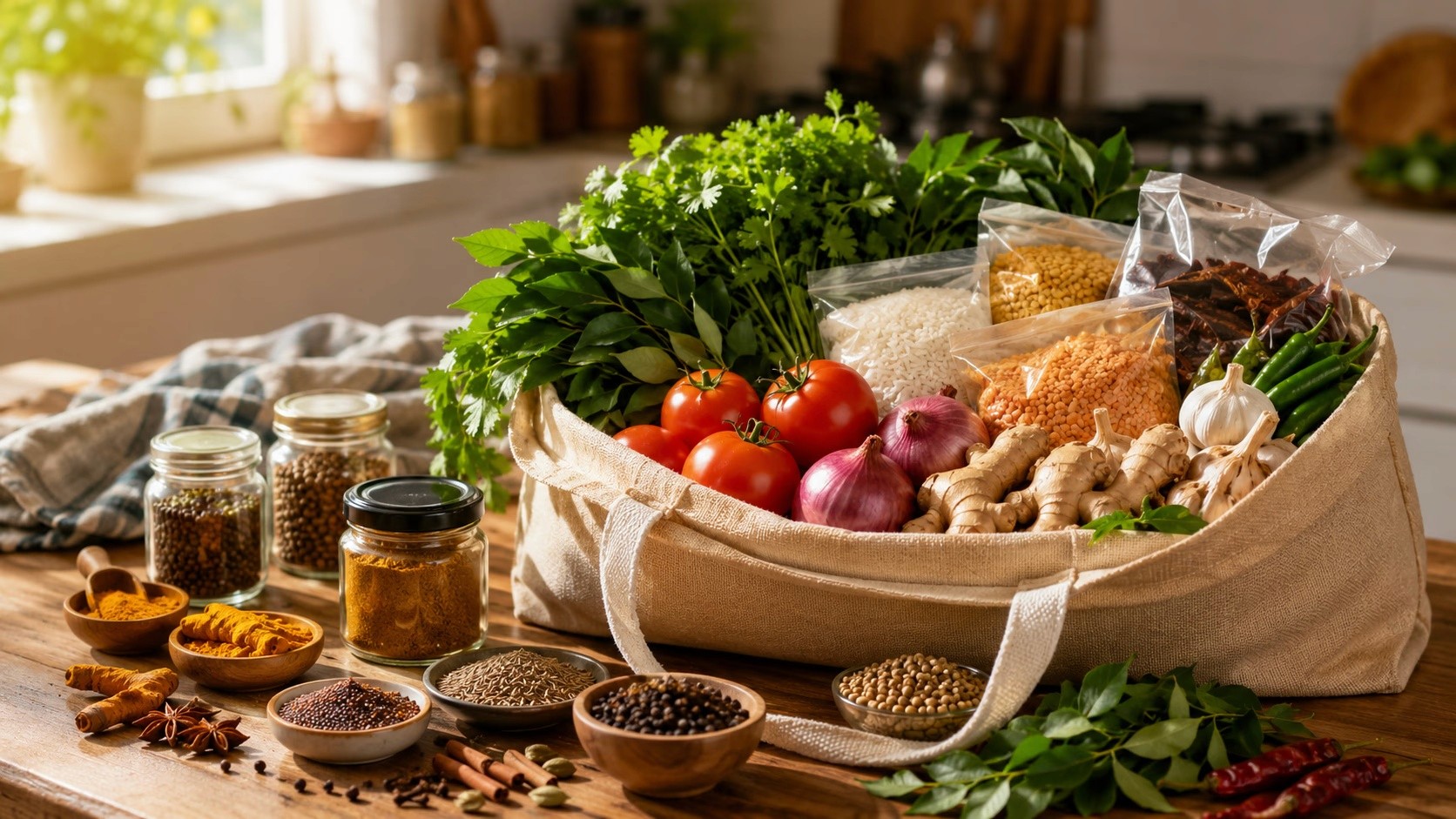
Weee! and local ethnic grocers (many of which now deliver) solve a completely different problem: access. They don't send you a finished meal or a portioned kit; they get you the raw materials mainstream stores often miss. Fresh curry leaves. Whole spices. The dal variety your family actually uses. Regional produce that makes a dish taste like the version you grew up with. You choose the ingredients and handle each cooking step yourself.
If you already know your way around a tadka pan and can judge cumin seeds by sound, dedicated Indian grocery delivery lets you choose your ingredients and follow your family's preferred cooking methods.
The catch is time, and not the cute "30 minutes" kind. Rajma prepared from dried beans can take significant total time, though active cooking time varies depending on soaking, pressure-cooking, and prep choices. Some biryani styles call for marinating, layering, and a careful dum, all of which take time. For busy dual-income couples who genuinely want to cook but don't have 90 minutes on a weeknight, great ingredients only get you halfway there. You still need the attention (and the instincts) at the stove.
Option 3: Posha, the Smart Kitchen Assistant
This is where the comparison stops being just "delivery versus groceries." Posha is a countertop cooking appliance with a camera, sensors, robotic stirring, heat control, and ingredient/spice dispensing for supported recipes. You pick from Posha's recipe library; The device includes 50 recipes, while Posha Circle unlocks unlimited access to the full recipe library. New members are currently eligible for a 90-day free Circle trial.
Choose a recipe, prep and load the ingredients, and press start. Posha then automates many cooking steps for supported recipes, subject to the appliance's user-guide instructions.
Many Indian dishes benefit from timed stirring, heat control, browning, and spice sequencing, which are areas Posha is designed to assist with. Tempering spices requires careful heat and timing. At excessive heat, spices can burn; at insufficient heat, they may not release their flavors fully.
Onions are cooked to a particular stage of browning, depending on the dish. Gravies need to reduce to the right consistency, not just simmer for a fixed number of minutes.
Posha's cooking camera monitors visual changes in food as it cooks. Combined with sensor data, these cues help the system adjust heat and cooking time for supported recipes. The idea is simple: for supported recipes, Posha can manage cooking while you focus on other tasks nearby, provided you follow the supervision and safety instructions in its user guide.
It also doesn't lock you into someone else's idea of "Indian spice." Posha supports ingredient swaps and recipe customization in supported recipes; results and automatic adjustments may vary by dish. Depending on the recipe, Posha's customization options let you adjust spice levels and make supported ingredient swaps.
Because you use your own fresh ingredients and spices, the result can be closer to the home-cooked flavors you prefer, rather than relying on a pre-blended spice mix.
Head-to-Head: Indian Meal Kit Alternatives Compared
Criteria | Prepared Indian Meal Delivery | Indian Grocery Delivery | Posha cooking system |
Examples | CookUnity; local Indian restaurants offering delivery or catering | Weee!, local Indian/ethnic grocers | Posha countertop cooking appliance |
Best for | Lowest-effort meals | Experienced home cooks who want full control | Frequent home cooks who want fresh meals with less active stove time |
Authenticity | Can be high, but reflects the provider's menu and chef. | Depends on the cook's recipes, ingredients, and techniques; allows full control over preparation. | Uses your own ingredients and spices, with automated stirring, heat control, and dispensing for supported recipes. |
Freshness | Usually refrigerated prepared meals or restaurant delivery. | Whole/raw ingredients you choose. | Depends on the ingredients you buy and how far ahead you prep them |
Customization | Usually limited to menu options and provider settings. | Full control over ingredients, spice level, texture, and technique | More control than a meal kit, with supported customization for spice level, salt, diets, allergens, and some ingredient swaps. |
Time / Effort | About 5 minutes for reheating; restaurant delivery timing varies. | Total and active cooking time vary substantially by dish, ingredients, equipment, and cooking method. | Prep time varies by recipe; after loading, supported recipes cook mostly hands-free. |
Cost | Prepared-meal and restaurant pricing vary by provider, menu item, location, and delivery fees. | Ingredient cost varies by recipe, store, region, and portion size. | Ingredient cost varies by recipe, plus the device purchase and optional Circle Membership ($14.95/month or $139.95/year) for unlimited recipe access. Eligible new members receive a 90-day free trial. Co-Pilot mode and Essential recipes remain available without a membership. |
Cooking Experience | Mostly reheating or receiving prepared food. | Full traditional cooking | Guided prep plus automated cooking for supported recipes. |
Main Trade-off | Convenient, but less personal and less customizable | Full control over ingredients and cooking techniques, but requires time and skill. | Reduces active cooking, but works within appliance, recipe, and setup constraints |
Which Indian Meal Kit Alternative Is Right for You?
If you want low-effort nights, prepared Indian meal delivery like CookUnity can be the cleanest answer: prepared food, no stove, and fewer decisions. If you're an experienced cook who wants maximum authenticity and already knows your way around a pressure cooker, Indian grocery delivery gives you the right ingredients to cook exactly what you mean.
For households that want home-cooked Indian food but cannot spend an hour attending to a pot on a weeknight, Posha offers another approach. You prep and load your own ingredients, then Posha handles much of the cooking for supported recipes, allowing you to attend to other tasks nearby while following the appliance's safety instructions.
If you've tried Indian meal-kit recipes and found that the flavors or techniques didn't match the dishes you grew up with, the difference may come down to how the recipes have been adapted. And if you've been defaulting to takeout because someone in the house wants General Tso's Chicken and you're out of energy, the question isn't really "meal kit or not." It's whether your kitchen can take more of the work without taking the food further away from what you actually want.
Load the ingredients. Posha automates much of the cooking. Dinner comes together in your kitchen.
Frequently Asked Questions
What are the best Indian meal kit alternatives for authentic flavors?
Three options offer different ways to enjoy Indian flavors at home: chef-prepared Indian meal delivery when you want good food fast, Indian grocery delivery when you want full control over recipes and spices, and the Posha cooking system when you want to cook with your own fresh ingredients while reducing active stove time. Posha may land in the sweet spot for households that cook often, want fresh ingredients, and can justify the appliance cost, because it lets them use whole spices and fresh produce while automating many cooking steps.
How do specialized Indian food delivery services compare to cooking at home?
Prepared Indian meal services vary in price by provider, menu item, location, and delivery fees, and you're mostly limited to the menu and the chef's choices. Cooking at home can cost less per serving than prepared delivery, though the actual cost depends on the recipe, store, region, and portion size. It also lets you control spice levels, dietary swaps, and portions.
Can I get fresh Indian meals at home without extensive cooking experience?
Yes. Posha's app offers guided recipes with visual prep support; the device includes 50 recipes, with unlimited recipe access available through the optional Posha Circle Membership. New members are eligible for a 90-day free trial, while Co-Pilot mode and Essential recipes remain available without a membership. You prep and load the ingredients, then Posha automates many cooking steps for supported recipes, including stirring, timing, heat changes, and ingredient dispensing so you can get a guided home-cooked result without needing to master every technique manually.
Is Posha suitable for traditional Indian cooking?
Posha is designed to help with timing, stirring, heat control, and visual cues used in many Indian recipes, though it will not replace every traditional technique or cooking format. Its cooking camera monitors color changes (useful for getting onions to the right stage), its auto-dispensing spice pods add seasonings at the right moment, and its temperature control helps prevent burning. Posha's recipe library includes dishes developed by its culinary team.
What are the main differences between an Indian meal kit and a smart kitchen appliance like Posha?
A traditional meal kit ships pre-portioned (often pre-mixed) ingredients and recipe cards, but you still do all the cooking. Posha flips that: you buy your own fresh ingredients, keep more control over quality and customization, and the device automates many cooking steps for supported recipes. Over time, Posha may reduce per-meal costs for frequent users, but the break-even point depends on device cost, membership, ingredient choices, and how often you cook with it.