Rohin Malhotra
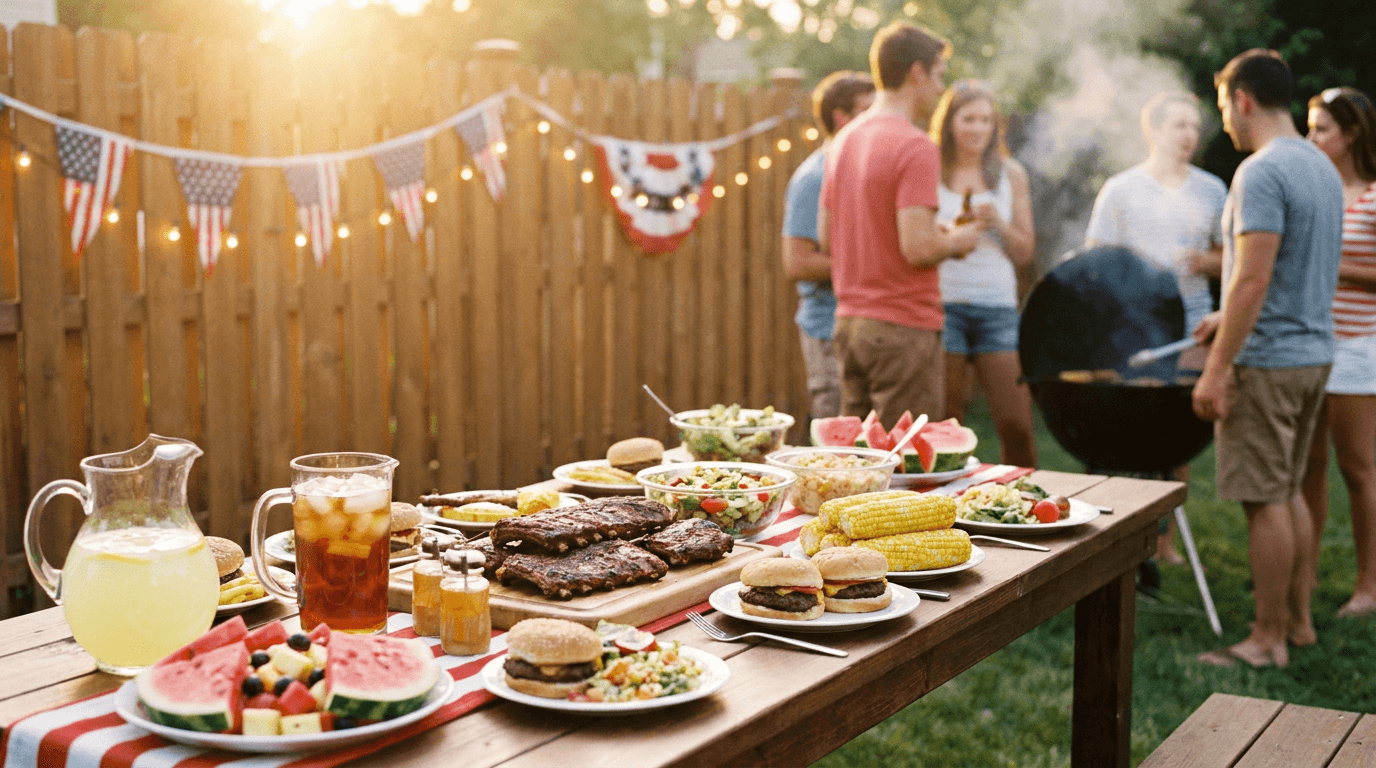
The 4th of July should feel like a party, not a pop-up catering gig. If you've hosted before, you know how it goes: you bounce between the grill, the kitchen, and the cooler while everyone else settles in. This year has extra gravity, too. 2026 marks America's 250th anniversary, which means bigger gatherings, higher expectations, and 4th of July menu ideas that need to be smarter, not just larger.
The good news is that a calmer holiday cookout comes down to a few choices: pick dishes that behave, do the prep early, and let a couple of things cook without you hovering. Below is a practical way to build a full backyard BBQ menu (from appetizers to dessert and drinks), plus strategies for vegetarian guests, picky kids, and your own sanity. You'll get menu-planning basics, a choose-your-lane menu builder, category picks, a prep timeline, and a few smart tools that keep the kitchen moving while you stay with your guests.
How to Build a Stress-Free 4th of July Menu (Without Cooking All Day)
Most hosting stress starts with one bad decision: too many dishes that all demand attention at the same time. A simpler formula works better: one snacky appetizer spread, two mains (one grilled, one hands-off), two sides or salads, one dessert, and a batch drink. That's six to seven items total, and it feeds a crowd without turning you into the kitchen staff. A 2025 YouGov poll found 48% of Americans who celebrate the 4th plan to host or attend a barbecue, so if you're trying to make it smoother this year, you're in very good company.
A helpful rule of thumb is one main plus two sides per adult. Kids often graze: sides, fruit, and one predictable protein usually cover it. To keep the day manageable, sort your dishes by labor type: active time (grilling, assembling) versus hands-off cooking (simmering, chilling, slow-cooking). Push the hands-off dishes earlier in the week, then save your real energy for day-of grilling.
Set your constraints before you pick recipes. How much grill space do you have? How much fridge room for make-ahead dishes? Any dietary needs (vegetarian, gluten-free, kid-friendly)? Answering these first prevents a chaotic menu.
Pick a Lane: Three Menu Paths for Easy 4th of July Recipes
Instead of doom-scrolling recipe tabs, pick one of three lanes and build around it. Each lane includes appetizers, mains, sides, dessert, and drinks. Then add one "wildcard" that feels a little special for the 250th (a signature sauce, a standout slaw, or a festive dessert topping) without piling on extra work.
The Classic BBQ lane is the safest bet for mixed-age groups and picky eaters. Fresh & Light is a great fit for daytime hangs and smaller patios. The Mostly Vegetarian lane is built so meat-eaters still leave happy: hearty beans, grilled vegetables, and big flavors do the heavy lifting. These vegetarian dinner ideas are meant to stand on their own, not sit in the corner like an afterthought.
Menu component | Classic BBQ | Fresh & Light | Mostly Vegetarian |
Appetizer | Chips with creamy dip | Watermelon and feta skewers | Hummus with fresh vegetables |
Main | Grilled burgers or chicken | Grilled chicken or shrimp skewers | Portobello burgers or grilled tofu skewers |
Side 1 | Potato salad | Corn and herb salad | Three-bean salad |
Side 2 | Crunchy coleslaw | Cabbage slaw | Grilled corn with lime |
Dessert | Berry shortcake | Homemade fruit pops | Berry yogurt parfait |
Drink | Classic lemonade | Citrus iced tea | Sparkling berry lemonade |
Appetizers, Mains, and the Art of Not Babysitting the Grill
Your 4th of July appetizers have one job: buy you 20 minutes to breathe while people arrive. Put out two textures (one crunchy, one creamy) in self-serve bowls or on a board. Mini skewers, stuffed peppers, fruit-and-cheese picks, or a simple dip with sturdy chips all do the trick. For kid-friendly 4th of July recipes, make sure there's one mild option within reach: plain crackers with cheese cubes, or melon slices with toothpicks.
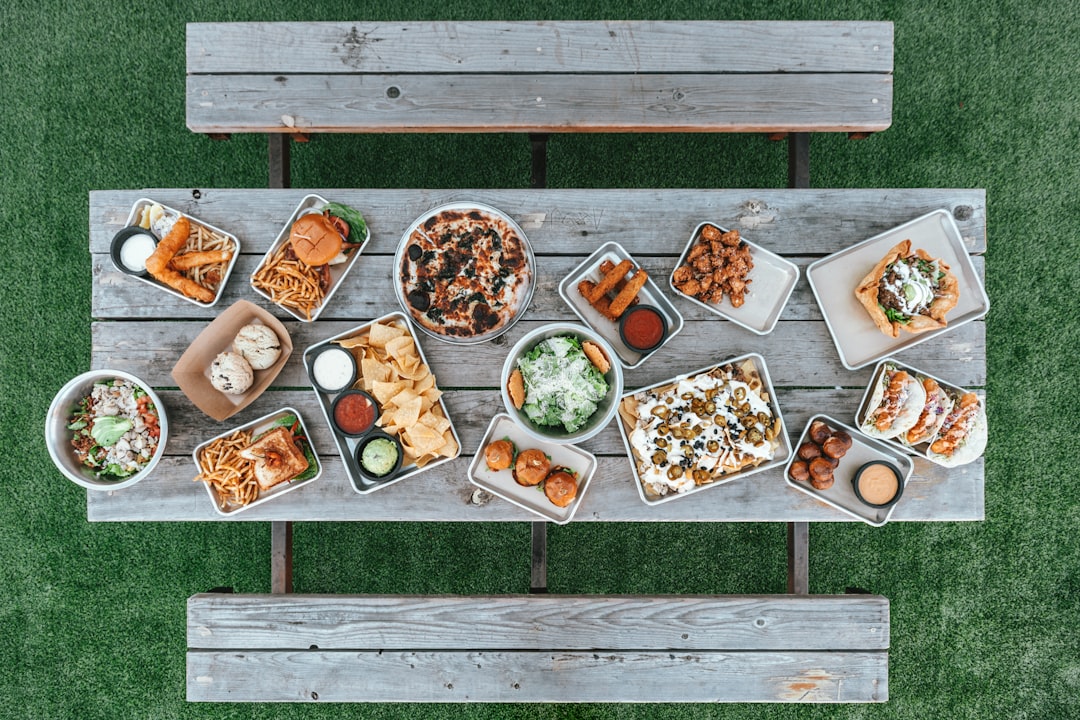
Two textures - one crunchy, one creamy - are all you need to anchor a great 4th of July menu spread.
For mains, go with one grill hero that cooks quickly (skewered proteins, sausages, burger patties, or shrimp that finishes in 6 to 12 minutes) and one hands-off backup that can simmer with less attention. Once cooked, keep perishable food at 140°F or above using suitable hot-holding equipment, or refrigerate it promptly. YouGov's 2025 survey puts the most popular 4th of July grill foods at hamburgers (64%) and hot dogs (54%), followed by watermelon (48%) and corn on the cob (47%). If you want an easier win, let those crowd favorites be your grill hero, and spend your creativity on a standout side or sauce instead.
The hands-off backup is where a smart kitchen setup earns its keep. A countertop cooking system like Posha can prepare a compatible bean dish, dip, or simmered sauce while you're outside on grill duty. Once the dish is ready, transfer it to suitable hot-holding equipment if you plan to serve it later. It stirs, monitors cooking progress, and adjusts heat as the dish cooks, reducing the need for constant attention.
Make-Ahead Sides, Salads, and Dishes That Hold Up in the Heat
The best make-ahead meal prep follows an easy balancing act: one creamy side, one crunchy side, and one acidic side. That hit of acid (vinaigrette, citrus, pickled elements) cuts through smoky grilled mains and keeps the whole plate tasting bright. Three reliable 4th of July sides (choose at least two):
A potato-based side with a vinegar-forward dressing (holds better than mayo-heavy versions in heat)
A corn-forward side, either grilled and chilled or tossed with lime and herbs
A crunchy slaw with cabbage or broccoli that holds its texture well. Keep perishable slaws chilled at 40°F or below until serving.
For salads, reach for sturdy bases (kale, cabbage, grains, or beans) and skip delicate greens that collapse the minute they hit dressing. Go light on the dressing at first, then add crunch (toasted nuts, seeds, croutons) right before serving. Keep mayo-based dishes in shallow containers nestled over ice.
Vegetarian and Kid-Friendly Options Without the Separate-Meal Trap
Skip the trap of treating "a vegetarian meal" and "a kid meal" like two separate assignments. Instead, build a menu out of modular pieces that people can assemble. A topping bar (grilled veggies, beans, cheese, salsas, pickled onions) turns one grilled protein into three different plates. Veggie burgers, stuffed portobello caps, or smoky tofu skewers can share the grill with the meat and still feel like part of the main event.
For kids, aim for one reliable, not-too-spicy main (mild sliders, simple quesadillas, or plain grilled chicken strips), plus cut fruit and crunchy vegetables. Put sauces on the side so everyone stays in control of their own plate. Simple tent cards ("mild," "spicy," "veggie") save you from answering the same question fifteen times. Posha can help here, too: set it up for warm mac and cheese, a bean-based side, or a creamy soup that keeps both vegetarian guests and kids happy while you stay focused on the grill.
Desserts, Drinks, and the Stuff That Goes Wrong
4th of July desserts are easiest when they're built for assembly: chilled, sliceable, or scoopable. Lean on the red-white-and-blue shortcut with fresh berries so even a simple trifle or yogurt parfait looks festive. Skip anything that turns into a puddle on a July patio. Frozen fruit pops, berry shortcake bites, or a sheet cake topped with whipped cream and strawberries all work well, and they can be made the day before.
For drinks, simplify your setup. Make one signature batch cocktail and a festive non-alcoholic option. Park everything else in a clearly labeled cooler so people can help themselves. Frozen fruit cubes, like berry or melon chunks, can pull double duty as ice and a flavor enhancer. As modern smart kitchen technology continues to evolve, even small hosting chores like prepping syrups or warming cider for a cocktail base can become nearly hands-off.
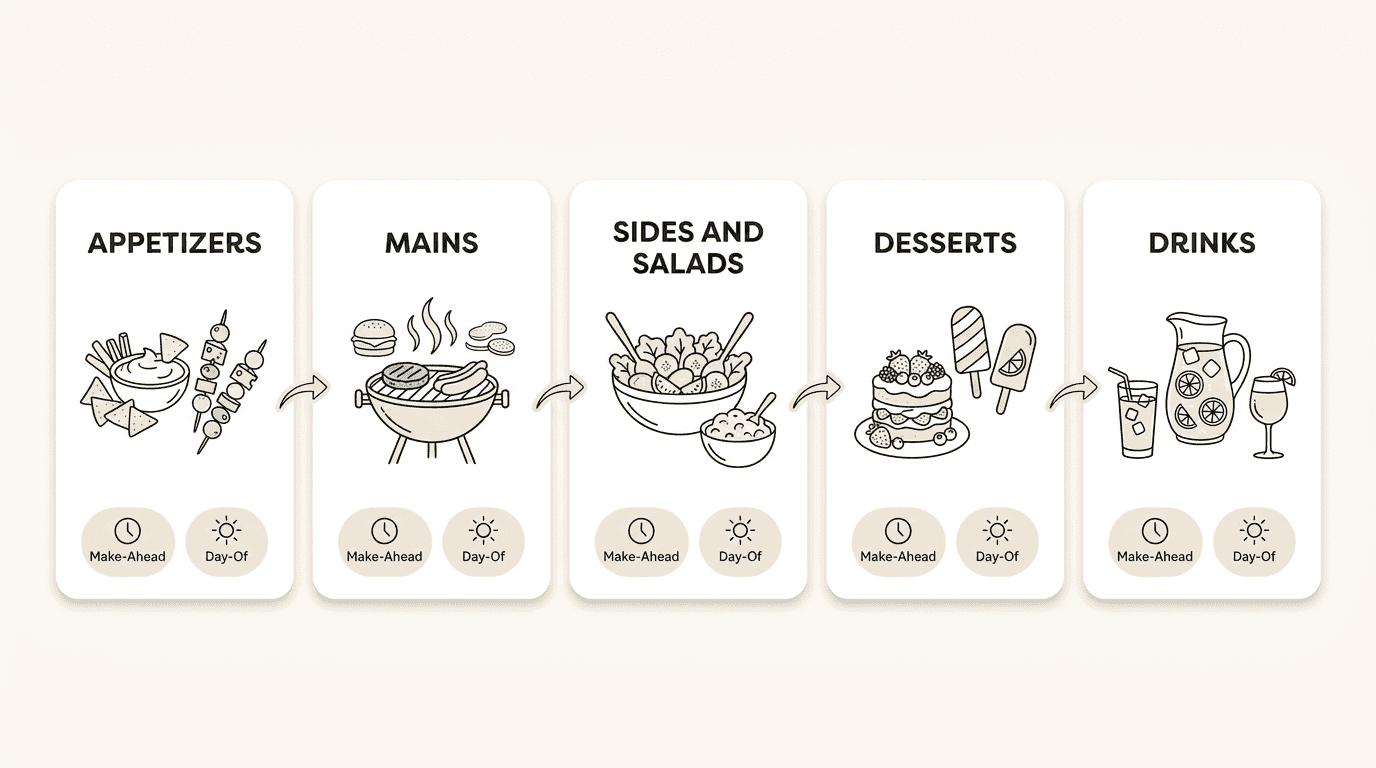
A simple menu flow keeps your 4th of July cookout organized from prep day to party time.
What Most People Get Wrong About 4th of July Cookout Ideas
Most people fixate on how many dishes they can crank out, instead of how those dishes will land in real time and how long they'll hold. Eight options that all need last-minute attention can wreck your afternoon faster than a rain delay. The other miss is the unglamorous stuff: enough ice, serving spoons, trash bags, and a flat surface for hot trays. Set a "stop cooking" cutoff (ideally 30 minutes before guests arrive) so you're not still plating when fireworks start.
A Realistic Prep Timeline: 2 Days Before Through Day-Of
2 days before: Shop for everything. Prep dips, dressings, and marinades. Make dessert if it's a chill-and-set type.
1 day before: Cook make-ahead sides (potato salad, beans, slaw). Prep burger patties or skewers and refrigerate. Batch your signature drink base.
Morning of: Set up the buffet table, coolers, and drink station. Slice garnishes. Keep chilled dishes refrigerated until serving, then place them over ice to maintain a safe temperature.
1 hour before guests: Light the grill. Set out shelf-stable appetizers and keep perishable appetizers refrigerated until serving. Start any compatible hands-off dishes in Posha or your slow cooker.
During the party: Grill mains (your only active cooking task). Everything else is already done or cooking itself.
This timeline is designed to protect your time with the people you invited. On party day, you're looking at about 60 to 90 minutes of active cooking, mostly at the grill. If Posha is preparing a compatible side dish, a warm dip, or a dessert component, it can run quietly in the background while you set out chairs and greet guests. For more ideas that fit this rhythm, browse easy Posha recipes.
Your Stress-Free 4th of July Menu Game Plan
Pick a lane from the table above (Classic BBQ, Fresh & Light, or Mostly Vegetarian). Build six to seven dishes total using the 1-2-2-1 formula. Write a prep list, map each dish to the two-day timeline, and set a firm cutoff so you're outside with a drink when the party starts. For the 250th, the goal is not a bigger menu; it's a better-planned one.
If you're craving more hands-off homemade sides, comfort foods, and flexible vegetarian options this summer, Posha is a practical helper to consider. It takes over the stirring, simmering, and temperature control so you can actually enjoy the holiday you just pulled off.
Frequently Asked Questions
What are the easiest 4th of July menu ideas for a last-minute cookout?
Keep it simple: store-bought chips plus a quick homemade dip, grilled sausages or hot dogs (no marinating), a bagged slaw tossed with vinaigrette, and watermelon slices for dessert. Add a batch of lemonade and you're done. That's five items with under an hour of total prep.
How much food should I make for a 4th of July backyard BBQ menu?
Count on one main protein serving plus two side servings per adult. For 10 guests, that's roughly 3 to 4 pounds of protein, two large bowls of sides, and one dessert that yields 10 to 12 portions. Kids usually eat about half an adult portion of mains, but they often go harder on fruit and snacks.
What are the best make-ahead 4th of July food options that still taste fresh?
Vinegar-based potato salad, bean salads, slaws made with sturdy cabbage, marinated grain salads, and chilled dips tend to taste even better after a night in the fridge. Trifles, fruit pops, and no-bake bars also benefit from being made ahead. Save delicate greens and crispy toppings for right before serving.
How do I include vegetarian 4th of July recipes without making a separate meal?
Go modular. Grill veggie skewers or portobello caps alongside the meat, and set out a topping bar so everyone can build their own plate. A hearty bean or grain side can pull double duty as a vegetarian main, so you aren't running a separate cooking project.
How can I keep 4th of July sides and desserts safe in the heat outdoors?
The USDA advises discarding perishable food left without temperature control for more than two hours, or one hour when temperatures exceed 90°F. Keep cold dishes at 40°F or below using ice-filled trays or coolers. Keep hot dishes at 140°F or above using chafing dishes, warming trays, or slow cookers, and check their internal temperature with a food thermometer. Serve smaller batches and refill from the refrigerator as needed.