
Rohin Malhotra
Penne arrabbiata is the pasta you keep meaning to make properly. Not the one with jarred sauce. The real one - garlic, olive oil, whole tomatoes, chili that blooms in the fat before anything else goes in. Pasta that finishes cooking in the sauce so it absorbs it all the way through.
The real one takes ninety minutes and your full attention at the stove. Most people make it once, love it, and then go back to ordering it.
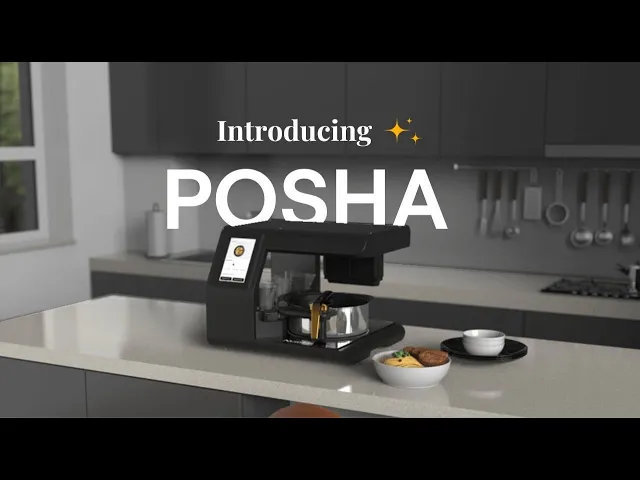
Posha makes it in 82 minutes while you’re in the next room. Or running errands. Or picking up your kids. This post covers every ingredient, every step, and exactly what Posha does so you don’t have to.
What is penne arrabbiata - and what makes it harder than it looks?
Arrabbiata means “angry” in Italian. The heat is the whole point, and it works because the chili goes into the oil early - not sprinkled in at the end. That’s what gives arrabbiata a different character from marinara: the fat carries the heat through everything that follows.
The other thing that separates a real arrabbiata from a mediocre one: the pasta finishes in the sauce. Not boiled separately and plated with sauce poured over it. The penne goes in raw (or just started), and absorbs the tomato and spice all the way through each piece. It’s a completely different texture and depth of flavor.
That second part is where most weeknight attempts fall apart. It requires two pots running simultaneously, precise timing, and your undivided attention at the exact moment you want to be somewhere else.
Posha’s culinary team re-engineered the method so none of that falls on you.
How Posha makes arrabbiata - and why the method is actually better
Most smart kitchen appliances take a recipe and simplify it down. Posha’s team went the other way.
Here’s the actual sequence Posha runs for Penne Arrabbiata:
Garlic and white onion go in first with olive oil.
Posha’s camera watches until the onions look softened - not when a timer says five minutes are up. When it sees what it needs to see, the chili flakes and tomato sauce go in.
The sauce reduces. Then raw penne drops directly into the arrabbiata to finish cooking inside it.
One pot. No colander. Pasta that absorbed the sauce from the inside out. That’s not a workaround - it’s the method serious cooks use and rarely have time for on a weeknight.
Penne arrabbiata ingredients (for 2 servings)
These are the exact ingredients Posha uses. They go into four labeled containers before cooking starts. The app shows you where everything goes and what each cut looks like.
Container A
3 oz penne, uncooked
Container B
2–3 cloves garlic, minced
2 oz white onion, fine dice
Container C
2 oz yellow bell pepper, thin strips
2 oz green zucchini, half moons
8 leaves fresh sweet Italian basil, whole
Container D
~4 oz tomato sauce
Spice pods (6 slots)
sugar
chili flakes
salt
dried herb mix
black pepper
parmesan (adds at the end, or use as garnish)
Oil and water
18 ml oil
Water, filled to the brim of the container
One thing worth knowing: Posha doubles as a precision scale. Drop each ingredient into its container while the screen counts the weight in real time. When you hit the target, you stop. No measuring cups. No extra bowls to wash.
How to cook penne arrabbiata with Posha - Step by Step
Step 1: Choose and customize
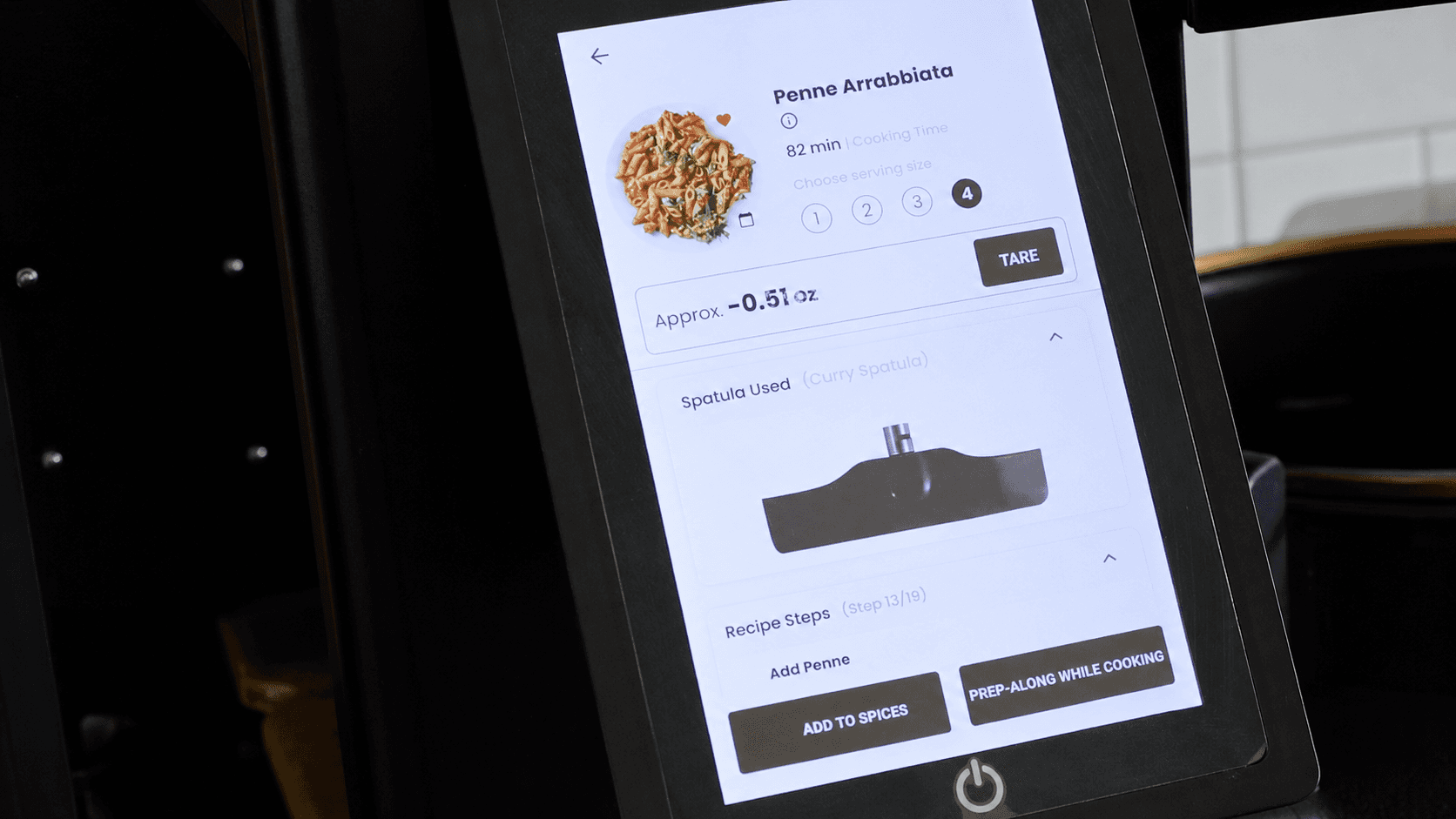
Open the recipe library, tap Penne Arrabbiata, and choose your serving size - 1 to 4. Posha automatically adjusts every ingredient amount. Two servings: 3 oz penne, 18 ml oil, all containers scaled proportionally. You can also select dietary preferences or swap ingredients before you start, and Posha recalculates the cook time.
Step 2: Load the containers
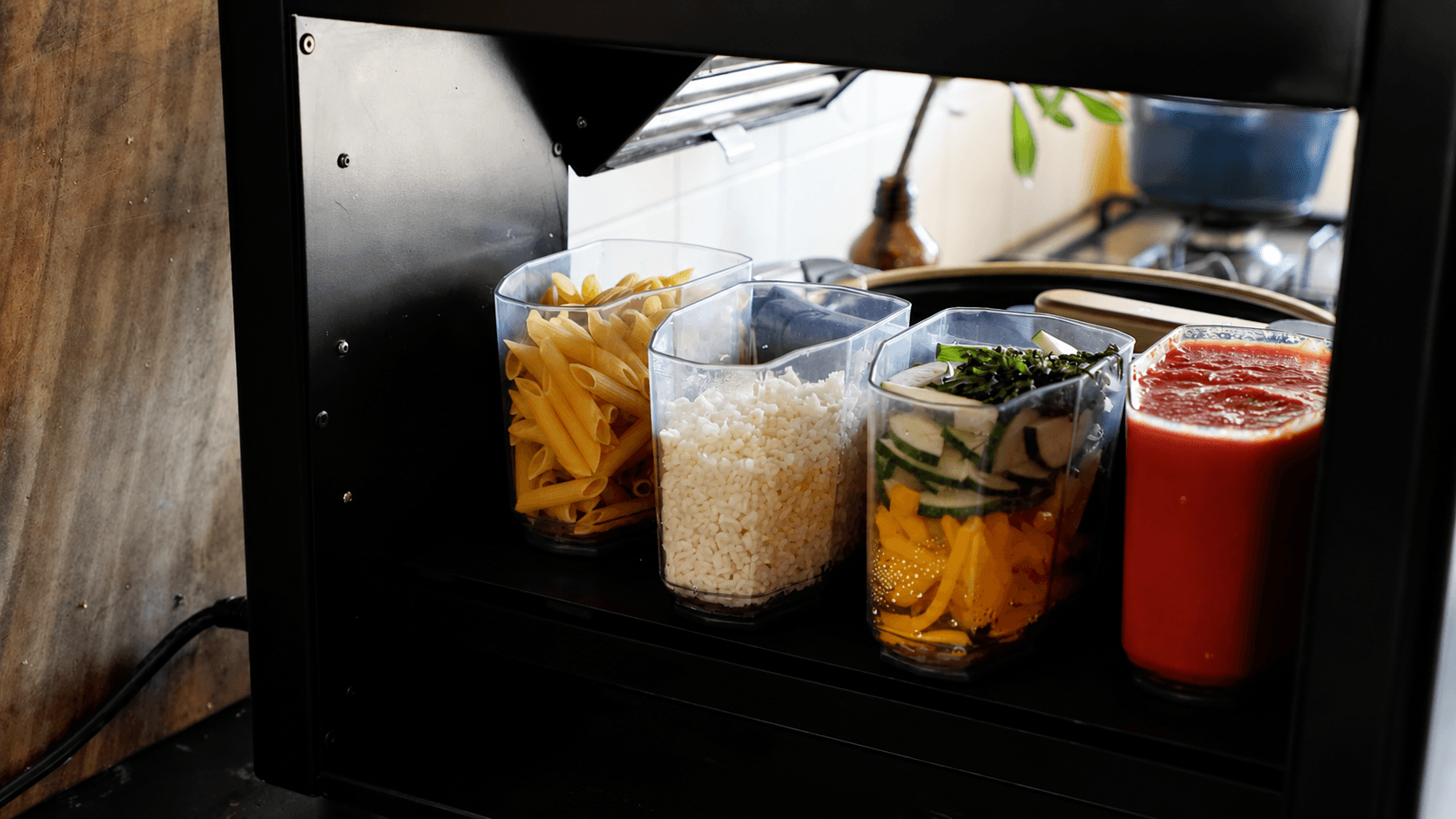
The screen walks you through each container one at a time. For each ingredient, a photo shows exactly what the cut should look like: what a fine dice looks like for white onion, what a half moon looks like for zucchini. Not a paragraph of description — a picture. Set the container on the platform, drop ingredients in while the scale counts up, stop at the target weight, slide it in. Repeat four times.
Step 3: Load the spice pods
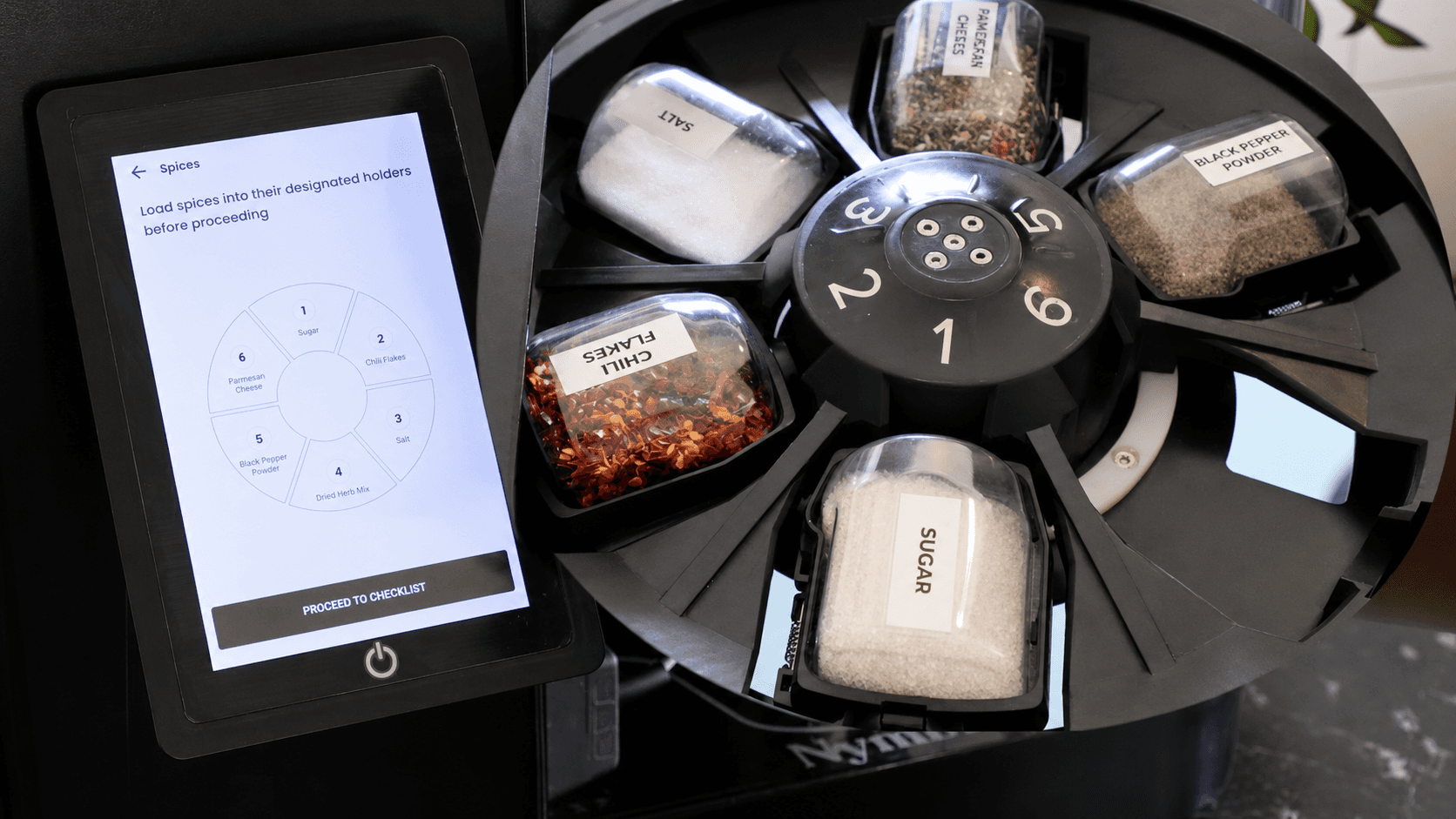
Six labeled slots. Each spice pod snaps in. Close the lid. About sixty seconds. You can buy pods pre-filled from Posha or refill them yourself - all spice pods are refillable.
Step 4: Fill oil and water
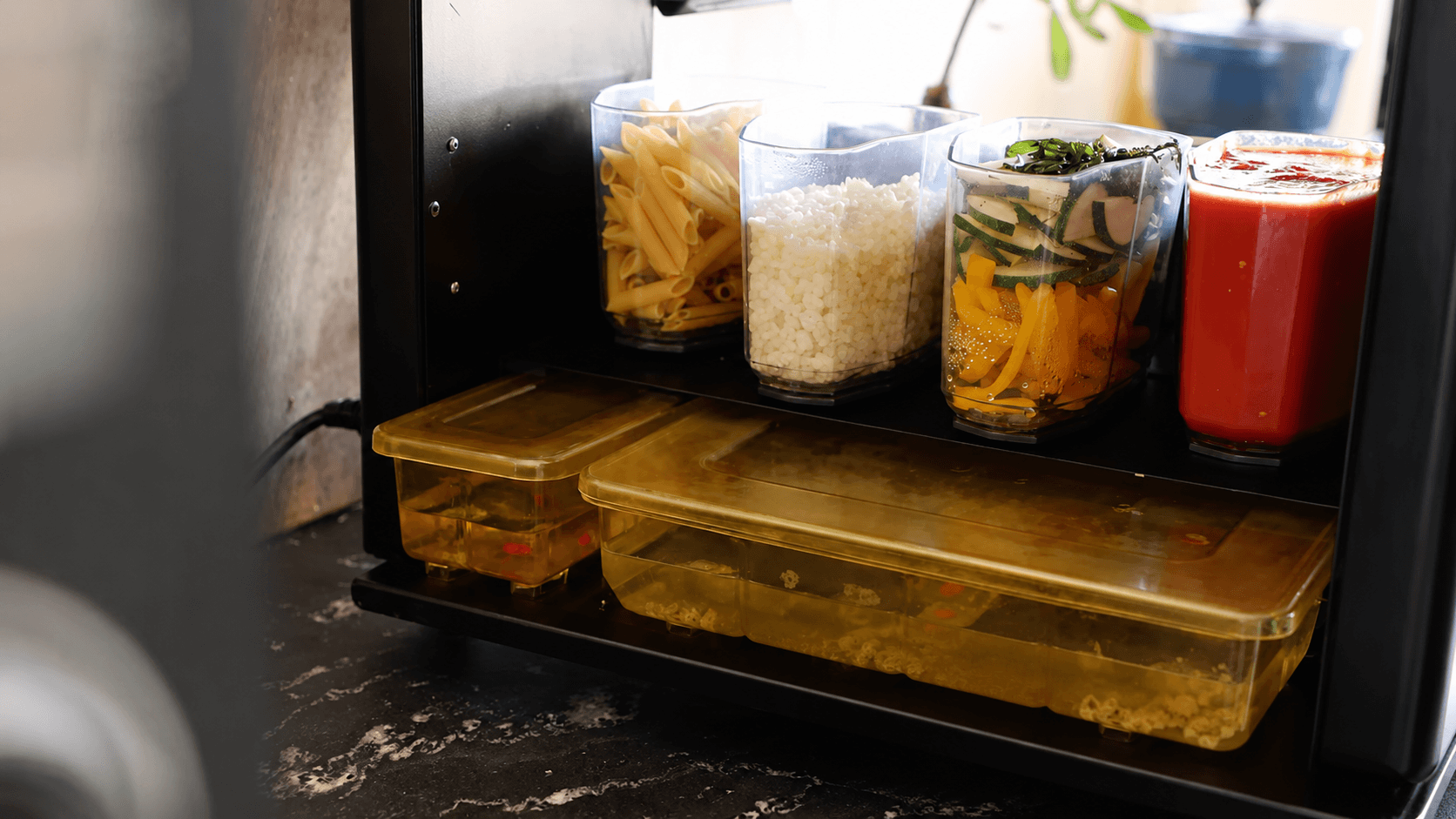
18 ml oil into the oil container. Water filled to the brim. Both slide into the tray.
Step 5: Assemble the pan
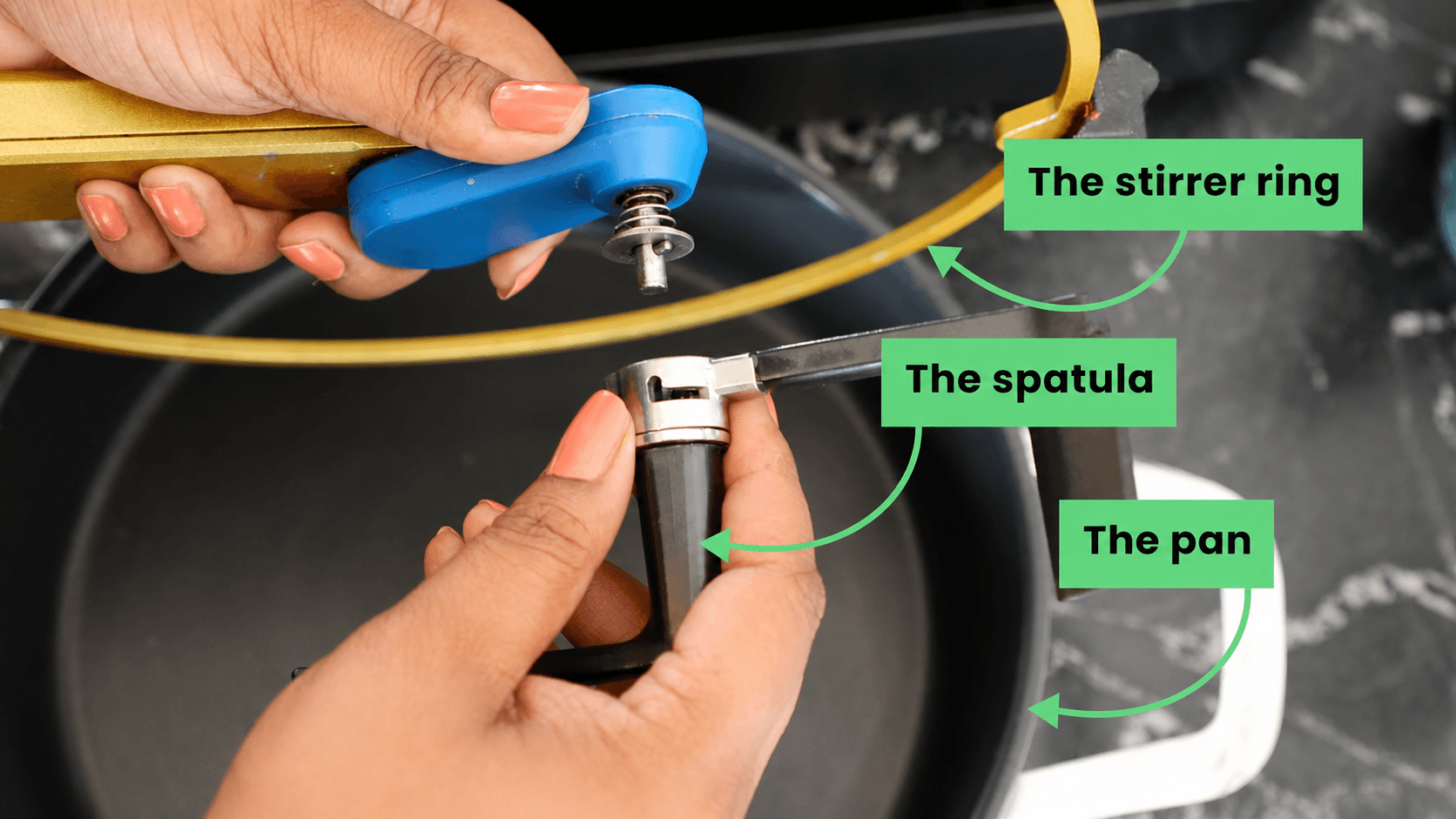
The pan has three parts: the pan itself, the stirrer ring, and the spatula. They click together. Magnetic connector at the back of the housing. Fifteen seconds. It clicks or it doesn’t. It clicks.
Step 6: Run the checklist and press start
Before cooking begins, Posha shows a four-item checklist on screen. Tap each one blue:
POSHA CHECKS BEFORE STARTING Water filled to the brim. Oil present - 18 ml for this recipe. Spatula connected correctly. Pan placed on the stovetop. |
Then Posha asks: Start now or Schedule for later?
That second option is worth using. If you’re doing prep at 4 PM and want dinner at 7, you can set an exact start time and walk out. Posha starts cooking at 6:20, or whenever you set it, whether you’re home or not. The push notification tells you when it’s ready.
What Posha does while you’re not in the kitchen?
Once you press Start - or your scheduled time hits - Posha takes over. Here’s what it’s actually doing.
The camera inside the housing watches the pan continuously. It’s tracking color change (are the onions actually softening?), texture, consistency of the sauce, and the size and doneness of the pasta. These aren’t approximations off a timer. They’re visual reads, the same cues a cook uses when they lean over the pan.
When it sees what it needs to see, the next ingredient drops. Chili flakes and tomatoes once the onions look right. Raw penne once the sauce has reduced. The induction stovetop runs at up to 1200 watts and adjusts instantly. The stirrer moves at the right speed for each phase - slow folds when the sauce is reducing, faster when the pasta is cooking and needs to be moved.
The screen narrates every call in real time:
POSHA SAYS Onions are softened. Adding chili flakes and tomatoes. Sauce is thickening. Adding raw penne directly. Pasta is al dente. Heat off. Dish is ready. |
When it’s done, your phone gets a push notification: “Bon appétit! Your Penne Arrabbiata is ready.” A garnishing tip follows on screen: finish with grated Parmesan. Add extra chili flakes if you want more heat.
You come home to a kitchen that smells like someone cooked. Because something did.
What Posha does - and What you still do? (The honest version)
Posha is a self-cooking stovetop - not a fully autonomous kitchen. Here’s the complete picture of who does what.
What Posha handles | What still needs you |
Heating: the induction base brings the pan up or down as the recipe needs. | You pick the dish and serving size. |
Stirring: the stirrer keeps the sauce moving and changes rhythm when needed. | You chop and load ingredients into the containers. |
Watching: computer vision tracks color, size, texture, and doneness. | You fill oil and water. |
Sequencing: ingredients, water, oil, and spices enter at the right moments. | You place the pan, stirrer ring, and spatula correctly. |
Scheduling: prep can be loaded early, then cooking can start later. | You choose cook now or schedule for later. |
Cleanup support: containers, pan, and food-contact parts are dishwasher-friendly. | You plate, taste, rate, and clean the few parts that need washing. |
Total active prep time for Penne Arrabbiata: about fifteen minutes. Total cook time: 82 minutes. The rest of those 82 minutes are yours.
Why it tastes Authentic
Here’s the thing about most kitchen tech: it trades flavor for speed. Pre-programmed steps, fixed timers, sauce from concentrate. You save time but you can tell.
Posha’s culinary team re-engineered the Penne Arrabbiata method so the trade-off disappears. Cooking raw pasta directly in the sauce - instead of boiling it separately and combining at the end - produces pasta that absorbs the arrabbiata all the way through. That’s the version you’d spend ninety minutes making by hand. The camera watching for real doneness cues rather than running timers means the onions are actually softened before the chili goes in, not just “five minutes in.”
That’s the science. The love is in the result on the plate.
Who Posha is actually built for?
Posha makes sense for you if any of these are true:
You’ve ordered takeout more times this month than you meant to.
You want real food on weeknights, but Wednesday at 6 PM doesn’t cooperate.
You cook fine - the problem is the time and attention, not the skill.
You travel for work and your household is doing solo dinner duty two or three nights a week.
You want your family eating across cuisines - Italian, Indian, Thai, Mexican - without sourcing and learning every technique.
You spend $50–$60 on takeout pasta twice a week and want that number to look different.
Posha isn’t built for the person who finds cooking meditative. The one who loves ninety minutes at the stove on a Sunday, who wants to control every stage, who uses cooking to decompress. That ritual is real and Posha doesn’t touch it.
For the other four nights? This is what dinner looks like when the cooking takes care of itself.
Dinner is still yours. The stove just doesn’t need you anymore.
Choose the recipe. Prep the ingredients. Set the time.
Posha builds the sauce, watches the pan, adds the pasta at the right moment, and sends your phone a message when it’s ready.
That’s not the future of cooking. That’s a Tuesday.
Frequently asked questions
What is penne arrabbiata?
Penne arrabbiata is a Southern Italian pasta dish. Arrabbiata means “angry” in Italian - a nod to the chili heat that defines the sauce. Unlike marinara, the chili goes into the olive oil early so the fat carries the heat through the entire sauce. Posha makes it with garlic, white onion, yellow bell pepper, zucchini, fresh basil, and tomato sauce, built from scratch.
How does Posha cook pasta differently from a regular recipe?
Traditional arrabbiata boils pasta in a separate pot, makes the sauce in another, then combines them. Posha builds the sauce from scratch first, then drops the raw penne directly into the arrabbiata to finish cooking. The pasta absorbs the sauce all the way through - better flavor, better texture, one pot, no colander.
How long does it take to make penne arrabbiata with Posha?
82 minutes total cook time. Your active prep time - loading four ingredient containers, six spice pods, oil, and water, then assembling the pan - is about fifteen minutes. The other 67 minutes require nothing from you.
Can I schedule Posha to start cooking while I’m not home?
Yes. After loading everything and running the pre-cook checklist, you can set any future start time. Posha begins cooking at exactly that time. A push notification arrives on your phone when the dish is ready.
Does Posha use a timer or does it actually watch the food?
Posha watches the food. A camera inside the housing tracks color, texture, consistency, and size during the entire cook. Onions have to look softened before the chili flakes go in - not just reach five minutes. The pasta is checked for al dente doneness visually, not by a countdown.
What other recipes does Posha make?
500+ recipes across Indian, Italian, Thai, Mexican, Mediterranean, and more. Sort by cuisine, dietary preference, ingredient, or cook time. Adjust servings from 1 to 4 and all ingredient amounts recalculate automatically.
Is Posha hard to clean?
No. Every part that touches food - the pan, the stirrer, the four ingredient containers, the spatula, and the spice pods - is dishwasher-safe. One load, done.
How is Posha different from a meal kit like HelloFresh?
Meal kits send you portioned ingredients. You still chop, sauté, stir, watch the stove, and clean multiple pots. Posha handles the active cooking after your fifteen minutes of prep. And unlike a meal kit, it cooks every meal differently based on what it actually sees - not a fixed program.
Where can I try Posha before I buy?
Posha runs real-life demonstrations in the Bay Area where you can taste the food before committing. Find an event near you at posha.com.